Indoles
Los indoles son compuestos heterocíclicos compuestos por un anillo de benceno fusionado a un anillo de pirrol. Estos compuestos son importantes en la química medicinal por su amplia gama de actividades biológicas, incluidas propiedades antiinflamatorias, anticancerígenas y antimicrobianas. Los indoles se utilizan en la síntesis de productos farmacéuticos, agroquímicos y colorantes. En CymitQuimica, ofrecemos una gama completa de indoles de alta calidad para apoyar sus investigaciones y aplicaciones industriales.
Subcategorías de "Indoles"
Se han encontrado 3984 productos de "Indoles"
Ordenar por
Pureza (%)
0
100
|
0
|
50
|
90
|
95
|
100
(S)-1-Phenyl-1,2,3,4-tetrahydroisoquinoline
CAS:Producto controlado<p>Impurity Solifenacin EP impurity A<br>Applications Solifenacin (S676700) intermediate.<br>References Andersson, K., et al.: Drugs, 35, 477 (1988), Wallis, R., et al.: Life Sci., 64, 395 (1999), Mitsuya, M., et al.: J. Med. Chem., 43, 5017 (2000), Ohtake, A., et al.: Eur. J. Pharmacol., 492, 243 (2004),<br></p>Fórmula:C15H15NForma y color:White To Off-WhitePeso molecular:209.293-Methyl-d3-indole
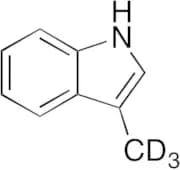
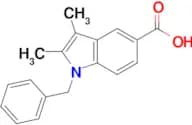
CAS:Producto controlado<p>Applications 3-Methyl-d3-indole has been used to prove that bioactivation of the pulmonary toxin 3-methylindole requires methyl carbon-hydrogen bond breakage in mice. 3-Methyl-d3-indole is the labeled analogue of 3-Methylindole (M313470), A naturally abundant pneumotoxin, found primarily in mammalian feces providing its strong fecal odor.<br> Not a dangerous good if item is equal to or less than 1g/ml and there is less than 100g/ml in the package<br>References Huijzer, J., et. al.: Toxicol. Appl. Pharm., 90, 60 (1987); Nakashima, T., et al.: Biol. Pharm. Bull., 32, 832 (2009); Xu, H., et al.: Chem. Pharm. Bull., 57, 321 (2009); Bodoor, K., et al.: J. Med. Chem., 52, 3753 (2009); Naskar, S., et al.: J. Chem. Res., 3, 174 (2009); Sollner, K., et al.: J. Agric. Food Chem., 57, 4319 (2009)<br></p>Fórmula:C92H3H6NForma y color:NeatPeso molecular:134.191-Benzyl-2,3-dimethyl-1H-indole-5-carboxylic acid
CAS:Forma y color:SolidPeso molecular:279.3389892578125Indoleacetic Acid
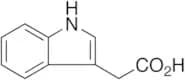
CAS:Producto controlado<p>Applications Indoleacetic Acid is the most common and naturally occuring plant hormone in the auxin class of hormones. It effects cell elongation, cell division as well as plant growth and development.<br></p>Fórmula:C10H9NO2Forma y color:Off-White To Light BeigePeso molecular:175.18(R)-3-Amino-4-(1H-indol-3-yl)butanoic acid hydrochloride
CAS:Pureza:95.0%Forma y color:Liquid, No data available.Peso molecular:254.71000671386726-Benzyloxyindole-3-carbaldehyde
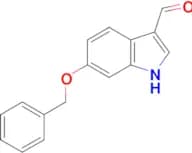
CAS:Pureza:95.0%Forma y color:SolidPeso molecular:251.28500366210938