Compuestos de organosilicio
En esta sección, encontrará un gran número de compuestos organosilícicos. Los compuestos organosilícicos se caracterizan por átomos de carbono unidos a átomos de silicio. También pueden estar presentes otros compuestos no metálicos. Estos compuestos son ampliamente utilizados en síntesis orgánica, ciencia de materiales y productos farmacéuticos debido a sus propiedades químicas únicas. En CymitQuimica, ofrecemos una amplia gama de compuestos organosilícicos de alta calidad para apoyar sus investigaciones y proyectos industriales.
Subcategorías de "Compuestos de organosilicio"
Se han encontrado 4327 productos de "Compuestos de organosilicio"
Ordenar por
Pureza (%)
0
100
|
0
|
50
|
90
|
95
|
100
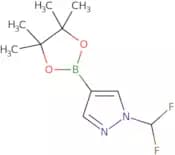
1-(difluoromethyl)-4-(4,4,5,5-tetramethyl-1,3,2-dioxaborolan
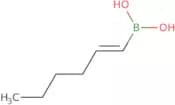
CAS:<p>Please enquire for more information about 1-(difluoromethyl)-4-(4,4,5,5-tetramethyl-1,3,2-dioxaborolan including the price, delivery time and more detailed product information at the technical inquiry form on this page</p>Fórmula:C10H15BF2N2O2Pureza:Min. 95%Peso molecular:244.05 g/molE-Hexen-1-ylboronic acid
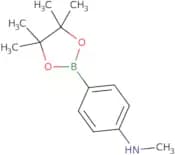
CAS:<p>E-Hexen-1-ylboronic acid is a reactive, boron-containing compound that can be used for Suzuki coupling reactions and metathesis reactions. It is also useful in the analysis of organic compounds, due to its ability to form brightly coloured complexes with metal ions. E-Hexen-1-ylboronic acid has been shown to react with chloride, reoxidant and hexane. This compound can be used as an analytical reagent for the detection of stereoselectively in a stepwise reaction. E-Hexen-1-ylboronic acid forms crystals x-ray diffraction patterns that are characteristic of a chair conformation.</p>Fórmula:C6H13BO2Pureza:Min. 95%Peso molecular:127.98 g/mol4-(N-Methylamino)phenylboronic acid pinacol ester
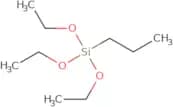
CAS:<p>Please enquire for more information about 4-(N-Methylamino)phenylboronic acid pinacol ester including the price, delivery time and more detailed product information at the technical inquiry form on this page</p>Fórmula:C13H20BNO2Pureza:Min. 95%Peso molecular:233.11 g/molTriethoxy(propyl)silane
CAS:<p>Triethoxy(propyl)silane is an organosilicon compound that has reactive properties. It is a polymeric material that can be used as a component in paints, coatings, and sealants. The reaction of triethoxy(propyl)silane with sodium hydroxide solution yields hydrogen fluoride, water vapor, and hydrochloric acid. Triethoxy(propyl)silane has been shown to react with hydroxide solution to form polycarboxylic acids. The hydroxyl group on the triethoxy(propyl)silane molecule is responsible for the transport properties of this compound.</p>Fórmula:C9H22O3SiPureza:Min. 95%Peso molecular:206.35 g/molBis (1,5-Cyclooctadiene) rhodium(I)tetrafluoroborate
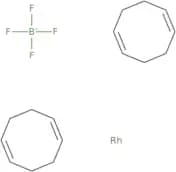
CAS:<p>Bis (1,5-Cyclooctadiene) rhodium(I)tetrafluoroborate (BODIPY) is a catalyst that enhances the rate of hydrosilylation reactions. This catalyst has been shown to be effective in the synthesis of aryl chlorides from amines and aldehydes with high enantioselectivity. BODIPY is also immobilized on silica gel to create an active catalyst for asymmetric synthesis. The immobilization process on silica gel is done by reacting BODIPY with ammonium formate and amines. The resulting catalyst can be used for the synthesis of functionalized organic compounds, such as pyrrolidines, tetrahydrofurans, and thiophenes.</p>Fórmula:C16H24BF4RhPureza:Min. 95%Peso molecular:406.07 g/mol6-(4,4,5,5-Tetramethyl-1,3,2-dioxaborolan-2-yl)-2,3-dihydrobenzo-1,4-dioxoline
CAS:<p>Please enquire for more information about 6-(4,4,5,5-Tetramethyl-1,3,2-dioxaborolan-2-yl)-2,3-dihydrobenzo-1,4-dioxoline including the price, delivery time and more detailed product information at the technical inquiry form on this page</p>Fórmula:C14H19BO4Pureza:Min. 95%Peso molecular:262.11 g/mol2-Aminopyrimidine-5-boronic acid pinacol ester
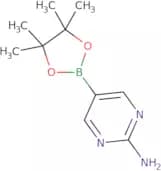
CAS:<p>2-Aminopyrimidine-5-boronic acid pinacol ester is a boronic acid derivative that has been shown to inhibit the activity of protein kinase C. This compound is also an effective linker for cross-coupling reactions and has a low reactivity with nucleophiles, which makes it safer than other boronic acids. 2-Aminopyrimidine-5-boronic acid pinacol ester has been shown to be potent against cancer cells in vitro and in vivo and synthetic cells. 2-Aminopyrimidine-5-boronic acid pinacol ester inhibits the growth of cancer cells by binding to the ATP site on protein kinase C, thereby inhibiting its function.</p>Fórmula:C10H16BN3O2Pureza:Min. 95 Area-%Forma y color:PowderPeso molecular:221.06 g/molVinyloxytrimethylsilane
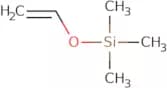
CAS:Producto controlado<p>Vinyloxytrimethylsilane is an organosilicon compound that is used as a polymerization initiator. It reacts with cyclobutanone to form a ruthenium complex, which can be used to coat surfaces and produce polymers. The use of this compound has been shown to increase the reaction yield and decrease the amount of by-products in the polymerization process. Vinyloxytrimethylsilane is biodegradable, making it an environmentally friendly alternative for coating surfaces or producing polymers.</p>Fórmula:C5H12OSiPureza:Min. 95%Peso molecular:116.23 g/molPhenyl-1,2-carborane
CAS:Producto controlado<p>Please enquire for more information about Phenyl-1,2-carborane including the price, delivery time and more detailed product information at the technical inquiry form on this page</p>Fórmula:C8H16B10Pureza:Min. 95%Forma y color:Colourless Or White To Off-White Solid Or Liquid (May Vary)Peso molecular:220.32 g/mol1-Bromomethyl-o-carborane
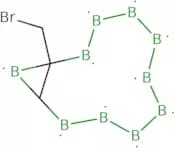
CAS:Producto controlado<p>1-Bromomethyl-o-carborane is a boron compound that has been used as a cross-coupling reagent for the conversion of terminal alkynes to acetonitrile. This reagent is prepared by the reaction of lithium diisopropylamide with dicarbonyl compounds, followed by desilylation and alkylation. The hydroxy group can be substituted with triflates or monosubstituted groups. The nature of these substituents will depend on the desired product and reaction conditions. 1-Bromomethyl-o-carborane has been shown to form hyaluronic acid in yields of up to 98%.</p>Fórmula:C3B10H13BrPureza:Min. 95%Peso molecular:237.15 g/mol4-(Hydroxymethyl)phenylboronic acid
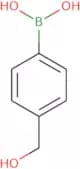
CAS:<p>4-(Hydroxymethyl)phenylboronic acid is an organic compound that has been identified as a reactive, fatty acid. It has shown antibacterial efficacy against gram-positive and gram-negative bacteria in the presence of nanogels. 4-(Hydroxymethyl)phenylboronic acid is also a cross-linking agent that can be used to form hydrogels for tissue engineering applications. This chemical is being studied as a potential treatment for inflammatory bowel disease and diabetes mellitus. 4-(Hydroxymethyl)phenylboronic acid has been shown to have anti-cancer properties by inhibiting the proliferation of cancer cells and inducing apoptosis. The molecule also undergoes structural analysis using confocal microscopy.</p>Fórmula:C7H9BO3Peso molecular:151.96 g/molSodium triacetoxyborohydride
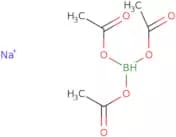
CAS:<p>Sodium triacetoxyborohydride is an oxidizing agent that is used in organic synthesis as a reagent for the reduction of esters and nitriles to alcohols and amines, respectively. This compound has been shown to be effective in reducing the activity of ccr5 receptors, which are important in HIV infection. Sodium triacetoxyborohydride can also be used to reduce antibodies, such as monoclonal antibodies, that have been conjugated with drugs or toxins to produce immunotoxins. Sodium triacetoxyborohydride has also been shown to be an effective agent for the treatment of inflammatory bowel disease and cancer therapy. It has been found to be toxic to some bacteria, fungi, and protozoa.</p>Fórmula:C6H10BNaO6Forma y color:White PowderPeso molecular:211.94 g/mol2-Chloro-3-ethylbenzoxazolium tetrafluoroborate
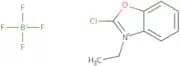
CAS:<p>2-Chloro-3-ethylbenzoxazolium tetrafluoroborate is a synthetic compound that inhibits the enzyme maltase. This compound is used in the treatment of diabetic patients with intestinal maltase deficiency and has been shown to be effective in clinical studies. 2-Chloro-3-ethylbenzoxazolium tetrafluoroborate has also been shown to inhibit other enzymes, such as thiocarbamate synthetase and aminooxazoline synthetase, which are involved in the biosynthesis of chlorinated pesticides and herbicides. The chloride ion is necessary for this inhibition activity. The compound can be prepared by a preparative method that involves hexaacetate and chloride ion or by using an aglycone, trehalamine, or stereospecific method.</p>Fórmula:C9H9BClF4NOPureza:Min. 95%Forma y color:PowderPeso molecular:269.43 g/molN-Methoxymethyl-N-(trimethylsilylmethyl)benzylamine
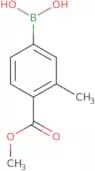
CAS:<p>N-Methoxymethyl-N-(trimethylsilylmethyl)benzylamine is a chiral, electron deficient reagent that reacts with aldehydes and boronic esters to form products with high chemical yields. This compound can be used as a catalyst for acylation reactions, such as the synthesis of p-nitrophenol. N-Methoxymethyl-N-(trimethylsilylmethyl)benzylamine is synthesized by the reaction of trifluoroacetic acid and an amine, followed by chloroformate displacement. The product is then reacted with acylating agents in the presence of catalysts.</p>Fórmula:C13H23NOSiPureza:Min. 95%Forma y color:Clear Colourless To Pale Yellow LiquidPeso molecular:237.41 g/mol(4-(Methoxycarbonyl)-3-Methylphenyl)boronic acid
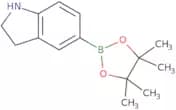
CAS:<p>Please enquire for more information about (4-(Methoxycarbonyl)-3-Methylphenyl)boronic acid including the price, delivery time and more detailed product information at the technical inquiry form on this page</p>Fórmula:C9H11BO4Pureza:Min. 95%Peso molecular:193.99 g/mol5-(4,4,5,5-Tetramethyl-1,3,2-dioxaborolan-2-yl)indoline
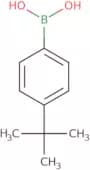
CAS:<p>Please enquire for more information about 5-(4,4,5,5-Tetramethyl-1,3,2-dioxaborolan-2-yl)indoline including the price, delivery time and more detailed product information at the technical inquiry form on this page</p>Pureza:Min. 95%4-tert-Butylphenylboronic acid
CAS:<p>4-tert-Butylphenylboronic acid is an aromatic hydrocarbon that belongs to the class of phenoxy. It is a molecule with nitrogen atoms and a molecular weight of 144.17 g/mol. 4-tert-Butylphenylboronic acid has been shown to form a copper complex in the presence of sodium trifluoroacetate, which is used for cross-coupling reactions. This compound also reacts with hydrochloric acid to form 4-methoxyphenylboronic acid and trimethyl boronate, which can be used as reaction products in organic synthesis. The stability of this compound has been studied using electrochemical impedance spectroscopy (EIS) on thin films.</p>Fórmula:C10H15BO2Pureza:Min. 95%Forma y color:White PowderPeso molecular:178.04 g/mol3-Pyridineboronic acid
CAS:<p>3-Pyridineboronic acid is an antimicrobial agent that is used to treat bacterial and fungal infections. 3-Pyridineboronic acid is a prodrug that is metabolized to its active form, pyridinium boronate. This drug has been shown to be effective in the treatment of hypoxic tumors in mice, which are resistant to other anticancer drugs. 3-Pyridineboronic acid also has acidic properties and can be used as an antiseptic for the treatment of skin and eye infections. It can also be used as a hydrogen bonding partner when combined with halides, such as chloride or bromide ions. The drug binds to human serum proteins and forms an acidic complex that prevents bacterial growth by inhibiting protein synthesis. 3-Pyridineboronic acid also inhibits prostate cancer cells by competitively inhibiting the enzyme 4-pyridinylboronic acid reductase (4PBAR).</p>Fórmula:C5H6BNO2Pureza:Min. 95%Peso molecular:122.92 g/molBiphenyldiMethylsilane
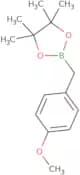
CAS:<p>BiphenyldiMethylsilane is a reactive compound that can be used for the surface modification of metals. It reacts with metal carbonyls, such as ZrO2, to form an oxide layer on the metal surface. This reaction can be monitored by magnetic resonance spectroscopy and chemical structures. The reactive site of this compound is a hydroxyl group, which will react with chloride ions to form a zirconium chloride complex. The chemical ionization technique can be used to determine the surface concentrations of this compound. BiphenyldiMethylsilane is often used in analytical chemistry to detect metal ions on surfaces or in films using infrared spectroscopy or mass spectrometry.</p>Pureza:Min. 95%4-Methoxybenzylboronic acid pinacolester
CAS:<p>Please enquire for more information about 4-Methoxybenzylboronic acid pinacolester including the price, delivery time and more detailed product information at the technical inquiry form on this page</p>Fórmula:C14H21BO3Pureza:Min. 95%Peso molecular:248.13 g/mol