Compuestos de organosilicio
En esta sección, encontrará un gran número de compuestos organosilícicos. Los compuestos organosilícicos se caracterizan por átomos de carbono unidos a átomos de silicio. También pueden estar presentes otros compuestos no metálicos. Estos compuestos son ampliamente utilizados en síntesis orgánica, ciencia de materiales y productos farmacéuticos debido a sus propiedades químicas únicas. En CymitQuimica, ofrecemos una amplia gama de compuestos organosilícicos de alta calidad para apoyar sus investigaciones y proyectos industriales.
Subcategorías de "Compuestos de organosilicio"
Se han encontrado 4325 productos de "Compuestos de organosilicio"
Ordenar por
Pureza (%)
0
100
|
0
|
50
|
90
|
95
|
100
Benzopyrazine-6-boronic acidHCl
CAS:<p>Please enquire for more information about Benzopyrazine-6-boronic acidHCl including the price, delivery time and more detailed product information at the technical inquiry form on this page</p>Fórmula:C8H8BClN2O2Pureza:Min. 95%Peso molecular:210.43 g/molLithium bis(oxalato)borate
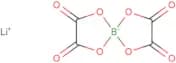
CAS:<p>Lithium bis(oxalato)borate (LBBO), also known as Lithiumbis(oxalato)borate, is a lithium salt of the borate ester. The optimum concentration for LBBO is 1-2 mol/L. LBBO is soluble in water and reacts with glycol esters to form lithium glycolates. This reaction is reversible and the equilibrium can be shifted by changing the temperature or pressure. The NMR spectra of LBBO show a peak at 3.3 ppm which corresponds to the carbon atom attached to the carbonyl group, which is indicative of an organic solution.<br>LBBO has been shown to be an electrolyte for lithium ion batteries but it has not been studied extensively because it decomposes at temperatures above 400°C and exhibits poor transport properties, limiting its application in electronic devices.</p>Fórmula:C4BO8•LiPureza:Min. 95%Peso molecular:193.79 g/mol3-Bromopropylboronic acid pinacol ester
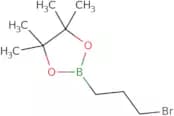
CAS:<p>Please enquire for more information about 3-Bromopropylboronic acid pinacol ester including the price, delivery time and more detailed product information at the technical inquiry form on this page</p>Fórmula:C9H18BBrO2Pureza:Min. 95%Peso molecular:248.95 g/mol(2-Chlorophenyl)boronic acid
CAS:<p>2-Chlorophenylboronic acid is a diphenyl ether that can be used as a building block for the synthesis of benzodiazepine receptor ligands. It has been shown to be an efficient nucleophile, leading to the formation of carbonyl groups in the presence of halides. 2-Chlorophenylboronic acid has also been shown to inhibit p38 kinase activity and may be useful for anticancer therapy.</p>Fórmula:C6H6BClO2Pureza:Min. 95%Peso molecular:156.37 g/molN-α-Trityl-Nε-Fmoc-L-lysine
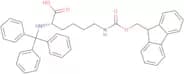
CAS:<p>N-alpha-Trityl-Nepsilon-Fmoc-L-lysine is a pentapeptide that is used in peptides. It has been shown to have cytotoxicity and permeability, as well as being biologically active. N-alpha-Trityl-Nepsilon-Fmoc-L-lysine has also been used in solid phase synthesis of peptides. This pentapeptide can be synthesized using the Miyaura cross coupling reaction with an ether or Suzuki cross coupling reaction. N-alpha-Trityl-Nepsilon-Fmoc-L-lysine is a bicyclic molecule that can be synthesized on a solid phase.</p>Fórmula:C40H38N2O4Pureza:Min. 95%Peso molecular:610.74 g/mol(Chlorodifluoromethyl)trimethylsilane
CAS:<p>(Chlorodifluoromethyl)trimethylsilane is a chlorinating agent that is used for the transfer of chlorine to organic compounds. The activated chlorides are converted to aldehydes, which are then reacted with terminal alkynes in the presence of sodium carbonate to produce (chlorodifluoromethyl)trimethylsilanes. This reaction produces an organosilicon compound that has been shown to inhibit certain enzymes, such as lipases and proteases. Chlorodifluoromethyl)trimethylsilane also has bioisosteres, or structural analogs, with other halogens. It can be prepared by irradiation of chlorodichloromethane at room temperature in the presence of a catalyst.</p>Fórmula:C4H9ClF2SiPureza:Min. 95%Forma y color:Colorless PowderPeso molecular:158.65 g/molFITC-epsilonAhx-Amyloid b-Protein (1-42) trifluoroacetate salt
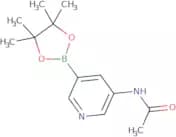
<p>Please enquire for more information about FITC-epsilonAhx-Amyloid b-Protein (1-42) trifluoroacetate salt including the price, delivery time and more detailed product information at the technical inquiry form on this page</p>Fórmula:C230H333N57O66S2Pureza:Min. 95%Peso molecular:5,016.58 g/molN-(5-(4,4,5,5-Tetramethyl-1,3,2-dioxaborolan-2-yl)pyridin-3-yl)acetamide
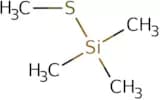
CAS:<p>Please enquire for more information about N-(5-(4,4,5,5-Tetramethyl-1,3,2-dioxaborolan-2-yl)pyridin-3-yl)acetamide including the price, delivery time and more detailed product information at the technical inquiry form on this page</p>Fórmula:C13H19BN2O3Pureza:Min. 95%Peso molecular:262.11 g/molTrimethyl(methylthio)silane
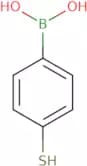
CAS:<p>Trimethyl(methylthio)silane is a synthetic chemical substance with the formula (CH3)3SiH. It is a colorless liquid that is soluble in organic solvents and insoluble in water. Trimethyl(methylthio)silane has been used to synthesize indole alkaloids such as benzylidene acetal, which are important precursors in organic chemistry. This functional group has also been used to synthesize other synthetic compounds, including fatty acids and halides. The synthesis of these substances is often achieved through the use of hydrochloric acid and hydrogen fluoride as catalysts. Trimethyl(methylthio)silane can be prepared by reacting chloromethyl methyl ether with sodium hydroxide followed by decarboxylation of the resulting product with hydrochloric acid.</p>Fórmula:C4H12SSiPureza:Min. 95%Peso molecular:120.29 g/mol4-Mercaptophenylboronic acid
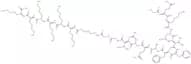
CAS:<p>4-Mercaptophenylboronicacid is a boronic acid that has been used to synthesize gold nanoparticles with antimicrobial properties. Boronic acids are able to form hydrogen bonds with biological molecules such as proteins and DNA, which allows them to be used for immobilization of biomolecules. This compound is also used as a reagent for the synthesis of disulfide bonds in proteins and peptides. 4-Mercaptophenylboronicacid can be used to prepare samples for electrochemical impedance spectroscopy (EIS) and colorimetric analysis.</p>Fórmula:C6H7BO2SPureza:Min. 95%Peso molecular:154 g/molGly-Amyloid b-Protein (15-25)-Gly-ε-aminocaproyl(-Lys)6
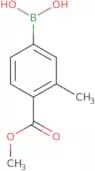
CAS:<p>Please enquire for more information about Gly-Amyloid b-Protein (15-25)-Gly-epsilon-aminocaproyl(-Lys)6 including the price, delivery time and more detailed product information at the technical inquiry form on this page</p>Fórmula:C105H178N28O26Pureza:Min. 95%Peso molecular:2,248.71 g/mol(4-(Methoxycarbonyl)-3-Methylphenyl)boronic acid
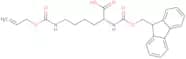
CAS:<p>Please enquire for more information about (4-(Methoxycarbonyl)-3-Methylphenyl)boronic acid including the price, delivery time and more detailed product information at the technical inquiry form on this page</p>Fórmula:C9H11BO4Pureza:Min. 95%Peso molecular:193.99 g/molN-α-Fmoc-Nε-allyloxycarbonyl-D-lysine
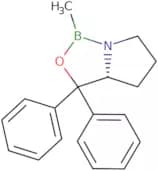
CAS:<p>N-alpha-Fmoc-Nepsilon-allyloxycarbonyl-D-lysine is a medicament that is modified with an amino group at the alpha position. It is synthesized by modification of the chain with a ganirelix acetate. N-alpha-Fmoc-Nepsilon-allyloxycarbonyl-D-lysine can be used to produce ganirelix, which inhibits the release of follicle stimulating hormone (FSH). The chemical synthesis of this drug has been shown to be successful in large scale production, and it has been shown to be effective in treating patients with prostate cancer. Impurities in this drug have been found and treated by removing the methyl ester group from the lysine residue.</p>Fórmula:C25H28N2O6Pureza:Min. 95%Peso molecular:452.5 g/mol(R)-(+)-2-Methyl-CBS-oxazaborolidine
CAS:<p>(R)-(+)-2-Methyl-CBS-oxazaborolidine is a dpp-iv inhibitor that is a β-unsaturated ketone. It has been shown to inhibit the enzyme histone lysine demethylase, which may be involved in the regulation of bone mass. This compound also has a pharmacokinetic profile that is characterized by high oral bioavailability, low plasma protein binding, and rapid metabolism by liver enzymes. The reaction mechanism for this compound is based on the formation of an enolate carbanion. (R)-(+)-2-Methyl-CBS-oxazaborolidine can be synthesized with high stereoselectivity and yields from reactions with simple starting materials. This synthetic route also has a number of advantages over other methods: it does not require any protecting groups, it does not use toxic solvents such as dichloromethane or chloroform, and it can be performed in anhydrous conditions</p>Fórmula:C18H20BNOPureza:Min. 95%Forma y color:SolidPeso molecular:277.17 g/mol4-(Trimethylsilyl)pheNylboroNic acid
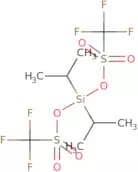
CAS:<p>4-(Trimethylsilyl)phenylboronic acid is a molecule that can be used as an acceptor in fluorescence. It has been shown to have acceptor properties, which means it is able to absorb light energy and transfer it to other molecules. This chemical can be used in microscopy and cross-coupling reactions. 4-(Trimethylsilyl)phenylboronic acid has been shown to undergo thermally activated transport properties and to be isomeric. The molecule also has cross-coupling reactions with anilines, which are important for the production of pharmaceuticals and other organic compounds. 4-(Trimethylsilyl)phenylboronic acid has a high affinity for chloride ions, making it a good candidate for use in solar cells.</p>Fórmula:C9H15BO2SiPureza:Min. 95%Peso molecular:194.11 g/molDiisopropylsilyl Bis(Trifluoromethanesulfonate)
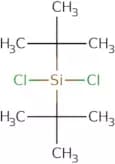
CAS:<p>Diisopropylsilyl bis(trifluoromethanesulfonate) is a bifunctional reagent that can be used to prepare the trifluoromethanesulfonic acid. It reacts with an alcohol in the presence of base to generate an ester, and then hydrolyzes the ester in the presence of water to generate the desired acid. Diisopropylsilyl bis(trifluoromethanesulfonate) is pale yellow and soluble in argon, nitrogen, and solvents such as ethyl acetate.</p>Fórmula:C8H14F6O6S2SiPureza:Min. 95%Peso molecular:412.4 g/molDi-tert-butyldichlorosilane
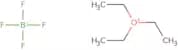
CAS:<p>Di-tert-butyldichlorosilane is a silicon compound that has been used to silylate amines and primary alcohols. It is a sterically hindered molecule with two chloro groups at the same position on one of the silicon atoms, which prevents or limits steric interactions with other molecules. Covid-19 Pandemic is the name given to a new strain of influenza virus that was discovered in 2009. The new strain contains some genetic material from bird flu, which makes it resistant to oseltamivir and zanamivir, drugs commonly used to fight against influenza infection.</p>Fórmula:C8H18Cl2SiPureza:Min. 95%Forma y color:Clear LiquidPeso molecular:213.22 g/molTriethyloxonium tetrafluoroborate
CAS:<p>Triethyloxonium tetrafluoroborate is an antimicrobial agent that inhibits the transfer of electrons from one molecule to another. It has been shown to be effective against methicillin-resistant Staphylococcus aureus and Mycobacterium tuberculosis. Triethyloxonium tetrafluoroborate binds to the bacterial enzyme, Jak1, which is involved in the formation of cytokines and interleukins. This binding inhibits the production of these molecules, leading to cell death by apoptosis. The use of triethyloxonium tetrafluoroborate as a research tool has facilitated its discovery as a potential anti-inflammatory drug for autoimmune diseases such as type 1 diabetes mellitus and rheumatoid arthritis. Triethyloxonium tetrafluoroborate can be used to inhibit amide synthesis, which may have applications in the study of carbohydrate chemistry and nitrogen atoms in biological systems. This compound has also been used</p>Fórmula:C6H15BF4OPureza:Min. 95%Forma y color:PowderPeso molecular:189.99 g/mol1-Phenyl-4-[4-(4,4,5,5-tetramethyl-[1,3,2]dioxaborolan-2-yl)-benzyl]piperazine
CAS:<p>Please enquire for more information about 1-Phenyl-4-[4-(4,4,5,5-tetramethyl-[1,3,2]dioxaborolan-2-yl)-benzyl]piperazine including the price, delivery time and more detailed product information at the technical inquiry form on this page</p>Fórmula:C23H31BN2O2Pureza:Min. 95%Forma y color:PowderPeso molecular:378.32 g/mol2,6-Dimethyl-4-phenylpyronium tetrafluoroborate
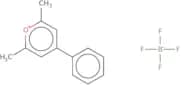
CAS:<p>2,6-Dimethyl-4-phenylpyronium tetrafluoroborate is a high quality reagent that is useful for the preparation of complex compounds. It is also a useful intermediate and building block. The CAS No. 97606-13-8, 2,6-Dimethyl-4-phenylpyronium tetrafluoroborate has been used in research chemicals and as a versatile building block for the synthesis of speciality chemicals. This reagent can be used in reactions to form many organic molecules that are not commercially available or difficult to synthesize.</p>Fórmula:C13H13O·BF4Pureza:Min. 95%Forma y color:PowderPeso molecular:272.05 g/mol






![1-Phenyl-4-[4-(4,4,5,5-tetramethyl-[1,3,2]dioxaborolan-2-yl)-benzyl]piperazine](/_next/image/?url=https%3A%2Fstatic.cymitquimica.com%2Fproducts%2F3D%2Fthumb-webp%2FFP33228.webp&w=3840&q=75)