Compuestos de organosilicio
En esta sección, encontrará un gran número de compuestos organosilícicos. Los compuestos organosilícicos se caracterizan por átomos de carbono unidos a átomos de silicio. También pueden estar presentes otros compuestos no metálicos. Estos compuestos son ampliamente utilizados en síntesis orgánica, ciencia de materiales y productos farmacéuticos debido a sus propiedades químicas únicas. En CymitQuimica, ofrecemos una amplia gama de compuestos organosilícicos de alta calidad para apoyar sus investigaciones y proyectos industriales.
Subcategorías de "Compuestos de organosilicio"
Se han encontrado 4325 productos de "Compuestos de organosilicio"
Ordenar por
Pureza (%)
0
100
|
0
|
50
|
90
|
95
|
100
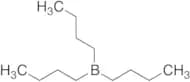
Tributylborane (1.0 M in THF)
CAS:Producto controlado<p>Applications Tributylborane is a reducing agent used in the controlled radical polymerization of alkyl acrylates.<br>References Ludin, D. et al.: Russ. Chem. Bill., 65, 1859 (2016); Semenycheva, L. et al.: Russ. J. App. Chem., 89, 1667 (2016);<br></p>Fórmula:C12H27BForma y color:Single SolutionPeso molecular:182.151,2-Bis(hydroxymethyl)-O-carborane
CAS:Producto controlado<p>1,2-Bis(hydroxymethyl)-O-carborane is a cyclic molecule that can be used in the synthesis of organic compounds. It can be prepared by reacting anhydrous sodium chloride with propiolic acid. It has been shown to produce decaborane and anion when reacted with chlorine. The chlorides are catalytic for the formation of methyl alcohol and methacrylates. 1,2-Bis(hydroxymethyl)-O-carborane has been used as a starting material for the synthesis of triflates and methyl alcohols. This compound has also been found to produce diffraction patterns that can be used for structural analysis.</p>Fórmula:C4H16B10O2Pureza:Min. 95%Peso molecular:204.28 g/molAmmonium tetrafluoroborate
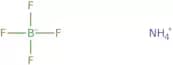
CAS:<p>Ammonium tetrafluoroborate is a salt of the organic compound tetrafluoroborate and ammonium. It is a colorless solid that can be used as a chemical reagent. Ammonium tetrafluoroborate has a higher chemical stability than other salts of tetrafluoroborate, such as ammonium hexafluorophosphate and ammonium hexafluoroarsenate. Ammonium tetrafluoroborate is used to make the dinucleotide phosphate, which is an important component in DNA synthesis. In a redox potential test, ammonium tetrafluoroborate showed no electrochemical activity in water vapor at pH 7. Ammonium tetrafluoroborate reacts with trifluoroacetic acid to produce hydrogen fluoride and ammonium chloride. This reaction is reversible, which means that it can be used for the synthesis of ammonia gas from hydrogen and nitrogen gases or for the</p>Fórmula:NH4BF4Pureza:Min. 98%Forma y color:White PowderPeso molecular:104.84 g/molRef: 3D-FA55588
Producto descatalogadoPotassium dihydrogen arsenate
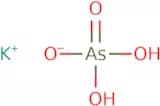
CAS:<p>Potassium dihydrogen arsenate is an inorganic chemical that is used as a pesticide. It prevents the synthesis of proteins by inhibiting soybean trypsin. The optimum concentration for chrysoperla is 1.6 mg/L, which has been shown to be sublethal at levels below 5 mg/L. This chemical has also been shown to have effects on light exposure and thermal expansion. Potassium dihydrogen arsenate belongs to the ferroelectric class of compounds and has a hydrogen bond with water, which may explain its uptake into plants.</p>Fórmula:H2AsKO4Pureza:Min. 95%Peso molecular:180.04 g/molIron(II) tetrafluoroborate - 40-45% aqueous solution
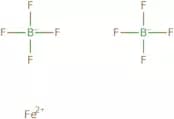
CAS:<p>Iron(II) tetrafluoroborate is a green-yellow crystalline solid that is soluble in water. It has been shown to have structural and optical properties that are similar to those of ferric chloride, but with the advantage of being less toxic. Iron(II) tetrafluoroborate is used as a homogeneous catalyst for organic reactions such as the hydrogenation of nitroarenes and the reduction of ketones. The catalytic activity of Iron(II) tetrafluoroborate arises from its ability to form hydrogen bonding interactions with other molecules and ions in solution.<br>Iron(II) tetrafluoroborate undergoes a number of reactions with other compounds, including cleavage products such as hydrogen sulfate and nitrogen atoms, which may be due to its chelate ligand. In coordination chemistry, Iron(II) tetrafluoroborate can form coordination complexes by reacting with potassium dichromate or calcium carbonate. These complexes are</p>Fórmula:B2F8FePureza:About 45%Forma y color:Slightly Green Clear LiquidPeso molecular:229.45 g/molRef: 3D-FI105721
Producto descatalogado