Señalización citoesquelética
Los inhibidores de la señalización del citoesqueleto son compuestos que interrumpen las vías de señalización que regulan el citoesqueleto, crucial para la forma celular, la motilidad, la división y el transporte intracelular. Estos inhibidores se utilizan para estudiar la dinámica de las proteínas del citoesqueleto, como la actina y la tubulina, y su papel en procesos como la migración celular, la adhesión y la metástasis del cáncer. Los inhibidores de la señalización del citoesqueleto son valiosos en la investigación sobre biología celular, cáncer y neurobiología. En CymitQuimica, ofrecemos una amplia gama de inhibidores de la señalización del citoesqueleto de alta calidad para apoyar su investigación en estas áreas.
Se han encontrado 1381 productos de "Señalización citoesquelética"
Ordenar por
Pureza (%)
0
100
|
0
|
50
|
90
|
95
|
100
PDI-IN-4
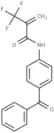
<p>PDI-IN-4 (Compound 14d) is a protein disulfide isomerase inhibitor with an IC50 value of 0.48 μM. It prevents platelet aggregation and thrombosis by reducing the activation of GPIIb/IIIa, without causing significant cytotoxicity. PDI-IN-4 is applicable in thrombosis research.</p>Fórmula:C17H12F3NO2Forma y color:SolidPeso molecular:319.278Microtubule-associated protein tau (26-44)
<p>Microtubule-associated protein tau (26-44) is a synthetic peptide with an amino group conjugated to glutamine and a carboxyl group conjugated to lysine.</p>Fórmula:C83H127N25O34SPureza:98%Forma y color:SolidPeso molecular:2051.11Odulimomab
CAS:<p>Odulimomab: anti-LFA-1 antibody, inhibits T cell growth, protects against ischemic injury, used in transplant rejection research.</p>Forma y color:LiquidLY 379196
<p>LY 379196, a potent PKC-β inhibitor (IC 50: 50 nM for PKC βI and 30 nM for PKC βII), effectively suppresses the proliferation of bovine retinal microvascular endothelial cells (BREC) induced by VEGF, IGF-1, and bFGF. This compound serves as an antiproliferative agent for proliferative retinopathy.</p>Fórmula:C30H34N4O5SForma y color:SolidPeso molecular:562.68Hypoglycemic agent 3
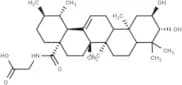
<p>Compound H26, a derivative of corosolic acid, functions as Hypoglycemic agent 3. It exhibits lipid-lowering and significant blood glucose-reducing properties, making it a potential hypoglycemic drug. Hypoglycemic agent 3 targets MCCC1 to mitigate insulin resistance, and may be useful in researching type 2 diabetes.</p>Fórmula:C32H51NO5Forma y color:SolidPeso molecular:529.751Anticancer agent 139
<p>Compound 6h (Anticancer Agent 139) exhibits potent anticancer activity, engaging in a π-cationic interaction with Lys352 of Tubulin and demonstrating high</p>Fórmula:C16H12F3N3OForma y color:SolidPeso molecular:319.28Bimosiamose
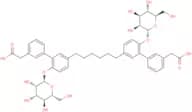
CAS:<p>Bimosiamose has anti-inflammatory effects[1].</p>Fórmula:C46H54O16Pureza:98%Forma y color:SolidPeso molecular:862.91Tubulin inhibitor 36
<p>Tubulin Inhibitor 36 (Compound 10) serves as a potent novel inhibitor of tubulin polymerization, which consequently induces apoptosis in glioblastoma cells,</p>Fórmula:C16H13ClN6SForma y color:SolidPeso molecular:356.83YS-49 monohydrate
<p>YS-49, a PI3K/Akt activator, curbs RhoA/PTEN; inhibits VSMC growth by inducing HO-1; an isoquinoline alkaloid that stimulates cardiac β-adrenoceptors.</p>Fórmula:C20H22BrNO3Forma y color:SolidPeso molecular:404.3MAL3-101
CAS:<p>MAL3-101 is a molecular chaperone inhibitor of heat shock protein 70 (Hsp 70).</p>Fórmula:C54H66N4O10Forma y color:SolidPeso molecular:931.12JG-258
CAS:<p>JG-258 is an inactive negative control for Hsp70 inhibitors [1] .</p>Fórmula:C20H22ClN3OS3Forma y color:SolidPeso molecular:452.06Arimoclomol citrate
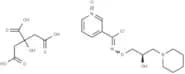
CAS:<p>Arimoclomol citrate boosts Hsp expression, aiding protein aggregation and neuron protection.</p>Fórmula:C20H28ClN3O10Forma y color:SolidPeso molecular:505.91Rotigaptide
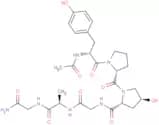
CAS:<p>Rotigaptide, modulates Cx43 for gap junctions, counteracts uncoupling, and maintains communication under stress.</p>Fórmula:C28H39N7O9Pureza:98%Forma y color:SolidPeso molecular:617.65DSPE-PEG1000-iRGD
<p>DSPE-PEG1000-iRGD is a PEG compound made from DSPE and the αv-integrin-targeting peptide (iRGD). The iRGD peptide initially binds to αv-integrins and undergoes proteolytic cleavage within tumors to produce CRGDK/R, which interacts with neuropilin-1, thereby facilitating tumor targeting and penetration. DSPE-PEG1000-iRGD is useful for drug delivery applications.</p>Forma y color:Odour SolidPROTAC BCR-ABL Degrader-1
<p>PROTAC BCR-ABL Degrader-1 (compound PROTAC 1), featuring a 2-oxoethyl linker, promotes Bcr-Abl degradation through the ubiquitin-proteasome pathway and</p>Fórmula:C43H40N10O6Pureza:98%Forma y color:SolidPeso molecular:792.84Crosstide
CAS:<p>Crosstide is a peptide analog of glycogen synthase kinase-3 (GSK-3) that functions as a natural substrate for Akt/PKB.</p>Fórmula:C48H77N17O17Pureza:98%Forma y color:SolidPeso molecular:1164.23Pironetin
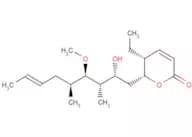
CAS:<p>Pironetin, from Streptomyces, inhibits microtubule polymerization and tumor growth, and causes cell cycle arrest.</p>Fórmula:C19H32O4Pureza:98%Forma y color:SolidPeso molecular:324.45ALB-109564 dihydrochloride
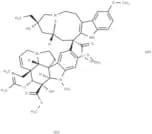
CAS:<p>ALB-109564 dihydrochloride: Semi-synthetic, vinblastine-derived, microtubule inhibitor, arrests tumor cells in G2/M phase.</p>Fórmula:C47H62Cl2N4O9SPureza:98%Forma y color:SolidPeso molecular:929.99para-amino-Blebbistatin
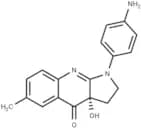
CAS:<p>para-amino-Blebbistatin is a water-soluble, stable, non-phototoxic inhibitor of non-muscle myosin II, with enhanced properties over blebbistatin.</p>Fórmula:C18H17N3O2Forma y color:SolidPeso molecular:307.353Tubulin polymerization-IN-53
<p>Tubulin polymerization-IN-53 (compound 4b) serves as an inhibitor of β-tubulin polymerization and is capable of arresting the cell cycle at the G2/M stage.</p>Forma y color:Odour Solid