Haluros orgánicos
En esta categoría, encontrará moléculas orgánicas que contienen uno o más átomos de halógeno en su estructura. Estos haluros orgánicos incluyen compuestos bromados, yodados, clorados y haluros cíclicos. Los haluros orgánicos se utilizan ampliamente en la síntesis orgánica, productos farmacéuticos, agroquímicos y ciencia de materiales debido a su reactividad y capacidad para someterse a diversas transformaciones químicas. En CymitQuimica, ofrecemos una selección integral de haluros orgánicos de alta calidad para apoyar sus aplicaciones de investigación e industriales, garantizando un rendimiento confiable y efectivo en sus proyectos sintéticos y analíticos.
Subcategorías de "Haluros orgánicos"
Se han encontrado 20437 productos de "Haluros orgánicos"
Ordenar por
Pureza (%)
0
100
|
0
|
50
|
90
|
95
|
100
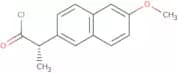
(S)-(+)-Naproxen chloride
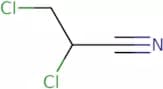
CAS:<p>COX1/2 inhibitor; nonsteroidal anti-inflammatory drug</p>Fórmula:C14H14Cl2O3Pureza:Min. 95%Peso molecular:301.16 g/mol2,3-Dichloropropionitrile
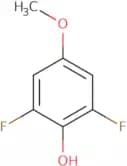
CAS:<p>2,3-Dichloropropionitrile is a synthetic chemical that is used for the chlorination of calcium carbonate. It is also used in the production of ester hydrochloride and acrylonitrile. The reaction vessel contains calcium carbonate and malonic acid, which are heated with hydrochloric acid. 2,3-Dichloropropionitrile is added to the reaction products to produce ester hydrochloride and acrylonitrile. The product can be isolated by adding hydrogen chloride to the reaction mixture.</p>Fórmula:C3H3Cl2NPureza:Min. 95%Peso molecular:123.97 g/mol2,6-Difluoro-4-methoxyphenol
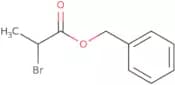
CAS:<p>Please enquire for more information about 2,6-Difluoro-4-methoxyphenol including the price, delivery time and more detailed product information at the technical inquiry form on this page</p>Fórmula:C7H6F2O2Pureza:Min. 95%Forma y color:PowderPeso molecular:160.12 g/mol2-Bromopropionic acid benzyl ester
CAS:<p>2-Bromopropionic acid benzyl ester is a synthetic compound with a molecular weight of 220.24 g/mol. It is soluble in organic solvents and has a hydroxyl group at its alpha position. 2-Bromopropionic acid benzyl ester is used in the synthesis of beta-cyclodextrin, which is an important biomaterial for drug delivery as well as other applications. 2-Bromopropionic acid benzyl ester also has antioxidant properties and can be used to treat leukemia cells by inhibiting the production of reactive oxygen species (ROS).</p>Fórmula:C10H11BrO2Pureza:Min. 95%Peso molecular:243.1 g/molMethyl 4- bromo- 5- methyl- 1H- imidazole- 2- carboxylate
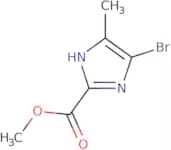
CAS:<p>Please enquire for more information about Methyl 4- bromo- 5- methyl- 1H- imidazole- 2- carboxylate including the price, delivery time and more detailed product information at the technical inquiry form on this page</p>Pureza:Min. 95%Indium (III) chloride
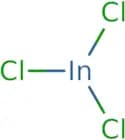
CAS:<p>Indium (III) chloride is a reactive metal with a high oxidation state that has been shown to have significant cytotoxic effects in vitro. It is also genotoxic, which may be due to the generation of hydroxyl radicals and other reactive oxygen species. Indium (III) chloride has been used for the treatment of various infectious diseases, including HIV, Epstein-Barr virus, herpes simplex virus type 1, and influenza A virus. The toxicity of this metal is dependent on the concentration and duration of exposure. Indium (III) chloride is metabolized by plasma mass spectrometry as a substrate molecule for cytochrome P450 enzymes. This reaction results in the formation of an active metabolite that can bind to DNA and affect mitochondrial membrane potential. Indium (III) chloride has also been used as a contrast agent in fluorescein angiography or particle imaging techniques to visualize the presence of biological materials such as tissue necrosis or inflammation.</p>Fórmula:Cl3InPureza:Min. 95%Forma y color:Clear LiquidPeso molecular:221.18 g/mol8-Fluoro-6-methoxy moxifloxacin
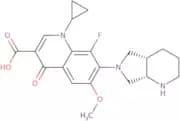
CAS:<p>Please enquire for more information about 8-Fluoro-6-methoxy moxifloxacin including the price, delivery time and more detailed product information at the technical inquiry form on this page</p>Fórmula:C21H24FN3O4Pureza:Min. 95%Peso molecular:401.43 g/molChloromethyl isopropyl carbonate
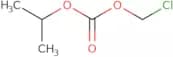
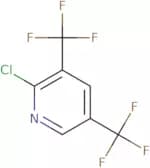
CAS:<p>Chloromethyl isopropyl carbonate (CIC) is a prodrug that is converted to disoproxil in the body. It has significant cytotoxicity and antiviral activity against HIV and other viruses, but has not been used clinically due to its chemical instability. CIC can be administered orally as a prodrug, with the active form of CIC being tenofovir disoproxil. Tenofovir disoproxil is metabolized by proximal tubules and has shown efficacy for treating hepatitis B and C. Tenofovir has also been shown to decrease the incidence of renal disease in HIV patients.</p>Fórmula:C5H9ClO3Pureza:Min. 95%Forma y color:Colorless PowderPeso molecular:152.58 g/mol2-Chloro-3,5-bis(trifluoromethyl)pyridine
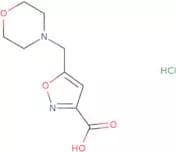
CAS:<p>Please enquire for more information about 2-Chloro-3,5-bis(trifluoromethyl)pyridine including the price, delivery time and more detailed product information at the technical inquiry form on this page</p>Fórmula:C7H2ClF6NPureza:Min. 95%Peso molecular:249.54 g/mol5-(Morpholin-4-ylmethyl)isoxazole-3-carboxylic acid hydrochloride
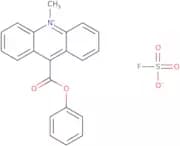
CAS:<p>Please enquire for more information about 5-(Morpholin-4-ylmethyl)isoxazole-3-carboxylic acid hydrochloride including the price, delivery time and more detailed product information at the technical inquiry form on this page</p>Fórmula:C9H12N2O4•HClPureza:Min. 95%Peso molecular:248.66 g/mol10-Methyl-9-(phenoxycarbonyl)acridinium fluorosulfonate
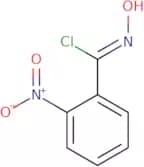
CAS:<p>Please enquire for more information about 10-Methyl-9-(phenoxycarbonyl)acridinium fluorosulfonate including the price, delivery time and more detailed product information at the technical inquiry form on this page</p>Fórmula:C21H16FNO5SPureza:Min. 95%Peso molecular:413.42 g/molα-Chloro-2-nitrobenzaldoxime
CAS:<p>The heterocycle alpha-chloro-2-nitrobenzaldoxime is a functional group that can be oriented in two different ways. The diversity of the product arises from the fact that it is possible to create new functional groups by substitution on the benzene ring and on the nitrogen. Heterocyclization of alpha-chloro-2-nitrobenzaldoxime can be achieved by using other heterocycles such as isoxazoles, which are readily available in large quantities, as building blocks. This reaction can be catalyzed by reductive means with sodium borohydride and methanol.</p>Fórmula:C7H5ClN2O3Pureza:Min. 95%Peso molecular:200.58 g/molAmylin (free acid) (human) trifluoroacetate salt
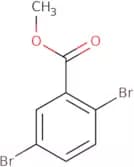
CAS:<p>Please enquire for more information about Amylin (free acid) (human) trifluoroacetate salt including the price, delivery time and more detailed product information at the technical inquiry form on this page</p>Fórmula:C165H260N50O56S2Pureza:Min. 95%Peso molecular:3,904.27 g/molMethyl 2,5-dibromobenzoate
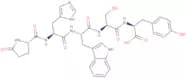
CAS:<p>Methyl 2,5-dibromobenzoate is a cross-coupling reagent that is used to stabilize proteins. It is a hydrophobic compound that binds to the surface of proteins and prevents denaturation. Methyl 2,5-dibromobenzoate has been shown to be an effective binder for protein stabilization in a model system, where it was found to increase the reaction rate of Suzuki coupling reactions. This reagent can be used as a substitute for fluoroaromatic solvents in cross-coupling reactions.</p>Fórmula:C8H6Br2O2Pureza:Min. 95%Forma y color:Off-White PowderPeso molecular:293.94 g/molLHRH (1-5) (free acid) trifluoroacetate salt
CAS:<p>LHRH (1-5) (free acid) trifluoroacetate salt is a synthetic hormone that is used in the treatment of prostate cancer. It inhibits the release of luteinizing hormone and follicle-stimulating hormone from the anterior pituitary gland, which suppresses testosterone production by the testes. LHRH (1-5) (free acid) trifluoroacetate salt is synthesized industrially using a liquid phase synthesis. The product may be recycled by returning it to the manufacturing process or using it as an additive for plastics or other industrial products. LHRH (1-5) (free acid) trifluoroacetate salt was shown to be active against tumor cells in culture and inhibited cell growth in culture. This drug has been shown to inhibit the production of nitric oxide, which may contribute to its anti-tumor activity. LHRH (1-5) (free acid)</p>Fórmula:C34H38N8O9Pureza:Min. 95%Forma y color:PowderPeso molecular:702.71 g/mol2,3,5-Trichlorobenzaldehyde
CAS:<p>2,3,5-Trichlorobenzaldehyde is a chemical compound that has been shown to have anticancer and apoptotic effects. It inhibits the growth of bacteria by chelating iron ions and inhibiting bacterial dna synthesis. 2,3,5-Trichlorobenzaldehyde has also been shown to inhibit the growth of cancer cells in culture in an experimental study. This chemical has been used as a substrate for nmr spectroscopy to study its functional groups and radical scavenging activities. 2,3,5-Trichlorobenzaldehyde can be synthesized from phenacyl chloride and benzaldehyde in the presence of hydrogen chloride gas. The carbonyl group in 2,3,5-trichlorobenzaldehyde may cause metabolic disorders such as diabetes mellitus or hyperglycemia.</p>Fórmula:C7H3Cl3OPureza:Min. 95%Forma y color:PowderPeso molecular:209.46 g/mol12-Fluorododecan-1-ol
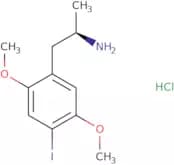
CAS:<p>12-Fluorododecan-1-ol is a volatile chemical compound that is found in the exoskeleton of termites. It has been shown to be a major component of the termiticide, FluoroCitrate. 12-fluorododecan-1-ol can be used to control the growth of insect populations by interfering with their ability to synthesize fatty acids and alcohols. It also has an effect on protein synthesis and inhibits the activity of citrate synthase, which is an enzyme involved in glycolate metabolism. This compound is also toxic to some species of insects such as Rhinotermitidae. 12-fluorododecan-1-ol can be used as a marker for Reticulitermes flavipes (a type of wood eating cockroach) and it can be used to distinguish between different species or strains of termites.</p>Fórmula:C12H25FOPureza:Min. 95%Forma y color:Clear LiquidPeso molecular:204.32 g/mol(R)(−)-DOI hydrochloride
CAS:Producto controlado<p>(R)(−)-DOI hydrochloride is a synthetic compound classified as a selective serotonin receptor agonist. It is primarily sourced from chemical synthesis processes designed to explore potential interactions within serotonergic pathways. The compound’s mode of action involves the activation of 5-HT2A, 5-HT2B, and 5-HT2C serotonin receptors, which play crucial roles in modulating neurotransmission and signaling pathways within the central nervous system.In research and experimental contexts, (R)(−)-DOI hydrochloride is utilized to investigate the molecular mechanisms of serotonin receptors, contributing to a deeper understanding of their role in neurophysiology and potential implications in neuropsychiatric disorders. Studies often explore its effects on cognition, perception, and mood regulation. Despite its promising role in scientific exploration, (R)(−)-DOI hydrochloride is not intended for therapeutic use and remains predominantly a tool for advancing the field of neuropharmacology through controlled experimental settings.</p>Fórmula:C11H17ClINO2Pureza:Min. 95%Peso molecular:357.62 g/mol4-Fluorophenyl isocyanate
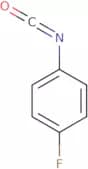
CAS:<p>4-Fluorophenyl isocyanate is a hydroxylated derivative of phenyl isocyanate. It has been shown to have anticancer activity, with an IC50 value of about 50 μM. 4-Fluorophenyl isocyanate can be synthesized by reacting 3-bromopropylamine hydrobromide with hydrogen fluoride in the presence of a carbodiimide. The reaction can be optimized by adding epoxides or carbodiimides, and the best conditions are found to be at pH 10 and room temperature. 4-Fluorophenyl isocyanate binds to the MT2 receptor which leads to activation of G proteins, resulting in increased intracellular cAMP levels.</p>Fórmula:C7H4FNOPureza:Min. 95%Peso molecular:137.11 g/molN-Fmoc-4-bromo-L-tryptophan
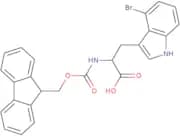
CAS:<p>Please enquire for more information about N-Fmoc-4-bromo-L-tryptophan including the price, delivery time and more detailed product information at the technical inquiry form on this page</p>Fórmula:C26H21BrN2O4Pureza:Min. 95%Forma y color:PowderPeso molecular:505.36 g/mol