Haluros orgánicos
En esta categoría, encontrará moléculas orgánicas que contienen uno o más átomos de halógeno en su estructura. Estos haluros orgánicos incluyen compuestos bromados, yodados, clorados y haluros cíclicos. Los haluros orgánicos se utilizan ampliamente en la síntesis orgánica, productos farmacéuticos, agroquímicos y ciencia de materiales debido a su reactividad y capacidad para someterse a diversas transformaciones químicas. En CymitQuimica, ofrecemos una selección integral de haluros orgánicos de alta calidad para apoyar sus aplicaciones de investigación e industriales, garantizando un rendimiento confiable y efectivo en sus proyectos sintéticos y analíticos.
Subcategorías de "Haluros orgánicos"
Se han encontrado 20437 productos de "Haluros orgánicos"
Ordenar por
Pureza (%)
0
100
|
0
|
50
|
90
|
95
|
100
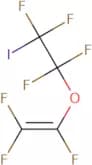
Trifluoro(1,1,2,2-Tetrafluoro-2-Iodoethoxy)Ethylene
CAS:<p>Please enquire for more information about Trifluoro(1,1,2,2-Tetrafluoro-2-Iodoethoxy)Ethylene including the price, delivery time and more detailed product information at the technical inquiry form on this page</p>Fórmula:C4F7IOPureza:Min. 95%Peso molecular:323.94 g/molBis(pentafluorophenyl)zinc
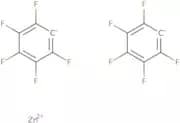
CAS:<p>Bis(pentafluorophenyl)zinc (BPFPZn) is a ring-opening polymerization catalyst that is used to synthesize polymers with pendant covalent adducts. BPFPZn has shown synergistic effects when used in combination with lactide, which is a monomer that can be polymerized to form polylactic acid. The reaction system used for the synthesis of BPFPZn and lactide involves nucleophilic attack on the zinc cation by the carbonyl group of lactide, leading to reductive elimination and coordination chemistry. This reaction system has been shown to produce architectures such as block copolymers and star polymers.</p>Fórmula:C12F10ZnPureza:Min. 95%Forma y color:PowderPeso molecular:399.49 g/molPyr-Pro-Arg-pNA hydrochloride salt
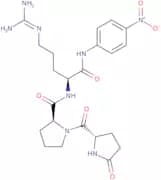
CAS:<p>Pyr-Pro-Arg-pNA hydrochloride salt is a chromogenic substrate that is used to detect microorganisms in the blood. This substrate is activated by the enzyme ochraceous, which catalyzes the hydrolysis of pyr-pro-arg-pNA. The reaction produces hydrogen peroxide and an orange color. Pyr-Pro-Arg-pNA hydrochloride salt can be used as an anticoagulant for blood plasma samples. It can also be used to identify Aspergillus ochraceus, a fungus that causes pulmonary infections in humans. Aspergillus ochraceus has been shown to produce this enzyme and to have a high affinity for this substrate.</p>Fórmula:C22H30N8O6·HClPureza:Min. 95%Peso molecular:538.98 g/mol3-[5-(4-Fluorophenyl)-5-hydroxy-1-oxopentyl]-4-phenyl-2-oxazolidinone
CAS:<p>Please enquire for more information about 3-[5-(4-Fluorophenyl)-5-hydroxy-1-oxopentyl]-4-phenyl-2-oxazolidinone including the price, delivery time and more detailed product information at the technical inquiry form on this page</p>Fórmula:C20H20FNO4Pureza:Min. 95%Peso molecular:357.38 g/mol2,6-Dimethyl-4-phenylpyronium tetrafluoroborate
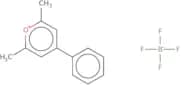
CAS:<p>2,6-Dimethyl-4-phenylpyronium tetrafluoroborate is a high quality reagent that is useful for the preparation of complex compounds. It is also a useful intermediate and building block. The CAS No. 97606-13-8, 2,6-Dimethyl-4-phenylpyronium tetrafluoroborate has been used in research chemicals and as a versatile building block for the synthesis of speciality chemicals. This reagent can be used in reactions to form many organic molecules that are not commercially available or difficult to synthesize.</p>Fórmula:C13H13O·BF4Pureza:Min. 95%Forma y color:PowderPeso molecular:272.05 g/molGly-arg-4-methoxy-β-naphthylamide dihydrochloride
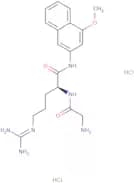
CAS:<p>Please enquire for more information about Gly-arg-4-methoxy-beta-naphthylamide dihydrochloride including the price, delivery time and more detailed product information at the technical inquiry form on this page</p>Fórmula:C19H26N6O3·2ClHPureza:Min. 95%Peso molecular:459.37 g/mol10-Fluorodecan-1-Ol
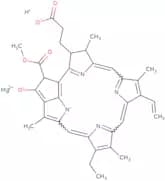
CAS:<p>Please enquire for more information about 10-Fluorodecan-1-Ol including the price, delivery time and more detailed product information at the technical inquiry form on this page</p>Fórmula:C10H21FOPureza:Min. 95%Peso molecular:176.27 g/molChlorophyllide A
CAS:<p>Chlorophyllide A is a chlorophyll molecule that has been synthesized by the enzymatic conversion of an existing chlorophyll molecule. It can be used as a model system for studying the physiological function of chlorophyll and its role in photosynthesis. The synthesis of Chlorophyllide A has been shown to be biocompatible with cells and tissues, making it an excellent candidate for drug delivery systems. The synthesis of this molecule is achieved through a reaction mechanism involving glutamate dehydrogenase, which adds a hydroxyl group to the cysteine residue on the chlorophyll molecule. This reaction takes place in low light conditions, which prevents photodegradation of this molecule. Chlorophyllide A also has a pH optimum at around pH 7-8 and does not react with proteins or nucleic acids.</p>Fórmula:C35H34MgN4O5Pureza:90%MinForma y color:PowderPeso molecular:614.97 g/molTriethyloxonium tetrafluoroborate
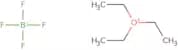
CAS:<p>Triethyloxonium tetrafluoroborate is an antimicrobial agent that inhibits the transfer of electrons from one molecule to another. It has been shown to be effective against methicillin-resistant Staphylococcus aureus and Mycobacterium tuberculosis. Triethyloxonium tetrafluoroborate binds to the bacterial enzyme, Jak1, which is involved in the formation of cytokines and interleukins. This binding inhibits the production of these molecules, leading to cell death by apoptosis. The use of triethyloxonium tetrafluoroborate as a research tool has facilitated its discovery as a potential anti-inflammatory drug for autoimmune diseases such as type 1 diabetes mellitus and rheumatoid arthritis. Triethyloxonium tetrafluoroborate can be used to inhibit amide synthesis, which may have applications in the study of carbohydrate chemistry and nitrogen atoms in biological systems. This compound has also been used</p>Fórmula:C6H15BF4OPureza:Min. 95%Forma y color:PowderPeso molecular:189.99 g/mol3-(2-Fluoroethoxy)Propanenitrile
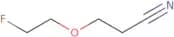
CAS:<p>3-(2-Fluoroethoxy)Propanenitrile is a chemical with toxic properties. It is classified as a fluoroacetic acid and has been used in the production of other chemicals. Fluoroacetic acid is toxic to humans, showing signs of skin irritation, respiratory tract irritation, and kidney damage. 3-(2-Fluoroethoxy)Propanenitrile is not found naturally and has been sponsored by many companies.</p>Fórmula:C5H8FNOPureza:Min. 95%Peso molecular:117.12 g/mol8-Fluoro-Quinazoline-2,4-Diamine
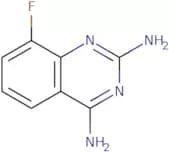
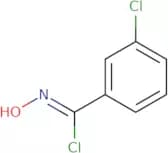
CAS:<p>8-Fluoro-Quinazoline-2,4-Diamine is an organic compound with the formula CHClN. It is a yellow solid that is soluble in organic solvents such as chloroform and toluene. The compound is used to produce dyes and pharmaceuticals. 8-Fluoro-Quinazoline-2,4-Diamine can be obtained by nitrating 2,4-diaminoquinazoline with nitric acid and hydrochloric acid in the presence of carbonate or stannous chloride. This reaction produces two isomers: 8-fluoroquinazoline (8FQ) and 6-fluoroquinazoline (6FQ). The 8FQ isomer has been shown to have a nuclear magnetic resonance spectrum at 300 MHz that contains four signals at 1.3 ppm, 3.5 ppm, 5.6 ppm, and 7.0 ppm, which are assigned to</p>Fórmula:C8H7FN4Pureza:Min. 95%Peso molecular:178.17 g/molα,3-Dichlorobenzaldoxime
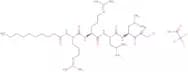
CAS:<p>Please enquire for more information about alpha,3-Dichlorobenzaldoxime including the price, delivery time and more detailed product information at the technical inquiry form on this page</p>Fórmula:C7H5Cl2NOPureza:Min. 95%Peso molecular:190.03 g/molDecanoyl-Arg-Arg-Leu-Leu-chloromethylketone trifluoroacetate salt
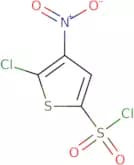
CAS:<p>Decanoyl-arginine-arginine-leucine-chloromethylketone trifluoroacetate salt is a prohormone that is biosynthesized from the amino acid decanoic acid. It has been shown to inhibit fatty acid synthesis and mineralization in tissue samples, as well as drug target enzymes such as human pathogens. Decanoyl-arginine-arginine-leucine-chloromethylketone trifluoroacetate salt has also been shown to have insulin resistance properties and may be used for the treatment of metabolic disorders.</p>Fórmula:C35H67ClN10O5Pureza:Min. 95%Peso molecular:743.42 g/mol5-Chloro-4-nitrothiophene-2-sulfonylchloride
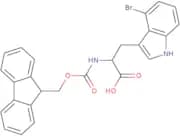
CAS:<p>Please enquire for more information about 5-Chloro-4-nitrothiophene-2-sulfonylchloride including the price, delivery time and more detailed product information at the technical inquiry form on this page</p>Fórmula:C4HCl2NO4S2Pureza:Min. 95%Peso molecular:262.09 g/molN-Fmoc-4-bromo-L-tryptophan
CAS:<p>Please enquire for more information about N-Fmoc-4-bromo-L-tryptophan including the price, delivery time and more detailed product information at the technical inquiry form on this page</p>Fórmula:C26H21BrN2O4Pureza:Min. 95%Forma y color:PowderPeso molecular:505.36 g/mol2-[(Ethylamino)methyl]-4-aminophenol dihydrochloride
CAS:<p>Please enquire for more information about 2-[(Ethylamino)methyl]-4-aminophenol dihydrochloride including the price, delivery time and more detailed product information at the technical inquiry form on this page</p>Fórmula:C9H14N2O•(HCl)2Pureza:Min. 95%Forma y color:PowderPeso molecular:239.14 g/mol7-[(2S,3R)-3-Amino-2-methyl-azetidin-1-yl]-1-(2,4-difluorophenyl)-6-fluoro-4-oxo-quinoline-3-carboxylic acid
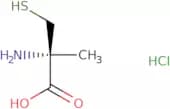
CAS:<p>7-[(2S,3R)-3-Amino-2-methyl-azetidin-1-yl]-1-(2,4-difluorophenyl)-6-fluoro-4-oxo-quinoline-3-carboxylic acid (ABT) is a drug that binds to bacterial enzymes and inhibits their ability to synthesize proteins. ABT is a conjugate of fluoroquinolone and an amino acid. As the drug is degradable by hydrolysis, it has been shown to be less toxic in Sprague Dawley rats than other fluoroquinolones. This drug has been used in diagnostic tests as a ligand for affinity ligands, but has not been approved for human use. The drug also possesses functional groups that are important for binding to reconstituted enzymes.br>br>ABT's ester linkages are degradable by hydrolysis and can be</p>Fórmula:C20H16F3N3O3Pureza:Min. 95%Peso molecular:403.35 g/mol2-Methyl-L-cysteine hydrochloride
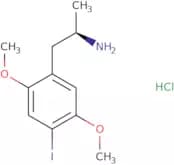
CAS:<p>2-Methyl-L-cysteine hydrochloride is a synthetic molecule that is used as an organic solvent. It can be produced from the reaction of an inorganic base with an ester hydrochloride and has been shown to have stereoselective properties. The spontaneous formation of this molecule was enhanced by the addition of hydrochloric acid, which increased the reaction yield. 2-Methyl-L-cysteine hydrochloride has been shown to react spontaneously with inorganic materials, such as titanium dioxide, which causes a color change from white to yellow.</p>Fórmula:C4H9NO2S·HClPureza:Min. 95%Forma y color:White PowderPeso molecular:171.65 g/mol(R)(−)-DOI hydrochloride
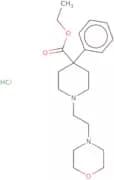
CAS:Producto controlado<p>(R)(−)-DOI hydrochloride is a synthetic compound classified as a selective serotonin receptor agonist. It is primarily sourced from chemical synthesis processes designed to explore potential interactions within serotonergic pathways. The compound’s mode of action involves the activation of 5-HT2A, 5-HT2B, and 5-HT2C serotonin receptors, which play crucial roles in modulating neurotransmission and signaling pathways within the central nervous system.In research and experimental contexts, (R)(−)-DOI hydrochloride is utilized to investigate the molecular mechanisms of serotonin receptors, contributing to a deeper understanding of their role in neurophysiology and potential implications in neuropsychiatric disorders. Studies often explore its effects on cognition, perception, and mood regulation. Despite its promising role in scientific exploration, (R)(−)-DOI hydrochloride is not intended for therapeutic use and remains predominantly a tool for advancing the field of neuropharmacology through controlled experimental settings.</p>Fórmula:C11H17ClINO2Pureza:Min. 95%Peso molecular:357.62 g/molMorpheridine dihydrochloride
CAS:Producto controlado<p>Please enquire for more information about Morpheridine dihydrochloride including the price, delivery time and more detailed product information at the technical inquiry form on this page</p>Fórmula:C20H32Cl2N2O3Pureza:Min. 95%Peso molecular:419.39 g/mol

![3-[5-(4-Fluorophenyl)-5-hydroxy-1-oxopentyl]-4-phenyl-2-oxazolidinone](/_next/image/?url=https%3A%2Fstatic.cymitquimica.com%2Fproducts%2F3D%2Fthumb-webp%2FFF23467.webp&w=3840&q=75)

![2-[(Ethylamino)methyl]-4-aminophenol dihydrochloride](/_next/image/?url=https%3A%2Fstatic.cymitquimica.com%2Fproducts%2F3D%2Fthumb-webp%2FFE23131.webp&w=3840&q=75)
![7-[(2S,3R)-3-Amino-2-methyl-azetidin-1-yl]-1-(2,4-difluorophenyl)-6-fluoro-4-oxo-quinoline-3-carbo…](/_next/image/?url=https%3A%2Fstatic.cymitquimica.com%2Fproducts%2F3D%2Fthumb-webp%2FFA30404.webp&w=3840&q=75)