Haluros orgánicos
Subcategorías de "Haluros orgánicos"
Se han encontrado 20442 productos de "Haluros orgánicos"
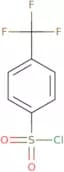
4-Trifluoromethylbenzene sulfonyl chloride
CAS:4-Trifluoromethylbenzene sulfonyl chloride (TFB) is a functional group that is used as a ligand in some chemical reactions. TFB has been shown to be fluorescent, and can be used as a cancer cell marker. It also inhibits the growth of cancer cells by binding to their surface and inhibiting protein synthesis. 4-Trifluoromethylbenzene sulfonyl chloride can be synthesized by reacting ethylene with salicylic acid, followed by the reaction of the resulting ester with chloroform. This process yields TFB and chloride ions, which are then neutralized with sodium hydroxide to yield TFB sulfonate salt.Fórmula:C7H4ClF3O2SPureza:Min. 95%Forma y color:Colourless Or White To Light (Or Pale) Yellow To Brown SolidPeso molecular:244.62 g/molNoscapine hydrochloride hydrate
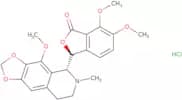
CAS:Noscapine is a drug used to treat bowel disease and as an antitussive. It is classified as a narcotic, but has no addictive properties. Noscapine inhibits the activity of nuclear dna polymerase, which prevents transcription of DNA into RNA. Its rate constant for hydrogen bonding interactions with DNA is 6 orders of magnitude slower than that of other drugs that inhibit this enzyme. Noscapine also inhibits the activity of protein kinases, which are enzymes that transfer a phosphate group from ATP to other proteins. Noscapine has been shown to bind to folate receptors on cells in culture, leading to an increase in chemiluminescence. This drug has also been shown to have anti-cancer effects on some cell lines in vitro by inhibiting the Bcl-2 protein.Fórmula:C22H24ClNO7·xH2OPureza:Min. 98 Area-%Forma y color:White Off-White PowderPeso molecular:449.88 g/molRac 1,2-bis-palmitoyl-3-chloropropanediol
CAS:Rac-1,2-bis-palmitoyl-3-chloropropanediol is a dispersive molecule that is composed of a fatty acid and a chlorinated derivative of palmitic acid. It is used to calibrate the mass spectrometer and as an internal standard in quantitative analysis. Rac-1,2-bis-palmitoyl-3-chloropropanediol reacts with electrospray ionization with a dose-dependent response. It has been shown to be toxic to kidney cells at high doses but not at low doses. This chemical has been detected in food samples after being absorbed from the gastrointestinal tract. Rac 1,2-bis-palmitoyl 3 chloropropanediol can be found in the dipalmitate form or as formic acid.
Fórmula:C35H67ClO4Pureza:95%NmrForma y color:PowderPeso molecular:587.36 g/molDibromoisocyanuric acid
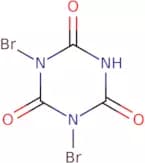
CAS:Dibromoisocyanuric Acid is an intermediate in the metabolism of fatty acids. It has been shown to inhibit fatty acid synthesis by inhibiting the transfer reactions of fatty acids from their acyl coenzyme A ester to carnitine, which is necessary for transport across the mitochondrial membrane. Dibromoisocyanuric Acid also inhibits monoclonal antibody production by monocytes and macrophages. Dibromoisocyanuric Acid may be used as a tumor suppressor in mice with tumors because it reduces gamma-aminobutyric acid levels, leading to increased locomotor activity and decreased body mass index.Fórmula:C3HBr2N3O3Pureza:Min. 95%Forma y color:PowderPeso molecular:286.87 g/mol10-Chloro-9-anthraldehyde
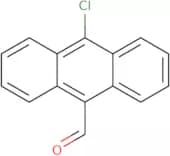
CAS:10-Chloro-9-anthraldehyde is an antibacterial agent that exhibits activity against a wide variety of bacteria. It is the product of the photomodification of anthracene, which is activated by ultraviolet light to produce 10-chloro-9-anthraldehyde. The preliminary functional studies of this compound indicate that it may be used in coatings for polymers and textiles as well as in innovative applications such as fluorescence labeling and immunoassays. 10-Chloro-9-anthraldehyde also has a protonation site at the 9 position, making it useful for conjugation with biomolecules.
Fórmula:C15H9ClOPureza:Min. 95%Peso molecular:240.68 g/molChlorodimethyl(3,3,4,4,5,5,6,6,7,7,8,8,8-Tridecafluorooctyl)-Silane
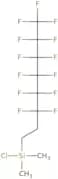
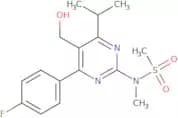
CAS:Chlorodimethyl(3,3,4,4,5,5,6,6,7,7,8,8,8-Tridecafluorooctyl)-Silane is an organic solvent that can be used as a component in the synthesis of synaptic membranes. It has been shown to inhibit spontaneous activity in rat brain slices and exhibits high hydrophobicity. Chlorodimethyl(3,3,4,4,5,5,6,6) - Silane has been used for the patch-clamp technique on human erythrocytes and the immunostaining of proteins. This compound is also useful for the optimization of organic reactions and asymmetric synthesis.Fórmula:C10H10ClF13SiPureza:Min. 95%Peso molecular:440.7 g/molN-(4-(4-Fluorophenyl)-5-(hydroxymethyl)-6-isopropylpyrimidin-2-yl)-Nmethylmethanesulfonamide
CAS:Please enquire for more information about N-(4-(4-Fluorophenyl)-5-(hydroxymethyl)-6-isopropylpyrimidin-2-yl)-Nmethylmethanesulfonamide including the price, delivery time and more detailed product information at the technical inquiry form on this pageFórmula:C16H20FN3O3SPureza:Min. 95%Peso molecular:353.41 g/mol6-Fluoro-3-oxo-3,4-dihydro-2-pyrazinecarbonitrile
CAS:Dibenzylamine is a tertiary amine with the chemical formula C6H12N2. Dibenzylamine is a colorless liquid that boils at 110°C and freezes at -50°C. It has a density of 0.859 g/mL and a refractive index of 1.539. When heated, it decomposes to form dipropylamine, dibutylamine, and dicyclohexylamine. It also reacts with nitric acid to form an explosive compound called nitrobenzene or dinitrobenzene. Dipropylamine is a colorless volatile liquid that has the chemical formula C6H12N2 and boils at 130°C. When heated, it decomposes to form dibutylamine and dicyclohexylamine. Dibutylamine is a colorless volatile liquid that has the chemical formula C6Fórmula:C5H2FN3OPureza:Min. 95%Peso molecular:139.09 g/molChloromethylated polystyrene - 0.8-1.5meq/g, 100-200Mesh
CAS:Chloromethylated polystyrene is a polymer that contains a hydroxyl group and a disulfide bond. It can be used to synthesize an asymmetric synthesis of the borane-tetrahydrofuran complex, which is an important reagent in organic synthesis. In this reaction, trifluoroacetic acid reacts with hydrogen fluoride to produce chloromethylated polystyrene. This product has been shown to be effective in preventing cancerous tissue growth and inhibiting infectious diseases by binding to nucleophilic sites on the cell surface.Pureza:Min. 95%[2-(1-Isopropyl-1H-benzimidazol-2-yl)ethyl]amine dihydrochloride
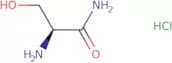
CAS:Producto controladoPlease enquire for more information about [2-(1-Isopropyl-1H-benzimidazol-2-yl)ethyl]amine dihydrochloride including the price, delivery time and more detailed product information at the technical inquiry form on this pageFórmula:C12H17N3Pureza:Min. 95%Peso molecular:203.28 g/molL-Serine amide hydrochloride
CAS:L-Serine amide hydrochloride is a synthetic, anti-HIV drug that is used as an antiviral agent. It inhibits the viral life cycle by inhibiting the activity of acyclic nucleoside phosphonates, which are vital to viral DNA synthesis. L-Serine amide hydrochloride binds to the cyclopentane ring of guanosine and prevents its interaction with the enzyme ribonucleotide reductase. This binding prevents the conversion of guanosine into GTP, thereby preventing HIV from using this molecule in their life cycle. L-Serine amide hydrochloride is not active against cellular proteins or prostaglandins.
Fórmula:C3H8N2O2·HClPureza:Min. 95%Peso molecular:140.57 g/mol1-Chloro-2-(chloromethoxy)ethane
CAS:1-Chloro-2-(chloromethoxy)ethane is an acyclic nucleoside phosphonate that is used as a HIV integrase inhibitor. It binds to the HIV RNA genome and prevents the integration of viral DNA into the host cell's genome, which blocks the replication of HIV. 1-Chloro-2-(chloromethoxy)ethane has been shown to be more potent than other acyclic nucleoside phosphonates in vitro and in vivo. This drug also inhibits herpes simplex virus type 1 (HSV1) thymidine kinase activity, which is essential for viral DNA synthesis. This drug has potential antitumor activities against certain tumor cells due to its ability to inhibit cell proliferation and induce apoptosis through inhibiting rna synthesis.Fórmula:C3H6Cl2OPureza:Min. 95%Forma y color:Clear LiquidPeso molecular:128.98 g/molTifluadom hydrochloride
CAS:Producto controladoTifluadom hydrochloride is an analogue of the drug adomol. It is a conformationally restricted derivative of 2-methyl-5,6-dihydro-2H-1,3,4-thiadiazin-4(5H)-one 1,1-dioxide that acts as a competitive inhibitor of acetylcholine esterase (AChE). The seven membered ring in this molecule has two conformations: one with the ketone on the left side and one with the methyl ketone on the left side. In its keto form, tifluadom hydrochloride is more potent than adomol because it binds to AChE more tightly. Tifluadom hydrochloride is also more soluble and less toxic than adomol.Fórmula:C22H21ClFN3OSPureza:Min. 95%Peso molecular:429.94 g/mol1,2-Dichloro-3-iodobenzene
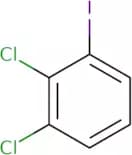
CAS:Iodobenzene is a chemical compound that is composed of two benzene rings joined by a single bond. Iodobenzene isomers are also called iodosobenzenes and they contain one or more chlorine atoms. Iodobenzene has been shown to have anti-inflammatory properties, which may be due to its inhibition of prostaglandin synthesis. Iodobenzene inhibits the enzyme phospholipase A2, which is involved in the production of prostaglandins. Iodobenzene binds to enzymes by forming a covalent bond with an electron-rich atom such as oxygen, nitrogen or sulfur in the active site of the enzyme. This type of inhibition is called non-nucleoside inhibition because it does not require an intermediate molecule such as ATP or NADH for binding to the enzyme. Carbonyl groups on iodobenzene molecules form strong bonds with nucleophilic groups on enzymes, leading to enzyme inhibition and
Fórmula:C6H3Cl2IPureza:Min. 95%Peso molecular:272.9 g/mol1-Bromo-3-ethylbenzene
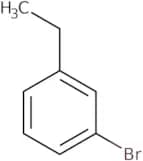
CAS:1-Bromo-3-ethylbenzene (1BEB) is a trifluoroacetic acid that is used as a reagent in the analysis of urine samples. It reacts with glutathione to form a fluorescent product, which can be detected by fluorescence spectroscopy. 1BEB reacts with methyl groups in the sample to produce an intermediate compound that can be measured by liquid chromatography-mass spectrometry (LC/MS). The reaction time for this process depends on the temperature and other conditions such as pH. LC/MS has been shown to be more accurate than kinetic measurements for the determination of 1BEB concentrations in urine because it takes into account the chemical reactions that take place during the analysis. In addition, methylbenzenes are also formed during this process, which can be analysed using gas chromatography-mass spectrometry (GC/MS). GC/MS has been shown to be more accurate than LC/MS methods for evaluating
Fórmula:C8H9BrPureza:Min. 95%Peso molecular:185.06 g/molNeotetrazolium Chloride
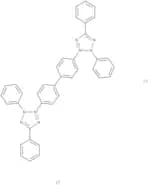
CAS:Neotetrazolium chloride is a tetrazolium dye that is used to detect the presence of living cells in a sample. It has an optimum concentration of 0.2% and significant cytotoxicity at concentrations greater than 1%. Neotetrazolium chloride binds to intracellular targets such as enzymes and nucleic acids, which can be detected by biochemical methods such as polymerase chain reaction (PCR). Neotetrazolium chloride can also bind to cell nuclei, making it useful for determining the number of viable cells in a sample. The bound form of neotetrazolium chloride is soluble in water and its detection limit is 10 fg/mL.Fórmula:C38H28N8·2ClPureza:Min. 95%Peso molecular:667.59 g/molNonadecafluorodecanoic acid
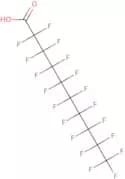
CAS:Nonadecafluorodecanoic acid (NDFA) is a fatty acid that has been shown to be an effective solvent for wastewater treatment. This product has been found to have a matrix effect on mouse tumor cells, as well as enzyme activities in vitro. NDFA has also been shown to have acute toxicities in mice and genotoxic activity in vitro. NDFA is not carcinogenic and does not react with DNA, but does cause mutagenic effects such as single-stranded breaks, double-stranded breaks, or cross-linkages between DNA strands. The molecular weight of NDFA is 216 g/mol and the melting point is -52°C. It can be detected by electrochemical detector at concentrations of 0.1 ppm and by optical sensor at concentrations of 1 ppm. The analytical method used for NDFA quantification is gas chromatography/mass spectrometry (GC/MS).
Fórmula:C10HF19O2Pureza:Min. 95%Forma y color:PowderPeso molecular:514.08 g/mol5-Chloropentanol
CAS:5-Chloropentanol is a reactive compound that can be used as an epidermal growth factor. It has been shown to have potentiating effects on the production of epidermal growth factor in a biological sample. 5-Chloropentanol has also been shown to increase the rate of cell proliferation, which could be due to its ability to generate reactive chloroform in cells. It is not known whether 5-Chloropentanol has any carcinogenic properties.Pureza:Min. 95%Bis(trimethylsilyl)bromomethane
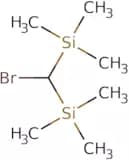
CAS:Bis(trimethylsilyl)bromomethane is an alkali metal compound that is a multinuclear, crystalline solid. It has an x-ray diffraction pattern with peaks at 30, 39, and 44 degrees. The elemental analysis of the compound shows it to be composed of carbon and hydrogen. Bis(trimethylsilyl)bromomethane is a tetrahydrofuran derivative that can be alkylated or silylated with metal compounds. This compound has been shown to have coordination properties when combined with potassium. The molecular structure of bis(trimethylsilyl)bromomethane is composed of two trimethylsiloxy groups linked together by one bromine atom.
Fórmula:C7H19BrSi2Pureza:Min. 95%Forma y color:Clear LiquidPeso molecular:239.3 g/mol2-Chloro-6-cyanopyrazine
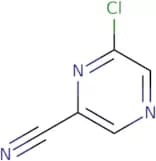
CAS:2-Chloro-6-cyanopyrazine is a compound that has been shown to have antimycobacterial activity against Mycobacterium avium. It may also have tuberculostatic activity and be useful for the treatment of tuberculosis. 2-Chloro-6-cyanopyrazine inhibits bacterial growth by binding to DNA, RNA, and protein synthesis in mycobacteria. The antibacterial effect is due to its ability to inhibit amidation and alkylation reactions, as well as its nucleophilic properties. 2-Chloro-6-cyanopyrazine is an acidic compound with a pKa of 3.2, which makes it more soluble in water than hydrophobic compounds such as alkanoic acids.Fórmula:C5H2ClN3Pureza:Min. 95%Peso molecular:139.54 g/mol




![[2-(1-Isopropyl-1H-benzimidazol-2-yl)ethyl]amine dihydrochloride](/_next/image/?url=https%3A%2Fstatic.cymitquimica.com%2Fproducts%2F3D%2Fthumb-webp%2FFI126434.webp&w=3840&q=75)