


Haluros orgánicos
Subcategorías de "Haluros orgánicos"
Se han encontrado 20442 productos de "Haluros orgánicos"
1-(4-Bromobenzyl)piperazine
CAS:Producto controlado1-(4-Bromobenzyl)piperazine is a chemical compound that is an amine and an aromatic heterocycle. It has been shown to inhibit the growth of murine melanoma cells in culture, with a preferential effect on malignant cells. 1-(4-Bromobenzyl)piperazine binds to melanin, which may be due to its ability to cross the blood-brain barrier and accumulate in the brain. This compound also has diffraction properties and can be used as a high-energy radiation source for electron microscopy. 1-(4-Bromobenzyl)piperazine is used in the synthesis of benzylpiperazine, an aromatic amine that is used as a chemical intermediate in organic chemistry.Fórmula:C11H15BrN2Pureza:Min. 95%Peso molecular:255.15 g/molN,N,N-Trimethyl-1-decanaminium bromide
CAS:N,N,N-Trimethyl-1-decanaminium bromide is a quaternary ammonium salt with the chemical formula CH3(CH2)5COOB. It is an ionic surfactant that is used as an emulsifier for water and oil based systems. N,N,N-Trimethyl-1-decanaminium bromide has been shown to be able to stabilize the surface tension in aqueous solutions and can be used in biomedical research. This compound also has the ability to bind proteins and other organic molecules. N,N,N-Trimethyl-1-decanaminium bromide may be used as a fluorescent probe for detecting hydrophobic effects in biological systems.Fórmula:C13H30NBrPureza:Min. 95%Peso molecular:280.29 g/mol5-Iodo-2-aminoindane
CAS:Producto controlado5-Iodo-2-aminoindane is a chemical pesticide that belongs to the group of diallyl trisulfide. It is used for the control of fruit pests such as Drosophila, Ceratitis capitata, and Rhagoletis pomonella. 5-Iodo-2-aminoindane has been shown to inhibit the growth of these pests through in vitro assay. The synthetic cannabinoid activity of 5-iodo-2-aminoindane may be due to its ability to inhibit fatty acid uptake by binding to the fatty acid transporter protein at the cell membrane.Fórmula:C9H10INPureza:Min. 95%Peso molecular:259.09 g/molHeptadecafluorooctanesulfonic acid potassium
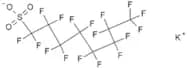
CAS:Please enquire for more information about Heptadecafluorooctanesulfonic acid potassium including the price, delivery time and more detailed product information at the technical inquiry form on this page
Fórmula:C8HF17O3S•KPureza:Min. 95%Forma y color:PowderPeso molecular:539.23 g/mol16a-Bromodehydro epiandrosterone
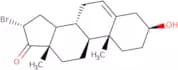
CAS:Producto controladoPlease enquire for more information about 16a-Bromodehydro epiandrosterone including the price, delivery time and more detailed product information at the technical inquiry form on this pageFórmula:C19H27BrO2Pureza:Min. 95%Peso molecular:367.32 g/molTetradecafluoromethylcyclohexane
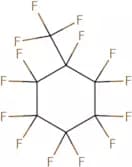
CAS:Producto controladoTetradecafluoromethylcyclohexane is a chemical compound with the chemical formula CF4CH2. It is a colorless gas that has a high octane number. It has been used as a refrigerant and in metal carbonyl synthesis, among other applications. Tetradecafluoromethylcyclohexane has been used for the removal of hydrogen fluoride from metal-containing wastewater, but it is not effective in removing other halides because it does not react with them. This compound can also be used as an analytical method for detecting metals, such as mercury and arsenic. The detection sensitivity of this method is about 0.01 ppb. Tetradecafluoromethylcyclohexane reacts with oxygen at room temperature to form tetradecaoxafulvene (C8F16O). Solid phase microextraction (SPME) is an analytical chemistry technique that uses porous polymer fibersFórmula:C7F14Pureza:Min. 95%Peso molecular:350.05 g/mol8-Chlorotheophylline
CAS:Producto controlado8-Chlorotheophylline is a chemical compound used in pharmaceutical preparations as an antispasmodic and bronchodilator. It is a derivative of theophylline and has been shown to bind to receptors in the brain, lungs, heart, and smooth muscles. 8-Chlorotheophylline has been shown to have broad-spectrum antimicrobial activity against both Gram-positive and Gram-negative bacteria. The compound is water soluble at physiological pH levels and does not require a buffer for stability. This agent can be prepared by using a sample preparation procedure that includes adding sodium carbonate followed by caffeine to extract the sample from a biological matrix such as tissue or blood. 8-Chlorotheophylline can be analyzed by chromatography with UV detection (254 nm) or fluorescence detection (365 nm).Fórmula:C7H7ClN4O2Pureza:Min. 95%Forma y color:White PowderPeso molecular:214.61 g/mol2,1,3-Benzoxadiazole-4-sulphonyl chloride
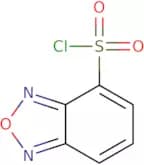
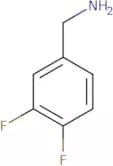
CAS:2,1,3-Benzoxadiazole-4-sulphonyl chloride is a versatile building block that can be used in the synthesis of complex compounds. It is a reagent that can be used in research as well as in industrial processes. 2,1,3-Benzoxadiazole-4-sulphonyl chloride is also useful for the preparation of organic and organometallic compounds. The compound has shown high quality and purity, which makes it an excellent intermediate or reaction component. This fine chemical can be used as a scaffold to generate new and interesting molecules with different properties.Fórmula:C6H3ClN2O3SPureza:Min. 95%Peso molecular:218.62 g/mol3,4-Difluorobenzyl amine
CAS:3,4-Difluorobenzyl amine (3,4-DFBA) is a synthetic compound that has been shown to have anti-cancer properties. It has been used in the synthesis of perovskites as an alternative strategy for solar cell applications. 3,4-DFBA has also been used to investigate the effect of hydrophobic and deformation on the biological activity of amines. This compound inhibits aldehyde oxidase and catalase from glyoxal and hydrogen peroxide respectively, which may be due to its ability to form microcapsules with a diameter of less than 50 nm.
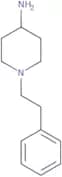
Fórmula:C7H7F2NPureza:Min. 95%Forma y color:Clear LiquidPeso molecular:143.13 g/mol1-(2-Phenylethyl)piperidin-4-amine dihydrochloride
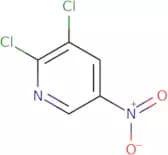
CAS:Producto controladoPlease enquire for more information about 1-(2-Phenylethyl)piperidin-4-amine dihydrochloride including the price, delivery time and more detailed product information at the technical inquiry form on this pageFórmula:C13H20N2Pureza:Min. 95%Peso molecular:204.31 g/mol2,3-Dichloro-5-nitropyridine
CAS:2,3-Dichloro-5-nitropyridine (2,3-DNP) is an antidiabetic drug that has been shown to improve insulin sensitivity in animals. It is a sample preparation reagent that can be used to validate the use of γ-aminobutyric acid (GABA) as a linker for the immobilization of proteins on solid supports. 2,3-DNP is also used as an adipose tissue marker to study obesity and insulin resistance. This drug has been shown to increase choline levels in the liver by inhibiting its export and increasing its synthesis by phosphorylation of serine hydroxymethyltransferase. 2,3-DNP also increases fatty acid synthesis by activating acetyl coenzyme A carboxylase and inhibiting carnitine palmitoyl transferase I. 2,3-DNP has also been shown to decrease food intake and body weight gain in db/db miceFórmula:C5H2Cl2N2O2Pureza:Min. 95%Forma y color:PowderPeso molecular:192.99 g/mol1-(3-Trifluoromethylphenyl)piperazine hydrochloride
CAS:Producto controlado1-(3-Trifluoromethylphenyl)piperazine hydrochloride (TFMPP) is a derivative of the piperazine class of drugs. It is structurally similar to other drugs in this class, such as bromopropane, which acts as an agonist of the 5-HT1 receptor. TFMPP has been shown to be an agonist at 5-HT1 receptors and dopamine receptors. It has also been shown to inhibit serotonin uptake and release, and inhibits choline acetyltransferase activity in brain tissue. TFMPP is not active on the 5-HT2 receptor, but does have some affinity for the 5-HT2A receptor. TFMPP has high affinity for the serotonergic system, with selective binding to serotonin transporter proteins in vitro. TFMPP may also have some effect on cholinergic systems through its inhibition of acetylcholinesterase activity.
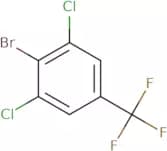
Fórmula:C11H14ClF3N2Pureza:Min. 95%Forma y color:White PowderPeso molecular:266.69 g/mol4-Bromo-3,5-dichlorobenzotrifluoride
CAS:4-Bromo-3,5-dichlorobenzotrifluoride is a molecule that has been used in wastewater treatment. It is also known as BDCTF, which stands for 4-bromo-3,5-dichlorobenzotrifluoride. The molecule can be synthesized by reacting benzonitrile and an azide. BDCTF reacts with the amine group of proteins to form an amide bond, so it can be used to modify protein or peptides for various purposes. This reaction is catalyzed by a nucleophilic agent such as hydroxide ion or cyanide ion. The crystal structure of BDCTF has been determined using X-ray crystallography methods.Fórmula:C7H2BrCl2F3Pureza:Min. 95%Peso molecular:293.9 g/mol3-Fluoro-4-hydroxybenzoic acid methyl ester
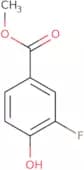
CAS:Please enquire for more information about 3-Fluoro-4-hydroxybenzoic acid methyl ester including the price, delivery time and more detailed product information at the technical inquiry form on this pageFórmula:C8H7O3FPureza:Min. 95%Peso molecular:170.14 g/molN,N-Didesmethyl diltiazem hydrochloride
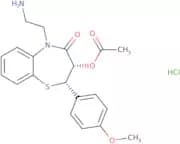
CAS:Please enquire for more information about N,N-Didesmethyl diltiazem hydrochloride including the price, delivery time and more detailed product information at the technical inquiry form on this pageFórmula:C20H23ClN2O4SPureza:Min. 95%Peso molecular:422.93 g/mol(2-Chlorobenzyl)hydrazine dihydrochloride
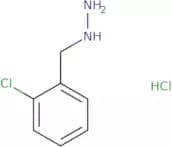
CAS:Please enquire for more information about (2-Chlorobenzyl)hydrazine dihydrochloride including the price, delivery time and more detailed product information at the technical inquiry form on this pageFórmula:C7H9ClN2Pureza:Min. 95%Peso molecular:156.61 g/mol4-Iodo-2-methoxypyridine-3-carboxaldehyde
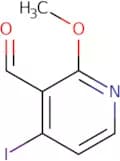
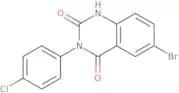
CAS:4-Iodo-2-methoxypyridine-3-carboxaldehyde is a disubstituted compound that has insulin-like properties. It inhibits the activity of the insulin receptor, which may contribute to its insulin-like growth factor effects. This inhibitor also targets the protein kinase, which is responsible for the response of cells to insulin. 4-Iodo-2-methoxypyridine 3 carboxaldehyde has been shown to inhibit IGF1R and malonate ion, and it may have potential as an oral treatment for diabetes.Fórmula:C7H6INO2Pureza:Min. 95%Peso molecular:263.03 g/mol6-Bromo-3-(4-chlorophenyl)quinazoline-2,4(1H,3H)-dione
CAS:Producto controladoPlease enquire for more information about 6-Bromo-3-(4-chlorophenyl)quinazoline-2,4(1H,3H)-dione including the price, delivery time and more detailed product information at the technical inquiry form on this page
Fórmula:C14H8BrClN2O2Pureza:Min. 95%Peso molecular:351.58 g/mol3-[4-(2-Chlorophenyl)-9-methyl-6H-thieno[3,2-f][1,2,4]triazolo[4,3-a][1,4]diazepin-2-yl]-2-propyn-1-ol
CAS:Producto controladoPlease enquire for more information about 3-[4-(2-Chlorophenyl)-9-methyl-6H-thieno[3,2-f][1,2,4]triazolo[4,3-a][1,4]diazepin-2-yl]-2-propyn-1-ol including the price, delivery time and more detailed product information at the technical inquiry form on this pageFórmula:C18H13ClN4OSPureza:Min. 95%Peso molecular:368.84 g/molN-MethylethylamineHydrochloride
CAS:N-Methylethylamine hydrochloride (MEA) is a cytotoxic agent that inhibits the growth of tumor cells by inhibiting protein synthesis. It is classified as an acyl halide and can be methylated in the liver to form methylamine. MEA has been shown to inhibit the growth of rat liver microsomes when combined with 3-bromopropylamine hydrobromide, hydroxide solution, aminoguanidine, alkylsulfonyl, nitrogen atoms, and carbon source. MEA is also known to inhibit HIV infection in vitro by inhibiting deoxynucleotide triphosphate (dNTP) binding to reverse transcriptase.Fórmula:C3H9N•HClPureza:Min. 95%Peso molecular:95.57 g/mol






![3-[4-(2-Chlorophenyl)-9-methyl-6H-thieno[3,2-f][1,2,4]triazolo[4,3-a][1,4]diazepin-2-yl]-2-propyn-…](/_next/image/?url=https%3A%2Fstatic.cymitquimica.com%2Fproducts%2F3D%2Fthumb-webp%2FFC20335.webp&w=3840&q=75)
