Haluros orgánicos
Subcategorías de "Haluros orgánicos"
Se han encontrado 20442 productos de "Haluros orgánicos"
3-(Bromomethyl)benzoic acid
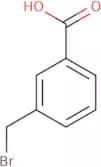
CAS:3-(Bromomethyl)benzoic acid is a quaternary ammonium salt that has been shown to be an ampk activator. It has been used in the synthesis of mesoporous materials and for the synthesis of sulfoxides, oxindoles, and carboxylic acids. 3-(Bromomethyl)benzoic acid has also been used as a calibrant for nonlinear regression analysis, due to its conformational properties.Fórmula:C8H7BrO2Pureza:Min. 95%Peso molecular:215.04 g/mol4-Bromo-3,5-difluorobenzenesulfonyl chloride
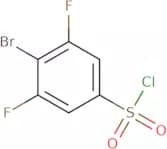
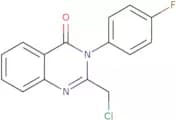
CAS:Please enquire for more information about 4-Bromo-3,5-difluorobenzenesulfonyl chloride including the price, delivery time and more detailed product information at the technical inquiry form on this pageFórmula:C6H2BrF2O2ClSPureza:Min. 95%Forma y color:PowderPeso molecular:291.5 g/mol2-(Chloromethyl)-3-(4-fluorophenyl)quinazolin-4(3H)-one
CAS:Producto controladoPlease enquire for more information about 2-(Chloromethyl)-3-(4-fluorophenyl)quinazolin-4(3H)-one including the price, delivery time and more detailed product information at the technical inquiry form on this pageFórmula:C15H10ClFN2OPureza:Min. 95%Peso molecular:288.7 g/mol2,6-Dibromo-3-nitropyridine
CAS:2,6-Dibromo-3-nitropyridine is a chemical compound that has been shown to inhibit serine protease activity. The compound was shown to be an inhibitor of the enzyme trypsin, and showed some activity against a number of other proteases. 2,6-Dibromo-3-nitropyridine has also been shown to inhibit nucleophilic alkylation of DNA bases by 2,6-dichloroquinoxaline. 2,6-Dibromo-3-nitropyridine is a targeted inhibitor that binds to the active site of the enzyme and prevents the formation of an enzyme-substrate complex. This inhibition leads to a decrease in the production of proteins essential for cell division.Fórmula:C5H2Br2N2O2Pureza:Min. 95%Peso molecular:281.89 g/mol1-Cyclopropyl-7-(2,8-diazabicyclo[4.3.0]non-8-yl)-6-fluoro-8-methoxy-4-oxoquinoline-3-carboxylic acid
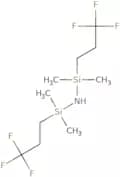
CAS:This is a broad-spectrum antibacterial agent that inhibits bacterial DNA gyrase. It is active against atypical bacterial species, such as Chlamydia and Mycoplasma, and has been shown to be effective against certain strains of the methicillin-resistant Staphylococcus aureus (MRSA) bacteria. This drug also inhibits the growth of other bacteria by binding to their DNA. The drug is used in combination with other antibiotics to treat infections caused by Clostridium difficile, Helicobacter pylori, Borrelia burgdorferi, and Salmonella enterica. However, this drug does not work against Pseudomonas aeruginosa or Enterobacteriaceae infections.Fórmula:C21H24FN3O4Pureza:Min. 95%Forma y color:PowderPeso molecular:401.43 g/mol1,3-Bis(3,3,3-trifluoropropyl)-1,1,3,3-tetramethyldisilazane
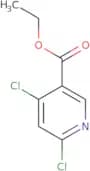
CAS:1,3-Bis(3,3,3-trifluoropropyl)-1,1,3,3-tetramethyldisilazane is a dielectric with a low dielectric constant and high hydrophobicity. It can be used as a self-assembled monolayer for reducing the contact angle on hydrophobic surfaces. 1,3-Bis(3,3,3-trifluoropropyl)-1,1,3,3-tetramethyldisilazane has been used in transistors to increase the conductivity of pentacene monolayer.Fórmula:C10H21F6NSi2Pureza:94%MinPeso molecular:325.44 g/molEthyl 4,6-dichloronicotinate
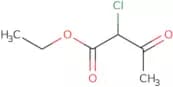
CAS:Ethyl 4,6-dichloronicotinate (EDCN) is a hybrid drug that can be used as a clinical drug for the treatment of cancers. EDCN has been shown to have an antiproliferative effect in hematopoietic cells and tumor cells. It is also able to inhibit tyrosine kinase activity and cellular proliferation by inducing apoptosis. EDCN has been shown to be a potent inhibitor of cancer cell growth in vitro and in vivo, with IC50 values ranging from 1 to 10 μM. This drug is active against leukemia, lymphoma, breast cancer, prostate cancer, colorectal cancer, and other cancers that are sensitive to inhibition by tyrosine kinase inhibitors. EDCN binds reversibly to DNA with high affinity and specificity through hydrogen bonding interactions between the nucleobases on its aromatic ring system and the purine bases on dsDNA. This binding inhibits transcription by blocking access of RNA polymerase II to DNA templatesFórmula:C8H7Cl2NO2Pureza:Min. 95%Peso molecular:220.05 g/molEthyl 2-chloroacetoacetate
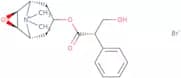
CAS:Ethyl 2-chloroacetoacetate is an organic compound that is prepared industrially by the chlorination of acetoacetic acid. It has been shown to have antimicrobial activity against human pathogens, such as Staphylococcus aureus and Escherichia coli. The kinetic constants for this reaction are pH dependent and depend on the ionic strength of the solution. Ethyl 2-chloroacetoacetate reacts with hydroxide to form ethyl chlorocarbonate, which is hydrolyzed to give carbon dioxide and hydrogen chloride. The hydrogen bonding interactions between these two molecules are important in the mechanism of this reaction. This reaction also generates a characteristic NMR spectrum in which six peaks can be seen. Ethyl 2-chloroacetoacetate is acidic and hemolytic when dissolved in water, but it does not react with trifluoroacetic acid or low energy radiation.Fórmula:C6H9ClO3Pureza:Min. 95%Forma y color:Clear LiquidPeso molecular:164.59 g/molMethscopolamine bromide
CAS:Methscopolamine bromide is a leukotriene receptor antagonist that is used to treat various conditions including bowel diseases and autoimmune diseases. Methscopolamine bromide binds to muscarinic receptors and blocks the action of acetylcholine, which mediates inflammation. Methscopolamine bromide can also be used to treat congestive heart failure. This drug has significant interactions with other medications, including thermal expansion, fatty acid metabolism, or symptoms of bowel disease. The drug should not be taken by patients who have had a stroke or who have asthma. It is contraindicated in patients who are pregnant or breastfeeding.Fórmula:C18H24BrNO4Pureza:Min. 95%Forma y color:White PowderPeso molecular:398.29 g/molN-Ethyl-N-[(heptadecafluorooctyl)sulphonyl]glycine
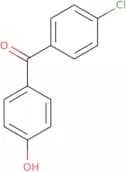
CAS:Producto controladoN-Ethyl-N-[(Heptadecafluorooctyl)sulphonyl]glycine is a high-concentration environmental pollutant that has been detected in the environment and human blood plasma. This chemical is a member of the class of polyfluoroalkyl substances (PFASs), which are used as surfactants in many industrial processes, including the manufacture of paper, textiles, and paints. PFASs are also present in foods such as meat, butter, and eggs. N-Ethyl-N-[(Heptadecafluorooctyl)sulphonyl]glycine has been shown to have trophic effects on invertebrates and can be measured using a triple-quadrupole mass spectrometer with reaction monitoring. This chemical is not suspected to be carcinogenic or toxic to humans because it does not react with DNA or proteins. The health effects of this substance are stillFórmula:C12H8F17NO4SPureza:Min. 95%Forma y color:PowderPeso molecular:585.24 g/mol4-Chloro-4'-hydroxybenzophenone
CAS:4-Chloro-4'-hydroxybenzophenone is a chemical intermediate that is used to produce p-hydroxybenzoic acid by acylation reaction with hydrochloric acid. The optimal reaction of 4-chloro-4'-hydroxybenzophenone with hydrochloric acid occurs at a temperature of 40 degrees Celsius and an excess of 2 equivalents of hydrochloric acid per equivalent of 4-chloro-4'-hydroxybenzophenone. This chemical intermediate has been shown to be an environmental pollutant, as it reacts in the atmosphere with ozone or other oxidizing agents to form hydrogen chloride and aluminium chloride. The transfer mechanism for this process is not yet well understood, but it may be due to demethylation followed by chlorination.Fórmula:C13H9ClO2Pureza:Min. 95%Peso molecular:232.66 g/mol1-Bromoicosane
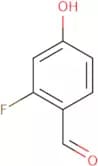
CAS:1-Bromoicosane is a viscous, hydrophobic organic solvent with a high boiling point. It has been used as an additive in the production of polyurethanes and as a cross-linking agent in rubber and plastics. The viscosity of 1-bromoicosane can be increased by adding it to other solvents, such as xylene. 1-Bromoicosane is also used as an additive in paints and varnishes, where it increases the glossiness of the final product. This compound is also used to prevent corrosion on metal surfaces when mixed with zinc chloride or phosphonium salt. 1-Bromoicosane has been shown to have antioxidative activities against lipid peroxidation, hydrogen peroxide oxidation, and nitric oxide induced hemoglobin oxidation.Fórmula:C20H41BrPureza:Min. 95%Forma y color:White PowderPeso molecular:361.44 g/mol2-Fluoro-4-hydroxybenzaldehyde
CAS:2-Fluoro-4-hydroxybenzaldehyde is an oxidative compound that is a model compound of phenolic compounds. It can be used to synthesize 2,6-dichloroquinone and 2,5,7,8-tetrachlorodibenzo[p]fluoranthene. The metabolic pathway for this compound starts with the oxidative decarboxylation of L-tyrosine to form 4-hydroxyphenylpyruvic acid. This compound is then oxidized by cytochrome P450 enzymes to form 4-(2'-oxo)phenol. The 4-(2'-oxo)phenol can be methylated by S-adenosylmethionine in order to form 2-fluoro-4-hydroxybenzaldehyde.
Fórmula:C7H5FO2Pureza:Min. 95%Peso molecular:140.11 g/mol1-[2-(5-Fluoro-1H-indol-3-yl)ethyl]-5-oxopyrrolidine-3-carboxylic acid
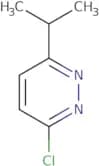
CAS:Producto controladoPlease enquire for more information about 1-[2-(5-Fluoro-1H-indol-3-yl)ethyl]-5-oxopyrrolidine-3-carboxylic acid including the price, delivery time and more detailed product information at the technical inquiry form on this pageFórmula:C15H15FN2O3Pureza:Min. 95%Peso molecular:290.29 g/mol3-Chloro-6-isopropylpyridazine
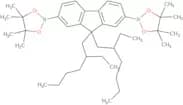
CAS:Please enquire for more information about 3-Chloro-6-isopropylpyridazine including the price, delivery time and more detailed product information at the technical inquiry form on this pageFórmula:C7H9ClN2Pureza:Min. 95%Peso molecular:156.61 g/mol9,9-Bis(2-ethylhexyl)fluorene-2,7-bis(boronic acidpinacolester)
CAS:Please enquire for more information about 9,9-Bis(2-ethylhexyl)fluorene-2,7-bis(boronic acidpinacolester) including the price, delivery time and more detailed product information at the technical inquiry form on this page
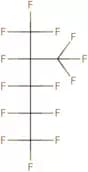
Fórmula:C41H64B2O4Pureza:Min. 95%Peso molecular:642.57 g/molTetradecafluoro-2-methylpentane
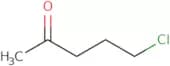
CAS:Producto controladoTetradecafluoro-2-methylpentane is a fluorinated hydrocarbon that is used in synthetic chemistry. It has been shown to inhibit the growth of cancer cells and leaves. Tetradecafluoro-2-methylpentane has also been shown to be an anthropogenic emission and may contribute to global warming. The chemical is classified as a cyclic hydrocarbon, which means it contains two or more rings of carbon atoms. Cyclic hydrocarbons are generally toxic because they disrupt normal cellular function through interference with cell membranes, protein synthesis, and DNA replication.Fórmula:C6F14Pureza:Min. 95%Peso molecular:338.04 g/mol5-Chloro-2-pentanone
CAS:5-Chloro-2-pentanone is a reactive, unsaturated ketone. It is a colorless liquid with a pungent odor. 5-Chloro-2-pentanone can be used in the synthesis of other organic compounds, such as covid-19 pandemic. The reaction of carbonyl groups with hydrogen chloride and chlorine atom to form hydrochloric acid and chlorocarbons is an example of a reaction that 5-chloro-2-pentanone can take part in. When 5-chloro-2-pentanone reacts with hydrogen chloride (HCl) and chlorine atom (Cl), the reaction products are hydrochloric acid (HCl) and chlorocarbons. This process is called nucleophilic attack and proceeds as follows: 5CH=C(CH)COH + HCl + Cl → CH=C(CH)COCl + H+ + Cl 5CH=CFórmula:C5H9ClOPureza:Min. 95%Forma y color:Clear LiquidPeso molecular:120.58 g/mol3-Iodobenzoic acid methyl ester
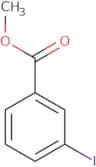
CAS:3-Iodobenzoic acid methyl ester is a synthetic selenium compound that is used in the synthesis of fatty acids. It is also used as a radionuclide in the diagnosis of cancer and other diseases. 3-Iodobenzoic acid methyl ester can be taken orally or injected, but it should not be taken by pregnant women or those who are allergic to iodine. This product has been shown to have anti-cancer properties when given orally, although there are some potential side effects associated with usage. These side effects include nausea, vomiting, diarrhea, and an increase in urine production. 3-Iodobenzoic acid methyl ester is metabolized into toxic products such as biphenyl, which may cause an escalation of symptoms. The structural formula for this product is C8H7INOS2O2.Fórmula:C8H7IO2Pureza:Min. 95%Forma y color:PowderPeso molecular:262.04 g/mol4,4,4-Trifluorovaline
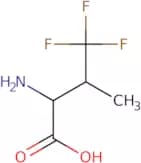
CAS:4,4,4-Trifluorovaline is a chemical compound with a trifluoromethyl group that can be synthesized in an efficient method. It has been shown to have the ability to stabilize proteins and enzymes in recombinant systems. The enolate of 4,4,4-trifluorovaline reacts with amides to form allylations. The stereoselective synthesis of 4,4,4-trifluorovaline isomers produces two diastereoisomers that are separated by either chiral chromatography or crystallization. These methods allow for the introduction of 4,4,4-trifluorovaline into cellular systems without affecting the stability of the protein or enzyme.
Fórmula:C5H8F3NO2Pureza:Min. 95%Peso molecular:171.12 g/mol


![1-Cyclopropyl-7-(2,8-diazabicyclo[4.3.0]non-8-yl)-6-fluoro-8-methoxy-4-oxoquinoline-3-carboxylic a…](/_next/image/?url=https%3A%2Fstatic.cymitquimica.com%2Fproducts%2F3D%2Fthumb-webp%2FFC102529.webp&w=3840&q=75)
![N-Ethyl-N-[(heptadecafluorooctyl)sulphonyl]glycine](/_next/image/?url=https%3A%2Fstatic.cymitquimica.com%2Fproducts%2F3D%2Fthumb-webp%2FFE91897.webp&w=3840&q=75)

![1-[2-(5-Fluoro-1H-indol-3-yl)ethyl]-5-oxopyrrolidine-3-carboxylic acid](/_next/image/?url=https%3A%2Fstatic.cymitquimica.com%2Fproducts%2F3D%2Fthumb-webp%2FFF119448.webp&w=3840&q=75)