


Haluros orgánicos
Subcategorías de "Haluros orgánicos"
Se han encontrado 20443 productos de "Haluros orgánicos"
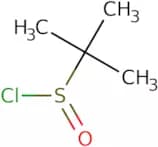
tert-Butylsulfinylchloride
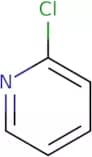
CAS:Tert-Butylsulfinylchloride is a hydroxamic acid that has been shown to be an effective inhibitor of indole alkaloids, such as tryptamine and serotonin. This compound is enantiopure and chiral, which allows for the synthesis of a number of diastereomers. Tert-Butylsulfinylchloride can react with hydrogen peroxide to form reactive intermediates that are thought to have a mechanistic role in the inhibition of indole alkaloid biosynthesis. It also reacts with chloride under thermal conditions to produce an asymmetric synthesis. Tert-Butylsulfinylchloride can be used at temperatures up to 125 degrees Celsius without losing its anti-indole alkaloid properties, making it a good candidate for use in organic syntheses.Fórmula:C4H9ClOSPureza:Min. 95%Forma y color:Clear LiquidPeso molecular:140.63 g/mol2-Chloropyridine
CAS:Producto controlado2-Chloropyridine is a molecule that reacts with hydrochloric acid to produce hydrogen chloride and 2-chloropyridine. The reaction mechanism involves a photoelectron and hydrogen bonding interactions. The chlorine atom in the original molecule will be replaced by a hydrogen atom, while the other chlorine atom becomes part of the product, hydrogen chloride. This reaction occurs in solution at room temperature.Fórmula:C5H4ClNPureza:Min. 95%Forma y color:PowderPeso molecular:113.54 g/molQuinoline-6-sulfonyl chloride
CAS:Please enquire for more information about Quinoline-6-sulfonyl chloride including the price, delivery time and more detailed product information at the technical inquiry form on this page
Fórmula:C9H6ClNO2SPureza:Min. 95%Peso molecular:227.67 g/molN-Ethyl-N-[(heptadecafluorooctyl)sulphonyl]glycine
CAS:Producto controladoN-Ethyl-N-[(Heptadecafluorooctyl)sulphonyl]glycine is a high-concentration environmental pollutant that has been detected in the environment and human blood plasma. This chemical is a member of the class of polyfluoroalkyl substances (PFASs), which are used as surfactants in many industrial processes, including the manufacture of paper, textiles, and paints. PFASs are also present in foods such as meat, butter, and eggs. N-Ethyl-N-[(Heptadecafluorooctyl)sulphonyl]glycine has been shown to have trophic effects on invertebrates and can be measured using a triple-quadrupole mass spectrometer with reaction monitoring. This chemical is not suspected to be carcinogenic or toxic to humans because it does not react with DNA or proteins. The health effects of this substance are stillFórmula:C12H8F17NO4SPureza:Min. 95%Forma y color:PowderPeso molecular:585.24 g/mol1-Pyrrolidinecarbonylchloride
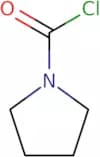
CAS:1-Pyrrolidinecarbonylchloride (1PC) is a chloride-containing compound that has been shown to be a potent inhibitor of inflammatory bowel disease (IBD). It binds to the nicotinic acetylcholine receptors and inhibits inflammatory diseases through its anti-inflammatory properties. 1PC has also been shown to inhibit cancer cell growth, as well as uv absorption in the skin. This compound is not toxic at high doses and does not have any known side effects.Fórmula:C5H8ClNOPureza:Min. 95%Forma y color:Clear Colourless To Yellow LiquidPeso molecular:133.58 g/mol2,6-Dichloro-5-nitropyrimidin-4-amine
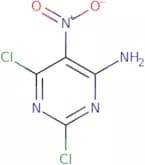
CAS:2,6-Dichloro-5-nitropyrimidin-4-amine is a chlorinating agent that reacts with aliphatic and aromatic amines to form substituted pyrimidines. The substitution pattern of the product depends on the regioselectivity of the reaction. 2,6-Dichloro-5-nitropyrimidin-4-amine is one of the few chlorinating agents that react with propylamine. Substitution at position 2 of the purine ring has been found to be more selective than substitution at position 6. The 2,6-dichloropyrimidine can also be used as a nitro group source in chemical synthesis or as an intermediate in production of other compounds.
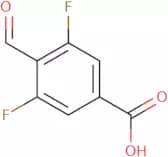
Fórmula:C4H2Cl2N4O2Pureza:Min. 95%Forma y color:SolidPeso molecular:208.99 g/mol3,5-difluoro-4-formylbenzoic Acid
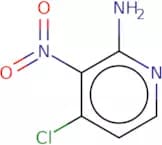
CAS:3,5-Difluoro-4-formylbenzoic acid is a sulfamic acid derivative that is used as a catalyst in the synthesis of aldehydes. The catalytic activity of 3,5-difluoro-4-formylbenzoic acid is due to its ability to be oxidized by air and light to give an active form. It also has other uses in the synthesis of dihydropyrans and regioselectivity studies.Fórmula:C8H4F2O3Pureza:Min. 95%Peso molecular:186.11 g/mol2-Amino-4-chloro-3-nitropyridine
CAS:2-Amino-4-chloro-3-nitropyridine is a potent inhibitory molecule that inhibits the activity of the enzyme acetylcholinesterase. It has been used in the treatment of chronic pain, and has been shown to be effective for inhibiting malonate esters and amino acid esters. This drug is an ethyl ester that can be synthesized from chlorobenzene and malonic acid by chlorinating it with chlorine gas. 2-Amino-4-chloro-3-nitropyridine has also been shown to have a high affinity for malonic acid diethyl esters.Fórmula:C5H4ClN3O2Pureza:Min. 98 Area-%Forma y color:PowderPeso molecular:173.56 g/mol1-[(2-Chlorophenyl)-N-(methylimino)methyl]cyclopentanol hydrochloride
CAS:Producto controladoPlease enquire for more information about 1-[(2-Chlorophenyl)-N-(methylimino)methyl]cyclopentanol hydrochloride including the price, delivery time and more detailed product information at the technical inquiry form on this pageFórmula:C13H16ClNO•HClPureza:Min. 95%Peso molecular:274.19 g/mol4-[4-(Dimethylamino)-1-(4-fluorophenyl)-1-hydroxybutyl]-3-(hydroxymethyl)benzonitrile hydrobromide
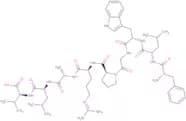
CAS:4-[4-(Dimethylamino)-1-(4-fluorophenyl)-1-hydroxybutyl]-3-(hydroxymethyl)benzonitrile hydrobromide is an antagonist of the nicotinic acetylcholine receptor (nAChR) that has been shown to be prophylactic against mediated nitrogen. It was isolated from a marine sponge and shows high affinity for nAChRs, with low nanomolar binding constants. The prophylactic properties of 4-[4-(dimethylamino)-1-(4-fluorophenyl)-1-hydroxybutyl]-3-(hydroxymethyl)benzonitrile hydrobromide are mediated by its ability to antagonize the function of nAChRs and prevent the release of neurotransmitters such as acetylcholine.Fórmula:C20H23FN2O2•HBrPureza:Min. 95%Peso molecular:423.32 g/molMAGE-3 Antigen (271-279) (human) trifluoroacetate salt
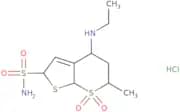
CAS:ALPHA FACTOR SIGNALING PEPTIDEFórmula:C53H79N13O10Pureza:Min. 95%Peso molecular:1,058.28 g/molDorzolamide hydrochloride related compound A
CAS:Please enquire for more information about Dorzolamide hydrochloride related compound A including the price, delivery time and more detailed product information at the technical inquiry form on this pageFórmula:C10H16N2O4S3·HClPureza:Min. 95%Peso molecular:360.9 g/molDesmethyl fluorometholone
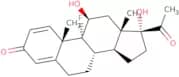
CAS:Producto controladoPlease enquire for more information about Desmethyl fluorometholone including the price, delivery time and more detailed product information at the technical inquiry form on this page
Fórmula:C21H27FO4Pureza:Min. 95%Forma y color:SolidPeso molecular:362.44 g/mol4-Chloro-2-hydroxypyridine
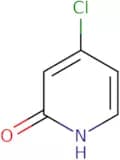
CAS:4-Chloro-2-hydroxypyridine is a chemical substance that has been shown to inhibit the replication of viruses in cell culture. It has demonstrated antiobesity effects in animal studies, but its mechanism is not well understood. This substance may be a thioxanthone derivative, which are heterocyclic compounds containing oxygen and sulfur. 4-Chloro-2-hydroxypyridine can crosslink DNA and form adducts with deoxyribose sugars. It also has affinity for sequences containing pyridones and imidazopyridines.
Fórmula:C5H4ClNOPureza:Min. 95%Peso molecular:129.54 g/mol5-Chloropentanol
CAS:5-Chloropentanol is a reactive compound that can be used as an epidermal growth factor. It has been shown to have potentiating effects on the production of epidermal growth factor in a biological sample. 5-Chloropentanol has also been shown to increase the rate of cell proliferation, which could be due to its ability to generate reactive chloroform in cells. It is not known whether 5-Chloropentanol has any carcinogenic properties.Pureza:Min. 95%1,3-Distearoyl-2-chloropropanediol-d5
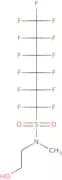
CAS:Please enquire for more information about 1,3-Distearoyl-2-chloropropanediol-d5 including the price, delivery time and more detailed product information at the technical inquiry form on this pageFórmula:C39H70D5CIO4Pureza:Min. 95%Peso molecular:751.95 g/molTridecafluoro-N-(2-Hydroxyethyl)-N-Methylhexanesulphonamide
CAS:Please enquire for more information about Tridecafluoro-N-(2-Hydroxyethyl)-N-Methylhexanesulphonamide including the price, delivery time and more detailed product information at the technical inquiry form on this pageFórmula:C9H8F13NO3SPureza:Min. 95%Peso molecular:457.21 g/molMono[2-(perfluorooctyl)ethyl] phosphate
CAS:Producto controladoPlease enquire for more information about Mono[2-(perfluorooctyl)ethyl] phosphate including the price, delivery time and more detailed product information at the technical inquiry form on this page
Fórmula:C10H6F17O4PPureza:Min. 95%Forma y color:PowderPeso molecular:544.1 g/mol2,5-Difluoropyridine
CAS:2,5-Difluoropyridine is a ligand that is used in the synthesis of pharmaceuticals and other organic compounds. 2,5-Difluoropyridine is typically activated by a metal ion (e.g., palladium) to form an organometallic complex. The orientation of substituents on the difluoropyridine ring can affect its reactivity and selectivity. For example, chlorine atoms interact with the electrophilic carbon atom in the ring and orientations with electron withdrawing groups are more reactive than those with electron donating groups. 2,5-Difluoropyridine can be used as a cross-coupling reagent for Grignard reactions and nucleophilic substitution reactions. It also has been shown to inhibit human erythrocyte pyruvate kinase activity in vitro and may be useful for the treatment of diabetic complications such as neuropathy or retinopathy.Fórmula:C5H3F2NPureza:Min. 95%Forma y color:Clear LiquidPeso molecular:115.08 g/mol3-Chloro-N-methylpropan-1-amine HCl
CAS:Please enquire for more information about 3-Chloro-N-methylpropan-1-amine HCl including the price, delivery time and more detailed product information at the technical inquiry form on this pageFórmula:C4H11Cl2NPureza:Min. 95%Peso molecular:144.04 g/mol


![N-Ethyl-N-[(heptadecafluorooctyl)sulphonyl]glycine](/_next/image/?url=https%3A%2Fstatic.cymitquimica.com%2Fproducts%2F3D%2Fthumb-webp%2FFE91897.webp&w=3840&q=75)
![1-[(2-Chlorophenyl)-N-(methylimino)methyl]cyclopentanol hydrochloride](/_next/image/?url=https%3A%2Fstatic.cymitquimica.com%2Fproducts%2F3D%2Fthumb-webp%2FFC146990.webp&w=3840&q=75)
![4-[4-(Dimethylamino)-1-(4-fluorophenyl)-1-hydroxybutyl]-3-(hydroxymethyl)benzonitrile hydrobromide](/_next/image/?url=https%3A%2Fstatic.cymitquimica.com%2Fproducts%2F3D%2Fthumb-webp%2FFD102304.webp&w=3840&q=75)


![Mono[2-(perfluorooctyl)ethyl] phosphate](/_next/image/?url=https%3A%2Fstatic.cymitquimica.com%2Fproducts%2F3D%2Fthumb-webp%2FFM26053.webp&w=3840&q=75)

