Compuestos y reactivos bioquímicos
Los bioquímicos y reactivos son sustancias fundamentales para la investigación y el desarrollo en campos como la biotecnología, la biología molecular, la farmacología y la medicina. Estos productos son esenciales para una variedad de aplicaciones, incluyendo la síntesis de compuestos, el análisis de muestras biológicas, la investigación de procesos metabólicos y la producción de medicamentos. En CymitQuimica, ofrecemos una amplia selección de bioquímicos y reactivos de alta calidad y pureza, adecuados para diversas necesidades científicas e industriales. Nuestro catálogo incluye enzimas, anticuerpos, ácidos nucleicos, aminoácidos, y muchos otros productos, todos diseñados para apoyar a los investigadores y profesionales en sus proyectos de investigación y desarrollo, asegurando resultados confiables y reproducibles.
Subcategorías de "Compuestos y reactivos bioquímicos"
- Biomoléculas(99.205 productos)
- Por objetivo biológico(99.900 productos)
- Según efectos farmacológicos(6.790 productos)
- Crioconservantes(21 productos)
- Desinfectantes y compuestos relacionados(28 productos)
- Hormonas(346 productos)
- Biología Vegetal(6.835 productos)
- Metabolitos secundarios(14.345 productos)
Se han encontrado 130607 productos de "Compuestos y reactivos bioquímicos"
Ordenar por
Pureza (%)
0
100
|
0
|
50
|
90
|
95
|
100
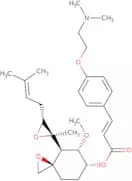
Beloranib
CAS:Producto controlado<p>Inhibitor of methionine aminopeptidase METAP2</p>Fórmula:C29H41NO6Pureza:Min. 95%Peso molecular:499.64 g/mol2,3-Dihydroxypropyl (8Z)-8-tetradecenoate
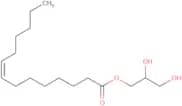
CAS:<p>2,3-Dihydroxypropyl (8Z)-8-tetradecenoate is a synthetic molecule that has been used as a model compound for the study of ionizing radiation. It has an ionization constant of 1.4 x 10^-5 cm/sec, which is relatively constant and can be measured by nature. This compound has profiles with a range of synthetic properties and can be used for photometric measurements. Densities can be modeled using this compound, which is a good candidate for optical modeling due to its high refractive index. 2,3-Dihydroxypropyl (8Z)-8-tetradecenoate is also useful in the modeling of the formation rate of architectures and analogs. The molecule's dynamic properties make it suitable for use as a sibling to other molecules in order to better understand how they react with each other.</p>Fórmula:C17H32O4Pureza:Min. 95%Peso molecular:300.43 g/molCD38 antibody
<p>The CD38 antibody is a powerful tool used in the field of Life Sciences. It is a monoclonal antibody that specifically targets CD38, a protein found on the surface of various cells. This antibody has multiple applications, including research in insulin signaling, electrode development, and drug delivery systems.</p>EPCAM antibody
<p>The EPCAM antibody is a highly effective monoclonal antibody that specifically targets the Epithelial Cell Adhesion Molecule (EPCAM). It has a high affinity for the antigen binding domain and can be used in various applications. The antibody is produced using a hybridoma cell line and has been extensively tested for its specificity and efficacy.</p>GR148672X
CAS:<p>GR148672X is a peptide that has been shown to inhibit the interaction between the NMDA receptor and its ligand, glutamate. GR148672X binds to the NMDA receptor and prevents the binding of glutamate, thereby preventing the activation of the receptor. This drug is being developed as a research tool for studying protein interactions and may also be used in treating pain associated with nerve damage. GR148672X is a high purity peptide at 99% purity by HPLC analysis.</p>Fórmula:C15H11F3N2O2SPureza:Min. 95%Peso molecular:340.32 g/molKN-92
CAS:<p>KN-92 is a potassium channel opener that has been shown to increase intracellular calcium levels in cardiac and neuronal cells. It also increases the energy metabolism of cardiac cells by increasing the mitochondrial membrane potential, leading to increased production of ATP. KN-92 has been shown to be effective in experimental models for structural heart disease. It also reduces the incidence of atrial arrhythmia and congestive heart failure in rats with experimentally induced myocardial infarction. KN-92 is not active against granule neurons.</p>Fórmula:C24H25ClN2O3SPureza:Min. 95%Peso molecular:456.98 g/molABHD12 antibody
<p>ABHD12 antibody was raised using the middle region of ABHD12 corresponding to a region with amino acids CPLLILHAEDDPVVPFQLGRKLYSIAAPARSFRDFKVQFVPFHSDLGYRH</p>Pureza:Min. 95%HS 014 trifluoroacetate
CAS:<p>Please enquire for more information about HS 014 trifluoroacetate including the price, delivery time and more detailed product information at the technical inquiry form on this page</p>Fórmula:C71H94N20O17S2•(C2HF3O2)xPureza:Min. 95%1-Thiouredopyrene-3,6,8-trisulfonate
CAS:<p>1-Thioureido-3,6,8-trisulfonate is a small molecule that functions as a potent inhibitor of the enzyme fatty acid synthase. It inhibits cardiac hypertrophy in Sprague-Dawley rats and is selective for the heart. This drug also has an effect on cellular proliferation and induces apoptosis in h9c2 cells.</p>Fórmula:C14H18F3N3O4SPureza:Min. 95%Peso molecular:381.37 g/molSOCS3 antibody
<p>The SOCS3 antibody is a glycoprotein that belongs to the family of antibodies. It is specifically designed to target and bind to a specific antigen, which can be used for various applications in the Life Sciences field. The SOCS3 antibody is a monoclonal antibody, meaning it is produced by a single type of immune cell and has high specificity for its target antigen.</p>HOXB4 antibody
<p>The HOXB4 antibody is a highly specialized monoclonal antibody that acts as an inhibitor of the HOXB4 protein. This protein plays a crucial role in the regulation of hematopoietic stem cell proliferation and differentiation. By targeting and neutralizing the HOXB4 protein, this antibody effectively inhibits its cytotoxic effects and prevents the activation of downstream signaling pathways.</p>NET antibody
<p>NET antibody was raised in rabbit using a 22 amino acid peptide of rat NET as the immunogen.</p>Pureza:Min. 95%AVE 1625
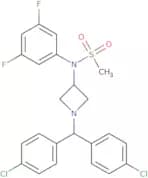
CAS:<p>Antagonist of cannabinoid receptor CB1</p>Fórmula:C23H20Cl2F2N2O2SPureza:Min. 95%Peso molecular:497.39 g/mol(S,S,S)-Enalapril-d5 maleate
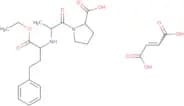
CAS:<p>(S,S,S)-Enalapril-d5 maleate is a deuterated analogue of enalapril maleate, a pharmaceutical compound used as an angiotensin-converting enzyme (ACE) inhibitor. This isotopically labeled form is synthetically derived to incorporate five deuterium atoms, serving as a critical tool in mass spectrometry studies. By replacing hydrogen atoms with deuterium, this compound enables precise measurements in pharmacokinetic and metabolic research.</p>Fórmula:C24H32N2O9Pureza:Min. 95%Peso molecular:497.5 g/molSR33805
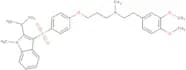
CAS:<p>SR33805 is a synthetic investigational compound, which is primarily derived from chemical synthesis with potential cardiovascular applications. This compound functions as a calcium channel antagonist, targeting specific ion channels that regulate the influx of calcium ions in cardiac and smooth muscle cells. By modulating these ion channels, SR33805 can affect muscle contractility and vascular tone.</p>Fórmula:C32H40N2O5SPureza:Min. 95%Peso molecular:564.7 g/molAID antibody
<p>The AID antibody is a monoclonal antibody that has neutralizing properties and specifically targets the HER2 receptor. This antibody binds to the amino group of the HER2 growth factor and inhibits its activity. It can be used in various applications, such as immunohistochemistry, western blotting, and ELISA assays. The AID antibody has been extensively studied in the field of life sciences and has shown promising results in inhibiting tumor growth. It can also be used in combination with other antibodies, such as trastuzumab, to enhance its therapeutic effects. Additionally, this antibody has been shown to have interferon-like activity and can modulate gene expression in nuclear extracts. With its lysine-specific binding capabilities, the AID antibody offers researchers a valuable tool for studying epidermal growth factor signaling pathways and understanding their role in various cellular processes.</p>RPESP antibody
<p>RPESP antibody was raised using the C terminal of RPESP corresponding to a region with amino acids WMQYLREGYTVCVDCQPPAMNSVSLRCSGDGLDSDGNQTLHWQAIGNPRC</p>Prexasertib mesylate
CAS:<p>Prexasertib mesylate is a research tool that belongs to the class of activators. It is also a ligand and receptor. Prexasertib mesylate binds to ion channels, which are protein structures that allow the passage of ions across cell membranes, regulating their flow in and out of cells. It is used as a research tool for its ability to inhibit protein interactions and peptides. The active form of prexasertib mesylate is not known, but it has been shown to be able to inhibit ion channels in cells with high purity by binding to specific receptors on their surface.</p>Fórmula:C19H23N7O5SPureza:Min. 95%Peso molecular:461.50 g/molRat RBC antibody
<p>Rat RBC antibody was raised in rabbit using rat erythrocytes as the immunogen.</p>Pureza:Min. 95%Hepatitis C Virus protein
<p>The Hepatitis C Virus protein is a versatile and crucial component in the field of Life Sciences. It plays a significant role in various biological processes, including cell growth, differentiation, and immune response. This protein has been extensively studied for its interactions with other molecules and its impact on human health.</p>Pureza:Min. 95%CEF4
CAS:<p>Portion of Influenza NP</p>Fórmula:C53H93N15O13Pureza:Min. 95%Peso molecular:1,148.4 g/molREEP4 antibody
<p>REEP4 antibody was raised using the N terminal of REEP4 corresponding to a region with amino acids EIKMAFVLWLLSPYTKGASLLYRKFVHPSLSRHEKEIDAYIVQAKERSYE</p>Pureza:Min. 95%Erythropoietin - lyophilized powder
CAS:<p>Erythropoietin is a hormone that stimulates the production of red blood cells, and is used for patients with anemia. It is a recombinant human erythropoietin (rhEPO) that has been produced by genetic engineering. Erythropoietin binds to receptors on the surface of many types of cells, including those in the bone marrow. This binding stimulates the production of red blood cells from precursor cells in the bone marrow, and increases oxygen-carrying capacity in blood. The half-life of erythropoietin is approximately 36 hours. This drug also can be used to reduce high blood pressure and improve responsiveness to other drugs that are given intravenously. Erythropoietin can cause an increase in asialoglycoprotein levels in serum, which may be due to its effects on hepatocytes or erythrocytes.</p>Pureza:(Capillary Zone Electrophoresis) Min. 98.0%EARS2 antibody
<p>EARS2 antibody was raised using a synthetic peptide corresponding to a region with amino acids TAKHLLLYQALGWQPPHFAHLPLLLNRDGSKLSKRQGDVFLEHFAADGFL</p>IL11 antibody (HRP)
<p>IL11 antibody was raised in Mouse using recombinant human IL-11 as the immunogen.</p>PRMT6 antibody
<p>PRMT6 antibody was raised in Mouse using a purified recombinant fragment of human PRMT6 expressed in E. coli as the immunogen.</p>RPLP0 Blocking Peptide
<p>A synthetic peptide for use as a blocking control in assays to test for specificity of RPLP0 antibody, catalog no. 70R-4936</p>Pureza:Min. 95%PHI, porcine
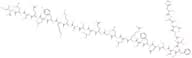
CAS:<p>Please enquire for more information about PHI, porcine including the price, delivery time and more detailed product information at the technical inquiry form on this page</p>Fórmula:C136H216N36O40Pureza:Min. 95%Peso molecular:2,995.39 g/molMLN 8054
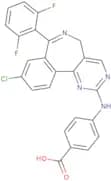
CAS:<p>Aurora A kinase inhibitor</p>Fórmula:C25H15ClF2N4O2Pureza:Min. 95%Peso molecular:476.86 g/molCAV1 antibody
<p>CAV1 antibody was raised in rabbit using a synthetic peptide conjugated to KLH as the immunogen.</p>Pureza:Min. 95%IGF1R antibody
<p>The IGF1R antibody is a monoclonal antibody that is used in Life Sciences research. It specifically targets the insulin-like growth factor 1 receptor (IGF1R) and has been shown to have cytotoxic effects on various types of cancer cells. This antibody can neutralize the activity of IGF1R, which is a key regulator of cell growth and proliferation. Additionally, it has been found to inhibit the expression of alpha-fetoprotein, a marker associated with liver cancer. The IGF1R antibody can also be used as an anti-connexin agent, blocking gap junction-mediated intercellular communication. In addition to its role in cancer research, this antibody has applications in studying adipose tissue development, endothelial growth factors, and nuclear signaling pathways.</p>GPT Antibody
<p>The GPT Antibody is a polyclonal antibody that is commonly used in immunohistochemistry studies. It is an essential tool in the field of life sciences for detecting and analyzing various proteins and antigens. This antibody specifically targets the GPT protein, which is involved in numerous biological processes, including interferon signaling and chemokine binding.</p>Pureza:Min. 95%CPA inhibitor
CAS:<p>CPA inhibitor is a biochemical compound designed to selectively inhibit carboxypeptidase A (CPA), a metalloenzyme implicated in various physiological and pathological processes. It is typically sourced from synthetic chemical libraries or derivative natural compounds, characterized by their high specificity and affinity for the active site of CPA. The mode of action involves binding to the metalloenzyme’s active site, thereby obstructing substrate access and reducing enzymatic activity.</p>Fórmula:C18H19NO4Pureza:Min. 95%Peso molecular:313.35 g/molFETUB antibody
<p>FETUB antibody was raised using the N terminal of FETUB corresponding to a region with amino acids GCNDSDVLAVAGFALRDINKDRKDGYVLRLNRVNDAQEYRRGGLGSLFYL</p>Pureza:Min. 95%(5Z)-5-[[4-[(2-Methylphenyl)thio]-3-nitrophenyl]methylene]-2-thioxo-4-thiazolidinone
CAS:<p>(5Z)-5-[[4-[(2-Methylphenyl)thio]-3-nitrophenyl]methylene]-2-thioxo-4-thiazolidinone is a peptide that can activate the immune system by stimulating antibody production. This peptide has been shown to inhibit protein interactions and ion channels, as well as modulate cell adhesion and migration. The chemical name for this compound is (5Z)-5-[(4-[2-(methylphenyl)thio]-3-nitrophenyl)methylene]-2-thioxo-4-thiazolidinone, with CAS number 1489285-17-7.</p>Fórmula:C17H12N2O3S3Pureza:Min. 95%Peso molecular:388.50 g/molCopo 22
CAS:<p>Copo 22 is a chemical substance which is a potentiator of the CFTR protein. The molecule is designed to modulate the CFTR protein by binding to its active site and enhancing the function of the CFTR protein. Copo 22 has been shown to increase chloride ion flow in cells with a mutation in the F508del-CFTR gene. This chloride ion flow increases and improves lung function, reducing inflammation and improving mucus clearance. Copo 22 also has other potential benefits, such as being non-toxic, stable, and easy to synthesize. The molecule has been shown to be expressed in cells with a F508del mutation, suggesting that it may be used for treatment of cystic fibrosis patients with this mutation.</p>Fórmula:C22H22N4O2Pureza:Min. 95%Peso molecular:374.4 g/molArylex active
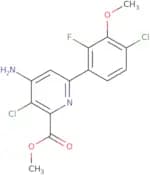
CAS:<p>Arylex active is a potent inhibitor of kinases that has been shown to have anticancer properties. It was originally identified in Chinese urine as an analog of hepcidin, a protein involved in iron metabolism. Arylex active has been found to induce apoptosis and inhibit the growth of cancer cells in vitro and in vivo. It also has inhibitory effects on several other kinases that are involved in cell signaling pathways, making it a promising candidate for the treatment of various types of cancer. Additionally, Arylex active has been found to have potential applications beyond oncology, including as an inhibitor of inflammation and autoimmune diseases.</p>Fórmula:C14H11Cl2FN2O3Pureza:Min. 95%Peso molecular:345.1 g/mol(2R)-α-Tocopherol
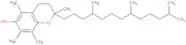
CAS:<p>(2R)-α-Tocopherol is a potent antioxidant and has been shown to have anticancer properties. It induces apoptosis in cancer cells by inhibiting kinases and regulating protein expression. This compound has been studied extensively for its potential as an anticancer agent, with promising results in both human and Chinese hamster ovary cell lines. (2R)-α-Tocopherol has also been found to be an inhibitor of ceftiofur metabolites in urine samples, making it useful in veterinary medicine. Its analogs have been developed as kinase inhibitors for the treatment of various types of tumors.</p>Fórmula:C29H50O2Pureza:Min. 95%Peso molecular:430.7 g/molCiita antibody
<p>Ciita antibody was raised in rabbit using CIITA peptide corresponding to a region near the N-terminus of the human protein conjugated to KLH as the immunogen.</p>Pureza:Min. 95%NOL6 antibody
<p>NOL6 antibody was raised using a synthetic peptide corresponding to a region with amino acids SRKRTLAEPPAKGLLQPVKLSRAELYKEPTNEELNRLRETEILFHSSLLR</p>FABP3 protein
FABP3 protein is a growth factor that plays a crucial role in various biological processes. It can be activated by specific antibodies present in human serum, leading to the promotion of anti-angiogenesis activities. FABP3 is a glycoprotein that binds to fatty acids and facilitates their transport within cells. This protein can be detected using streptavidin-coated electrodes or colloidal gold-labeled antibodies. FABP3 is widely used in Life Sciences research as a target for studying cellular metabolism and lipid signaling pathways. Additionally, it serves as a valuable tool for developing inhibitors and monoclonal antibodies for therapeutic applications.Pureza:Min. 95%CARM1-IN-1
CAS:<p>CARM1-IN-1 is a selective inhibitor designed to target and inhibit the activity of coactivator-associated arginine methyltransferase 1 (CARM1). This compound is synthetically derived and specifically interacts with its enzymatic target by competitively binding to its active site, thereby preventing the methylation of arginine residues on histone and non-histone proteins.</p>Fórmula:C26H21Br2NO3Pureza:Min. 95%Peso molecular:555.26 g/molKIF5A antibody
<p>KIF5A antibody was raised using the middle region of KIF5A corresponding to a region with amino acids LEESYDSLSDELAKLQAQETVHEVALKDKEPDTQDADEVKKALELQMESH</p>Amphotensid eh
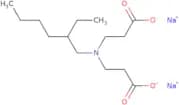
CAS:<p>Amphotensid eh is a potent inhibitor of kinases, which are enzymes that play a critical role in the regulation of cell cycle and protein signaling pathways. It has shown promising results in the treatment of cancer and tumors by inhibiting the activity of cyclin-dependent kinases (CDKs), which are overexpressed in many human cancers. Amphotensid eh has been found to induce apoptosis or programmed cell death in cancer cells by blocking the activity of CDKs, leading to the inhibition of tumor growth. This medicinal compound has also been studied for its potential as an anticancer agent due to its ability to target multiple kinases simultaneously. In Chinese medicine, Amphotensid eh has been used for centuries as a natural remedy for various ailments including cancer.</p>Fórmula:C14H25NNa2O4Pureza:Min. 95%Peso molecular:317.33 g/molMMP12 antibody
<p>The 6-Fluoro-3-indoxyl-beta-D-galactopyranoside is a powerful antituberculosis drug that falls under the class of rifamycins. It is known to be highly effective in treating tuberculosis infections, thanks to its bactericidal activity. This active compound works by binding to DNA-dependent RNA polymerase, inhibiting bacterial growth and preventing transcription and replication. Studies have shown its high efficacy on human erythrocytes using a patch-clamp technique.</p>NOSIP antibody
<p>NOSIP antibody was raised using the N terminal of NOSIP corresponding to a region with amino acids LSRDAVKDFDCCCLSLQPCHDPVVTPDGYLYEREAILEYILHQKKEIARQ</p>PLEK antibody
<p>PLEK antibody was raised using the N terminal of PLEK corresponding to a region with amino acids MEPKRIREGYLVKKGSVFNTWKPMWVVLLEDGIEFYKKKSDNSPKGMIPL</p>Pureza:Min. 95%BTF3L1 antibody
<p>BTF3L1 antibody was raised in rabbit using the n terminal of BTF3L1 as the immunogen</p>Pureza:Min. 95%beta Galactosidase antibody
<p>Beta galactosidase antibody was raised in rabbit using beta galactosidase (E. Coli) as the immunogen.</p>Pureza:Min. 95%ADAM33 antibody
<p>ADAM33 antibody was raised using the middle region of ADAM33 corresponding to a region with amino acids HDSAQLLTGRAFQGATVGLAPVEGMCRAESSGGVSTDHSELPIGAAATMA</p>Pureza:Min. 95%FOXA1 antibody
<p>FOXA1 antibody is a monoclonal antibody that specifically targets β-catenin, a protein involved in various cellular processes. This antibody acts as a family kinase inhibitor, blocking the activity of kinases that regulate β-catenin signaling. It is widely used in life sciences research to study the role of β-catenin in development, cancer, and other diseases.</p>KLHL31 Blocking Peptide
<p>A synthetic peptide for use as a blocking control in assays to test for specificity of KLHL31 antibody, catalog no. 70R-6296</p>Pureza:Min. 95%VER 49009
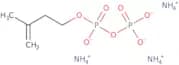
CAS:Producto controlado<p>VER 49009 is a chaperone that binds to the amide group of proteins, inhibiting their function. VER 49009 has been shown to inhibit cancer cells in vitro and in vivo by preventing protein synthesis. This compound also inhibits the production of heat-shock proteins. It can be used for the treatment of cancer, as well as other diseases associated with high levels of heat-shock proteins, such as pediatric cancer.</p>Fórmula:C19H18ClN3O4Pureza:Min. 95%Peso molecular:387.82 g/molDimethylallyl Pyrophosphate (triammonium salt)
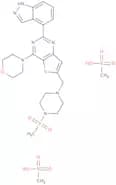
CAS:<p>Dimethylallyl Pyrophosphate (triammonium salt) is a versatile compound used in various research applications. It acts as a binding protein for dopamine and has been studied for its potential role in the regulation of neurotransmitters. This compound is commonly used in the synthesis of alkaloids, ligases, and channels. Additionally, Dimethylallyl Pyrophosphate (triammonium salt) has shown promise in studies related to erythropoietin production and hypotension management. Researchers have also explored its potential therapeutic effects on depressive disorders and its interactions with other compounds such as taurine, quetiapine, and epoxomicin. With its wide range of applications, Dimethylallyl Pyrophosphate (triammonium salt) is an essential reagent for any laboratory or research facility seeking to advance scientific knowledge.</p>Fórmula:C5H12O7P2·3NH3Pureza:Min. 95%Peso molecular:297.18 g/molGDC 0941 bimesylate
CAS:<p>Pan-PI3K inhibitor of class I catalytic subunits; anti-proliferative</p>Fórmula:C25H35N7O9S4Pureza:Min. 95%Peso molecular:705.85 g/molCYP19 antibody
<p>The CYP19 antibody is a highly specialized antibody that targets the aromatase enzyme, also known as cytochrome P450 19A1. This enzyme plays a crucial role in the synthesis of estrogen, making it an important target in hormone-related diseases and conditions. The CYP19 antibody specifically binds to the aromatase enzyme, inhibiting its activity and preventing the conversion of androgens into estrogens. This can have significant therapeutic implications in the treatment of hormone-dependent cancers such as breast cancer. Additionally, the CYP19 antibody has been used in research settings to study the regulation of estrogen synthesis and its impact on various physiological processes. With its high specificity and affinity for the aromatase enzyme, the CYP19 antibody is a valuable tool for both clinical and scientific applications in the field of endocrinology and oncology.</p>Complement C3 protein
<p>Complement C3 protein is a test compound that plays a crucial role in the immune system. It is involved in various processes such as inflammation, opsonization, and immune complex clearance. Complement C3 protein interacts with IFN-gamma and is found to have intraocular effects. This protein is commonly used in research and diagnostic applications in the field of Life Sciences. It has been shown to exhibit neutralizing properties against autoantibodies and can be used for studying interferon and chemokine signaling pathways. Additionally, complement C3 protein has been implicated in endothelial growth factor regulation, making it an important target for therapeutic interventions related to angiogenesis. Its high viscosity allows for easy handling during experiments.</p>Pureza:Min. 95%NRF2 antibody
The NRF2 antibody is a highly effective tool in the field of immunology and molecular biology. This antibody belongs to the class of polyclonal antibodies, which are produced by multiple B cell clones and have the ability to recognize different epitopes on the target protein. The NRF2 antibody specifically targets the nuclear factor erythroid 2-related factor 2 (NRF2), a transcription factor that plays a crucial role in cellular defense against oxidative stress.TRF3 antibody
<p>TRF3 antibody was raised in rabbit using the N terminal of TRF3 as the immunogen</p>Pureza:Min. 95%PYCR2 protein
<p>The PYCR2 protein is a growth factor that plays a crucial role in neutralizing interferon. It is widely used in the field of Life Sciences for various applications. PYCR2 protein has been extensively studied and its binding proteins are well characterized. It is commonly used as a target for antibody-drug conjugates, monoclonal antibodies, and other therapeutic agents. PYCR2 protein is often purified from liver microsomes and can be used in research studies to investigate its interaction with other molecules such as globulins, chemokines, and anti-CD20 antibodies. This highly purified protein is free from any excipients and has a high refractive index, making it ideal for use in experiments requiring precise measurements.</p>Pureza:Min. 95%QX 222
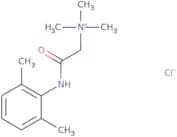
CAS:<p>QX222 is a selective nicotinic acetylcholine receptor agonist that binds to the α7 nicotinic acetylcholine receptor. It is used as a research tool in neuroscience and physiology. QX222 has been shown to stimulate membrane hyperpolarization, which leads to an increase in cardiac action potentials. This drug also has dose-dependent effects on blood pressure and heart rate, which may be due to its ability to activate fatty acid metabolism and inhibit the binding of inhibitors to cation channels.</p>Fórmula:C13H21ClN2OPureza:Min. 95%Peso molecular:256.77 g/molF3 antibody
<p>The F3 antibody is a potent cytotoxic and inhibitory factor used in Life Sciences. It targets various proteins and molecules such as tyrosinase, insulin, collagen, and fibronectin. This antibody has been extensively studied for its ability to neutralize autoantibodies and anti-ACTH antibodies. The F3 antibody is highly specific and can be used in a wide range of applications including research, diagnostics, and therapeutics. Its unique properties make it an essential tool for studying protein-protein interactions, cell signaling pathways, and immune responses. With its high affinity and specificity, the F3 antibody offers researchers unparalleled accuracy and reliability in their experiments.</p>SLC25A45 antibody
<p>SLC25A45 antibody is a glycoprotein that belongs to the chemokine binding protein family. It plays a crucial role in various biological processes, including interferon signaling and hepatocyte growth regulation. This antibody is widely used in Life Sciences research for its ability to specifically bind to SLC25A45 and facilitate the detection and analysis of this protein. It can be used in various applications such as Western blotting, immunohistochemistry, and flow cytometry. The SLC25A45 antibody is available as both monoclonal and polyclonal antibodies, providing researchers with options based on their specific needs. Its high specificity and cytotoxic properties make it an essential tool for studying the function and expression of SLC25A45 in different cellular contexts.</p>SSE15206
CAS:<p>SSE15206 is a chemical compound commonly referred to as an intermediate in organic synthesis. It is derived from complex chemical precursors through an extensive series of reactions involving catalysts and controlled conditions. This compound serves a pivotal role in the synthetic pathway by enabling the construction of more intricate molecules.</p>Fórmula:C19H21N3O3SPureza:Min. 95%Peso molecular:371.45 g/molGPR44 antibody
<p>GPR44 antibody was raised in rabbit using a synthetic peptide conjugated to KLH as the immunogen.</p>Pureza:Min. 95%Carbuterol
CAS:<p>Carbuterol is a peptide that is an inhibitor of protein interactions. Carbuterol is an activator of Ligand and receptor interactions and has been used as a research tool for studying ion channels. Carbuterol has been shown to be a potent inhibitor of the alpha-adrenergic receptor, which may be due to its ability to increase cyclic adenosine monophosphate (cAMP) levels in cells. Carbuterol has also been shown to have an inhibitory effect on the proteasome, which is responsible for degrading proteins within cells.</p>Fórmula:C13H21N3O3Pureza:Min. 95%Peso molecular:267.32 g/moleNOS antibody
<p>The eNOS antibody is a highly specialized antibody used in the field of Life Sciences. It has been extensively studied and proven to have significant cation binding properties. Through molecular docking, it has shown a strong affinity for epidermal growth factor (EGF), making it an essential tool for researchers studying EGF-related pathways.</p>CLPP antibody
<p>The CLPP antibody is a highly specialized biomolecule that belongs to the class of monoclonal antibodies. It specifically targets chemokine binding proteins and has been widely used in life sciences research. This monoclonal antibody has a high affinity for its target and can be used for various applications, including immunoassays, protein detection, and cell signaling studies. The CLPP antibody has been shown to have cytotoxic effects on activated cells and can be used as a tool for targeted therapy. It can also be immobilized on electrodes or collagen matrices for use in biosensors or tissue engineering applications. With its exceptional specificity and versatility, the CLPP antibody is an invaluable tool in the field of molecular biology and biomedical research.</p>ML327
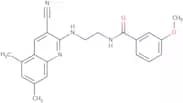
CAS:<p>ML327 is a small molecule that has been shown to inhibit the growth of cancer cells in the mesial, lingually, and distal regions of the tongue. It also inhibits choroidal neovascularization (CNV) in mouse models. ML327 is a chemical entity that belongs to the class of protein synthesis inhibitors. It targets the protein synthesis machinery by binding to ribosomes and inhibiting translation. ML327 also binds to TNF-related apoptosis-inducing ligand (TRAIL) receptors and induces TRAIL-mediated apoptosis in cancer cells.</p>Fórmula:C19H18N4O4Pureza:Min. 95%Peso molecular:366.37 g/molALK antibody
<p>The ALK antibody is a powerful tool in the field of Life Sciences. This antibody is specifically designed to target and bind to ALK (anaplastic lymphoma kinase), a protein that plays a crucial role in cell growth and division. By binding to ALK, this antibody can help researchers study its function and investigate its involvement in various diseases.</p>FLJ31875 antibody
<p>FLJ31875 antibody was raised in rabbit using the middle region of FLJ31875 as the immunogen</p>Pureza:Min. 95%(E)-N-[Trans-3-{1-(2-nitrophenyl)-1H-pyrrol-2-yl} allylidenamino]guanidinium acetate
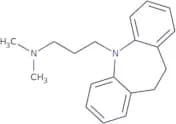
CAS:<p>(E)-N-[Trans-3-{1-(2-nitrophenyl)-1H-pyrrol-2-yl} allylidenamino]guanidinium acetate is a research tool that has been shown to be an activator of a variety of receptors. It binds to the receptor, which is an ion channel protein, and alters its properties. This compound has been shown to bind to ligands and receptors by competitive inhibition. In addition, it has been shown to inhibit the binding of antibodies to cell surface antigens. This compound may have potential use in pharmacology as a therapeutic drug for neurological disorders such as Alzheimer's disease.</p>Fórmula:C16H18N6O4Pureza:Min. 95%Peso molecular:358.35 g/molImipramine
CAS:Producto controlado<p>Imipramine is a tricyclic antidepressant drug that is used to treat major depressive disorder, anxiety disorders, and chronic pain. Imipramine binds to the α1-acid glycoprotein receptor, which may be due to its ability to inhibit hydrogen bonding interactions with other inhibitor molecules. The rate constant of imipramine binding to the α1-acid glycoprotein receptor is high enough for this drug to have a significant effect on the rate of serotonin reuptake in the brain. Imipramine has been shown to have dna binding activity and can be detected in blood samples.br>br>Imipramine has been shown to cause drug interactions with drugs such as warfarin and other anticoagulants, which are metabolized by cytochrome P450 enzymes. Imipramine also interacts with drugs that are substrates for p-glycoprotein (e.g., digoxin) or CYP2D6 (e</p>Fórmula:C19H24N2Pureza:Min. 95%Peso molecular:280.41 g/molCDH1 antibody
<p>The 6-Fluoro-3-indoxyl-beta-D-galactopyranoside is an antituberculosis drug that falls under the class of rifamycins. It is highly effective in treating tuberculosis infections. This active compound exhibits bactericidal activity by binding to DNA-dependent RNA polymerase, preventing transcription and replication. Through various metabolic transformations such as hydrolysis by esterases or glucuronidases, oxidation by cytochrome P450 enzymes, reduction by glutathione reductase, or conjugation with glucuronic acid, it undergoes metabolization. Additionally, it specifically targets markers expressed at high levels in Mycobacterium tuberculosis strains and inhibits cell growth. Choose 6-Fluoro-3-indoxyl-beta-D-galactopyranoside for a powerful solution against tuberculosis.</p>PECAM1 antibody
<p>The PECAM1 antibody is a monoclonal antibody that is water-soluble and specifically targets the PECAM1 protein. It has been shown to be effective in various applications such as diagnostic agents, pharmacologic studies, and life sciences research. The antibody can be used in experiments involving reaction solutions, electrophoresis, and enzyme-linked immunosorbent assays (ELISA). Additionally, it has been used to detect autoantibodies in human serum samples. The PECAM1 antibody is a valuable tool for researchers and scientists looking to study the function and expression of the PECAM1 protein.</p>













![(5Z)-5-[[4-[(2-Methylphenyl)thio]-3-nitrophenyl]methylene]-2-thioxo-4-thiazolidinone](/_next/image/?url=https%3A%2Fstatic.cymitquimica.com%2Fproducts%2F3D%2Fthumb-webp%2FPJC28517.webp&w=3840&q=75)













![(E)-N-[Trans-3-{1-(2-nitrophenyl)-1H-pyrrol-2-yl} allylidenamino]guanidinium acetate](/_next/image/?url=https%3A%2Fstatic.cymitquimica.com%2Fproducts%2F3D%2Fthumb-webp%2FJNB85074.webp&w=3840&q=75)