Compuestos y reactivos bioquímicos
Los bioquímicos y reactivos son sustancias fundamentales para la investigación y el desarrollo en campos como la biotecnología, la biología molecular, la farmacología y la medicina. Estos productos son esenciales para una variedad de aplicaciones, incluyendo la síntesis de compuestos, el análisis de muestras biológicas, la investigación de procesos metabólicos y la producción de medicamentos. En CymitQuimica, ofrecemos una amplia selección de bioquímicos y reactivos de alta calidad y pureza, adecuados para diversas necesidades científicas e industriales. Nuestro catálogo incluye enzimas, anticuerpos, ácidos nucleicos, aminoácidos, y muchos otros productos, todos diseñados para apoyar a los investigadores y profesionales en sus proyectos de investigación y desarrollo, asegurando resultados confiables y reproducibles.
Subcategorías de "Compuestos y reactivos bioquímicos"
- Biomoléculas(99.117 productos)
- Por objetivo biológico(99.161 productos)
- Según efectos farmacológicos(6.787 productos)
- Crioconservantes(21 productos)
- Desinfectantes y compuestos relacionados(28 productos)
- Hormonas(346 productos)
- Biología Vegetal(6.710 productos)
- Metabolitos secundarios(14.222 productos)
Se han encontrado 130581 productos de "Compuestos y reactivos bioquímicos"
Ordenar por
Pureza (%)
0
100
|
0
|
50
|
90
|
95
|
100
Hydroxyguanidine Sulfate
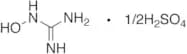
CAS:Producto controlado<p>Stability Hygroscopic<br>Applications Reacts with NO forming anadduct which is a potent and stable vasodilator. Its actions are very similar to those of NG-Hydroxy-L-arginine on the potentiation and stabilization of NO.<br>References Zembowicz, A., et al.: Br. J.Pharmacol., 107, 1001 (1992)<br></p>Fórmula:CH5N3O·H2O4SForma y color:NeatPeso molecular:248.22D-erythro-N,N-Dimethylsphingosine
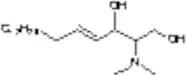
CAS:Producto controlado<p>Applications D-erythro-N,N-Dimethylsphingosine is general modulator of protein kinases . D-erythro-N,N-Dimethylsphingosine is implicated in neuropathic pain.<br>References Igarashi, Y. et al.: Biochemistry, 28, 6796 (1989), Igarashi, Y. et al.: J. Biol. Chem., 265, 5385 (1990); Chemical and Engineering News, 90(4) 8 (2012)<br></p>Fórmula:C20H41NO2Forma y color:NeatPeso molecular:327.54Azomethine-H
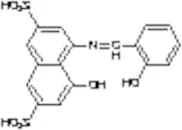
CAS:<p>Stability Hygroscopic<br>Applications Azomethine-H ia a highly sensitive reagent for testing boron.<br>References Korenman, I.M.: Zh. Analit. Khimii, 2, 153 (1947), Capelle, R.: Analyt. Chim. Acta., 24, 555 (1961), Capelle, R.: Analyt. Chim. Acta., 25, 59 (1961)<br></p>Fórmula:C17H13NO8S2Pureza:>90%Forma y color:OrangePeso molecular:423.425-Methylcytosine (~90%)
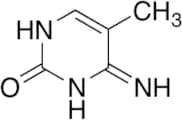
CAS:Producto controlado<p>Applications 5-Methylcytosine (cas# 554-01-8) is a useful research chemical.<br></p>Fórmula:C5H7N3OPureza:~90%Forma y color:NeatPeso molecular:125.13TCEP Hydrochloride (0.5M in water)
CAS:Producto controladoFórmula:C9H15O6P·ClHForma y color:ColourlessPeso molecular:286.65Oxythiamine Hydrochloride
CAS:Producto controlado<p>Stability Hygroscopic<br>Applications Oxythiamine HCl (cas# 136-16-3) is a useful research chemical.<br></p>Fórmula:C12H15N3O2S·HClForma y color:NeatPeso molecular:301.79Linoleoyl Carnitine
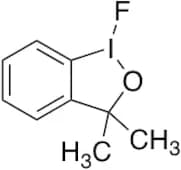
CAS:Producto controlado<p>Stability Hygroscopic, Temperature Sensitive<br>Applications A carnitine ester of unsaturated fatty acid. Used in the studies of fibroblasts in long-chain 3-hydroxyacyl-CoA dehydrogenase deficiency and fatty acid oxidation disorders.<br>References Gross R.W., et al.: J. Biol. Chem., 258, 5221 (1983),<br></p>Fórmula:C25H45NO4Forma y color:NeatPeso molecular:423.631-Fluoro-3,3-dimethyl-1,2-benziodoxole
CAS:Producto controlado<p>Applications 1-fluoro-3,3-dimethyl-1$l^{3},2-benziodoxole (cas# 1391728-13-4) is a useful research chemical.<br></p>Fórmula:C9H10FIOForma y color:NeatPeso molecular:280.078Glycodeoxycholic Acid Sodium Salt
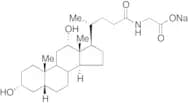
CAS:Producto controlado<p>Stability Hygroscopic<br>Applications Glycodeoxycholic acid is a bile acid that induces severe pancreatitis in rats.<br>References Houghton, A., et al.: Neuroreport, 8, 3795 (1997); Lake, A., et al.: Toxicol. Appl. Pharm., 268, 132 (2013); Zhao, X., et al.: Scand. J. Gastroentero., 37, 1351 (2002)<br></p>Fórmula:C26H42NO5·NaForma y color:White To Off-WhitePeso molecular:471.61Rhodamine-123
CAS:<p>Applications Rhodamine-123 is a fluorescent dye most commonly used in flow cytometry as functional reporter for Pgp. Rhodamine 123 (R123), as a typical of P-glycoprotein substrate, was widely used to quantify P-glycoprotein (P-gp) functional efflux activity in vivo. Rhodamine-123 can be used in multiparameter analyses without fluorescence interference in combination with common protein labeling dyes such as PE-Cy5 and AMCA (7-amino-4-methylcoumarin-3-acetic acid).<br>References Yumoto, R., et al.: J. Pharmacol. Exp. Ther., 289, 149 (1999), Romiti, N., et al.: Toxicol. Appl. Pharmacol., 183, 83 (2002), Mizuno, N., et al.: Pharmacol. Rev., 559, 425 (2003), del Amo, E., et al.: Eur. J. Pharm. Sci., 36, 200 (2009),<br></p>Fórmula:C21H16N2O3·ClHForma y color:NeatPeso molecular:380.82DL-Cysteine
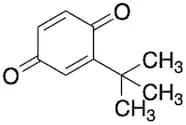
CAS:Producto controlado<p>Stability Hygroscopic<br>Applications Cysteine is a non-essential amino acid that can be synthesized by the human body under normal physiological conditions if a sufficient quantity of methionine is available. Cysteine is commonly used as a precursor in the food and pharmaceutical industries. Cysteine is used as a processing aid for baking, as an additive in cigarettes, as well as in the preparation of meat flavours.<br>References Hui, N. et al.: Meat Sci. Appl., 74 (2001); Kiviharju, K. et al.: J. Biotechnol., 117, 299 (2005); Pecivova, P. et al.: J. Sci. Food Agric., 90, 1681 (2010);<br></p>Fórmula:C3H7NO2SForma y color:NeatPeso molecular:121.162-tert-Butyl-1,4-benzoquinone
CAS:Producto controlado<p>Applications 2-Tert-Butyl-1,4-Benzoquinone (cas# 3602-55-9) is a useful research chemical.<br></p>Fórmula:C10H12O2Forma y color:NeatPeso molecular:164.20Disperse Blue 60 (Technical Grade)
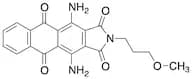
CAS:Producto controlado<p>Applications Disperse Blue 60 (cas# 12217-80-0) is a compound useful in organic synthesis.<br></p>Fórmula:C20H17N3O5Forma y color:NeatPeso molecular:379.37N-(2-Aminoethyl)-2-[phenyl(phenylmethyl)amino]acetamide
CAS:Producto controlado<p>Stability Hygroscopic<br>Applications This compound is an impurity in the synthesis of Antazoline (A678405) which acts as a histamine H1 receptor blocker, functioning as an antihistamine pharmaceutical.<br>References Constanti, A. et al.: Brit. J. Pharmacol. 58, 583 (1976);<br></p>Fórmula:C17H21N3OForma y color:NeatPeso molecular:283.376-α-D-Glucopyranosyl Maltotriose
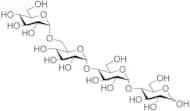
CAS:<p>Stability Hygroscopic<br>Applications Sugar composition of sake.<br>References Giri, N.Y., et al.: Arch. Biochem. Biophysics, 145, 505 (1971a<br></p>Fórmula:C24H42O21Forma y color:NeatPeso molecular:666.58TETA
CAS:Producto controlado<p>Applications TETA, is a macrocyclic ligand, used for development of new imaging agents.<br></p>Fórmula:C18H32N4O8•4HCl•xH2OForma y color:NeatPeso molecular:432.47 + 4(36.46) + x(18.02)1,2-Dilinoleoyl-3-palmitoyl-rac-glycerol
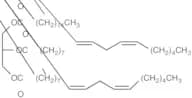
CAS:Producto controlado<p>Stability Light Sensitive<br>Applications 1,2-Dilinoleoyl-3-palmitoyl-rac-glycerol is a triacylglycerol found in sesame oil.<br>References Lee, D., et al.: Analytica Chimica Acta, 429, 321 (2001); Jahaniaval, F., et al.: J. AM. Oil Chem. Soc., 77,847 (2000)<br></p>Fórmula:C55H98O6Forma y color:NeatPeso molecular:855.36L-Glutamic Acid 5-Methyl Ester
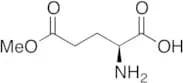
CAS:Producto controlado<p>Applications L-Glutamic acid 5-methyl ester is a protected form of L-Glutamic acid (G596960). L-Glutamic acid is a nonessential amino acid that is important to the mammalian central nervous system. L-Glutamic acid is also a neurotransmitter for cone photoreceptors in the human brain and is used as a treatment for patients who have liver disease accompanied by encephalopathy (a condition termed ‘hepatic coma’).<br>References Anderson, H., et al.: J. Nutr., 99, 82 (1969); Brandon, C. & Lam, D.: Proc. Nat. Acad. Sci., 80, 5117 (1983); McDermott Jr, W., et al.: New Engl. J. Med., 253, 1093 (1955)<br></p>Fórmula:C6H11NO4Forma y color:NeatPeso molecular:161.156






![N-(2-Aminoethyl)-2-[phenyl(phenylmethyl)amino]acetamide](/_next/image/?url=https%3A%2Fstatic.cymitquimica.com%2Fproducts%2FTR%2Fthumb-webp%2FA609260.webp&w=3840&q=75)