Compuestos y reactivos bioquímicos
Los bioquímicos y reactivos son sustancias fundamentales para la investigación y el desarrollo en campos como la biotecnología, la biología molecular, la farmacología y la medicina. Estos productos son esenciales para una variedad de aplicaciones, incluyendo la síntesis de compuestos, el análisis de muestras biológicas, la investigación de procesos metabólicos y la producción de medicamentos. En CymitQuimica, ofrecemos una amplia selección de bioquímicos y reactivos de alta calidad y pureza, adecuados para diversas necesidades científicas e industriales. Nuestro catálogo incluye enzimas, anticuerpos, ácidos nucleicos, aminoácidos, y muchos otros productos, todos diseñados para apoyar a los investigadores y profesionales en sus proyectos de investigación y desarrollo, asegurando resultados confiables y reproducibles.
Subcategorías de "Compuestos y reactivos bioquímicos"
- Biomoléculas(99.117 productos)
- Por objetivo biológico(99.161 productos)
- Según efectos farmacológicos(6.787 productos)
- Crioconservantes(21 productos)
- Desinfectantes y compuestos relacionados(28 productos)
- Hormonas(346 productos)
- Biología Vegetal(6.705 productos)
- Metabolitos secundarios(14.220 productos)
Se han encontrado 130581 productos de "Compuestos y reactivos bioquímicos"
Ordenar por
Pureza (%)
0
100
|
0
|
50
|
90
|
95
|
100
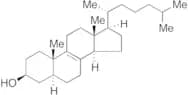
Zymostenol
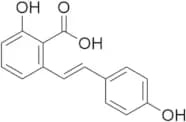
CAS:Producto controlado<p>Applications Zymostenol, is the derivative of Zymosterol (Z701520), which is an sterol intermediate in the biosynthesis of cholesterol (C432501).<br>References Roland, E.D., et al.: J. Am. Chem. Soc., 111, 278 (1989); Echevarria, F., et al.: J. Biol. Chem., 265, 8484 (1990); Baranovskii, A.V., et al.: Russian. J. Bioorg. Chem., 28, 250 (2002); Schoenheimer, et al.: J. Biol. Chem., 105, 355 (1934);<br></p>Fórmula:C27H46OForma y color:NeatPeso molecular:386.65(E)-2-Hydroxy-6-(4-hydroxystyryl)benzoic Acid
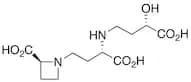
CAS:Producto controladoFórmula:C15H12O4Forma y color:NeatPeso molecular:256.252’-Deoxymugineic Acid
CAS:Producto controlado<p>Applications Phytosiderophores are produced in higher plants as iron chelating amino acids that promote uptake of iron from soil.<br>References Klair, S., et al.: J. Plant Nutr., 19, 1295 (1996),<br></p>Fórmula:C12H20N2O7Forma y color:NeatPeso molecular:304.30Bis[2-(succinimidooxycarbonyloxy)ethyl] Sulfone
CAS:Producto controlado<p>Stability Moisture Sensitive<br>Applications An amine reactive homobifunctional crosslinking reagent. Used to crosslink ß-endorphin to opioid receptors.Spacer Arm: 13.0 Angstroms<br>References Zarling, D.A., et al.: J. Immunol., 124, 913 (1980), Howard, A.D., et al.: J. Biol. Chem., 260, 10833 (1985), Bouizar, Z., et al.: Eur. J. Biochem., 155, 141 (1986)<br></p>Fórmula:C14H16N2O12SForma y color:NeatPeso molecular:436.35Olivetol
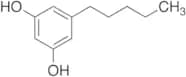
CAS:Producto controlado<p>Stability Light Sensitive<br>Applications Olivetol is a precursor in various syntheses of tetrahydrocannabinol.<br>References Kumano, T., et al.: Bioorg. Med. Chem., 16, 8117 (2008), Appendino, G., et al.: J. Nat. Prod., 71, 1427 (2008), Sampietro, D., et al.: Food Chem., 115, 1170 (2009),<br></p>Fórmula:C11H16O2Forma y color:NeatPeso molecular:180.24Poly(ethylene Glycol) ~20000
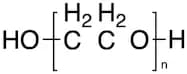
CAS:Producto controlado<p>Stability Hygroscopic<br>Applications Poly(ethylene Glycol) molecules of an average molecular mass of 20000. Poly(ethylene Glycol) is used in various applications from industrial chemistry to biological chemistry. Recent research has shown PEG maintains the ability to aid the spinal cord injury recovery process, helping the nerve impulse conduction process in animals. In rats, it has been shown to aid in the repair of severed sciatic axons, helping with nerve damage recovery. It is industrially produced as a lubricating substance for various surfaces to reduce friction. PEG is also used in the preparation of vesicle transport systems in with application towards diagnostic procedures or drug delivery methods.<br>References Borgens, R. et al.: J. Neurosci. Res., 66, 1179 (2001); Stavisky, R. et al.: Neurosci. Lett., 376, 98 (2005); Nalam, P. et al.: Tribiol. Lett., 37, 541 (2010); Steinmetz, N. et al.: J. Am. Chem. Soc., 131, 17093 (2009); Li, X. et al.: J. Am. Chem. Soc., 133, 11147 (2011); Li, L. et al.: Int. J. Pharm., 447, 192 (2013);<br></p>Fórmula:H2O(C2H4O)nForma y color:Off-WhitePeso molecular:62.07Urolithin A
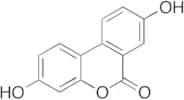
CAS:<p>Applications Urolithin A is a major metabolite of ellagitannin and exhibits anti-inflammatory and antioxidant properties.<br>References Ishimoto, H., et. al.: Bioorg. Med. Chem. Lett., 21, 5901 (2011);<br></p>Fórmula:C13H8O4Forma y color:NeatPeso molecular:228.20Solvent Red 52
CAS:Producto controlado<p>Applications Solvent Red 52 is used in method for production of Poly(trimethylene furandicarboxylate) using Zinc catalyst.<br>References Poladi, Raja Hari, et al.: PCT Int. Appl., (2018);<br></p>Fórmula:C24H18N2O2Forma y color:RedPeso molecular:366.412Congo Red (90%)
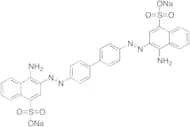
CAS:Producto controlado<p>Applications Congo Red is a secondary diazo dye that is used to stain β sheet aggregates. Congo Red can be used to diagnose amyloidosis. Dyes and metabolites, Environmental Testing<br>References Falk, R. H. et al.: N Engl J Med 337, 898 (1997); Ishii, W., et al.: intern Med. May;42, 400 (2003)<br></p>Fórmula:C32H22N6O6S2·2NaPureza:90%Forma y color:Red BrownPeso molecular:696.666-[(4-Nitrobenzyl)thio]-9-β-D-ribofuranosylpurine-5’-monophosphate, Disodium Salt
CAS:Producto controlado<p>Applications Used in therapy of mouse leukemia L1210 in combinations with Nebularin and Nitrobenzylthioinosine 5’-monophosphate.<br>References Anderson, C., et al.: Neurosci. Lett., 219, 191 (1996), Allay, J., et al.: Nat. Med., 4, 1136 (1998),<br></p>Fórmula:C17H16N5Na2O9PSForma y color:NeatPeso molecular:543.36N-(Acetyl-d3)-S-benzyl-L-cysteine
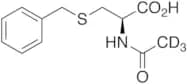
CAS:Producto controlado<p>Applications A labelled metabolite of Toluene.<br>References Gargas, M., et al.: Toxicol. Appl. Pharmacol., 98, 87 (1989), Commandeur, J., et al.: Pharmacol. Rev., 47(2), 271 (1995), Campo, P., et al.: Neurotoxicol. Teratol., 21, 427 (1999), Lohse, C., et al.: J. Agr. Food Chem., 48, 5913 (2000),<br></p>Fórmula:C122H3H12NO3SForma y color:White To Off-WhitePeso molecular:256.34Thyroxine-13C6
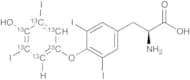
CAS:<p>Applications One of the thyroid hormones involved in the maintenance of metabolic homeostasis. Synthesized and stored as amino acid residues of thyroglobulin, the major protein component of the thyroid follicular colloid. Synthesis and secretion are regulated by the pituitary hormone (TSH). Deiodinated in peripheral tissues to the active metabolite, liothyronine. The D-form has very little activity as a thyroid hormone, but has been used to treat hyperlipidemia.<br>References Post, A., et al.: Anal. Profiles Drug Subs., 5, 225 (1976), Nelson, J.C., et al.: Clin. Chem., 34, 1737 (1988), Fischer, D.A., et al.: Clin. Chem., 42, 135 (1996), Cavalieri, R.R., et al.: Thyroid, 7, 177 (1997),<br></p>Fórmula:C913C6H11I4NO4Forma y color:White To Light BrownPeso molecular:782.837,8-Diaminopelargonic Acid Dihydrochloride
CAS:Producto controlado<p>Stability Hygroscopic<br>Applications Dethiobiotin synthetase carbonylation carbamate.<br></p>Fórmula:C9H20N2O2·2HClForma y color:NeatPeso molecular:261.19Triton X-100
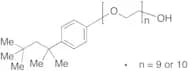
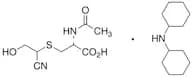
CAS:<p>Applications Triton-X 100 is a non-ionic surfactant. Used in the enhancement of film porosity in conducting polymers.<br> Not a dangerous good if item is equal to or less than 1g/ml and there is less than 100g/ml in the package<br>References Tevi, T. et al.: Synth. Mat., 191, 59 (2014); Zhang, L. et al.: Nano Lett., 14, 4189 (2014);<br></p>Fórmula:C14H22O·(OCH2CH2)nForma y color:ColourlessPeso molecular:250.38N-Acetyl-S-(1-cyano-2-hydroxyethyl)-L-cysteine Dicyclohexylamine Salt (Mixture of Diastereomers)
CAS:<p>Applications A metabolite of Acrylonitrile (ACN).<br>References Guengerich, F., et al.: Cancer Res., 41, 4925 (1981), Leonard, A., et al.: Mutation Res., 436, 263 (1999), Stadler, R., et al.: J. Agric. Food Chem., 52, 5550 (2004), Dybing, E., et al.: Food Chem. Toxicol., 43, 365 (2005), Rice, J., et al.: Mutation Res., 580, 3 (2005),<br></p>Fórmula:C12H23N·C8H12N2O4SForma y color:NeatPeso molecular:413.57SR 9011
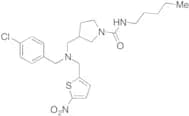
CAS:<p>Applications SR 9011 is a synthetic REV-ERBα/β agonist with activity in vivo. It is a lead compound for a new class of cancer drugs associated with the body’s circadian clock.<br>References Solt, L.A., et. al.: Nature, 485, 7396 (2012); Chem. and Eng. News. p.8, Jan. 15, 2018<br></p>Fórmula:C23H31ClN4O3SForma y color:NeatPeso molecular:479.004-Acetyl-L-phenylalanine Hydrochloride
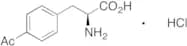
CAS:<p>Applications 4-Acetyl-L-phenylalanine Hydrochloride is the 4-acetyl analogue of the essential amino acid L-phenylaniline. 4-Acetyl-L-phenylalanine as well as other unnatural amino acids can be genetically incorporated successfully into proteins in Escherichia coli as well as mammalian cells.<br>References Liu, W. et al.: Nature Meth., 4, 239 (2007); Liu, C. et al.: Nature Biotechnol., 29, 164 (2011);<br></p>Fórmula:C11H13NO3•HClForma y color:NeatPeso molecular:207.233646(3Z)-17-Desacetyl Norgestimate
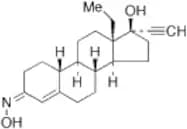
CAS:Producto controlado<p>Applications A metabolite of Norgestimate. Note- The oxime isomerizes when: 1) Heated in any solvent or heating the crystalline form 2) Dissolved in MeOH at room temperature very quickly 3) Dissolved in acetone or CHCl3 at room temperature in a couple of hours at room temperature4) In EtOAc or EtOAc/isooctane over a couple of days at RT. It is stable in the crystalline form.<br>References Phillips, A., et al.: Steroids, 55, 373 (1990)<br></p>Fórmula:C21H29NO2Forma y color:White To BeigePeso molecular:327.465-Methylcytosine (~90%)
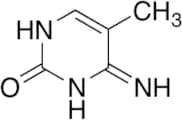
CAS:Producto controlado<p>Applications 5-Methylcytosine (cas# 554-01-8) is a useful research chemical.<br></p>Fórmula:C5H7N3OPureza:~90%Forma y color:NeatPeso molecular:125.13

![Bis[2-(succinimidooxycarbonyloxy)ethyl] Sulfone](/_next/image/?url=https%3A%2Fstatic.cymitquimica.com%2Fproducts%2FTR%2Fthumb-webp%2FB585000.webp&w=3840&q=75)

![6-[(4-Nitrobenzyl)thio]-9-β-D-ribofuranosylpurine-5’-monophosphate, Disodium Salt](/_next/image/?url=https%3A%2Fstatic.cymitquimica.com%2Fproducts%2FTR%2Fthumb-webp%2FN495770.webp&w=3840&q=75)