Compuestos y reactivos bioquímicos
Los bioquímicos y reactivos son sustancias fundamentales para la investigación y el desarrollo en campos como la biotecnología, la biología molecular, la farmacología y la medicina. Estos productos son esenciales para una variedad de aplicaciones, incluyendo la síntesis de compuestos, el análisis de muestras biológicas, la investigación de procesos metabólicos y la producción de medicamentos. En CymitQuimica, ofrecemos una amplia selección de bioquímicos y reactivos de alta calidad y pureza, adecuados para diversas necesidades científicas e industriales. Nuestro catálogo incluye enzimas, anticuerpos, ácidos nucleicos, aminoácidos, y muchos otros productos, todos diseñados para apoyar a los investigadores y profesionales en sus proyectos de investigación y desarrollo, asegurando resultados confiables y reproducibles.
Subcategorías de "Compuestos y reactivos bioquímicos"
- Biomoléculas(99.117 productos)
- Por objetivo biológico(99.161 productos)
- Según efectos farmacológicos(6.787 productos)
- Crioconservantes(21 productos)
- Desinfectantes y compuestos relacionados(28 productos)
- Hormonas(346 productos)
- Biología Vegetal(6.705 productos)
- Metabolitos secundarios(14.220 productos)
Se han encontrado 130581 productos de "Compuestos y reactivos bioquímicos"
Ordenar por
Pureza (%)
0
100
|
0
|
50
|
90
|
95
|
100
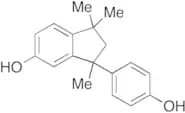
3-(4-Hydroxyphenyl)-1,1,3-trimethyl-5-indanol
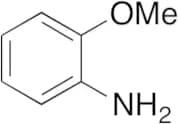
CAS:Producto controlado<p>Stability Light Sensitive<br>Applications 3-(4-Hydroxyphenyl)-1,1,3-trimethyl-5-indanol is a compound derived from Bisphenol A (B519495), a chemical used in the manufacturing of polycarbonate plastics that has effects on reproductive health, body weight, and plasma LH levels in female Sprague-Dawley rats.<br>References Calafat, A., et al.: Environ. Health Persp., 116, 39 (2008); Rubin, B., et al.: Environ. Health Persp., 109, 675 (2001)<br></p>Fórmula:C18H20O2Forma y color:NeatPeso molecular:268.35o-Anisidine
CAS:Producto controlado<p>Applications o-Anisidine, is a highly toxic environmental pollutant and digestive system carcinogen. It is also a toxin that has been identified to be present in cigarettes.Environmental toxin on US EPA Toxic Release Inventory list (TRI) list.<br> Not a dangerous good if item is equal to or less than 1g/ml and there is less than 100g/ml in the package<br>References Coggins, C.R.E. et al.: Inhal. Toxicol., 23, 41 (2011); Dracinska, H. et al.: Neuroendorinol. Lett., 27, 9 (2006); Naiman, K. et al.: Neuroendocrinol. Lett., 31, 36 (2010);<br></p>Fórmula:C7H9NOForma y color:Dark Red To Dark BrownPeso molecular:123.15(all-cis)-7,10,13,16,19-Docosapentaenoic Acid
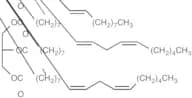
CAS:Producto controladoFórmula:C22H34O2Forma y color:NeatPeso molecular:330.501,2-Dilinoleoyl-3-oleoyl-rac-glycerol
CAS:Producto controlado<p>Stability Light Sensitive, Temperature Sensitive<br>Applications 1,2-Dilinoleoyl-3-oleoyl-rac-glycerol is a triacylglycerol found in sesame oil.<br>References Lee, D., et al.: Analytica Chimica Acta, 429, 321 (2001); Jahaniaval, F., et al.: J. AM. Oil Chem. Soc., 77,847 (2000)<br></p>Fórmula:C57H100O6Forma y color:NeatPeso molecular:881.405(6)-Carboxynaphthofluorescein
CAS:Producto controlado<p>Applications 5(6)-Carboxynaphthofluorescein is a pH-dependent fluorophore.<br></p>Fórmula:C29H16O7Forma y color:NeatPeso molecular:476.4334-Hydroxybutanesulfonate Sodium Salt (Technical Grade)
CAS:Producto controlado<p>Applications Impurity of β-cyclodextrin (C987830), a cyclic oligosaccharide produced from starch via enzymatic conversion.<br>References Johnson, M.D., et al.: J. Pharma. Sci., 83, 1142 (1994); Jain, A.C., et al.: Int. J. Pharma., 212, 177 (2001);<br></p>Fórmula:C4H9O4S·NaForma y color:NeatPeso molecular:176.1725-Hydroxy Vitamin D2
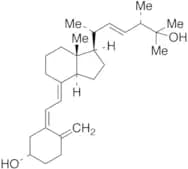
CAS:Producto controlado<p>Stability Light Sensitive, Temperature Sensitive<br>Applications A metabolite of Vitamin D2 (V676040).<br> Not a dangerous good if item is equal to or less than 1g/ml and there is less than 100g/ml in the package<br>References Barnes, P., et al.: J. Clin. Invest., 83, 1527 (1989), Holick, M., et al.: J. Cell Biochem., 88(2), 296 (2003), Maunsell, Z., et al.: Clin. Chem., 51, 1683 (2005),<br></p>Fórmula:C28H44O2Forma y color:White To Light YellowPeso molecular:412.651-Linoleoyl-3-palmitoyl-rac-glycerol
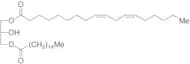
CAS:<p>Applications Fatty acid ester with glycerol from banana fruit residues as source of valuable phytosterols.<br>References Banskota, A., ET AL.: Biol. Pharm. Bull., 23, 456 (2000), Luo, H., ET AL.: J. Nat. Prod., 68, 94 (2005), Oliveira, L., et al.: J. Agric. Food Chem., 54, 2598 (2006), Oliveira, L., et al.: Ind. Crops Prod., 26, 163 (2007),<br></p>Fórmula:C37H68O5Forma y color:NeatPeso molecular:592.93β-Muricholic Acid
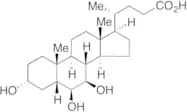
CAS:Producto controlado<p>Applications β-Muricholic Acid is an bile acid found in urine. β-Muricholic Acid has been used in studies of down regulation of transporter protein through ubiquitin dependent protein degradation.<br>References Miyata, M., et al.: Euro. J. Pharmacol., 714, 507 (2013);<br></p>Fórmula:C24H40O5Forma y color:White To Off-WhitePeso molecular:408.573'-Azido-3'-deoxythymidine β-D-glucuronide, Sodium Salt
CAS:Producto controlado<p>Stability Hygroscopic<br>Applications A metabolite of the potent and selective inhibitor of HIV-1 replication, AZT.<br></p>Fórmula:C16H20N5O10·NaForma y color:White To Light YellowPeso molecular:465.35[Leu5]-Enkephalin Acetate
CAS:<p>Applications [Leu5]-Enkephalin is a neurotransmitter used in molecular dynamics studies for the insertion of neurotransmitters into lipid bilayer membranes and their implication on membrane stability.<br>References Shen, C., et al.: ChemPhysChem, pages ahead of print (2017)<br></p>Fórmula:C28H37N5O7·x(C2H4O2)Forma y color:NeatPeso molecular:615.67L-Lysine-15N Dihydrochloride Salt
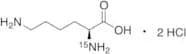
CAS:Fórmula:C6H14N15NO2•2(HCl)Forma y color:NeatPeso molecular:147.1823646Zymostenol
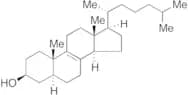
CAS:Producto controlado<p>Applications Zymostenol, is the derivative of Zymosterol (Z701520), which is an sterol intermediate in the biosynthesis of cholesterol (C432501).<br>References Roland, E.D., et al.: J. Am. Chem. Soc., 111, 278 (1989); Echevarria, F., et al.: J. Biol. Chem., 265, 8484 (1990); Baranovskii, A.V., et al.: Russian. J. Bioorg. Chem., 28, 250 (2002); Schoenheimer, et al.: J. Biol. Chem., 105, 355 (1934);<br></p>Fórmula:C27H46OForma y color:NeatPeso molecular:386.65Poly(ethylene Glycol) ~2000
CAS:<p>Applications Poly(ethylene Glycol) molecules of an average molecular mass of 2000. Poly(ethylene Glycol) is used in various applications from industrial chemistry to biological chemistry. Recent research has shown PEG maintains the ability to aid the spinal cord injury recovery process, helping the nerve impulse conduction process in animals. In rats, it has been shown to aid in the repair of severed sciatic axons, helping with nerve damage recovery. It is industrially produced as a lubricating substance for various surfaces to reduce friction. PEG is also used in the preparation of vesicle transport systems in with application towards diagnostic procedures or drug delivery methods.<br>References Borgens, R. et al.: J. Neurosci. Res., 66, 1179 (2001); Stavisky, R. et al.: Neurosci. Lett., 376, 98 (2005); Nalam, P. et al.: Tribiol. Lett., 37, 541 (2010); Steinmetz, N. et al.: J. Am. Chem. Soc., 131, 17093 (2009); Li, X. et al.: J. Am. Chem. Soc., 133, 11147 (2011); Li, L. et al.: Int. J. Pharm., 447, 192 (2013);<br></p>Fórmula:H2O(C2H4O)nForma y color:White To Off-WhitePeso molecular:62.07Allura Red AC (Technical Grade)
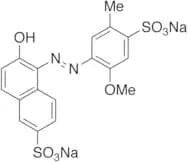
CAS:<p>Stability Very Hygroscopic, Light Sensitive<br>Applications Color additive in foods, drugs and cosmetics. It is used as a food dye and has the E number E129. The study found increased levels of hyperactivity and attention deficit hyperactivity disorder and lower IQs were observed in children consuming the chemicals. It is banned in Denmark, Belgium, France, Switzerland, Sweden. Dyes and metabolites, Environmental Testing.<br>References Kirschbaum, J., et al.: Eur. Food Res. Technol., 222, 572 (2006), Yoshioka, N., et al.: Talanta, 74, 1408 (2008), Al-Degs, Y., et al.: Food Chem., 117, 485 (2009),<br></p>Fórmula:C18H14N2O8S2·2NaForma y color:NeatPeso molecular:496.42Folcysteine
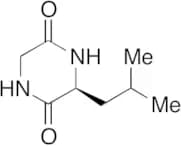
CAS:Producto controlado<p>Applications A cysteine derivative as potential antitumor agent. (A609645)A vitamin needed to synthesize DNA, conduct DNA repair and methylate DNA, it also acts as a cofactor in biological reactions involving folate. (F680300)<br>References Paul, B., et al.: J. Med. Chem., et al.: 19, 1002 (1976), Xu, L., et al.: Mol. Pharm., 7, 1311 (2010), Everette, J., et al.: J. Agric. Food Chem., 58, 8139 (2010), Alshatwi, A., et al.: Food, Chem., Toxicol., 48, 1881 (2010), McKay, D., et al.: Nut. J., 9 (2010),<br></p>Fórmula:C19H19N7O6·C6H9NO3SForma y color:YellowPeso molecular:616.17Cyclo(Leu-Gly)
CAS:Producto controlado<p>Applications Cyclo(Leu-Gly) is an antimicrobial compound produced by Latobacillus plantarum.<br>References Niku-Paavola, M., et al.: J. Appl. Microbiol., 86, 29 (1999)<br></p>Fórmula:C8H14N2O2Forma y color:Off-WhitePeso molecular:170.21





![[Leu5]-Enkephalin Acetate](/_next/image/?url=https%3A%2Fstatic.cymitquimica.com%2Fproducts%2FTR%2Fthumb-webp%2FL330340.webp&w=3840&q=75)