Compuestos y reactivos bioquímicos
Los bioquímicos y reactivos son sustancias fundamentales para la investigación y el desarrollo en campos como la biotecnología, la biología molecular, la farmacología y la medicina. Estos productos son esenciales para una variedad de aplicaciones, incluyendo la síntesis de compuestos, el análisis de muestras biológicas, la investigación de procesos metabólicos y la producción de medicamentos. En CymitQuimica, ofrecemos una amplia selección de bioquímicos y reactivos de alta calidad y pureza, adecuados para diversas necesidades científicas e industriales. Nuestro catálogo incluye enzimas, anticuerpos, ácidos nucleicos, aminoácidos, y muchos otros productos, todos diseñados para apoyar a los investigadores y profesionales en sus proyectos de investigación y desarrollo, asegurando resultados confiables y reproducibles.
Subcategorías de "Compuestos y reactivos bioquímicos"
- Biomoléculas(99.115 productos)
- Por objetivo biológico(99.160 productos)
- Según efectos farmacológicos(6.787 productos)
- Crioconservantes(21 productos)
- Desinfectantes y compuestos relacionados(28 productos)
- Hormonas(346 productos)
- Biología Vegetal(6.722 productos)
- Metabolitos secundarios(14.222 productos)
Se han encontrado 130582 productos de "Compuestos y reactivos bioquímicos"
Ordenar por
Pureza (%)
0
100
|
0
|
50
|
90
|
95
|
100
FGF21 antibody
<p>The FGF21 antibody is a growth factor that is used in the field of Life Sciences. It is a monoclonal antibody that specifically targets and binds to FGF21, a protein involved in various physiological processes. The FGF21 antibody can be used for research purposes, such as studying the role of FGF21 in different disease models or investigating its potential as a therapeutic target.</p>ALDH1L1 antibody
<p>The ALDH1L1 antibody is a monoclonal antibody that targets the α1 subunit of glutamate receptors. It is widely used in Life Sciences research for its ability to specifically bind to this target protein. The ALDH1L1 antibody can be used in various applications, including immunohistochemistry, western blotting, and flow cytometry.</p>N-[(1S,2S,3R)-3-(5,6-Dihydrobenzo[b][1]benzazepin-11-yl)-2-hydroxycyclohexyl]-4-(trifluoromethoxy)benzenesulfonamide
CAS:<p>Please enquire for more information about N-[(1S,2S,3R)-3-(5,6-Dihydrobenzo[b][1]benzazepin-11-yl)-2-hydroxycyclohexyl]-4-(trifluoromethoxy)benzenesulfonamide including the price, delivery time and more detailed product information at the technical inquiry form on this page</p>Fórmula:C27H27F3N2O4SPureza:Min. 95%Peso molecular:532.6 g/mol4-Hydroxy toremifene
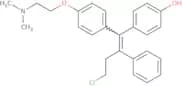
CAS:Producto controlado<p>Toremifene is an antiestrogen that binds to the estrogen receptor and blocks the interaction of estrogens with this receptor. It also inhibits epidermal growth factor, which stimulates cell proliferation. Toremifene is a chemotherapeutic agent that has been shown to inhibit oxidative DNA damage in human endometrial cells in vitro. Kinetic data showed that response element-mediated transcriptional activation was inhibited by toremifene at concentrations greater than 0.1 μM. A multicenter phase II trial showed that toremifene was effective for treating metastatic breast cancer. Toremifene can also be used for the treatment of estrogen-dependent cancers, such as prostate cancer and ovarian cancer, and may have other uses, such as in the treatment of metabolic disorders and liver diseases.</p>Fórmula:C26H28ClNO2Pureza:Min. 95%Peso molecular:422 g/molBis(7)-tacrine
CAS:<p>Bis(7)-tacrine is a synthetic, dimeric acetylcholinesterase inhibitor, which is derived from the classical Alzheimer's treatment drug, tacrine. This compound functions through a dual-binding mechanism where it efficiently inhibits acetylcholinesterase by binding at two different sites, leading to increased availability of acetylcholine at synapses. Bis(7)-tacrine has been studied for its potential neuroprotective and cognitive-enhancing effects.</p>Fórmula:C33H42Cl2N4Pureza:Min. 95%Peso molecular:565.6 g/molOR2M2 antibody
<p>OR2M2 antibody was raised in rabbit using the C terminal of OR2M2 as the immunogen</p>Pureza:Min. 95%SF3B4 antibody
<p>SF3B4 antibody was raised using the N terminal of SF3B4 corresponding to a region with amino acids SFDASDAAIEAMNGQYLCNRPITVSYAFKKDSKGERHGSAAERLLAAQNP</p>ACO2 antibody
<p>The ACO2 antibody is a monoclonal antibody used in Life Sciences research. It has been developed to target specific proteins and molecules involved in various biological processes. This antibody has shown potential in the study of amyloid plaque formation, as well as in the development of inhibitors that can block the aggregation of these plaques. Additionally, the ACO2 antibody has been found to be effective in assessing microvessel density, which is crucial for understanding angiogenesis and tumor growth. This antibody can also be used to detect activated cells and electrodes, making it a valuable tool in cell biology research. Furthermore, the ACO2 antibody has shown reactivity against proteins such as collagen, alpha-fetoprotein, sclerostin, chemokines, interleukins, and cytotoxic factors present in human serum. Its high specificity and sensitivity make it an indispensable asset for researchers working in various fields of Life Sciences.</p>Tie2 antibody
<p>The Tie2 antibody is a highly specialized monoclonal antibody that targets the carboxyl terminus of the Tie2 receptor. It is commonly used in Life Sciences research to study the role of Tie2 in various biological processes. This antibody specifically binds to human hepatocytes and has been shown to inhibit elastase activity, which is crucial for maintaining tissue integrity. The Tie2 antibody is produced using state-of-the-art hybridization techniques and purified using bovine γ-globulin and streptavidin. Its high specificity and low viscosity make it an ideal tool for studying the natriuretic properties of Tie2 and its potential therapeutic applications.</p>FR194738
CAS:<p>FR194738 is a synthetic statin that inhibits cholesterol synthesis. It has been shown to be effective in lowering cholesterol levels, as well as reducing the incidence of coronary heart disease and stroke. FR194738 inhibits the enzyme HMG-CoA reductase, which is an important regulator of cholesterol synthesis by blocking the conversion of HMG-CoA to mevalonate, a precursor for cholesterol production. The clinical use of FR194738 has not been determined, but it has been shown to have inhibitory effects on fatty acid biosynthesis and epoxidase activity in vitro.</p>Fórmula:C27H38ClNO2SPureza:Min. 95%Peso molecular:476.1 g/molAKT3 antibody
<p>The AKT3 antibody is a monoclonal antibody used in Life Sciences research. It specifically targets the c-myc protein, which is involved in cell growth and proliferation. This antibody has a high affinity for its target and can be used in various applications, such as Western blotting, immunohistochemistry, and flow cytometry.</p>L1CAM antibody
<p>The L1CAM antibody is a monoclonal antibody that specifically targets the L1 cell adhesion molecule. This nuclear antigen is found in various tissues and plays a crucial role in cell adhesion and migration. The L1CAM antibody can be used for immunohistochemistry to detect the expression of L1CAM in different tissues, including blood plasma, as well as for research purposes in the field of Life Sciences.</p>Cyclin E1 antibody
<p>Human cyclin E1 non-phosphopeptide (Thr395) region immunogen, Rabbit polyclonal Cyclin E1 antibody</p>CD44 antibody
<p>CD44 antibody was raised in mouse using recombinant human CD44 (21-145aa) purified from E. coli as the immunogen.</p>Pf-06700841 (p-tosylate)
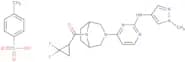
CAS:<p>Pf-06700841 is a peptide that can be used as a research tool for the study of ion channels and protein interactions. It is an inhibitor of the potassium channel, which is involved in the regulation of neuronal excitability. Pf-06700841 also blocks L-type calcium channels, which are important in cell proliferation and differentiation. Pf-06700841 has been shown to inhibit receptor binding at low concentrations, with increased potency at higher concentrations. At high concentrations, it acts as a ligand to activate G protein coupled receptors. Pf-06700841 has been shown to reduce pain in animal models by blocking pain receptors as well as inhibiting the release of inflammatory cytokines from immune cells.</p>Fórmula:C25H29F2N7O4SPureza:Min. 95%Peso molecular:561.6 g/molP4HB protein
<p>P4HB protein is a biomolecule that plays a crucial role in various biological processes. It acts as a lectin, which means it can bind to specific carbohydrate molecules. P4HB protein also has racemase activity, which allows it to convert amino acids from their L-form to their D-form. This protein is involved in cell lysis and cellulose degradation.</p>Pureza:Min. 95%JNJ 26854165
CAS:<p>Activates tumor suppressor p53; anti-proliferative in p53 wild-type tumor cells</p>Fórmula:C21H20N4Pureza:Min. 95%Peso molecular:328.41 g/molCystatin 9 antibody
<p>Cystatin 9 antibody was raised using a synthetic peptide corresponding to a region with amino acids IDNCPFQESLELNNVRQGISFPQVHSCGCCMGCGVGTGAADKAIPRDKGK</p>Pureza:Min. 95%R 715
CAS:<p>R 715 is a fatty acid that inhibits the activity of protein synthesis in the detrusor muscle. It has been shown to inhibit cycloheximide-sensitive glutamate release from nerve terminals and pro-inflammatory factors, such as tumor necrosis factor-α (TNF-α), from microglia cells. R 715 also binds to receptors on bladder cells and rat kidney cells, which may be due to its ability to inhibit receptor binding or activation by amines. Clinical studies have shown that R 715 can be used for the treatment of overactive bladder syndrome, chronic pain, and Parkinson's disease.</p>Fórmula:C57H81N13O12Pureza:Min. 95%Peso molecular:1,140.3 g/molIGJ antibody
<p>The IGJ antibody is a monoclonal antibody that specifically targets the epidermal growth factor (EGF). It is designed to bind to EGF and neutralize its activity. This antibody has been shown to be reactive against serum albumin protein, making it an effective tool for studying the role of albumin in various biological processes. Additionally, the IGJ antibody can also be used as a research tool to study agonist proteins and their effects on cell signaling pathways. It has been demonstrated to be particularly effective against androgen-independent cell lines, suggesting its potential use in cancer research. The IGJ antibody is activated upon binding to its target antigen, allowing for the detection and quantification of EGF levels in various samples, including human serum. With its high specificity and affinity for EGF, this monoclonal antibody offers researchers a valuable tool for investigating the role of EGF in health and disease.</p>JAM3 antibody
<p>JAM3 antibody was raised using the N terminal of JAM3 corresponding to a region with amino acids SSNRTPVVQEFESVELSCIITDSQTSDPRIEWKKIQDEQTTYVFFDNKIQ</p>Pureza:Min. 95%RIPK3-IN-1
CAS:<p>RIPK3-IN-1 is a recombinant protein that activates the receptor, Receptor Interacting Protein Kinase 3 (RIPK3). RIPK3 is a member of the serine/threonine kinase family and is involved in regulating inflammatory responses. The activation of RIPK3 by RIPK3-IN-1 leads to the phosphorylation of various downstream targets, including caspases, which are involved in apoptosis. Inhibitors such as RIPK3-IN-1 may be useful for regulating inflammatory responses in diseases such as obesity, diabetes, Alzheimer's disease and arthritis.</p>Fórmula:C29H25FN4O4Pureza:Min. 95%Peso molecular:512.5 g/molBTG4 antibody
<p>BTG4 antibody was raised using the middle region of BTG4 corresponding to a region with amino acids ILERACVESNVDFSHLGLPKEMTIWVDPFEVCCRYGEKNHPFTVASFKGR</p>Pureza:Min. 95%KUS 121
CAS:<p>KUS 121 is a potent inhibitor of cancer-associated kinases, making it a promising medicinal compound for anticancer therapy. It has been shown to induce apoptosis in human cancer cells by blocking the activity of specific kinases that are involved in tumor growth and cell cycle regulation. KUS 121 has also been detected in urine, indicating its potential as a non-invasive diagnostic tool for cancer detection. This Chinese herbal extract may have significant implications for cancer treatment due to its ability to inhibit protein kinase activity and promote apoptosis in cancer cells. Its effectiveness as an inhibitor of tumor growth and metastasis makes it a promising candidate for further research and development.</p>Fórmula:C22H16FN4NaO3SPureza:Min. 95%Peso molecular:458.4 g/molAnnexin V antibody
<p>The Annexin V antibody is a highly specialized monoclonal antibody that plays a crucial role in various biological processes. It acts as a neutralizing agent against the colony-stimulating factor (CSF) and growth factor GM-CSF, which are responsible for promoting cell growth and differentiation. This antibody specifically targets the A1 protein, found in human serum, and forms dimers with it to inhibit its activity.</p>GTF2H2 antibody
<p>GTF2H2 antibody was raised in mouse using recombinant Human General Transcription Factor Iih, Polypeptide 2, 44Kda</p>UoS 12258
CAS:<p>UOS 12258 is a modulator that is used in the research and development of new medicines. It is an allosteric modulator that binds to the receptor site of a target protein, which changes its activity or function. UOS 12258 has been shown to have an oral bioavailability profile and pharmacokinetic properties that are optimized for humans. Additionally, UOS 12258 has been shown to be effective in treating patients with Alzheimer's disease and Parkinson's disease in preclinical studies.</p>Fórmula:C17H19FN2O2SPureza:Min. 95%Peso molecular:334.4 g/molBIN1 antibody
<p>BIN1 antibody is a monoclonal antibody that specifically targets the BIN1 protein. Antibodies are proteins produced by the immune system that recognize and bind to specific molecules, such as proteins or pathogens. Monoclonal antibodies are created in the laboratory and have a high degree of specificity and binding affinity.</p>FAM84B antibody
<p>The FAM84B antibody is a powerful tool in the field of Life Sciences and medicine. This monoclonal antibody has analgesic properties and can be used for immunomodulation. It specifically targets the FAM84B antigen, which plays a crucial role in various biological processes. The FAM84B antibody has been extensively studied and has shown promising results in inhibiting the gas-liquid interface, making it an effective inhibitor of certain substances. Additionally, it has been found to have antinociceptive effects, providing relief from pain. Whether used in research or therapeutic applications, the FAM84B antibody is a valuable asset in the field of immunology and drug development.</p>Goat anti Human IgM (mu chain) (HRP)
<p>This antibody reacts with heavy chains on human IgM (mu chain).</p>Pureza:Min. 95%E6446
CAS:<p>E6446 is a small molecule that has been shown to have antimicrobial activity against a range of microorganisms, including bacterial, fungal and viral pathogens. It also inhibits the production of proinflammatory cytokines and chemokines in vitro. E6446 has been shown to be effective in vivo in an experimental model for inflammatory bowel disease (IBD). The drug does not cross the blood-brain barrier, so it does not affect the central nervous system or cause neurological side effects. E6446 is being studied as a potential treatment for ventricular dysfunction and other conditions associated with chronic inflammation.<br>E6446 is not active against gram-positive bacteria such as Staphylococcus aureus or Streptococcus pneumoniae.</p>Fórmula:C27H35N3O3Pureza:Min. 95%Peso molecular:449.6 g/molSSX6 antibody
<p>SSX6 antibody was raised in rabbit using the middle region of SSX6 as the immunogen</p>Pureza:Min. 95%


![N-[(1S,2S,3R)-3-(5,6-Dihydrobenzo[b][1]benzazepin-11-yl)-2-hydroxycyclohexyl]-4-(trifluoromethoxy)…](/_next/image/?url=https%3A%2Fstatic.cymitquimica.com%2Fproducts%2F3D%2Fthumb-webp%2FJXC06870.webp&w=3840&q=75)