Compuestos y reactivos bioquímicos
Los bioquímicos y reactivos son sustancias fundamentales para la investigación y el desarrollo en campos como la biotecnología, la biología molecular, la farmacología y la medicina. Estos productos son esenciales para una variedad de aplicaciones, incluyendo la síntesis de compuestos, el análisis de muestras biológicas, la investigación de procesos metabólicos y la producción de medicamentos. En CymitQuimica, ofrecemos una amplia selección de bioquímicos y reactivos de alta calidad y pureza, adecuados para diversas necesidades científicas e industriales. Nuestro catálogo incluye enzimas, anticuerpos, ácidos nucleicos, aminoácidos, y muchos otros productos, todos diseñados para apoyar a los investigadores y profesionales en sus proyectos de investigación y desarrollo, asegurando resultados confiables y reproducibles.
Subcategorías de "Compuestos y reactivos bioquímicos"
- Biomoléculas(99.117 productos)
- Por objetivo biológico(99.161 productos)
- Según efectos farmacológicos(6.787 productos)
- Crioconservantes(21 productos)
- Desinfectantes y compuestos relacionados(28 productos)
- Hormonas(346 productos)
- Biología Vegetal(6.710 productos)
- Metabolitos secundarios(14.222 productos)
Se han encontrado 130581 productos de "Compuestos y reactivos bioquímicos"
Ordenar por
Pureza (%)
0
100
|
0
|
50
|
90
|
95
|
100
POLK antibody
<p>POLK antibody was raised using a synthetic peptide corresponding to a region with amino acids ATECTLEKTDKDKFVKPLEMSHKKSFFDKKRSERKWSHQDTFKCEAVNKQ</p>Pureza:Min. 95%CLPP antibody
<p>The 6-Fluoro-3-indoxyl-beta-D-galactopyranoside is a powerful antituberculosis drug belonging to the rifamycins class. It is specifically designed to target tuberculosis infections and contains active compounds that exhibit bactericidal activity. Through its unique mechanism of action, this drug inhibits bacterial growth by binding to DNA-dependent RNA polymerase, preventing transcription and replication. Extensive research has shown its high efficacy in human erythrocytes using a patch-clamp technique. The metabolization process involves various transformations such as hydrolysis by esterases or glucuronidases, oxidation by cytochrome P450 enzymes, reduction by glutathione reductase, or conjugation with glucuronic acid. Additionally, it selectively binds to markers expressed in Mycobacterium tuberculosis strains, leading to inhibition of cell growth in culture.</p>SERPIND1 antibody
<p>SERPIND1 antibody was raised using a synthetic peptide corresponding to a region with amino acids VSMMQTKGNFLAANDQELDCDILQLEYVGGISMLIVVPHKMSGMKTLEAQ</p>Pureza:Min. 95%C2ORF25 antibody
<p>C2ORF25 antibody was raised using the middle region of C2Orf25 corresponding to a region with amino acids RAEGYWADFIDPSSGLAFFGPYTNNTLFETDERYRHLGFSVDDLGCCKVI</p>ERBB2 antibody
<p>The ERBB2 antibody is a monoclonal antibody that acts as a family kinase inhibitor. It specifically targets the epidermal growth factor receptor 2 (ERBB2), which is known to play a critical role in the growth and proliferation of cancer cells. This antibody effectively inhibits the binding of growth factors, such as epidermal growth factor and interleukin-6, to the ERBB2 receptor, thereby preventing the activation of downstream signaling pathways that promote tumor growth.</p>Ubiquilin 3 antibody
<p>Ubiquilin 3 antibody was raised using the N terminal of UBQLN3 corresponding to a region with amino acids LMRQHVSVPEFVTQLIDDPFIPGLLSNTGLVRQLVLDNPHMQQLIQHNPE</p>DEFB1 antibody
<p>The DEFB1 antibody is a growth factor and family kinase inhibitor protein that is widely used in Life Sciences research. This specific antibody is designed to bind to DEFB1, also known as human beta-defensin 1. It has been extensively validated for its high specificity and affinity towards DEFB1, making it an essential tool for studying the function and regulation of this important protein.</p>S6 antibody
<p>The S6 antibody is a highly specialized monoclonal antibody used in the field of Life Sciences. It is specifically designed to target and neutralize collagen, a protein that plays a crucial role in various biological processes. This antibody has been extensively tested and proven to be effective in inhibiting collagen's genotoxic effects.</p>Borrelia burgdorferi antibody
<p>Borrelia burgdorferi antibody was raised in rabbit using a whole cell preparation from Borrelia burgdorferi as the immunogen.</p>Pureza:Min. 95%B3GAT3 antibody
<p>B3GAT3 antibody was raised using a synthetic peptide corresponding to a region with amino acids PPLRAAAEQLRQKDLRISQLQAELRRPPPAPAQPPEPEALPTIYVVTPTY</p>Pureza:Min. 95%RACGAP1 antibody
<p>The 6-Fluoro-3-indoxyl-beta-D-galactopyranoside is a powerful antituberculosis drug from the rifamycin class. It is highly effective in treating tuberculosis infections due to its bactericidal activity. This compound works by binding to DNA-dependent RNA polymerase, preventing transcription and replication, thus inhibiting bacterial growth. Its potency has been confirmed through extensive research using the patch-clamp technique on human erythrocytes. The drug undergoes various metabolic transformations, including hydrolysis, oxidation, reduction, and conjugation with glucuronic acid. Additionally, it specifically targets markers expressed at high levels in Mycobacterium tuberculosis strains, inhibiting their growth. With its multifaceted mechanism of action and proven efficacy, 6-Fluoro-3-indoxyl-beta-D-galactopyranoside is an invaluable tool in the fight against tuberculosis.</p>Transferrin protein
<p>Transferrin protein is a versatile monoclonal antibody that has various applications in the field of life sciences. It plays a crucial role in cell growth and development by binding to specific molecules and promoting cellular processes. Transferrin protein is commonly used as a carrier for targeted drug delivery, especially in combination with trastuzumab, an anti-HER2 antibody. The protein contains an amino group that can be conjugated with different molecules, such as fatty acids or other monoclonal antibodies, to enhance its functionality.</p>Pureza:Min. 95%CCNB1IP1 antibody
<p>CCNB1IP1 antibody was raised in mouse using recombinant Human Cyclin B1 Interacting Protein 1 (Ccnb1Ip1)</p>PDGFRalpha kinase inhibitor 1
CAS:Producto controlado<p>PDGFRalpha kinase inhibitor 1 is an inhibitor of the PDGFRalpha protein. The PDGFRalpha protein is a receptor tyrosine kinase that belongs to the group of receptors that are activated by specific growth factors and cytokines. This inhibitor has affinity for the active site of PDGFRalpha, where it binds and blocks the catalytic activity of this enzyme.<br>PDGFRalpha kinase inhibitor 1 is a potent, selective and reversible inhibitor of PDGFRα with IC50 value in low micromolar range. It does not inhibit other tyrosine kinases such as PDGFRA, AXL, RET or KIT.</p>Fórmula:C34H34N8O2Pureza:Min. 95%Peso molecular:586.7 g/molOxycodone antibody
<p>Oxycodone antibody was raised in mouse using oxycodone-BSA as the immunogen.</p>Pureza:Min. 95%HCK antibody
<p>The HCK antibody is a polyclonal antibody that is used in Life Sciences research. It specifically targets the HCK protein, which is found in human hepatocytes. This antibody has been shown to have cytotoxic effects on cells expressing high levels of HCK. It can be used for various applications, including immunohistochemistry, western blotting, and flow cytometry. The HCK antibody can also be immobilized on an electrode for use in biosensor applications. In addition, this antibody has been used in studies investigating the role of interferon and CXCR4 binding proteins in cell signaling pathways. Its binding properties are highly specific to the acidic chemokine receptors expressed on human serum.</p>BIRC5 antibody
<p>The BIRC5 antibody is a monoclonal antibody that targets the growth factor known as neurotrophic factors. It acts as a neuroprotective agent by inhibiting the activity of phosphatase enzymes, which play a critical role in cell survival and growth. This antibody has shown promising results in studies involving sphingosine-induced neuronal death and pancreatic glucagon secretion. The BIRC5 antibody is produced using recombinant antigen technology and purified using cellulose-based chromatography methods. It can be used in various applications within the Life Sciences field, including research, diagnostics, and therapeutic development. This highly specific antibody is suitable for use in immunoassays, such as ELISA or Western blotting, to detect the presence of BIRC5 in samples such as blood plasma or tissue lysates. Its high affinity binding to BIRC5 makes it an ideal tool for studying cellular processes regulated by this growth factor.</p>MDL-29951
CAS:<p>Please enquire for more information about MDL-29951 including the price, delivery time and more detailed product information at the technical inquiry form on this page</p>Fórmula:C12H9Cl2NO4Pureza:Min. 95%Peso molecular:302.11 g/molONO-7300243
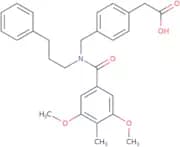
CAS:<p>ONO-7300243 is a hydrogen bond inhibitor that has been shown to have anti-fungal activity. This drug is being studied for its potential use in the treatment of HIV infection. ONO-7300243 blocks the binding of nitro groups to monoclonal antibodies, which prevents their aggregation and allows them to be used as therapeutic drugs against HIV. The mechanism of action for this drug is not fully understood, but it is thought that ONO-7300243 may inhibit the synthesis or release of inflammatory cytokines such as TNF alpha and IL-1 beta. It also binds to the CB2 receptor and MT2 receptors, which are found on immune cells, suggesting an immunosuppressive effect. ONO-7300243 has been shown to have pharmacokinetic properties that are different from other drugs in its class; it has a long half-life and low clearance rate. There are also studies showing that ONO-7300243 has fatty acid</p>Fórmula:C28H31NO5Pureza:Min. 95%Peso molecular:461.55 g/molPDGF BB antibody
<p>PDGF BB antibody was raised in rabbit using highly pure recombinant human PDGF-BB as the immunogen.</p>Pureza:Min. 95%Myeloperoxidase antibody
<p>Myeloperoxidase antibody was raised in mouse using human myeloperoxidase as the immunogen.</p>TRAPPC6B Blocking Peptide
<p>A synthetic peptide for use as a blocking control in assays to test for specificity of TRAPPC6B antibody, catalog no. 70R-3155</p>Pureza:Min. 95%OXCT2 antibody
<p>OXCT2 antibody was raised using the middle region of OXCT2 corresponding to a region with amino acids GIPLLASNFISPSMTVHLHSENGILGLGPFPTEDEVDADLINAGKQTVTV</p>Pureza:Min. 95%BECN1 antibody
<p>The BECN1 antibody is a monoclonal antibody that has been specifically designed to target and bind to the BECN1 protein. This protein plays a crucial role in autophagy, which is the process by which cells break down and recycle their own components. By binding to BECN1, this antibody activates the autophagy pathway, leading to increased cell survival and improved cellular function.</p>SCGB1A1 antibody
<p>SCGB1A1 antibody was raised using a synthetic peptide corresponding to a region with amino acids MDTPSSYEAAMELFSPDQDMREAGAQLKKLVDTLPQKPRESIIKLMEKIA</p>Pureza:Min. 95%MAP3K15 antibody
<p>MAP3K15 antibody was raised using the middle region of MAP3K15 corresponding to a region with amino acids TLEQKTQELYHLQLKLKSNCITENPAGPYGQRTDKELIDWLRLQGADAKT</p>AID antibody
<p>The AID antibody is a highly specialized monoclonal antibody that targets the adeno-associated virus (AAV). It specifically binds to insulin and has cytotoxic properties, making it effective in the treatment of insulin-related disorders. The AID antibody works by inhibiting the activity of reactive 3-kinase, an enzyme involved in insulin signaling pathways. This inhibition leads to a decrease in insulin production and secretion, ultimately resulting in improved glucose control. Additionally, the AID antibody can be used as a diagnostic tool for detecting autoantibodies against insulin in patients with autoimmune diseases such as type 1 diabetes. With its high specificity and affinity for insulin, the AID antibody offers promising potential in the field of Life Sciences and holds great promise for therapeutic applications.</p>HSFY1 antibody
<p>HSFY1 antibody was raised in rabbit using the middle region of HSFY1 as the immunogen</p>Pureza:Min. 95%DAGLB antibody
<p>DAGLB antibody was raised using the middle region of DAGLB corresponding to a region with amino acids STAELFSTYFSDTDLVPSDIAAGLALLHQQQDNIRNNQEPAQVVCHAPGS</p>Pureza:Min. 95%Claudin 5 antibody
<p>Claudin 5 antibody was raised using a synthetic peptide corresponding to a region with amino acids GWAATALLMVGGCLLCCGAWVCTGRPDLSFPVKYSAPRRPTATGDYDKKN</p>Pureza:Min. 95%