Compuestos y reactivos bioquímicos
Los bioquímicos y reactivos son sustancias fundamentales para la investigación y el desarrollo en campos como la biotecnología, la biología molecular, la farmacología y la medicina. Estos productos son esenciales para una variedad de aplicaciones, incluyendo la síntesis de compuestos, el análisis de muestras biológicas, la investigación de procesos metabólicos y la producción de medicamentos. En CymitQuimica, ofrecemos una amplia selección de bioquímicos y reactivos de alta calidad y pureza, adecuados para diversas necesidades científicas e industriales. Nuestro catálogo incluye enzimas, anticuerpos, ácidos nucleicos, aminoácidos, y muchos otros productos, todos diseñados para apoyar a los investigadores y profesionales en sus proyectos de investigación y desarrollo, asegurando resultados confiables y reproducibles.
Subcategorías de "Compuestos y reactivos bioquímicos"
- Biomoléculas(99.117 productos)
- Por objetivo biológico(99.161 productos)
- Según efectos farmacológicos(6.787 productos)
- Crioconservantes(21 productos)
- Desinfectantes y compuestos relacionados(28 productos)
- Hormonas(346 productos)
- Biología Vegetal(6.705 productos)
- Metabolitos secundarios(14.220 productos)
Se han encontrado 130581 productos de "Compuestos y reactivos bioquímicos"
Ordenar por
Pureza (%)
0
100
|
0
|
50
|
90
|
95
|
100
CMV pp65 (485-500)
<p>CMV pp65 (415-429) (HLA-B7) is a CEF (cytomegalovirus, Epstein-Barr virus, and influenza virus) control peptide that is derived from the Cytomegalovirus (CMV). CMV is capable of infecting a wide range of human cell types, where the body's primary immune response to CMV is innate, and relies on inflammatory cytokines and costimulatory molecules in order to control the spread of the virus. CMV pp65 (415-429) (HLA-B7) is defined as a CEF control peptide due to its antigenic properties. Clinically, these peptides are suitable epitopes for CD8+ T cells and can be used to stimulate the release of IFNg. HLA-B7 refers to the cell HLA type that this peptide acts on.</p>Forma y color:PowderPeso molecular:1,761 g/mol2-[[2-[[2-[[2-[[2-[[5-Amino-2-[[5-amino-2-[[1-[6-amino-2-[[1-[2-amino-5-(diaminomethylideneamino)pentanoyl]pyrrolidine-2-carbonyl]am ino]hexanoyl]pyrrolidine-2-carbonyl]amino]-5-oxopentanoyl]amino]-5-oxopentanoyl]amino]-3-phenylpropanoyl]amino]-3-phenylpr
CAS:<p>Custom research peptide; min purity 95%. For different specs please use the Peptide Quote Tool</p>Fórmula:C63H98N18O13SPeso molecular:1,348.65 g/molSARS-CoV-2 NSP13 (476-490)
<p>The SARS-CoV-2 non-structural protein 13 (NSP13) has been identified as a target for anti-viral therapeutics due to its highly conserved sequence and is essential for viral replication. NSP13 is part of the helicase superfamily 1B. As an NTPase and RNA helicase, NSP13 binds to RNA-dependent RNA polymerase and acts in concert with the replication-transcription complex to stimulate backtracking and further activate NSP13 helicase activity. These factors make NSP13 a good target for developing new antiviral drugs. In addition, the identification of epitopes within the NSP13 sequence can help design more effective SARS-CoV-2 vaccines.Models have predicted epitopes exhibiting antigenicity, stability and interactions with MHC class-I and class-II molecules. NSP13 (476-490) is an epitope candidate with various predicted HLA restrictions. This epitope can be used to better vaccine design for more durable CD4+ and CD8+ T cell responses for long-lasting immunity.</p>Peso molecular:1,658.9 g/molTNF α antibody
<p>TNF alpha antibody was raised in mouse using recombinant human TNF as the immunogen.</p>Epothilone D (synthetic)
CAS:<p>Microtubule stabilizer; natural polyketide compound; antineoplastic</p>Fórmula:C27H41NO5SPureza:Min. 95%Forma y color:PowderPeso molecular:491.69 g/molBMAP-28
<p>Numerous studies have found BMAP-28 to have AMP activity against various bacteria, fungi, and some parasites such as Leishmania. Of note, studies show it inhibits multi-drug resistant (pan-resistant) species of both Gram-negative and Gram-positive bacteria including Acinetobacter baumanniim, Pasteurella multocida, and MRSA. With the rise in antibiotic-resistant species, BMAP-28 is a useful discovery for creating new more potent analogues.In mammalian studies BMAP-28 induces cancer cell death and prevents growth, via inducing mitochondrial pore opening and depolarisation leading to cell apoptosis making it a target for future cancer treatment.</p>Peso molecular:3,071.9 g/molKisspeptin 10 human
<p>The biologically active C-terminal region of human Kisspeptin. Kisspeptin, is cleaved from a 145 amino acid precursor to a 54 amino acid peptide in humans and a 52 amino acid peptide in mice. Smaller isoforms of 14, 13 and 10 amino acids have also been isolated, each sharing the common C-terminal sequence. Kisspeptin-10 (KP-10) is the most potent member of the kisspeptin family and the plasma half-life of is approximately 6 fold shorter than KP-54. KP-10 is produced by the trophoblast cells in the first trimester of pregnancy and inhibits cell migration primary trophoblasts which is essential for placental invasion.Kisspeptin, a product of the KISS1 gene, is a hypothalamic neuropeptide that stimulates gonadotropin-releasing hormone (GNRH) neurons and drives fertility. Kisspeptin binds specifically to the G-protein-coupled receptor-54, now known as Kiss1r, which is expressed in almost all GNRH neurons. Kiss1r is also expressed in other areas of the brain and periphery, highlighting other possible roles for kisspeptin outside of reproduction.</p>Peso molecular:1,302.4 g/molH-GLFIIDGK^-OH
<p>Peptide H-GLFIIDGK^-OH is a Research Peptide with significant interest within the field academic and medical research. This peptide is available for purchase at Cymit Quimica in multiple sizes and with a specification of your choice.</p>H-LTIGEGQQHHLGGA^K^QA^GDV-OH
<p>Peptide H-LTIGEGQQHHLGGA^K^QA^GDV-OH is a Research Peptide with significant interest within the field academic and medical research. This peptide is available for purchase at Cymit Quimica in multiple sizes and with a specification of your choice.</p>Sheep IgG
<p>Sheep IgG is a purified immunoglobulin that plays a crucial role in the immune system. It is an endogenous hematopoietic protein that is involved in various physiological processes. Sheep IgG is commonly used in Life Sciences research, particularly in studies involving cell lines such as MCF-7. This monoclonal antibody has shown anti-VEGF (vascular endothelial growth factor) activity, which makes it valuable for studying angiogenesis and tumor growth. Additionally, Sheep IgG has binding affinity to fibrinogen and albumin found in human serum. It can also act as a growth factor and stimulate the production of immunoglobulins in vitro. However, it's worth noting that excessive use of Sheep IgG can be nephrotoxic and cytotoxic, so caution should be exercised when handling this product.</p>Pureza:Min. 95%H-L^^GTL^^DNPSSL^^DETAYER-OH
<p>Peptide H-L^^GTL^^DNPSSL^^DETAYER-OH is a Research Peptide with significant interest within the field academic and medical research. This peptide is available for purchase at Cymit Quimica in multiple sizes and with a specification of your choice.</p>hCG β antibody
<p>hCG beta antibody was raised in mouse using human chorionic gonadotropin beta as the immunogen.</p>pE-HWSYGLRPG-OH
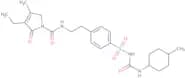
<p>Peptide pE-HWSYGLRPG-OH is a Research Peptide with significant interest within the field academic and medical research. This peptide is available for purchase at Cymit Quimica in multiple sizes and with a specification of your choice.</p>Glimepiride - Bio-X ™
CAS:<p>Glimepiride is a sulfonylurea drug that is used in the treatment of type 2 diabetes mellitus. This drug works by inhibiting ATP-sensitive potassium channels by binding non-specifically to the B sites of both sulfonylurea receptor-1 (SUR1) and sulfonylurea receptor-2A (SUR2A) subunits. As a result, this promotes insulin secretion from beta cells.</p>Fórmula:C24H34N4O5SPureza:Min. 95%Forma y color:PowderPeso molecular:490.62 g/molAP 202
CAS:<p>Selective antagonist of α4β2 nicotinic acetylcholine receptors (nAChRs), selective over α4β4, α3β2, and α3β4α5 nAChRs. Lowers nicotine self-administration in vivo for 30 minutes. Inhibits nicotine seeking, following relapse, during both prime- and cue-induced reinstatement.</p>Fórmula:C11H16N4Pureza:Min. 95%Peso molecular:204.27 g/molNEUROG3 protein (His tag)
<p>Purified recombinant NEUROG3 protein (His tag)</p>Pureza:> 85% By Sds-PageH-FITLVPSNLPHEATR^-OH
<p>Peptide H-FITLVPSNLPHEATR^-OH is a Research Peptide with significant interest within the field academic and medical research. This peptide is available for purchase at Cymit Quimica in multiple sizes and with a specification of your choice.</p>[Cys]-Exendin 4
<p>Originally identified in Gila monster lizard (Heloderma suspectum), Exendin-4 is an incretin mimetic, an analog of glucagon-like-peptide-1 (GLP-1), it stimulates insulin secretion and modulates gastric emptying to slow the entry of ingested sugars into the bloodstream. Exendin-4 is resistant to cleavage by plasma DPP-IV unlike GLP-1. This gives it a longer half-life and duration of action than GLP-1, as well as greater potency in vivo. Exendin-4 increases insulin sensitivity and improves glucose tolerance and is currently used for the treatment of Type 2 diabetes mellitus in its synthetic form Exenatide.Exendin-4 also promotes the production and proliferation of β-cells leading to regeneration of the pancreas. It is a ligand to the exendin receptor and increases pancreatic acinar cell cAMP levels. However, the GLP-1 analog was found to have a toxic effect by inducing hypotension due to relaxation of the cardiac smooth muscle.This exendin-4 peptide is provided with an N-terminal cysteine residue for conjugation reactions.</p>Peso molecular:4,287 g/molH-VSFEDSVISLSGDHSIIGR^-OH
<p>Peptide H-VSFEDSVISLSGDHSIIGR^-OH is a Research Peptide with significant interest within the field academic and medical research. This peptide is available for purchase at Cymit Quimica in multiple sizes and with a specification of your choice.</p>H-RLENLIAQL-OH
<p>H-RLENLIAQL-OH is a custom peptide that can be synthesized rapidly by our peptide experts in under 2 weeks. H-RLENLIAQL-OH is provided at greater that >95% purity (HPLC) from Cymit Quimica for a variety of research applications. We also offer H-RLENLIAQL-OH in bulk quantities in addition to our standard pack sizes.Please enquire for more information about H-RLENLIAQL-OH at the technical inquiry form on this page</p>Pureza:Min. 95%SARS-CoV 3C-like protease (3CLpro) substrate (C-terminal KK-acid)
<p>3CLpro are the key enzymes required by coronaviruses to replicate. They cleave polyproteins to form replicase. This makes 3CLpro a drug target for protease inhibitors with particular interest to COVID-19. For, example Paxlovid®- has been brought to market as a 3CLpro inhibitor that can be administered orally to reduce coronavirus disease 19 (COVID-19) hospitalisation. Aiming to expand on such advances, synthesis of more substrates for 3CLpro are being generated and tested for their ability to inhibit the protease activity and thus replication cycle of coronaviruses. This product is the natural substrate for 3CLpro, this makes it a useful tool as a control but also for structural manipulation to design inhibitors.</p>Volitinib
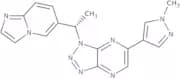
CAS:<p>Inhibitor of c-Met kinase</p>Fórmula:C17H15N9Pureza:Min. 95%Forma y color:White PowderPeso molecular:345.36 g/molH-LFDQAFGVPR^-OH
<p>Peptide H-LFDQAFGVPR^-OH is a Research Peptide with significant interest within the field academic and medical research. This peptide is available for purchase at Cymit Quimica in multiple sizes and with a specification of your choice.</p>H-GEAGPQGPR^-OH
<p>Peptide H-GEAGPQGPR^-OH is a Research Peptide with significant interest within the field academic and medical research. This peptide is available for purchase at Cymit Quimica in multiple sizes and with a specification of your choice.</p>SMAP-18
<p>SMAP -18 is a truncated form of sheep myeloid anti-microbial peptide-29 (SMAP-29). SMAP-29 displays extremely high anti-microbial activity against fungi and gram-negative bacteria including Pseudomonas strains and multidrug-resistant pathogens, however it also has high cytotoxic activity to human cells. The carboxyl terminal is more hydrophobic and may be responsible for higher hemolytic activity of SMAP-29, whereas the anti-microbial activity has been attributed to the N-terminal amphipathic alpha-helix region (residues 1-18). SMAP-18 displays much higher cell selectivity as compared to parental SMAP-29 because of their decreased hemolytic activity and retained anti-microbial activity.The cathelicidins are a large family of structurally diverse host defence peptide (HDP- formerly called antimicrobial peptides) found in mammalian species including humans. All members of the cathelicidin family contain an N-terminal cathelin domain and a C-terminal domain of varied structure that displays anti-microbial activity.</p>Peso molecular:2,063.3 g/molHSV-1/2 IgG Negative Human Plasma
<p>HSV-1/2 IgG Negative Human Plasma is a life science tool for use in pharmaceutical and diagnostic applications. Please enquire for more information about HSV-1/2 IgG Negative Human Plasma including the price, delivery time and more detailed product information at the technical inquiry form on this page.</p>H-SAEGLDASASLR^-OH
<p>Peptide H-SAEGLDASASLR^-OH is a Research Peptide with significant interest within the field academic and medical research. This peptide is available for purchase at Cymit Quimica in multiple sizes and with a specification of your choice.</p>Podoplanin antibody
<p>Podoplanin antibody was raised in rabbit using recombinant ectodomain of human gp36 (podoplanin) as the immunogen.</p>Pureza:Min. 95%Ac-GSARAEVHLRKS-NH2
<p>Peptide Ac-GSARAEVHLRKS-NH2 is a Research Peptide with significant interest within the field academic and medical research. This peptide is available for purchase at Cymit Quimica in multiple sizes and with a specification of your choice.</p>Low OJ Antibody Positive Human Plasma
<p>Low OJ Antibody Positive Human Plasma is a life science tool for use in pharmaceutical and diagnostic applications. Please enquire for more information about Low OJ Antibody Positive Human Plasma including the price, delivery time and more detailed product information at the technical inquiry form on this page.</p>H-ALGSHHTASPWNLSPFSK^-OH
<p>Peptide H-ALGSHHTASPWNLSPFSK^-OH is a Research Peptide with significant interest within the field academic and medical research. This peptide is available for purchase at Cymit Quimica in multiple sizes and with a specification of your choice.</p>Ac-PRCGVPDL-NH2
<p>Peptide Ac-PRCGVPDL-NH2 is a Research Peptide with significant interest within the field academic and medical research. This peptide is available for purchase at Cymit Quimica in multiple sizes and with a specification of your choice.</p>HPV16 E7 antibody
<p>The HPV16 E7 antibody is a monoclonal antibody that specifically targets the human papillomavirus 16 (HPV16) E7 protein. This protein plays a crucial role in the development and progression of HPV-related cancers, making it an important target for therapeutic interventions.</p>CoV Main Protease (Mpro) Substrate
<p>Substrate for the severe acute respiratory syndrome coronavirus main protease (SARS-CoV Mpro). The substrate sequence is derived from residues P4-P5' of the SARS-CoV Mpro N-terminal autoprocessing site and was identified by a docking study. This substrate binds to and acts as a competitive inhibitor of SARS-CoV Mpro, (3CLpro).Experiments show that the octapeptide AVLQSGFR is bound to SARS-CoV Mpro through six hydrogen bonds. It is an effective inhibitor of SARS coronavirus with an EC50 of 2.7 x 10⁻² mg/L and is able to block replication of the virus. The octapeptide also shows no detectable toxicity in the host cells.</p>Dengue NS1 antibody
<p>The Dengue NS1 antibody is a highly specialized product in the field of Life Sciences. It is a Monoclonal Antibody that targets the glycan present on the NS1 protein of the dengue virus. This antibody has been extensively used in research and diagnostic applications, particularly in the development of ophthalmic formulations for dengue-related eye diseases. The Dengue NS1 antibody has shown promising results in inhibiting the interaction between NS1 and host cell receptors, thereby preventing viral entry and replication. Additionally, it has demonstrated its efficacy in neutralizing the harmful effects of NS1, such as its interference with epidermal growth factor and erythropoietin signaling pathways. Studies have also revealed that this antibody can effectively inhibit angiogenesis by reducing microvessel density through its interaction with specific growth factors involved in blood vessel formation. Furthermore, it has been found to modulate immune responses by blocking the activity of pro-inflammatory biomolecules like TNF-α and chemokines</p>ZnT-8 114-123 (HLA-A*02:01)
<p>Custom research peptide; min purity 95%. For different specs please use the Peptide Quote Tool</p>Glucagon like-peptide-2 (GLP-2)
<p>Glucagon like-peptide-2 (GLP-2) is a gut hormone produced in the enteroendocrine L cells of gastrointestinal tract by the cleavage of the 160-amino-acid proglucagon molecule. GLP-2 is secreted following the ingestion of food and carries out its activities via the GLP-2 G-protein coupled receptors (GLP-2Rs). GLP-2 has a range of roles within the cell, including: anti-inflammatory effects promoting the expansion of the intestinal mucosa, stimulating intestinal blood flow, inhibiting gastric acid secretion and gastric emptying, increasing intestinal barrier function and enhancing nutrient and fluid absorption.</p>Peso molecular:3,555.7 g/molFibrinogen (377-395) Human
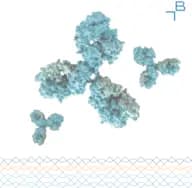
<p>Fibrinogen (377-395) Human is derived from Fibrinogen, which is a large plasma glycoprotein with a complex structure, and one of the most abundant proteins in blood. Fibrinogen is important in fibrin clot formation, haemostasis, and inflammatory responses. Increased plasma fibrinogen indicates a proinflammatory state and is a risk factor for vascular inflammatory diseases including hypertension and atherosclerosis. Fibrinogen cleavage products act as inflammatory activators in the pathophysiology of allergic asthma.Fibrinogen (377-395) Human is capable of preventing microglia activation by inhibiting the Mac-1 receptor, which in turn suppresses relapsing paralysis.</p>Forma y color:PowderPeso molecular:2,242.77 g/mol[BDP630/650]3-halphaCGRP (calcitonin gene-related peptide)
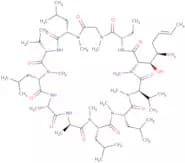
<p>[BDP630/650]3-halphaCGRP (calcitonin gene-related peptide)</p>Peso molecular:4,299.1 g/molCyclosporin H
CAS:<p>Formyl peptide receptor-1 (FPR-1) antagonist</p>Fórmula:C62H111N11O12Pureza:Min. 95%Forma y color:PowderPeso molecular:1,202.61 g/molH-LIAPVAEEEATVPNNK^-OH
<p>Peptide H-LIAPVAEEEATVPNNK^-OH is a Research Peptide with significant interest within the field academic and medical research. This peptide is available for purchase at Cymit Quimica in multiple sizes and with a specification of your choice.</p>[β-Ala]-[Lys(AMCA)]-acid
<p>[β-Ala]-[Lys(AMCA)]-acid.</p>Forma y color:PowderPeso molecular:432.2 g/molHistone H4 (1-21) R3Me2
<p>Histone 4 (H4) is one of the four core histones (H2A, H2B, H3 and H4) which are fundamental in compacting eukaryotic DNA into the nucleosome. Due to the high lysine and arginine content, histones have a net positive charge and therefore electrostatically interact with negatively charged DNA. The nucleosome arises when 147 base pairs of DNA wrap around a H3-H4 tetramer and two H2A-H2B dimers, forming the histone octamer core. Like other core histones, H4 has a globular domain and a flexible N-terminal domain, the histone tail, which can undergo modifications such as acetylation, methylation, phosphorylation and ubiquitination.Gene transcriptional activation or inactivation is controlled by ATP-dependent chromatin remodelling factors and histone modifying enzymes. Both processes function to alter the positioning of the nucleosome, allowing the DNA within to be either accessible to the transcription machinery or inaccessible. H4's lysine rich tail plays a role in the higher order chromatin folding.</p>Peso molecular:2,118.3 g/molHistone H3 (10-29)-Biotin
<p>Histone H3 (10-29)-Biotin is derived from Histone 3 (H3) which is one of the four core histones (H2A, H2B, H3 and H4) fundamental in compacting eukaryotic DNA into the nucleosome. The nucleosome arises when 147 base pairs of DNA wrap around a H3-H4 tetramer and two H2A-H2B dimers, forming the histone octamer core. Both H4 and H3 are highly conserved and perform roles in binding to segments of DNA which enter and leave the nucleosome and in chromatin formation. Similar to the other core histone, H3 has a globular domain and a flexible N-terminal domain, 'histone tail' which can undergo modifications such as acetylation, methylation, phosphorylation and ubiquitination. Due to histones containing a large number of lysine and arginine residues they have a positive net charge which interacts in an electrostatic manner with the negatively charged phosphate groups in DNA. The transcriptional activation or silencing of the chromatin is controlled by ATP-dependent chromatin remodelling factors and histone modifying enzymes which target histone proteins. Both processes function to alter the positioning of the nucleosome, allowing the DNA it to be either available or inaccessible to the transcription machinery.Another modification process histones can undergo is biotinylation where the covalent attachment of a biotin molecule is catalysed by the enzyme Biotinidase. This cleaves biocytin to generate a biotinyl-thiester intermediate. The biotinyl can then be transferred onto the histone lysine ɛ-amino group which is covalently attached to Histone 3. Overall the biotinylation sites identified in histone 3 are: K4, K9 and K18. The presence of biotinylated histones have been detected in human cells such as lymphocytes and lymphomas.</p>Forma y color:PowderPeso molecular:2,294.3 g/molH-IGPGGDGPGG-OH
<p>H-IGPGGDGPGG-OH is a custom peptide that can be synthesized rapidly by our peptide experts in under 2 weeks. H-IGPGGDGPGG-OH is provided at greater that >95% purity (HPLC) from Cymit Quimica for a variety of research applications. We also offer H-IGPGGDGPGG-OH in bulk quantities in addition to our standard pack sizes.Please enquire for more information about H-IGPGGDGPGG-OH at the technical inquiry form on this page</p>Pureza:Min. 95%Ac-QEAFSHIRIPLPH-OH
<p>Peptide Ac-QEAFSHIRIPLPH-OH is a Research Peptide with significant interest within the field academic and medical research. This peptide is available for purchase at Cymit Quimica in multiple sizes and with a specification of your choice.</p>Click PR9
<p>Cell penetrating peptides (CPP) can transport molecules such as nucleic acids, proteins, and imaging agents into cells of interest. Pas PR9, nona-arginine, is an arginine rich CPP. It is composed of the nona-arginine: R9 and Pas which is a peptide penetrating accelerating sequence (PAS) and it functions to export molecules out of endocytic vesicles. During a study in which PR9 was in complex with a Quantum dot probe (QD) it was evident that the PR9/QD complex was transported into the cell through endocytosis and co-localises with actins, lysosomes, early endosomes and the nucleus. Due to the non-toxicity of the PR9/QD complex it can be used as a safe vector for biomedical purposes.PR9 is provided here with a N-terminal alkyne attachment. Two of the most regularly encountered functional groups for click chemistry are azides and alkynes, and the azide-alkyne cycloaddition has become the most popular click reaction. The use of click chemistry with alkyne- PR9 allows a wide variety of applications particularly for conjugation, modification, and peptide design.</p>Forma y color:PowderPeso molecular:2,304.4 g/molComplement C3 - Ornithine Heavy
<p>Complement C3 is a fundamental factor featured in all three complement system pathways: the classical, lectin and alternative. To activate the complement cascade C3 associates with C3 convertase to produce C3a and C3b. It is also thought that C3 can be cleaved by proteases outside of the complement cascade. C3b can bind to carbohydrate and protein hydroxyl groups through a thioester bond generated by C3 convertase cleavage. This action allows C3b to be used as a 'marker of foreign molecules such as pathogens and ultimately leads to the assembly of the membrane attack complex (MAC) and anaphylatoxin production.Overall the main functions of the complement system are to mark cells for phagocytosis, the recruitment of inflammatory cells and the cell lysis of bacteria cell by the MAC. The anaphylatoxins C3a and C5a recruit neutrophils and causes the inflammatory response while the MAC produces pores in the bacterial membrane thus causing a Ca2+ influx into the cell and bacterial cell death.The complement system as a whole can be associated with the neurological diseases, bacterial meningitis, thrombotic disorders, neurological and autoimmune diseases.Ornithine, a urea cycle intermediate molecule and a substrate of proline, polyamine and citrulline synthesis, has been found to regulate metabolic processes and where dysregulation occurs it may be involved in diseases such as hyperammonemia and cancer.The Leucine residue at position 17 has been isotopically labelled with carbon-13 (6) and nitrogen-15 (1)</p>Pureza:Min. 95%Forma y color:PowderPeso molecular:1,985.1 g/mol








![[Cys]-Exendin 4](/_next/image/?url=https%3A%2Fstatic.cymitquimica.com%2Fproducts%2F3D%2Fthumb-webp%2FCRB1000606.webp&w=3840&q=75)




![[BDP630/650]3-halphaCGRP (calcitonin gene-related peptide)](/_next/image/?url=https%3A%2Fstatic.cymitquimica.com%2Fproducts%2F3D%2Fthumb-webp%2FCRB1101752.webp&w=3840&q=75)
![[β-Ala]-[Lys(AMCA)]-acid](/_next/image/?url=https%3A%2Fstatic.cymitquimica.com%2Fproducts%2F3D%2Fthumb-webp%2FCRB1101526.webp&w=3840&q=75)