Antibióticos
Subcategorías de "Antibióticos"
- Antibióticos macrólidos(26 productos)
- Antibióticos esteroides(31 productos)
- Antibióticos de tetraciclina(20 productos)
- Antibióticos β-lactámicos(11 productos)
Se han encontrado 4104 productos de "Antibióticos"
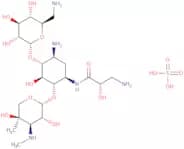
Isepamicin sulphate
CAS:Isepamicin Sulphate is an aminoglycoside antibiotic with a mode of action that inhibits bacterial protein synthesis by binding to the 30S ribosomal subunit. It is used for treating infections caused by gram-negative bacteria.Fórmula:C22H43N5O12•H2SO4Pureza:Min. 95%Forma y color:White PowderPeso molecular:667.68 g/molDalbavancin
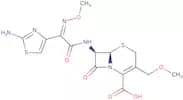
CAS:Dalbavancin is a lipoglycopeptide antibiotic with action against gram-positive bacteria, including MRSA and is used for treating acute bacterial skin and skin structure infections.Fórmula:C88H100Cl2N10O28Pureza:Min. 95%Forma y color:PowderPeso molecular:1,816.69 g/molCefpodoxime acid
CAS:Cefpodoxime acid is a third-generation cephalosporin antibiotic with action on bacterial cell wall synthesis and is used for treating respiratory tract infections, skin infections, and urinary tract infections.Fórmula:C15H17N5O6S2Pureza:Min. 95 Area-%Forma y color:Off-White PowderPeso molecular:427.46 g/molPiromidic acid
CAS:Quinolone antibiotic; antimalarialFórmula:C14H16N4O3Pureza:Min. 95%Forma y color:Off-White PowderPeso molecular:288.3 g/molAmikacin disulfate
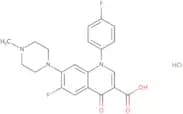
CAS:Inhibitor of protein synthesis; aminoglycosideFórmula:C22H43N5O13·2H2SO4Pureza:674 To 786 Usp U/MgForma y color:White PowderPeso molecular:781.76 g/molDifloxacin HCl
CAS:Difloxacin HCl is a fluoroquinolone antibiotic with action on bacterial DNA gyrase inhibition and is used for treating bacterial infections in veterinary medicine.Fórmula:C21H20ClF2N3O3Pureza:Min. 95 Area-%Forma y color:White PowderPeso molecular:435.85 g/molLincomycin 2,7-dipalmitate
Lincomycin 2,7-dipalmitate is an antibiotic compound that is a semi-synthetic derivative originating from the natural antibiotic lincomycin, which itself is produced by the actinobacterium Streptomyces lincolnensis. This compound functions by inhibiting bacterial protein synthesis. Specifically, it binds to the 23S rRNA component of the 50S subunit of the bacterial ribosome, thereby disrupting the process of RNA translocation and inhibiting the synthesis of essential proteins needed for bacterial growth and replication.Fórmula:C51H95NO8SPureza:Min. 95%Peso molecular:882.37 g/molArbekacin hydrochloride
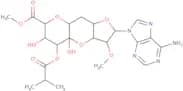
CAS:Inhibitor of DNA replication; aminoglycoside classFórmula:C22H44N6O10·xHclPureza:Min. 95%Peso molecular:552.62 g/molHerbicidin E
CAS:Herbicidin E is a potent herbicidal compound, derived from blue-green algae, with a biochemical mode of action focused on inhibiting photosynthetic electron transport. It effectively disrupts the photosynthetic process by binding to specific sites within the chloroplasts of target plants, impairing their ability to convert light energy into chemical energy. This leads to a depletion of essential energy reserves, resulting in the controlled demise of the plant.Fórmula:C22H29N5O10Pureza:Min. 95%Peso molecular:523.49 g/molCefatrizine propylene glycol
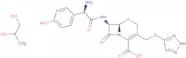
CAS:Cefatrizine propylene glycol is a cephalosporin antibiotic with action against gram-positive and gram-negative bacteria and is used for treating respiratory and skin infections.Fórmula:C21H26N6O7S2Pureza:Min. 95%Forma y color:PowderPeso molecular:538.6 g/molVancomycin hydrochloride, Antibiotic for Culture Media Use Only
CAS:Vancomycin hydrochloride is an antibiotic that is used against Gram-positive bacteria, including Staphylococcus aureus. It has been shown to inhibit the growth of bacteria by binding the D-alanyl-D-alanine moiety of the peptidoglycan cell wall precursor, inhibiting the peptidoglycan synthesis and disrupting its cross linking. It also inhibits particle formation when it reacts with human plasma, which can lead to hemolysis and hemagglutination. The absorption spectrum for vancomycin hydrochloride shows maxima at 230, 260, 290, and 320 nm, which are characteristic for this compound. Vancomycin has been used in several studies for treatment of methicillin-resistant Staphylococcus aureus infections.
Fórmula:C66H76Cl3N9O24Peso molecular:1,485.71 g/molRef: 3D-Q-201920
25gA consultar50gA consultar100gA consultar250gA consultar500gA consultar-Unit-ggA consultarMarbofloxacin - Bio-X ™
CAS:Marbofloxacin is an antibiotic belonging to the class of fluoroquinolones. It is used in veterinary medicine to treat bacterial infections in animals. This drug inhibits the bacterial enzyme DNA gyrase and topoisomerase IV. As a result, this drug prevents bacterial DNA replication.Fórmula:C17H19N4O4FPureza:Min. 95%Forma y color:PowderPeso molecular:362.36 g/molFostriecin
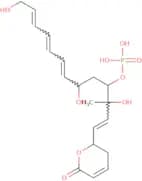
CAS:Fostriecin is a potent anticancer agent, which is a natural product isolated from the bacterium Streptomyces pulveraceus. It acts primarily as an inhibitor of protein phosphatases, particularly protein phosphatase 2A (PP2A) and protein phosphatase 4 (PP4), functioning by blocking their catalytic activity. This inhibition disrupts cell cycle regulation, leading to apoptosis in cancer cells.Fórmula:C19H27O9PPureza:Min. 95%Peso molecular:403.4 g/mol3’(6’)-Dehydroclindamycin phosphate (mixture of E/Z isomers)
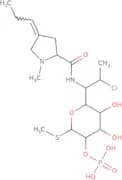
CAS:3’(6’)-Dehydroclindamycin phosphate is a semi-synthetic compound and a impurity of clindamycin. This in turn is prepared from lincomycin. It has antibacterial and antiviral propertiesFórmula:C18H32ClN2O8PSPureza:Min. 90 Area-%Forma y color:PowderPeso molecular:502.95 g/molIsochlortetracycline
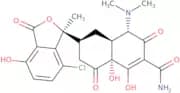
CAS:Isochlortetracycline is a tetracycline antibiotic with a mode of action that inhibits bacterial protein synthesis by binding to the 30S ribosomal subunit. It is used for treating bacterial infections in both humans and animals.Fórmula:C22H23ClN2O8Pureza:Min. 95%Forma y color:Off-White PowderPeso molecular:478.88 g/molCeftriaxone disodium hemiheptahydrate
CAS:Ceftriaxone disodium hemiheptahydrate is a third-generation cephalosporin antibiotic, which is a semisynthetic derivative of cephalosporin C. This compound is sourced from the fungus Acremonium, which is known for its role in deriving crucial β-lactam antibiotics. Ceftriaxone acts by inhibiting bacterial cell wall synthesis, specifically targeting the penicillin-binding proteins (PBPs). This action disrupts peptidoglycan cross-linking, leading to bacterial cell lysis and death.Fórmula:(C18H18N8Na2O7S3)2•(H2O)7Pureza:Min. 94 Area-%Forma y color:White Yellow PowderPeso molecular:1,327.23 g/mol4-Epichlortetracycline hydrochloride
CAS:Protein synthesis inhibitor; tetracycline classFórmula:C22H24Cl2N2O8Pureza:Min. 80%Forma y color:Slightly Yellow PowderPeso molecular:515.34 g/molBiapenem
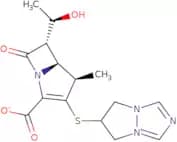
CAS:Biapenem is a carbapenem antibiotic and is used for the treatment of bacterial infections. It inhibits bacterial cell wall synthesis by binding to penicillin-binding proteins.Fórmula:C15H18N4O4SPureza:Min. 95%Forma y color:White PowderPeso molecular:350.39 g/molDihydrostreptomycin sesquisulfate, EP
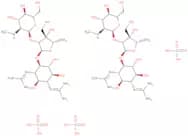
CAS:Dihydrostreptomycin sesquisulfate, EP is an aminoglycoside antibiotic, structurally derived from Streptomyces griseus. This compound originates from microbial biosynthesis, a method which harnesses the natural antibiotic-producing capabilities of microbial cultures. The mode of action of dihydrostreptomycin sesquisulfate involves binding to the 30S subunit of bacterial ribosomes, which interrupts the process of protein synthesis, ultimately leading to bacterial cell death.
Fórmula:C21H41N7O12•(H2SO4)1Pureza:(Hplc) 94.0 To 102.0%Forma y color:PowderPeso molecular:1,461.42 g/molMidecamycin
CAS:Midecamycin is a macrolide antibiotic with action on bacterial protein synthesis by binding to the 50S ribosomal subunit and is used for treating respiratory tract and skin infections.Fórmula:C41H67NO15Pureza:Min. 95%Forma y color:PowderPeso molecular:813.97 g/mol