


Building Blocks de hidrocarburos
Los building blocks hidrocarbonados son compuestos orgánicos formados únicamente por átomos de carbono e hidrógeno. Estas estructuras fundamentales sirven como base para la síntesis de una amplia variedad de moléculas complejas. Los building blocks hidrocarbonados se utilizan en el desarrollo de productos farmacéuticos, polímeros y otros compuestos orgánicos. En CymitQuimica, ofrecemos una amplia gama de building blocks hidrocarbonados de alta calidad para facilitar tus proyectos de síntesis e investigación.
Subcategorías de "Building Blocks de hidrocarburos"
Se han encontrado 5575 productos de "Building Blocks de hidrocarburos"
Ordenar por
Pureza (%)
0
100
|
0
|
50
|
90
|
95
|
100
[S(R)]-N-[(R)-[2-(Diphenylphosphino)phenyl](4-methoxyphenyl)methyl]-2-methyl-2-propanesulfinamide
CAS:Pureza:95%Peso molecular:501.622-amino-6-methyl-3-(prop-2-yn-1-yl)benzo[d]thiazol-3-ium bromide
CAS:Fórmula:C11H11BrN2SPureza:95.0%Peso molecular:283.19[S(R)]-N-[(1R)-1-[5-(Diphenylphosphino)-9,9-dimethyl-9H-xanthen-4-yl]-2,2-dimethylpropyl]-2-methyl-2-propanesulfinamide
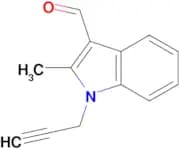
CAS:Pureza:95%Peso molecular:583.772-Methyl-1-prop-2-ynyl-1H-indole-3-carbaldehyde
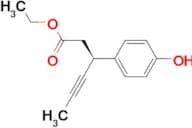
CAS:Fórmula:C13H11NOPureza:95%Forma y color:SolidPeso molecular:197.237(3S)-3-(4-HYDROXYPHENYL)-4-HEXYNOIC ACID ETHYL ESTER
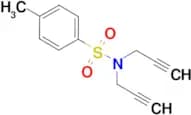
CAS:Fórmula:C14H16O3Pureza:95%Peso molecular:232.2794-methyl-N,N-di-2-propyn-1-ylbenzenesulfonamide
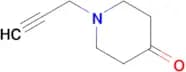
CAS:Fórmula:C13H13NO2SPureza:95.0%Forma y color:SolidPeso molecular:247.311-(2-propyn-1-yl)-4-piperidinone
CAS:Fórmula:C8H11NOPureza:95%Forma y color:SolidPeso molecular:137.182Ref: 10-F054484
1g668,00€5g2.199,00€10g4.396,00€2.5g1.532,00€50mg175,00€100mg188,00€250mg290,00€500mg471,00€1-[(Anthracen-9-yl)methyl]cinchonidinium chloride
CAS:Fórmula:C34H33ClN2OPureza:85.0%Forma y color:SolidPeso molecular:521.17-Octyn-1-ol
CAS:Producto controlado<p>Applications 7-Octyn-1-ol is used in the synthesis of the sex pheromone of the citrus leafminer, Phyllocnistis citrella.<br>References Ando, T., et al.: Agric. Biol. Chem., 49, 3633 (1985), Beevor, P., et al.: J. Chem. Ecol., 12, 1 (1986), Kerr, D., et al.: J. Med. Chem., 33, 1958 (1990), McElfresh, J., et al.: Ecology, 82, 3505 (2002),<br></p>Fórmula:C8H14OForma y color:NeatPeso molecular:126.20Vinylcyclopropane
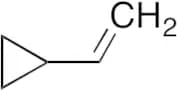
CAS:Producto controlado<p>Stability Highly Volatile<br>Applications Vinylcyclopropane is a useful synthetic intermediate. Vinylcyclopropane and its derivatives can participate in a variety of transition-metal-catalyzed multicomponent cycloadditions to produce five- to eight-membered carbocycles.<br>References Jiao, L., et al.: J. Org. Chem., 78, 6842 (2013); Pasto, D., et al.: Tetrahedron Lett., 9, 713 (1979); Larock, R., et al.: Tetrahedron, 52, 2743 (1996)<br></p>Fórmula:C5H8Forma y color:NeatPeso molecular:68.122,2,4,4,6,8,8-Heptamethylnonane
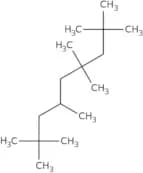
CAS:<p>2,2,4,4,6,8,8-Heptamethylnonane is a hydrogenated form of 2-methylnonane. It is used as a model system for fatty acids in order to study the kinetics of air entrainment and constant pressure distillation. The chemical stability of 2,2,4,4,6,8,8-heptamethylnonane has been shown to be excellent when heated at 200°C under nitrogen. This compound can also be used as an analytical method for ethylene diamine in pharmaceutical preparations of sodium salts and boron nitride. The use of 2-methylnonane as a starting material may lead to the production of chinese herb by reacting with acetic acid or formic acid.</p>Fórmula:C16H34Pureza:Min. 95%Forma y color:PowderPeso molecular:226.44 g/molParaffin oil
CAS:<p>Paraffin oil is a mixture of hydrocarbons that is liquid at room temperature and pressure. It has been shown to inhibit the growth of human osteosarcoma cells in vitro, with a potency corresponding to that of delphinidin, a natural compound found in plants. Paraffin oil also has an inhibitory effect on the mitochondrial membrane potential and on the release of pro-inflammatory cytokines such as TNF-α and IL-6 by HL-60 cells. This inhibition may be due to the ability of paraffin oil to bind to Toll-like receptors (TLRs). The molecular mechanism underlying this inhibition remains unknown. Paraffin oil can be used as a model system for epigenetic modulators because it induces histone acetylation, which alters gene expression.</p>Pureza:Min. 95%tert-Butyl 3-bromopropionate
CAS:<p>Tert-butyl 3-bromopropionate is a linker for the synthesis of pleuromutilin derivatives. It has been used as a model substrate for studying the effects of hypertrophy on cardiac muscle. Tert-butyl 3-bromopropionate has also been shown to inhibit the production of proinflammatory cytokines in response to bacterial infection, and can be used as an antibacterial agent. Tert-butyl 3-bromopropionate binds to RNA and inhibits protein synthesis, which leads to cell death by preventing the production of proteins vital for cell division. Tert-butyl 3-bromopropionate is also a potent inhibitor of chloride channels that are found in nerve cells and prevents the flow of chloride ions through these channels, leading to paralysis. This drug also inhibits hydrogen fluoride excretion in rats, which may be due to its ability to bind with chloride ions in the kidney tubules, preventing their</p>Fórmula:C7H13BrO2Pureza:Min. 95%Forma y color:Colorless Clear LiquidPeso molecular:209.08 g/molTrifluoromethanesulfonic acid
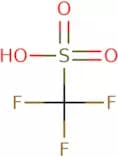
CAS:<p>Trifluoromethanesulfonic acid is a strong oxidizing agent that is used as a catalyst for the synthesis of organic compounds. It is an excellent solvent for many types of reactions and has been shown to be an effective catalyst for the synthesis of triflate, which can be used in cationic polymerization. Trifluoromethanesulfonic acid also has potential applications in carbohydrate chemistry and asymmetric synthesis, due to its ability to reduce carboxylic acids and nitriles. Trifluoromethanesulfonic acid can be synthesized by reacting potassium hexafluorophosphate with amines or nitrogen atoms under activated conditions.</p>Fórmula:CHF3O3SPureza:Min. 95%Forma y color:Clear LiquidPeso molecular:150.08 g/molN-Methyl-1,1,1-trifluoro-2-propylamine hydrochloride
CAS:<p>Please enquire for more information about N-Methyl-1,1,1-trifluoro-2-propylamine hydrochloride including the price, delivery time and more detailed product information at the technical inquiry form on this page</p>Fórmula:C4H9ClF3NPureza:Min. 95%Peso molecular:163.57 g/molN-Methylbutane-1,4-diamine, dihydrochloride
CAS:<p>Putrescine is a metabolite that is produced by the breakdown of amino acids and proteins. It can be synthesized from ornithine, citrulline, and arginine. Putrescine is a precursor to polyamines such as spermidine and spermine, which are important for cell growth. Mouse studies have shown that putrescine is a conjugate base that may act as a neurotransmitter or neuromodulator in the central nervous system.</p>Fórmula:C5H16Cl2N2Pureza:Min. 95%Forma y color:PowderPeso molecular:175.1 g/molHexabromoethane
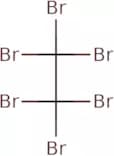
CAS:<p>Hexabromoethane is a metal chelate that has been shown to activate the polymerization of cyclohexane rings. It is often used as a light-sensitive initiator for the production of polymers, such as polyethylene. Hexabromoethane can also be found in some halogenated compounds and hydroxyl groups. The molecule is made up of six bromine atoms, an ethane chain, and one hydrogen atom. Hexabromoethane has significant interactions with other functional groups, including hydroxyls and monomers.</p>Fórmula:C2Br6Pureza:Min. 95%Forma y color:PowderPeso molecular:503.45 g/molTriisopropylsilyl trifluoromethanesulphonate
CAS:<p>Triisopropylsilyl trifluoromethanesulphonate (TIPS) is a naturally occurring compound that inhibits the enzyme dipeptidyl peptidase IV (DPP-IV). It has been shown to be active against alopecia areata in a mouse model and may have therapeutic potential for other autoimmune diseases. TIPS also has an inhibitory effect on sodium-dependent glucose transport, which may be useful in the treatment of hypertension. The reactive group of TIPS is hydroxyl, which can form a covalent bond with serine proteases and inhibit their activity. This reaction mechanism provides a new way to treat disorders such as metabolic diseases and infectious diseases. TIPS also has an inhibitory effect on ns3 protease, which is involved in the replication of human immunodeficiency virus type 1 (HIV-1) and other retroviruses.</p>Fórmula:C10H21F3O3SSiPureza:Min. 95%Forma y color:Colourless Clear LiquidPeso molecular:306.42 g/molBis[(pinacolato)boryl]methane
CAS:<p>Bis[(pinacolato)boryl]methane is a bifunctional organoboron reagent with an allyl group on one end and a cyclopropane on the other end. It is useful in organic synthesis as a nucleophile for allylation, as well as for the synthesis of unsymmetrical cyclopropanes. This compound can be used to catalyze asymmetric methods, such as the synthesis of alicyclic compounds. Bis[(pinacolato)boryl]methane can also be used to synthesize biomolecules.</p>Fórmula:C13H26B2O4Pureza:Min. 95%Forma y color:White To Off-White SolidPeso molecular:267.97 g/mol


![[S(R)]-N-[(R)-[2-(Diphenylphosphino)phenyl](4-methoxyphenyl)methyl]-2-methyl-2-propanesulfinamide](/_next/image/?url=https%3A%2Fstatic.cymitquimica.com%2Fproducts%2F10%2Fthumb-webp%2FF988110.webp&w=3840&q=75)

![2-amino-6-methyl-3-(prop-2-yn-1-yl)benzo[d]thiazol-3-ium bromide](/_next/image/?url=https%3A%2Fstatic.cymitquimica.com%2Fproducts%2F10%2Fthumb-webp%2FF515274.webp&w=3840&q=75)
![[S(R)]-N-[(1R)-1-[5-(Diphenylphosphino)-9,9-dimethyl-9H-xanthen-4-yl]-2,2-dimethylpropyl]-2-methyl…](/_next/image/?url=https%3A%2Fstatic.cymitquimica.com%2Fproducts%2F10%2Fthumb-webp%2FF988065.webp&w=3840&q=75)


![6-ETHYNYL-1H-PYRAZOLO[4,3-C]PYRIDINE](/_next/image/?url=https%3A%2Fstatic.cymitquimica.com%2Fproducts%2F10%2Fthumb-webp%2FF471913.webp&w=3840&q=75)

![1-[(Anthracen-9-yl)methyl]cinchonidinium chloride](/_next/image/?url=https%3A%2Fstatic.cymitquimica.com%2Fproducts%2F10%2Fthumb-webp%2FF546772.webp&w=3840&q=75)









![Bis[(pinacolato)boryl]methane](/_next/image/?url=https%3A%2Fstatic.cymitquimica.com%2Fproducts%2F3D%2Fthumb-webp%2FFB18774.webp&w=3840&q=75)