Building Blocks de hidrocarburos
Los building blocks hidrocarbonados son compuestos orgánicos formados únicamente por átomos de carbono e hidrógeno. Estas estructuras fundamentales sirven como base para la síntesis de una amplia variedad de moléculas complejas. Los building blocks hidrocarbonados se utilizan en el desarrollo de productos farmacéuticos, polímeros y otros compuestos orgánicos. En CymitQuimica, ofrecemos una amplia gama de building blocks hidrocarbonados de alta calidad para facilitar tus proyectos de síntesis e investigación.
Subcategorías de "Building Blocks de hidrocarburos"
Se han encontrado 5575 productos de "Building Blocks de hidrocarburos"
Ordenar por
Pureza (%)
0
100
|
0
|
50
|
90
|
95
|
100
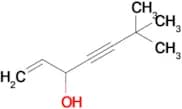
6,6-Dimethylhept-1-en-4-yn-3-ol
CAS:Pureza:98% +(stabilized with MEHQ)Peso molecular:138.2100067138672[1,1′-Binaphthalene]-3,3′-dicarbonitrile,2,2′-dihydroxy-, (1S)-
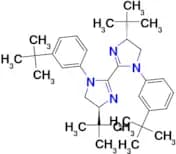
CAS:Forma y color:SolidPeso molecular:336.35(4R,4'S)-4,4'-Di-tert-butyl-1,1'-bis(3-(tert-butyl)phenyl)-4,4',5,5'-tetrahydro-1H,1'H-2,2'-biimidazole
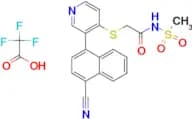
Pureza:98%Peso molecular:514.8022-((3-(4-Cyanonaphthalen-1-yl)pyridin-4-yl)thio)-N-(methylsulfonyl)acetamide 2,2,2-trifluoroacetate
Pureza:97%Peso molecular:511.498-(PROP-2-YNYL)-8-AZASPIRO[4.5]DECANE-7,9-DIONE
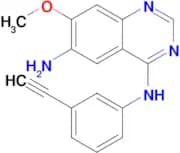
CAS:Fórmula:C12H15NO2Pureza:95%Forma y color:LiquidPeso molecular:205.257N4-(3-Ethynylphenyl)-7-methoxyquinazoline-4,6-diamine
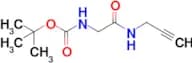
CAS:Pureza:95.0%Peso molecular:290.32598876953125Tert-Butyl (2-oxo-2-(prop-2-yn-1-ylamino)ethyl)carbamate
CAS:Pureza:95%Peso molecular:212.24899291992188Ref: 10-F609336
1gA consultar2gA consultar5gA consultar100mgA consultar250mgA consultar500mgA consultar4-[(4-tert-butylphenyl)methylidene]-1,2,3,4-tetrahydroacridine-9-carboxylic acid
CAS:Pureza:95%Peso molecular:371.48(S)-Diethyl 2-(4-(2-(2-amino-4-oxo-4,7-dihydro-3H-pyrrolo[2,3-d]pyrimidin-5-yl)ethyl)benzamido)pentanedioate 4-methylbenzenesulfonate
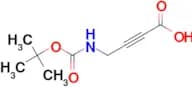
CAS:Pureza:97%Peso molecular:655.724-(TERT-BUTOXYCARBONYLAMINO)BUT-2-YNOIC ACID
CAS:Pureza:95.0%Forma y color:SolidPeso molecular:199.20599365234375Ref: 10-F469542
1gA consultar2gA consultar5gA consultar10gA consultar100mgA consultar250mgA consultar500mgA consultarRef: 10-F546273
1gA consultar5gA consultar25gA consultar100gA consultar100mgA consultar250mgA consultarN-(6-cyclopropyl-7-(((1R,2R,5R)-6,6-dimethylbicyclo[3.1.1]heptan-2-yl)methoxy)-1H-4l4-[1,2,4]triazolo[4,3-a]pyridin-3-yl)methanesulfonamide
CAS:Pureza:95%Peso molecular:406.553-(3-Methoxyphenyl)-5-[(4-methoxyphenyl)methylidene]-2-sulfanylideneimidazolidin-4-one
CAS:Pureza:95%Peso molecular:340.42-Hexyn-1-ol
CAS:Fórmula:C6H10OPureza:95%Forma y color:Liquid, No data available.Peso molecular:98.1452-Tert-butyl-4-[(4-chlorophenyl)methylidene]-1,2,3,4-tetrahydroacridine-9-carboxylic acid
CAS:Pureza:95%Peso molecular:405.924-(Furan-2-ylmethylene)-1,2,3,4-tetrahydroacridine-9-carboxylic acid
CAS:Pureza:98%Peso molecular:305.333(R)-5-isopropyl-2-(perfluorophenyl)-6,7-dihydro-5H-pyrrolo[2,1-c][1,2,4]triazol-2-ium tetrafluoroborate
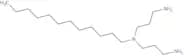
CAS:Pureza:97%Peso molecular:405.07N-(3-Aminopropyl)-N-dodecylpropane-1,3-diamine
CAS:<p>N-(3-Aminopropyl)-n-dodecylpropane-1,3-diamine, also called N,N-bis(3-aminopropyl)dodecylamine and laurylamine dipropylenediamine, is dodecylamine substituted with 2 propylamine units. Laurylamine dipropylenediamine is a non-ionic surfactant, antimicrobial agent, preservative, emulsifying agent, dispersing agent, corrosion inhibitor and an anti-static agent used in hair products.</p>Fórmula:C18H41N3Pureza:(¹H-Nmr) Min. 85 Area-%Forma y color:Colorless Clear LiquidPeso molecular:299.54 g/molSodium pyruvate
CAS:<p>Pyruvate is an intermediary organic acid metabolite in glycolysis and the first of the Embden Meyerhoff pathways that can pass readily in or out of the cell. Thus, the addition of sodium pyruvate to tissue culture medium provides both an energy source and a carbon skeleton for anabolic processes. Furthermore, it assists with maintaining certain specialized cells, is useful when cloning, and may be necessary when the serum concentration is reduced in the medium.</p>Fórmula:C3H3O3NaPureza:Min. 95%Forma y color:Crystalline PowderPeso molecular:110.04 g/molChloro-1-propanol
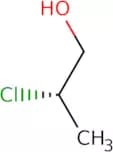
CAS:<p>Chloro-1-propanol is a product that is used as an organic solvent and a reaction medium. It can be used in the synthesis of chlorinated compounds, such as epoxides, chloride gas, and oxetane. Chloro-1-propanol is not carcinogenic, although it does contain traces of impurities that are carcinogenic. Chloro-1-propanol has a high yield with relatively low cost and can be obtained by reacting chlorine with alcohols or phenols. This product is hydrophobic and reacts well with other molecules that are also hydrophobic. The reactivity of chloro-1-propanol increases when it reacts with chloride gas or hydrochloric acid to form divalent ions.</p>Fórmula:C3H7ClOPureza:Min. 95%Forma y color:Colorless Clear LiquidPeso molecular:94.54 g/mol3-Mercapto-1,2-propanediol
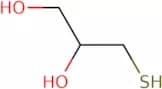
CAS:<p>3-Mercapto-1,2-propanediol is a sulfhydryl compound that has anti-tumor properties. It has been shown to induce apoptosis in leukemia cells and to inhibit the growth of myeloma cells. 3-Mercapto-1,2-propanediol has also been shown to induce redox potentials in cancer cells and prevent the formation of disulfide bonds in the cytoskeleton. The molecular pathogenesis of cancer is thought to be related to oxidative stress, which may be prevented by 3-mercapto-1,2-propanediol. This drug has also been shown to block transfection experiments with pemetrexed in a model system and human serum.</p>Fórmula:C3H8O2SPureza:Min. 95%Forma y color:Clear LiquidPeso molecular:108.16 g/mol2-Chloro-1,3-propanediol
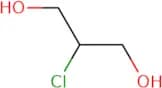
CAS:<p>2-Chloro-1,3-propanediol is a useful intermediate and building block in organic synthesis. It is also a reagent that can be used to synthesize other organic compounds. 2-Chloro-1,3-propanediol has been shown to be a versatile scaffold for the synthesis of many different types of organic molecules. It is also an important component of research chemicals and speciality chemicals. This chemical can be used as a high quality fine chemical or complex compound in the manufacture of other products.</p>Fórmula:C3H7ClO2Pureza:Min. 97 Area-%Forma y color:Colorless Clear LiquidPeso molecular:110.54 g/molDipropyl ether
CAS:<p>Dipropyl ether is an ether that has a glycol ether backbone. It is used as a solvent in the production of optical sensors, and it may be used as a carrier for fatty acids. Dipropyl ether also has the ability to transport water, which makes it useful for wastewater treatment. This compound is synthesized by reacting ethylene diamine with two equivalents of propylene oxide. The glycol chain consists of two hydroxyl groups that are separated by an intramolecular hydrogen bond, which stabilizes the molecule and prevents it from reacting with other substances.</p>Fórmula:C6H14OPureza:Min. 99.0 Area-%Forma y color:Colorless Clear LiquidPeso molecular:102.17 g/mol3-Mercapto-3-methyl-1-hexanol
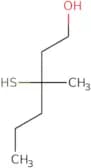
CAS:<p>3-Mercapto-3-methyl-1-hexanol is a molecule that belongs to the group of 3-hydroxyalkanoic acids. It is found in human skin cells and has a high transport rate in these cells. 3-Mercapto-3-methyl-1-hexanol can be converted to 3-hydroxy-3 methylhexanoic acid by bacterial enzymes, including corynebacterium, coli k12, and staphylococci. The molecule has been shown to be an enantiomer of 3,4 dithiadiphosphene. Studies have shown that this compound has antibacterial properties against both Gram positive and Gram negative bacteria, although it does not exhibit any activity against C. difficile or Proteus mirabilis. 3-Mercaptohexanol may also have clinical relevance for humans because it is structurally similar to molecules that are involved in the biosynthesis of important biochemicals such as</p>Fórmula:C7H16OSPureza:Min. 95 Area-%Forma y color:Colorless Clear LiquidPeso molecular:148.27 g/mol2-Aminoethanethiol
CAS:<p>2-Aminoethanethiol is a bitartrate salt of cysteamine. It inhibits the growth of bacteria by inhibiting the synthesis of the bacterial cell wall, which is required for bacterial replication and division. 2-Aminoethanethiol has been shown to be effective in experimental models of cystinosis and cystamine. 2-Aminoethanethiol has also been used as an antidote to cyanide poisoning.</p>Fórmula:C2H7NSForma y color:White Off-White PowderPeso molecular:77.15 g/molEthyl propiolate
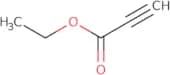
CAS:<p>Ethyl propiolate is a halide that is structurally related to the alkylating agent trifluoroacetic acid. Ethyl propiolate inhibits the activity of several enzymes including phosphofructokinase and pyruvate kinase, which are important for energy metabolism in cells. It also has been shown to have beneficial effects on autoimmune diseases such as lupus erythematosus. The mechanism of action of ethyl propiolate is due to its ability to react with activated oxygen and form an intramolecular hydrogen bond with carbon atoms in the substrate molecule. The reaction between ethyl propiolate and diethyl ketomalonate results in the formation of diethyl 2-propiolate, which can then be hydrolyzed by water into acetaldehyde and diethyl ketomalonate.</p>Fórmula:C5H6O2Pureza:Min. 98 Area-%Forma y color:Colorless Clear LiquidPeso molecular:98.1 g/molImidazolyl-4-ethanol
CAS:<p>Imidazolyl-4-ethanol is a glycoside derivative that inhibits the synthesis of proteins, fats, and nucleic acids by inhibiting the enzyme phosphofructokinase. The compound has been shown to have anti-inflammatory properties that are similar to those of nonsteroidal antiinflammatory drugs. This drug also has a kinetic energy of -1.2 kcal/mol and it has a ph optimum of 7.5. Imidazolyl-4-ethanol has been shown to be useful in vitro for the synthesis of antibodies against monoclonal antibodies and for radiation protection. It can also be used as a radioactive tracer in vivo.</p>Fórmula:C5H8N2OPureza:Min. 90 Area-%Forma y color:PowderPeso molecular:112.13 g/mol

![[1,1′-Binaphthalene]-3,3′-dicarbonitrile,2,2′-dihydroxy-, (1S)-](/_next/image/?url=https%3A%2Fstatic.cymitquimica.com%2Fproducts%2F10%2Fthumb-webp%2FF988861.webp&w=3840&q=75)

![8-(PROP-2-YNYL)-8-AZASPIRO[4.5]DECANE-7,9-DIONE](/_next/image/?url=https%3A%2Fstatic.cymitquimica.com%2Fproducts%2F10%2Fthumb-webp%2FF472177.webp&w=3840&q=75)
![4-[(4-tert-butylphenyl)methylidene]-1,2,3,4-tetrahydroacridine-9-carboxylic acid](/_next/image/?url=https%3A%2Fstatic.cymitquimica.com%2Fproducts%2F10%2Fthumb-webp%2FF985971.webp&w=3840&q=75)
![(S)-Diethyl 2-(4-(2-(2-amino-4-oxo-4,7-dihydro-3H-pyrrolo[2,3-d]pyrimidin-5-yl)ethyl)benzamido)pen…](/_next/image/?url=https%3A%2Fstatic.cymitquimica.com%2Fproducts%2F10%2Fthumb-webp%2FF988178.webp&w=3840&q=75)
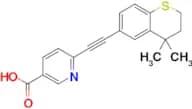
![N-(6-cyclopropyl-7-(((1R,2R,5R)-6,6-dimethylbicyclo[3.1.1]heptan-2-yl)methoxy)-1H-4l4-[1,2,4]triaz…](/_next/image/?url=https%3A%2Fstatic.cymitquimica.com%2Fproducts%2F10%2Fthumb-webp%2FF986666.webp&w=3840&q=75)

![5,6,11,12-Tetradehydrodibenzo[a,e]cyclooctene](/_next/image/?url=https%3A%2Fstatic.cymitquimica.com%2Fproducts%2F10%2Fthumb-webp%2FF612611.webp&w=3840&q=75)
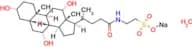
![3-(3-Methoxyphenyl)-5-[(4-methoxyphenyl)methylidene]-2-sulfanylideneimidazolidin-4-one](/_next/image/?url=https%3A%2Fstatic.cymitquimica.com%2Fproducts%2F10%2Fthumb-webp%2FF985982.webp&w=3840&q=75)
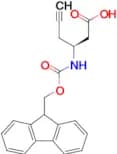

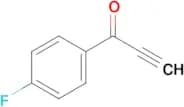

![12,13-Dihydro-12,13-bis(2-octyldodecyl)-3,9-diundecyldithieno[2′′,3′′:4′,5′]thieno[2 ](/_next/image/?url=https%3A%2Fstatic.cymitquimica.com%2Fproducts%2F10%2Fthumb-webp%2FF988426.webp&w=3840&q=75)
![2-Tert-butyl-4-[(4-chlorophenyl)methylidene]-1,2,3,4-tetrahydroacridine-9-carboxylic acid](/_next/image/?url=https%3A%2Fstatic.cymitquimica.com%2Fproducts%2F10%2Fthumb-webp%2FF985972.webp&w=3840&q=75)
![(R)-5-isopropyl-2-(perfluorophenyl)-6,7-dihydro-5H-pyrrolo[2,1-c][1,2,4]triazol-2-ium tetrafluorob…](/_next/image/?url=https%3A%2Fstatic.cymitquimica.com%2Fproducts%2F10%2Fthumb-webp%2FF987876.webp&w=3840&q=75)