Building Blocks de hidrocarburos
Los building blocks hidrocarbonados son compuestos orgánicos formados únicamente por átomos de carbono e hidrógeno. Estas estructuras fundamentales sirven como base para la síntesis de una amplia variedad de moléculas complejas. Los building blocks hidrocarbonados se utilizan en el desarrollo de productos farmacéuticos, polímeros y otros compuestos orgánicos. En CymitQuimica, ofrecemos una amplia gama de building blocks hidrocarbonados de alta calidad para facilitar tus proyectos de síntesis e investigación.
Subcategorías de "Building Blocks de hidrocarburos"
Se han encontrado 5575 productos de "Building Blocks de hidrocarburos"
Ordenar por
Pureza (%)
0
100
|
0
|
50
|
90
|
95
|
100
Diphenylmethane
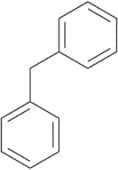
CAS:<p>Diphenylmethane is a chemical that has been used in the synthesis of pharmaceuticals and other organic compounds. It is also a useful reagent for the preparation of synthetic amines. Diphenylmethane can be used to synthesize drugs such as epidermal growth factor, which stimulates the growth and differentiation of keratinocytes. This chemical also has a number of potential therapeutic uses for metabolic disorders and infectious diseases, including hepatitis. The mechanism by which this compound reacts with nitrogen atoms is not fully understood, but it may involve the formation of diphenylmethanesulfinic acid.</p>Fórmula:C13H12Pureza:Min. 99 Area-%Forma y color:White PowderPeso molecular:168.23 g/mol2-Amino-1-methoxypropane
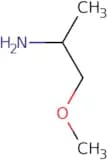
CAS:<p>2-Amino-1-methoxypropane (AMP) is a bifunctional amine that has been used as a diluent for lipase. It has been shown to have deprotective properties against metal surfaces and to be able to react with the nucleophilic group of an amine, which is useful in organic synthesis. The constant temperature of AMP, which is useful in organic synthesis, was obtained by recycling it through a constant temperature bath. This process also prevents the formation of unwanted products during the reaction.</p>Fórmula:C4H11NOPureza:Min. 95 Area-%Forma y color:Clear LiquidPeso molecular:89.14 g/mol11-Bromoundecanoic acid
CAS:<p>11-Bromoundecanoic acid is a heterobifunctional reagent that is used in the synthesis of phospholipids. This chemical reacts with an amide group on a phosphatidylcholine to introduce a bromine atom, which can be used as a fluorophore. The reaction is done in an organic solvent, such as dichloromethane, which facilitates the reaction by dissolving the reactants. The reaction can be monitored using fluorescence assay techniques and 11-bromoundecanoic acid is characterized by its constant ring-opening constant and fatty acid chain length.</p>Fórmula:C11H21BrO2Pureza:Min. 95%Forma y color:PowderPeso molecular:265.19 g/molCyclopentylmethanol
CAS:<p>Cyclopentylmethanol is a chemical compound with the molecular formula CH3OH. It is a colorless liquid that is soluble in water and has a distinctive, sweet odor. Cyclopentylmethanol is used as an intermediate in organic synthesis and as a solvent for nitrocellulose, cellulose acetate, cellulose nitrate, and similar materials. It reacts with chlorine at high temperatures to form chlorinated cyclopentylmethanols. This reaction can be used to synthesize hydroxyapatite (a mineral) from calcium phosphate (a mineral). Cyclopentylmethanol also reacts with nicotinic acetylcholine receptors in the brain, causing them to desensitize. Hydroxyapatite can also be synthesized by reacting cyclopentylmethanol with dinucleotide phosphate and hydroxyl group containing compounds such as esters or soluble guanylate cyclase enzymes. The reactions produce hydrogen</p>Fórmula:C6H12OPureza:Min. 95%Forma y color:Clear Colourless LiquidPeso molecular:100.16 g/molHexacosanoic acid
CAS:<p>Hexacosanoic acid is a glycol ether that has been shown to have hypoglycemic activity in mice. It was also shown to increase the levels of fatty acids and decrease the levels of glycerides in rats, which may be due to its ability to inhibit the synthesis of phospholipids. Hexacosanoic acid has been used as an analytical reagent for the determination of p-hydroxybenzoic acid and uronic acid. The polymerization of hexacosanoic acid is catalyzed by a polymerase chain reaction (PCR), which can be used for diagnosis. This molecule has also been found to have anti-inflammatory properties and nitrate reductase activity.</p>Fórmula:C26H52O2Forma y color:White PowderPeso molecular:396.69 g/molChloro-1-propanol
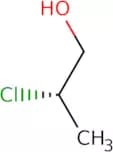
CAS:<p>Chloro-1-propanol is a product that is used as an organic solvent and a reaction medium. It can be used in the synthesis of chlorinated compounds, such as epoxides, chloride gas, and oxetane. Chloro-1-propanol is not carcinogenic, although it does contain traces of impurities that are carcinogenic. Chloro-1-propanol has a high yield with relatively low cost and can be obtained by reacting chlorine with alcohols or phenols. This product is hydrophobic and reacts well with other molecules that are also hydrophobic. The reactivity of chloro-1-propanol increases when it reacts with chloride gas or hydrochloric acid to form divalent ions.</p>Fórmula:C3H7ClOPureza:Min. 95%Forma y color:Colorless Clear LiquidPeso molecular:94.54 g/mol1,8-Diazido-3,6-dioxaoctane
CAS:<p>1,8-Diazido-3,6-dioxaoctane is a synthetic molecule that is used in the synthesis of macrolactones, polymers, and biomolecules. It can be used as a bioconjugate to attach other functional groups to biomaterials and polymers, such as azido groups. This compound has high sensitivity and thermal stability with good solubility in organic solvents. 1,8-Diazido-3,6-dioxaoctane has been shown to be compatible with many functional groups and is an important monomer for use in cross-linked polymers.</p>Fórmula:C6H12N6O2Pureza:Min. 95%Forma y color:Colorless PowderPeso molecular:200.2 g/molSodium pyruvate
CAS:<p>Pyruvate is an intermediary organic acid metabolite in glycolysis and the first of the Embden Meyerhoff pathways that can pass readily in or out of the cell. Thus, the addition of sodium pyruvate to tissue culture medium provides both an energy source and a carbon skeleton for anabolic processes. Furthermore, it assists with maintaining certain specialized cells, is useful when cloning, and may be necessary when the serum concentration is reduced in the medium.</p>Fórmula:C3H3O3NaPureza:Min. 95%Forma y color:Crystalline PowderPeso molecular:110.04 g/molTrimethylolpropane tris(2-mercaptoacetate)
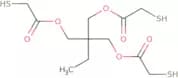
CAS:<p>Trimethylolpropane tris(2-mercaptoacetate) (TMPTMA) is a functional group that is used as an actuator in organic solvent-based inkjet printing. It has been shown to be a cross-linking agent and a treatment effect modifier. TMPTMA has been shown to be a hydroxyl group donor and has the ability to form vinyl groups. In addition, it can act as an organic acid by donating protons and carboxyl groups. TMPTMA can also function as a heat energy absorber and has low molecular weight, making it highly reactive with other substances. The alicyclic structure of TMPTMA makes it susceptible to ring opening reactions with strong acids or bases.</p>Fórmula:C12H20O6S3Pureza:Min. 95%Forma y color:PowderPeso molecular:356.48 g/molTrifluoromethanesulfonic anhydride
CAS:<p>Trifluoromethanesulfonic anhydride is more frequently known as triflic anhydride, since it derives from triflic acid. It is a versatile and strong electrophile used to insert the triflyl group (represented as Tf-) into chemical molecules (Ouyang, 2018). For example, trifluoromethane sulfonic anhydride interacts with some alkylsulfides to form stable salts that are used in the oxidation of alcohols. Moreover, trifluoromethane sulfonic anhydride has successfully shown high activity as a promoter in glycosylation reactions to obtain disaccharides (Tatai, 2007).</p>Fórmula:C2F6O5S2Pureza:Min. 95%Forma y color:Colorless Slightly Brown Clear LiquidPeso molecular:282.14 g/mol1,3-Di-(2-pyrenyl)propane
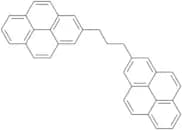
CAS:<p>1,3-Di-(2-pyrenyl)propane is a synthetic molecule that has been used as a model for the phosphatidylethanolamine (PE) component of bacterial membranes. 1,3-Di-(2-pyrenyl)propane has been shown to have a phase transition temperature of -7 degrees Celsius. It is hydrophobic and highly soluble in organic solvents like chloroform, ethanol, ether, and benzene. This molecule is kinetically inert and thermodynamically stable. The monomeric form of 1,3-Di-(2-pyrenyl)propane is not sensitive to ionizing radiation. However, in the bilayer form it is highly sensitive to radiation and can lead to the formation of double bonds that can break down into radicals.</p>Fórmula:C35H24Pureza:Min. 95%Forma y color:White PowderPeso molecular:444.57 g/molTrimethylolpropane, diallyl ether, tech
CAS:Fórmula:C12H22O3Pureza:90%Forma y color:Colourless LiquidPeso molecular:214.35-ETHYNYL-2-(TRIFLUOROMETHYL)PYRIDINE
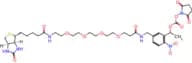
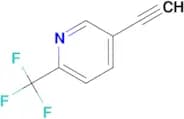
CAS:Fórmula:C8H4F3NPureza:95%Forma y color:SolidPeso molecular:171.1222,5-Dioxopyrrolidin-1-yl 4,7,10,13,16,19,22,25-octaoxaoctacos-27-yn-1-oate
CAS:Pureza:95%Peso molecular:533.57098393-Trimethylsilylpropargyl alcohol
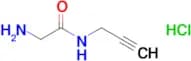
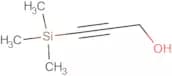
CAS:<p>S20100 - 3-Trimethylsilylpropargyl alcohol</p>Fórmula:C6H12OSiPureza:95%Forma y color:ClearPeso molecular:128.2462-Amino-N-(prop-2-yn-1-yl)acetamide hydrochloride
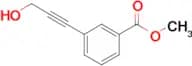
CAS:Pureza:97%Forma y color:SolidPeso molecular:148.58999633-(3-Hydroxy-prop-1-ynyl)-benzoic acid methyl ester
CAS:Fórmula:C11H10O3Pureza:98%Peso molecular:190.198tert-Butyl (1-ethynylcyclopropyl)carbamate
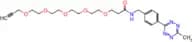
CAS:Pureza:98%Forma y color:SolidPeso molecular:181.2350006N-(4-(6-Methyl-1,2,4,5-tetrazin-3-yl)benzyl)-4,7,10,13,16-pentaoxanonadec-18-ynamide
CAS:Pureza:98%Peso molecular:487.5570068











![2-[2-(Trimethylsilyl)ethynyl]benzaldehyde](/_next/image/?url=https%3A%2Fstatic.cymitquimica.com%2Fproducts%2F10%2Fthumb-webp%2FF618474.webp&w=3840&q=75)

![5-Ethynyl-1H-pyrazolo[3,4-b]pyridine](/_next/image/?url=https%3A%2Fstatic.cymitquimica.com%2Fproducts%2F10%2Fthumb-webp%2FF759361.webp&w=3840&q=75)