Building Blocks de hidrocarburos
Los building blocks hidrocarbonados son compuestos orgánicos formados únicamente por átomos de carbono e hidrógeno. Estas estructuras fundamentales sirven como base para la síntesis de una amplia variedad de moléculas complejas. Los building blocks hidrocarbonados se utilizan en el desarrollo de productos farmacéuticos, polímeros y otros compuestos orgánicos. En CymitQuimica, ofrecemos una amplia gama de building blocks hidrocarbonados de alta calidad para facilitar tus proyectos de síntesis e investigación.
Subcategorías de "Building Blocks de hidrocarburos"
Se han encontrado 5579 productos de "Building Blocks de hidrocarburos"
Ordenar por
Pureza (%)
0
100
|
0
|
50
|
90
|
95
|
100
Ref: 10-F661577
1g474,00€5g1.352,00€10g2.258,00€2.5g992,00€50mg109,00€100mg144,00€250mg201,00€500mg338,00€Ref: 10-F046033
1g239,00€5g650,00€10g1.192,00€2.5g456,00€50mg54,00€100mg74,00€250mg100,00€500mg185,00€3,6,9,12,15,18-Hexaoxaheneicos-20-yn-1-amine
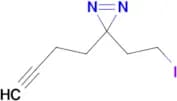
CAS:Pureza:97%Forma y color:LiquidPeso molecular:319.39801033-(BUT-3-YN-1-YL)-3-(2-IODOETHYL)-3H-DIAZIRINE
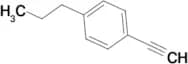
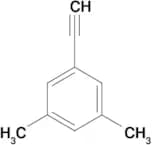
CAS:Fórmula:C7H9IN2Pureza:97%Forma y color:LiquidPeso molecular:248.0671-Eth-1-ynyl-4-propylbenzene
CAS:Fórmula:C11H12Pureza:97%Forma y color:Liquid, ClearPeso molecular:144.217tert-Butyl 3-ethynylazetidine-1-carboxylate
CAS:Fórmula:C10H15NO2Pureza:95%Forma y color:LiquidPeso molecular:181.235Ref: 10-F229582
1g50,00€5g183,00€10g330,00€25g572,00€50g1.123,00€100g1.880,00€100mg21,00€250mg25,00€500mg49,00€3-(PROP-2-YNYLOXY)PROPANOIC ACID
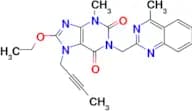
CAS:Fórmula:C6H8O3Pureza:95%Forma y color:LiquidPeso molecular:128.1277-(But-2-yn-1-yl)-8-ethoxy-3-methyl-1-((4-methylquinazolin-2-yl)methyl)-1H-purine-2,6(3H,7H)-dione (Linagliptin Impurity)
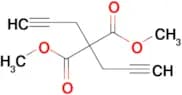
CAS:Pureza:95%Peso molecular:418.4572,2-DI-(PROP-2-YNYL)-MALONIC ACID DIMETHYL ESTER
CAS:Fórmula:C11H12O4Pureza:97%Forma y color:SolidPeso molecular:208.213N-Methyl methanesulfonamide
CAS:N-Methyl methanesulfonamide is an amide compound that has a vibrational frequency of 1605 cm-1. It is used in the manufacture of covid-19, a pandemic influenza virus vaccine. Covid-19 contains N-methyl methanesulfonamide as one of its ingredients. The vaccine has been shown to have a constant temperature and an inhibitory effect on the production of tyrosine kinase, which is a protein that regulates cell growth and division. The reaction product also inhibits sulfoxide reductase, an enzyme that catalyzes the reduction of sulfoxides. N-Methyl methanesulfonamide is susceptible to acidic hydrolysis and can be structurally represented as follows:Fórmula:C2H7NO2SPureza:Min. 95%Forma y color:Light (Or Pale) Yellow To Amber To Brown LiquidPeso molecular:109.15 g/mol8-oxa-5-azaspiro[3.5]nonane
CAS:<p>8-oxa-5-azaspiro[3.5]nonane is a high quality, non-toxic reagent with many uses as a building block for the synthesis of complex compounds. It can be used as an intermediate in the synthesis of fine chemicals, such as pharmaceuticals and agrochemicals, or as a building block for the synthesis of other chemical compounds. CAS No. 602326-48-7 is a versatile building block that can be used to synthesize molecules for research purposes. This compound has been shown to be useful in organic synthesis because it reacts easily with different functional groups.</p>Fórmula:C7H13NOPureza:Min. 95%Forma y color:PowderPeso molecular:127.18 g/mol2,3-Dichloro-1-propanol
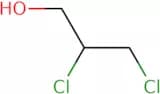
CAS:<p>2,3-Dichloro-1-propanol is a metabolic byproduct of chlorinated solvents. It has been shown to be toxic to mitochondria and can cause mitochondrial membrane potential disruption in rat liver cells. The chemical reacts with fatty acids to form a reactive carbonyl group that can react with the hydrogen bond of membrane phospholipids. This reaction disrupts the structure of the lipid bilayer, leading to mitochondrial degeneration. 2,3-Dichloro-1-propanol also reacts with glutathione and carbonic anhydrase, which leads to the formation of reactive intermediates that react with DNA or proteins. These reactions are responsible for the observed toxicity effects in animals.</p>Fórmula:C3H6Cl2OPureza:Min. 95%Forma y color:Clear LiquidPeso molecular:128.98 g/mol2-Iodo-2-methylpropane (stabilized with Copper chip)
CAS:Fórmula:C4H9IPureza:>97.0%(GC)Forma y color:Colorless to Yellow clear liquid to cloudy liquidPeso molecular:184.02Bromoform (stabilized with 2-Methyl-2-butene) [for Spectrophotometry]
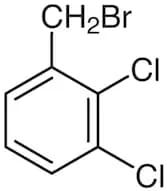
CAS:Fórmula:CHBr3Pureza:>99.0%(GC)Forma y color:Colorless clear liquidPeso molecular:252.732,3-Dichlorobenzyl Bromide
CAS:Fórmula:C7H5BrCl2Pureza:>98.0%(GC)(T)Forma y color:White or Colorless to Light yellow powder to lump to clear liquidPeso molecular:239.922-(4-Methoxyphenyl)ethanol
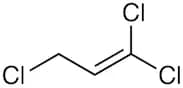
CAS:2-(4-Methoxyphenyl)ethanol is a chemical compound that can be synthesized in an efficient method. It is a by-product of the reaction of fatty acids with hydroxyl compounds and has been shown to have synergistic effects when combined with chloride. 2-(4-Methoxyphenyl)ethanol is used as a synthetic intermediate for the production of methyl anthranilate, which is an important industrial chemical that is used as a flavor and fragrance additive. 2-(4-Methoxyphenyl)ethanol also has eugenol as one of its cleavage products, which can be found in plants such as clove oil, cinnamon bark, and nutmeg.Fórmula:C9H12O2Pureza:Min. 98%Forma y color:White PowderPeso molecular:152.19 g/mol1,1,3-Trichloro-1-propene
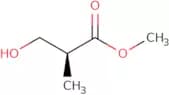
CAS:Fórmula:C3H3Cl3Pureza:>98.0%(GC)Forma y color:Colorless to Light yellow clear liquidPeso molecular:145.41Methyl L-(S)-b-Hydroxyisobutanoate
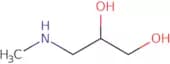
CAS:Methyl L-(S)-b-hydroxyisobutanoate is a spiroketal that belongs to the class of methyl ketones. It has been found to inhibit the growth of cancer cells in vitro and in vivo. This effect is mediated by its ability to inhibit fatty acid synthesis and its ability to activate Bafilomycin A1, which inhibits ATP synthase. Methyl L-(S)-b-hydroxyisobutanoate also has an asymmetric carbon atom at position 4, which makes it possible to synthesize stereoisomers with different biological properties. The hydroxyl group on the side chain is important for its biological function because it facilitates the binding to biomolecules.Fórmula:C5H10O3Pureza:Min. 95%Forma y color:PowderPeso molecular:118.13 g/mol3-Methylamino-1,2-propanediol
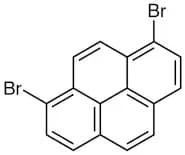
CAS:<p>3-Methylamino-1,2-propanediol is a reactive compound that is used in the synthesis of organic acids. It is also used as an intermediate in the manufacture of polyethylene glycols and particle coatings. 3-Methylamino-1,2-propanediol can be synthesized from allylamine and alkanolamine via a thermal process. It reacts with chloride to form methyl chloroacetate, which can then be converted into 3-methylamino-1,2-propanediol by reaction with methanol. The production process for this substance has been shown to generate low levels of hazardous substances such as polycyclic aromatic hydrocarbons (PAHs) and dioxins.</p>Fórmula:C4H11NO2Pureza:Min. 95%Forma y color:PowderPeso molecular:105.14 g/mol1,8-Dibromopyrene
CAS:Fórmula:C16H8Br2Pureza:>90.0%(HPLC)Forma y color:White to Light yellow powder to crystalPeso molecular:360.05c(R,S)-1-(2-Nitrophenyl)ethanol
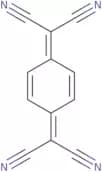
CAS:1,2-Dichloroethane is an organic solvent that has a number of industrial uses. It is also used as an antigen for the detection of antibodies in biological studies. 1,2-Dichloroethane reacts with free amino groups on proteins to form antigen-binding sites. The cavity created by the reaction then binds to the antigen and induces a change in fluorescence. This process can be detected using fluorescence resonance energy transfer (FRET). Irradiation of 1,2-dichloroethane leads to the formation of reactive oxygen species (ROS) such as singlet oxygen, which can react with aspartyl groups in proteins to form diphosgene. This reaction can lead to protein denaturation and loss of function, which may be responsible for some of the toxic effects observed with this compound.Fórmula:C8H9NO3Pureza:Min. 95%Forma y color:PowderPeso molecular:167.16 g/mol7,7,8,8-Tetracyanoquinodimethane
CAS:7,7,8,8-Tetracyanoquinodimethane is a quinoid compound that is used as an analytical chemical reagent. It has been shown to be a powerful reducing agent and can be used in the determination of trace amounts of metals. 7,7,8,8-Tetracyanoquinodimethane also reacts with cationic surfactants and hydroxyl groups to form stable compounds. The nitrogen atoms in this molecule are capable of multiple transfer reactions with other molecules.br>br> The redox potentials of this substance are negative and it has been shown to have the ability to transport pharmaceutical preparations across cell membranes. Boron nitride (BN) has been shown to stabilize the structure of 7,7,8,8-tetracyanoquinodimethane by forming strong hydrogen bonds between the BN and hydroxyl groups on this molecule.Fórmula:C12H4N4Pureza:Min. 95%Forma y color:Yellow To Green Or Brown SolidPeso molecular:204.19 g/mol1-Hexadecanol
CAS:<p>1-Hexadecanol is a monohydroxy alcohol that is used as a surfactant in analytical chemistry. It can be found naturally in the secretions of some glands and has an optimum concentration of 0.2% to 1%. 1-Hexadecanol has been shown to inhibit bacterial growth by reducing the mitochondrial membrane potential, which leads to cell death. 1-Hexadecanol also reacts with benzalkonium chloride to form ester hydrochloride, which is a reagent for the detection of bacteria. The reaction mechanism for this process is not yet fully understood, but it may involve a metastable form of 1-hexadecanol reacting with benzalkonium chloride.</p>Fórmula:C16H34OPureza:Min. 95%Forma y color:PowderPeso molecular:242.44 g/mol4-Phenyl-2-butanol
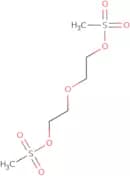
CAS:4-Phenyl-2-butanol is a monoclonal antibody that is used in the treatment of human immunodeficiency virus (HIV). It is an aromatic hydrocarbon that binds to amines and reacts with malonic acid, which has monophenolase activity. The resulting product, dimethyl malonate, reacts with unsaturated ketones to form diphenols. The reaction solution also contains chloride yields, which are generated by the conversion of amines to their corresponding chlorides. 4-Phenyl-2-butanol has been shown to have enantiopure properties for the synthesis of fatty acids and other compounds containing unsaturated ketones.Fórmula:C10H14OPureza:Min. 95%Forma y color:Clear Colourless LiquidPeso molecular:150.22 g/molDiethylene glycol dimethanesulfonate
CAS:Diethylene glycol dimethanesulfonate is a functional group that is used in the synthesis of organic compounds. It is a white crystalline solid with a melting point of about 130°C. Diethylene glycol dimethanesulfonate reacts slowly with water and hydrochloric acid to produce diethyl ether and hydrogen chloride gas. The reaction time for this process can be affected by the concentration of reactants, temperature, and pH. Diethylene glycol dimethanesulfonate undergoes acidic hydrolysis in the presence of hydrochloric acid or sodium hydroxide. This reaction produces sodium chloride and ethylene glycol. Busulfan, an anti-cancer drug, is produced by the dehydration of diethylene glycol dimethanesulfonate with copper chloride or chlorine gas. Intramolecular hydrogen bonds are formed during this process to give grandis as an intermediate product. Grandis can be converted into busulfan byFórmula:C6H14O7S2Pureza:Min. 95%Forma y color:PowderPeso molecular:262.3 g/mol3-Isopropylamino)-1,2-propanediol
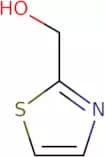
CAS:3-Isopropylamino)-1,2-propanediol is a chiral molecule that can exist in two forms, or enantiomers. The two enantiomers of 3-isopropylamino)-1,2-propanediol are mirror images of each other and have different physical properties. One form has a hydroxyl group at the 3 position and the other has a hydroxyl group at the 1 position. These two forms are called R-(+)-3-isopropylamino)-1,2-propanediol and S-(−)-3-isopropylamino)-1,2-propanediol. 3-Isopropylamino)-1,2-propanediol is used in biotechnology to produce chiral compounds and as an intermediate in bioscience research. It is also used as an organic solvent in biochemistry and stereochemistry experiments.Fórmula:C6H15NO2Pureza:Min. 95%Forma y color:White to off-white solid.Peso molecular:133.19 g/mol1,3-Thiazol-2-ylmethanol
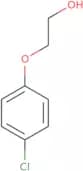
CAS:<p>1,3-Thiazol-2-ylmethanol is a macrocyclic compound that has a structure similar to that of the natural product phenylbutazone. It is synthesized from 1,3-thiazol-2-amine and benzaldehyde by dehydrogenative condensation. The ligand binds with metal ions via its thionyl group. The metal ion coordinates with the chloride anion and the ligand to produce a planar geometry. This process also produces a distillate that contains phenylbutazone as a major product.</p>Fórmula:C4H5NOSPureza:Min. 95%Forma y color:White PowderPeso molecular:115.15 g/mol2-(4-Chlorophenoxy)ethanol
CAS:2-(4-Chlorophenoxy)ethanol is a fatty acid that has shown antimicrobial activity against a number of bacteria and fungi. 2-(4-Chlorophenoxy)ethanol is active against the protozoan Trichomonas vaginalis and has been used in the treatment of bacterial vaginosis. The mechanism of action for the antimicrobial activity of 2-(4-Chlorophenoxy)ethanol is unknown, but it may be due to interference with lipid metabolism or by producing reactive oxygen species and damaging cellular membranes. This compound also possesses anti-inflammatory properties and has been shown to inhibit tumor necrosis factor-α (TNF-α) production in human monocytes.Fórmula:C8H9ClO2Pureza:Min. 95%Forma y color:PowderPeso molecular:172.61 g/molBoc-1-amino-3,6-dioxa-8-octanediamine
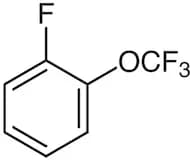
CAS:Boc-1-amino-3,6-dioxa-8-octanediamine is a linker used to attach targeting moieties to drugs. It is capable of binding iron, chlorine and other metals. Boc-1-amino-3,6-dioxa-8-octanediamine has been shown to be a useful tool for the development of novel cancer treatments by enhancing the uptake of chemotherapeutic agents in tumor tissue. This linker can be modified with functional groups such as amines and carboxyls that allow it to bind various types of molecules. The cellular distribution of this compound is not well understood due to its lack of availability in cell culture models.Fórmula:C11H24N2O4Pureza:Min. 95%Forma y color:Red Clear LiquidPeso molecular:248.32 g/mol1-Fluoro-2-(trifluoromethoxy)benzene
CAS:Fórmula:C7H4F4OPureza:>98.0%(GC)Forma y color:Colorless to Almost colorless clear liquidPeso molecular:180.102-Octadecoxyethanol
CAS:2-Octadecoxyethanol is a skin cell penetration enhancer. It is a nonionic surfactant that has been shown to increase the permeability of the skin by altering the lipid structure and function of the stratum corneum. This product can be used as an absorption enhancer, or as a plate test for microbial metabolism. 2-Octadecoxyethanol is water soluble and has low toxicity. It is also stable in both acidic and alkaline environments, making it suitable for use in a variety of applications.Fórmula:C20H42O2Pureza:Min. 95%Forma y color:PowderPeso molecular:314.55 g/mol










![8-oxa-5-azaspiro[3.5]nonane](/_next/image/?url=https%3A%2Fstatic.cymitquimica.com%2Fproducts%2F3D%2Fthumb-webp%2FFO76093.webp&w=3840&q=75)


![Bromoform (stabilized with 2-Methyl-2-butene) [for Spectrophotometry]](/_next/image/?url=https%3A%2Fstatic.cymitquimica.com%2Fproducts%2F3B%2Fthumb-webp%2FB0806.webp&w=3840&q=75)