


Building Blocks de hidrocarburos
Subcategorías de "Building Blocks de hidrocarburos"
Se han encontrado 5580 productos de "Building Blocks de hidrocarburos"
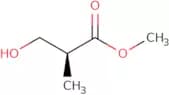
Methyl L-(S)-b-Hydroxyisobutanoate
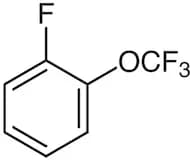
CAS:Methyl L-(S)-b-hydroxyisobutanoate is a spiroketal that belongs to the class of methyl ketones. It has been found to inhibit the growth of cancer cells in vitro and in vivo. This effect is mediated by its ability to inhibit fatty acid synthesis and its ability to activate Bafilomycin A1, which inhibits ATP synthase. Methyl L-(S)-b-hydroxyisobutanoate also has an asymmetric carbon atom at position 4, which makes it possible to synthesize stereoisomers with different biological properties. The hydroxyl group on the side chain is important for its biological function because it facilitates the binding to biomolecules.Fórmula:C5H10O3Pureza:Min. 95%Forma y color:PowderPeso molecular:118.13 g/mol1-Fluoro-2-(trifluoromethoxy)benzene
CAS:Fórmula:C7H4F4OPureza:>98.0%(GC)Forma y color:Colorless to Almost colorless clear liquidPeso molecular:180.108-oxa-5-azaspiro[3.5]nonane
CAS:8-oxa-5-azaspiro[3.5]nonane is a high quality, non-toxic reagent with many uses as a building block for the synthesis of complex compounds. It can be used as an intermediate in the synthesis of fine chemicals, such as pharmaceuticals and agrochemicals, or as a building block for the synthesis of other chemical compounds. CAS No. 602326-48-7 is a versatile building block that can be used to synthesize molecules for research purposes. This compound has been shown to be useful in organic synthesis because it reacts easily with different functional groups.
Fórmula:C7H13NOPureza:Min. 95%Forma y color:PowderPeso molecular:127.18 g/mol4-Iodotoluene
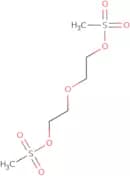
CAS:Fórmula:C7H7IPureza:>99.0%(GC)Forma y color:White or Colorless to Yellow powder to lump to clear liquidPeso molecular:218.04Diethylene glycol dimethanesulfonate
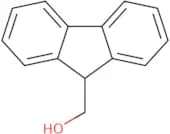
CAS:Diethylene glycol dimethanesulfonate is a functional group that is used in the synthesis of organic compounds. It is a white crystalline solid with a melting point of about 130°C. Diethylene glycol dimethanesulfonate reacts slowly with water and hydrochloric acid to produce diethyl ether and hydrogen chloride gas. The reaction time for this process can be affected by the concentration of reactants, temperature, and pH. Diethylene glycol dimethanesulfonate undergoes acidic hydrolysis in the presence of hydrochloric acid or sodium hydroxide. This reaction produces sodium chloride and ethylene glycol. Busulfan, an anti-cancer drug, is produced by the dehydration of diethylene glycol dimethanesulfonate with copper chloride or chlorine gas. Intramolecular hydrogen bonds are formed during this process to give grandis as an intermediate product. Grandis can be converted into busulfan byFórmula:C6H14O7S2Pureza:Min. 95%Forma y color:PowderPeso molecular:262.3 g/mol9-Fluorenemethanol
CAS:9-Fluorenemethanol is a chemical compound that is used as a reagent in analytical chemistry. It reacts with zirconium oxide to form 9-fluorenylmethyl zirconium chloride, which can be used to detect the presence of ethyl formate by fluorescence resonance spectroscopy. The reaction solution is heated at 100°C for about 4 hours and then cooled to room temperature. The isolated yield of 9-fluorenylmethyl zirconium chloride is determined by the detection time and thermodynamic parameters. This compound can also be used in acylation reactions.Fórmula:C14H12OPureza:Min. 95%Forma y color:White PowderPeso molecular:196.24 g/mol7,7,8,8-Tetracyanoquinodimethane
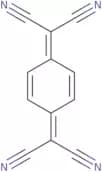
CAS:7,7,8,8-Tetracyanoquinodimethane is a quinoid compound that is used as an analytical chemical reagent. It has been shown to be a powerful reducing agent and can be used in the determination of trace amounts of metals. 7,7,8,8-Tetracyanoquinodimethane also reacts with cationic surfactants and hydroxyl groups to form stable compounds. The nitrogen atoms in this molecule are capable of multiple transfer reactions with other molecules.br>br> The redox potentials of this substance are negative and it has been shown to have the ability to transport pharmaceutical preparations across cell membranes. Boron nitride (BN) has been shown to stabilize the structure of 7,7,8,8-tetracyanoquinodimethane by forming strong hydrogen bonds between the BN and hydroxyl groups on this molecule.Fórmula:C12H4N4Pureza:Min. 95%Forma y color:Yellow To Green Or Brown SolidPeso molecular:204.19 g/mol1,2-Dibromo-2,4-dicyanobutane
CAS:1,2-Dibromo-2,4-dicyanobutane is a chemical substance with antimicrobial properties. It is used as an ingredient in the production of health care products and preservatives for food. 1,2-Dibromo-2,4-dicyanobutane inhibits bacterial growth by preventing the synthesis of fatty acids and proteins. This compound has been shown to have synergistic effects when combined with benzalkonium chloride or potassium dichromate. 1,2-Dibromo-2,4-dicyanobutane has not been found to be carcinogenic in animal studies and does not cause allergic reactions.Fórmula:C6H6Br2N2Pureza:Min. 95%Forma y color:White PowderPeso molecular:265.93 g/mol2,3-Dichloro-1-propanol
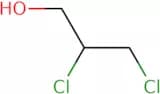
CAS:2,3-Dichloro-1-propanol is a metabolic byproduct of chlorinated solvents. It has been shown to be toxic to mitochondria and can cause mitochondrial membrane potential disruption in rat liver cells. The chemical reacts with fatty acids to form a reactive carbonyl group that can react with the hydrogen bond of membrane phospholipids. This reaction disrupts the structure of the lipid bilayer, leading to mitochondrial degeneration. 2,3-Dichloro-1-propanol also reacts with glutathione and carbonic anhydrase, which leads to the formation of reactive intermediates that react with DNA or proteins. These reactions are responsible for the observed toxicity effects in animals.
Fórmula:C3H6Cl2OPureza:Min. 95%Forma y color:Clear LiquidPeso molecular:128.98 g/mol2-(4-Methoxyphenyl)ethanol
CAS:2-(4-Methoxyphenyl)ethanol is a chemical compound that can be synthesized in an efficient method. It is a by-product of the reaction of fatty acids with hydroxyl compounds and has been shown to have synergistic effects when combined with chloride. 2-(4-Methoxyphenyl)ethanol is used as a synthetic intermediate for the production of methyl anthranilate, which is an important industrial chemical that is used as a flavor and fragrance additive. 2-(4-Methoxyphenyl)ethanol also has eugenol as one of its cleavage products, which can be found in plants such as clove oil, cinnamon bark, and nutmeg.Fórmula:C9H12O2Pureza:Min. 98%Forma y color:White PowderPeso molecular:152.19 g/molSodium trifluoromethanesulfonate
CAS:Sodium trifluoromethanesulfonate is an inorganic salt that is used as a reagent in organic synthesis. It is prepared by treating sodium metal with hydrogen fluoride and carbon disulfide. Sodium trifluoromethanesulfonate can be used to form stable complexes with copper(II) chloride, which are useful for the synthesis of organic compounds. This compound has been shown to undergo intermolecular hydrogen bonding interactions with glycol ethers, which are model systems for polymers. Sodium trifluoromethanesulfonate also has the ability to form hydrogen bonds with water molecules, which is important for its use in electrolytes. The structural analysis of sodium trifluoromethanesulfonate reveals that it contains one asymmetric center, which may be responsible for its ability to form hydrogen bonds.
Fórmula:CHF3O3S•NaPureza:Min. 95%Forma y color:White PowderPeso molecular:173.07 g/mol2,3-Dichlorobenzyl Bromide
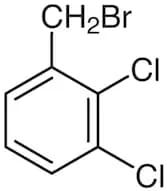
CAS:Fórmula:C7H5BrCl2Pureza:>98.0%(GC)(T)Forma y color:White or Colorless to Light yellow powder to lump to clear liquidPeso molecular:239.92c(R,S)-1-(2-Nitrophenyl)ethanol
CAS:1,2-Dichloroethane is an organic solvent that has a number of industrial uses. It is also used as an antigen for the detection of antibodies in biological studies. 1,2-Dichloroethane reacts with free amino groups on proteins to form antigen-binding sites. The cavity created by the reaction then binds to the antigen and induces a change in fluorescence. This process can be detected using fluorescence resonance energy transfer (FRET). Irradiation of 1,2-dichloroethane leads to the formation of reactive oxygen species (ROS) such as singlet oxygen, which can react with aspartyl groups in proteins to form diphosgene. This reaction can lead to protein denaturation and loss of function, which may be responsible for some of the toxic effects observed with this compound.Fórmula:C8H9NO3Pureza:Min. 95%Forma y color:PowderPeso molecular:167.16 g/mol3′,6′-Dihydroxy-3-oxo-N-(prop-2-yn-1-yl)-3H-spiro[isobenzofuran-1,9′-xanthene]-5-carboxamide
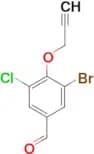
CAS:Fórmula:C24H15NO6Pureza:97%Peso molecular:413.3853-bromo-5-chloro-4-(prop-2-yn-1-yloxy)benzaldehyde
CAS:Fórmula:C10H6BrClO2Pureza:95.0%Peso molecular:273.51(1S,2R,10R,11S,14R,15S)-15-ethyl-14-ethynyl-14-hydroxytetracyclo[8.7.0.0^{2,7}.0^{11,15}]heptadec-6-en-5-one
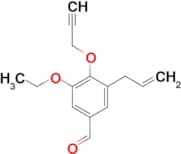
CAS:Fórmula:C21H28O2Pureza:99+%Peso molecular:312.4533-allyl-5-ethoxy-4-(2-propyn-1-yloxy)benzaldehyde
CAS:Fórmula:C15H16O3Pureza:95.0%Peso molecular:244.29(1S,2R)-rel-2-[(benzyloxy)carbonyl]cyclopropane-1-carboxylic acid
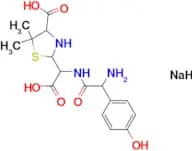
CAS:Pureza:95Forma y color:SolidPeso molecular:220.2242-((2-Amino-2-(4-hydroxyphenyl)acetamido)(carboxy)methyl)-5,5-dimethylthiazolidine-4-carboxylic acid, sodium salt (Amoxicillin Impurity)
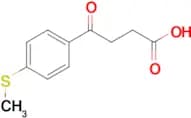
CAS:Pureza:97%Peso molecular:406.413-(4-Methylthiobenzoyl)propionic acid
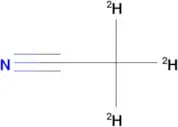
CAS:Fórmula:C11H12O3SPureza:97.0%Forma y color:SolidPeso molecular:224.27Acetonitrile D3 >99.96% (+ 0.03% tms)
CAS:Fórmula:C2H3NPureza:99.96%Forma y color:LiquidPeso molecular:44.071[S(R)]-N-[(R)-[2-(Diadamantanphosphino)phenyl]phenylmethyl]-2-methyl-2-propanesulfinamide
CAS:Pureza:97%Peso molecular:587.855-{[4-(diethylamino)phenyl]methylidene}-2-sulfanylideneimidazolidin-4-one
CAS:Pureza:97%Peso molecular:275.374-(Trifluoromethyl)benzamidoxime
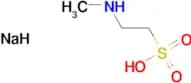
CAS:Fórmula:C8H7F3N2OPureza:97.0%Forma y color:Solid, Crystalline Powder or PowderPeso molecular:204.152Sodium 2-(methylamino)ethanesulfonate
CAS:Pureza:64-66% in waterForma y color:LiquidPeso molecular:162.16[S(R)]-N-[(1S)-1-[5-(Diphenylphosphino)-9,9-dimethyl-9H-xanthen-4-yl]-2,2-dimethylpropyl]-2-methyl-2-propanesulfinamide
CAS:Pureza:97%Peso molecular:583.77


![8-oxa-5-azaspiro[3.5]nonane](/_next/image/?url=https%3A%2Fstatic.cymitquimica.com%2Fproducts%2F3D%2Fthumb-webp%2FFO76093.webp&w=3840&q=75)






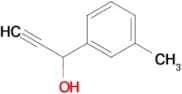
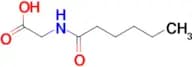

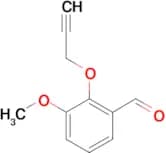
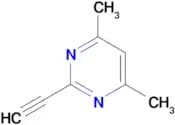

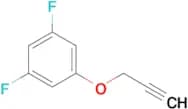
![3′,6′-Dihydroxy-3-oxo-N-(prop-2-yn-1-yl)-3H-spiro[isobenzofuran-1,9′-xanthene]-5-carboxamide](/_next/image/?url=https%3A%2Fstatic.cymitquimica.com%2Fproducts%2F10%2Fthumb-webp%2FF546083.webp&w=3840&q=75)
![(1S,2R,10R,11S,14R,15S)-15-ethyl-14-ethynyl-14-hydroxytetracyclo[8.7.0.0^{2,7}.0^{11,15}]heptadec-…](/_next/image/?url=https%3A%2Fstatic.cymitquimica.com%2Fproducts%2F10%2Fthumb-webp%2FF358122.webp&w=3840&q=75)
![(1S,2R)-rel-2-[(benzyloxy)carbonyl]cyclopropane-1-carboxylic acid](/_next/image/?url=https%3A%2Fstatic.cymitquimica.com%2Fproducts%2F10%2Fthumb-webp%2FF985596.webp&w=3840&q=75)

![[S(R)]-N-[(R)-[2-(Diadamantanphosphino)phenyl]phenylmethyl]-2-methyl-2-propanesulfinamide](/_next/image/?url=https%3A%2Fstatic.cymitquimica.com%2Fproducts%2F10%2Fthumb-webp%2FF988101.webp&w=3840&q=75)
![5-{[4-(diethylamino)phenyl]methylidene}-2-sulfanylideneimidazolidin-4-one](/_next/image/?url=https%3A%2Fstatic.cymitquimica.com%2Fproducts%2F10%2Fthumb-webp%2FF985978.webp&w=3840&q=75)
![2-Quinolinecarboxamide, N-[2-(4,5-dihydro-2-oxazolyl)phenyl]-](/_next/image/?url=https%3A%2Fstatic.cymitquimica.com%2Fproducts%2F10%2Fthumb-webp%2FF986288.webp&w=3840&q=75)


![[S(R)]-N-[(1S)-1-[5-(Diphenylphosphino)-9,9-dimethyl-9H-xanthen-4-yl]-2,2-dimethylpropyl]-2-methyl…](/_next/image/?url=https%3A%2Fstatic.cymitquimica.com%2Fproducts%2F10%2Fthumb-webp%2FF988066.webp&w=3840&q=75)