Compuestos y derivados alifáticos
Los compuestos alifáticos y sus derivados son compuestos orgánicos caracterizados por estructuras de cadena recta o ramificada, a diferencia de las estructuras en anillo encontradas en los compuestos aromáticos. Estos compuestos incluyen alcanos, alquenos, alquinos y sus derivados funcionalizados, desempeñando un papel vital en varios procesos químicos y aplicaciones industriales. En CymitQuimica, ofrecemos una diversa selección de compuestos alifáticos de alta pureza y sus derivados, meticulosamente seleccionados y probados para cumplir con los estrictos requisitos de las necesidades de investigación e industriales. Nuestro catálogo abarca una amplia gama de compuestos, incluyendo hidrocarburos, alcoholes, aldehídos, cetonas y ácidos, cada uno conocido por su reactividad y versatilidad en la síntesis orgánica, la farmacéutica y la ciencia de materiales. Al proporcionar compuestos alifáticos y derivados de alta calidad, apoyamos a los investigadores y profesionales en la consecución de transformaciones químicas precisas y eficientes, fomentando la innovación y los avances en múltiples campos científicos y tecnológicos.
Se han encontrado 8718 productos de "Compuestos y derivados alifáticos"
Ordenar por
Pureza (%)
0
100
|
0
|
50
|
90
|
95
|
100
tert-butyl 4-[3-(4-bromophenyl)-1-hydroxy-3-oxoprop-1-en-1-yl]piperidine-1-carboxylate
CAS:Pureza:97%Peso molecular:410.3080139N-Ethyl-N-(o-tolyl)but-2-enamide
CAS:Fórmula:C13H17NOPureza:95.0%Forma y color:SolidPeso molecular:203.285trans-1,4-Dibromo-2-butene
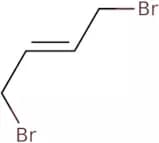
CAS:<p>Trans-1,4-Dibromo-2-butene is a chemical compound with the molecular formula of C4H8Br2. It is an organic halide and a member of the class of compounds known as dibromides. The molecule has two bromine atoms, one on each carbon atom in the chain. Trans-1,4-Dibromo-2-butene is used as a monomer to create polymers such as cationic polymerization or benzalkonium chloride. In addition, trans-1,4-Dibromo-2-butene can be used in the synthesis of amides by reacting with ammonia. This chemical compound also has antimicrobial properties and has been shown to inhibit the activity of bacteria by disrupting protein synthesis and cell division.</p>Fórmula:C4H6Br2Pureza:Min. 95%Forma y color:White PowderPeso molecular:213.9 g/mol2-Pentenoic acid
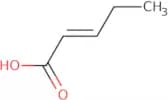
CAS:<p>2-Pentenoic acid is a fatty acid that belongs to the group of sodium salts. It is often used as a catalyst in organic synthesis. 2-Pentenoic acid has been shown to reduce the incidence of bowel disease and improve mitochondrial function. This compound is not toxic at doses up to 1 g/kg in mice, although it may cause acute toxicity at higher doses. 2-Pentenoic acid has also been shown to have anti-inflammatory properties that may be due to its ability to inhibit prostaglandin synthesis.</p>Fórmula:C5H8O2Pureza:Min. 95%Forma y color:Colorless Clear LiquidPeso molecular:100.12 g/mol1-tert-Butyl-3-ethylbenzene
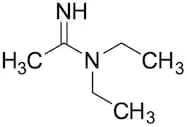
CAS:Producto controlado<p>Applications 1-TERT-BUTYL-3-ETHYLBENZENE (cas# 14411-56-4) is a useful research chemical.<br> Not a dangerous good if item is equal to or less than 1g/ml and there is less than 100g/ml in the package<br></p>Fórmula:C12H18Forma y color:NeatPeso molecular:162.27N,N-Diethylacetamidine
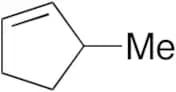
CAS:Producto controladoFórmula:C6H14N2Forma y color:NeatPeso molecular:114.1891,2-Dimethylcyclohexane
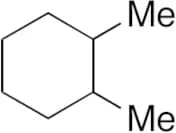
CAS:Producto controlado<p>Applications 1,2-Dimethylcyclohexane is used in the preparation of rhodium nanoparticles as recyclable catalysts.<br> Not a dangerous good if item is equal to or less than 1g/ml and there is less than 100g/ml in the package<br>References Stratton, S.A., et. al.: Catalysis Today, 183, 96 (2012)<br></p>Fórmula:C8H16Forma y color:NeatPeso molecular:112.214-Methylindan
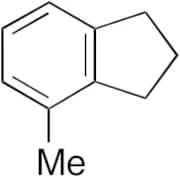
CAS:Producto controlado<p>Applications 4-Methylindan is a shoyu flavouring that is used in soy sauce.<br>References Nunomura, N., et al.: Agri. Biol. Chem., 48, 1753 (1984);<br></p>Fórmula:C10H12Forma y color:NeatPeso molecular:132.2α-Bromostyrene (~90%, ~1% Hydroquinone as stabilizer)
CAS:Producto controlado<p>Applications (1-Bromoethenyl)-benzene is a useful synthetic intermediate. It is a reactant used to synthesize Potassium (1-Phenylcyclopropyl)trifluoroborate (P698400). It can also be used in the synthesis of substituted cyclopentenones.<br>References Zhang, L., et al.: J. Am. Chem. Soc., 128, 1442 (2006)<br></p>Fórmula:C8H7BrForma y color:NeatPeso molecular:183.051-Amino-1-cyclopentanecarboxamide
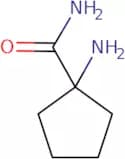
CAS:<p>1-Amino-1-cyclopentanecarboxamide is a bicyclic heterocycle that has been shown to have therapeutic effects in the treatment of autoimmune diseases and cancer. It is structurally related to chemokines, which are cytokines that induce inflammatory responses by activating the immune system. 1-Amino-1-cyclopentanecarboxamide binds to specific receptors on white blood cells, resulting in an increase in the production of chemokines and other proinflammatory molecules. This leads to an increase in inflammation, as well as an increase in blood pressure. The chemical also has anti-inflammatory properties and can be used for the treatment of inflammatory diseases such as arthritis. 1-Amino-1-cyclopentanecarboxamide has been shown to inhibit cancer cell growth by inducing apoptosis (programmed cell death).</p>Fórmula:C6H12N2OPureza:Min. 95%Forma y color:PowderPeso molecular:128.17 g/mol1,2-Ethanedithiol
CAS:<p>1,2-Ethanedithiol is a molecule that consists of a sulfur atom and two ethyl groups. It can form stable complexes with hydrogen fluoride and trifluoroacetic acid as well as hydrochloric acid. 1,2-Ethanedithiol is reactive with nucleophiles such as amines, thiols, and alcohols. The molecule has an electrochemical impedance spectroscopy (EIS) model system that has shown to react with the electron flow from the electrode to the solution of a compound. The EIS model system also showed that a conformational change in the molecule could result in light emission.</p>Fórmula:C2H6S2Pureza:Min. 95%Forma y color:Colorless Clear LiquidPeso molecular:94.2 g/molPerfluoroheptanoyl chloride
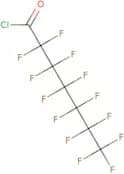
CAS:<p>Perfluoroheptanoyl chloride is a fluorinated hydrocarbon that is used as a surfactant in detergent compositions. It has been shown to be biostable, which means it does not react with other molecules in the environment. This compound also has low environmental toxicity because of its resistance to peroxidation and its ability to form stable complexes with metals. Perfluoroheptanoyl chloride has been shown to cause allergic reactions in some people and may cause adverse effects on animal health. Research on the effects of perfluoroheptanoyl chloride on Xenopus oocytes has demonstrated that this compound can affect gene expression and result in cell death.</p>Fórmula:C7CIF13OPureza:Min. 95%Forma y color:Colourless LiquidPeso molecular:382.51 g/mol
![tert-butyl 4-[3-(4-bromophenyl)-1-hydroxy-3-oxoprop-1-en-1-yl]piperidine-1-carboxylate](/_next/image/?url=https%3A%2Fstatic.cymitquimica.com%2Fproducts%2F10%2Fthumb-webp%2FF614592.webp&w=3840&q=75)