Materiales de autoensamblaje
Los materiales de autoensamblaje son una categoría fascinante en la química supramolecular, que consiste en compuestos que se organizan autónomamente en arreglos estructurados sin intervención externa. Estos materiales tienen la notable capacidad de reorganizar, reparar o fabricar estructuras químicas mediante interacciones no covalentes como el enlace de hidrógeno, las fuerzas de van der Waals y las interacciones electrostáticas. Esta capacidad inherente de autoorganización los hace muy valiosos en diversas aplicaciones, incluyendo la nanotecnología, la ciencia de materiales y la ingeniería biomédica. Los materiales de autoensamblaje son cruciales para el desarrollo de materiales funcionales avanzados, la creación de dispositivos a nanoescala y el diseño de sistemas responsivos que puedan adaptarse a los cambios ambientales. Su capacidad para formar estructuras bien definidas abre el camino para innovaciones en la administración de medicamentos, la detección y la creación de materiales inteligentes.
Se han encontrado 214 productos de "Materiales de autoensamblaje"
Ordenar por
Pureza (%)
0
100
|
0
|
50
|
90
|
95
|
100
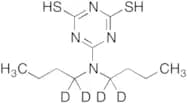
6-(Dibutylamino)-1,3,5-triazine-2,4-dithiol-d4
CAS:Producto controladoFórmula:C11H16D4N4S2Forma y color:NeatPeso molecular:276.461-(9-Mercaptononyl)-3,6,9-trioxaundecan-11-ol
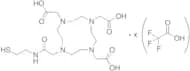
CAS:Producto controladoFórmula:C17H36O4SForma y color:NeatPeso molecular:336.53DO3A-Thiol TFA Salt
CAS:<p>Applications A TFA salt form of DO3A-Thiol (D494870), a DOTA derivative used for site-specific biomolecular modification via click chemistry.<br>References Waengler, C.; et al.: Bioorg. Med. Chem., 19, 3864 (2011).<br></p>Fórmula:C18H33N5O7S·x(C2HF3O2)Forma y color:White To Off-WhitePeso molecular:463.55 + x(114.02)Prasugrel Hydroxy Thiolactone
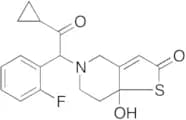
CAS:Producto controlado<p>Applications Prasugrel Hydroxy Thiolactone, is the metabolite of Prasugrel (P701150), which is a novel thienopyridine. It is also a potent inhibitor of platelet aggregation in vivo.<br>References Von Beckerath, N., et al.: Circulation, 112, 2946 (2005), Jernberg, T., et al.: Eur. Heart J., 27, 1166 (2006), Farid, N., et al.: Drug Metab. Dispos., 35, 1096 (2007), Farid, N., et al.: Clin. Pharmacol. Ther., 81, 735 (2007), Jakubowski, J., et al.: J. Cardiovasc. Pharmacol., 49, 167 (2007), Wiviott, S., et al.: N. Engl. J. Med., 357, 2001 (2007),<br></p>Fórmula:C18H18FNO3SForma y color:NeatPeso molecular:347.4Phosphoric Acid Dioctyl Ester Sodium Salt
CAS:Producto controlado<p>Stability Hygroscopic<br>Applications Phosphoric Acid Dioctyl Ester Sodium Salt is used in conjunction with polyaniline as an active pigment in various resins and also protects iron from corrosion. Phosphoric acid dioctyl ester is also used in multichannel taste sensors, devices that transform information about taste into electrical signals and subsequently analyzed by a computer.<br>References Samui A., et al.: Prog. Org. Coat., 54, 263 (2005); Toko, K.: Mat. Sci. Eng. C-Biomim., C4, 69 (1996)<br></p>Fórmula:C16H34NaO4PForma y color:NeatPeso molecular:344.43-Mercapto-3-methylbutyl-d6 Formate
CAS:Producto controlado<p>Applications Labelled 3-Mercapto-3-methylbutyl Formate (M253540). 3-Mercapto-3-methylbutyl formate is one of the major odor-active thiol in pan-roasted white sesame seeds.<br>References Czerny, M., et al.: J .Agric. Food Chem., 47, 695 (1999), Steinhaus, M., et al.: Eur. Food Res. Technol., 226, 45 (2007), Tamura, H., et al.: Agric. Food Chem., 2010, 58, 7368 (2010),<br></p>Fórmula:C6H6D6O2SForma y color:NeatPeso molecular:154.26Sodium 2-(2-Hydroxypropanamido)ethane-1-sulfonate
CAS:Producto controladoFórmula:C5H10NO5S·NaForma y color:NeatPeso molecular:219.19[3-(Trimethylammonium)propyl] Methanethiosulfonate Bromide
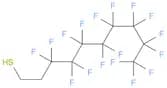
CAS:Producto controlado<p>Stability Moisture Sensitive: Very hygroscopic<br>Applications Reacts specifically and rapidly with thiols to form mixed disulfides.<br>References Duhten, R.L., et al.: Biochemistry, 32, 3139 (1993), Yang, N. et al.: Neuron, 16, 113 (1996), Kuner, T. et al.: Neuron, 17, 343 (1996), Holmgren, M. et al: Neuropharmacology, 35, 797 (1996), Chahine, M. et al.: Biochemical & Biophysical Res. Commun., 233, 606 (1997), Ehrlich, B.E., et al.: J. Gen. Physiol., 109, 255 (1997), Sullivan, D.A. and cohen, J.B.: J. B.C., 275, 17, 12651 (2000)<br></p>Fórmula:C7H18NO2S2·BrForma y color:NeatPeso molecular:292.263,3,4,4,5,5,6,6,7,7,8,8,9,9,10,10,10-Heptadecafluoro-1-decanethiol
CAS:Fórmula:C10H5F17SPureza:97%Forma y color:LiquidPeso molecular:480.1845543999997(Perfluorodecyl)Ethyl (Perfluorooctyl)Ethyl Hydrogen Phosphate
CAS:Fórmula:C22H9F38O4PForma y color:Neat





![[3-(Trimethylammonium)propyl] Methanethiosulfonate Bromide](/_next/image/?url=https%3A%2Fstatic.cymitquimica.com%2Fproducts%2FTR%2Fthumb-webp%2FT795950.webp&w=3840&q=75)