Silanos
Subcategorías de "Silanos"
Se han encontrado 1234 productos de "Silanos"
n-BUTYLTRICHLOROSILANE
CAS:Alkyl Silane - Conventional Surface Bonding
Aliphatic, fluorinated aliphatic or substituted aromatic hydrocarbon substituents are the hydrophobic entities which enable silanes to induce surface hydrophobicity. The organic substitution of the silane must be non-polar. The hydrophobic effect of the organic substitution can be related to the free energy of transfer of hydrocarbon molecules from an aqueous phase to a homogeneous hydrocarbon phase. A successful hydrophobic coating must eliminate or mitigate hydrogen bonding and shield polar surfaces from interaction with water by creating a non-polar interphase. Although silane and silicone derived coatings are in general the most hydrophobic, they maintain a high degree of permeability to water vapor. This allows coatings to breathe and reduce deterioration at the coating interface associated with entrapped water. Since ions are not transported through non-polar silane and silicone coatings, they offer protection to composite structures ranging from pigmented coatings to rebar reinforced concrete. A selection guide for hydrophobic silanes can be found on pages 22-31 of the Hydrophobicity, Hydrophilicity and Silane Surface Modification brochure.
n-Butyltrichlorosilane; Trichlorosilylbutane
Vapor pressure, 31 °C: 10 mmFórmula:C4H9Cl3SiPureza:97%Forma y color:LiquidPeso molecular:191.56N-[3-(TRIMETHOXYSILYL)PROPYL]HEXADECANAMIDE
CAS:Fórmula:C22H47NO4SiForma y color:White To Pale Yellow SolidPeso molecular:417.7TRIS(DIMETHYLAMINO)ETHYLSILANE
CAS:Fórmula:C8H23N3SiPureza:97%Forma y color:Straw LiquidPeso molecular:189.38CHLOROMETHYLDIMETHYLCHLOROSILANE
CAS:Specialty Silicon-Based Blocking Agent
Used as a protecting group for reactive hydrogens in alcohols, amines, thiols, and carboxylic acids. Organosilanes are hydrogen-like, can be introduced in high yield, and can be removed under selective conditions. They are stable over a wide range of reaction conditions and can be removed in the presence of other functional groups, including other protecting groups. The tolerance of silylated alcohols to chemical transformations summary is presented in Table 1 of the Silicon-Based Blocking Agents brochure.
Chloromethyldimethylchlorosilane; (Chlorodimethylsilyl)chloromethane; Chloro(chloromethyl)dimethylsilane; CMDMCS
Can form cyclic products with appropriate 1,2-difunctional substratesUsed in analytical applications for greater ECD detectabilitySummary of selective deprotection conditions is provided in Table 7 through Table 20 of the Silicon-Based Blocking Agents brochureFórmula:C3H8Cl2SiPureza:97%Forma y color:Straw LiquidPeso molecular:143.091,3,5,7-TETRAMETHYLCYCLOTETRASILOXANE
CAS:Siloxane-Based Silane Reducing Agent
Organosilanes are hydrocarbon-like and possess the ability to serve as both ionic and free-radical reducing agents. These reagents and their reaction by-products are safer and more easily handled and disposed than many other reducing agents. The metallic nature of silicon and its low electronegativity relative to hydrogen lead to polarization of the Si-H bond yielding a hydridic hydrogen and a milder reducing agent compared to aluminum-, boron-, and other metal-based hydrides. A summary of some key silane reductions are presented in Table 1 of the Silicon-Based Reducing Agents brochure.
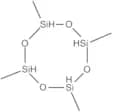
1,3,5,7-Tetramethylcyclotetrasiloxane; TMCTS; Methyl hydrogen cyclic tetramer
ΔHcomb: 5,308 kJ/molΔHvap: 177.9 kJ/molVapor pressure, 20 °C: 7.0 mmCritical temperature: 278 °CHigh molecular weight silane reducing agentIn presence of oxygen plasma generates SiO2 films for microelectronicsCyclic monomer- undergoes hydrosilylation reactionsForms hybrid inorganic-organic polymers with dienes suitable for circuit board resinsForms gate dielectrics by CVDExtensive review of silicon based reducing agents: Larson, G.; Fry, J. L. "Ionic and Organometallic-Catalyzed Organosilane Reductions", Wipf, P., Ed.; Wiley, 2007Fórmula:C4H16O4Si4Pureza:97%Forma y color:Colourless LiquidPeso molecular:240.51PHENYLTRIS(TRIMETHYLSILOXY)SILANE
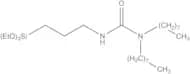
CAS:Fórmula:C15H32O3Si4Pureza:97%Forma y color:Straw LiquidPeso molecular:372.76N,N-DIOCTYL-N'-TRIETHOXYSILYLPROPYLUREA
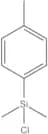
CAS:Fórmula:C26H56N2O4SiForma y color:Straw LiquidPeso molecular:488.83p-TOLYLDIMETHYLCHLOROSILANE
CAS:Fórmula:C9H13ClSiPureza:97%Forma y color:Straw LiquidPeso molecular:184.74N,N'-BIS[(3-TRIMETHOXYSILYL)PROPYL]ETHYLENEDIAMINE, 95%
CAS:N,N'-bis[(3-trimethoxysilyl)propyl]ethylenediamine; bis(trimethoxysilylpropyl)ethylenediamine; 1,2-bis[(3-trimethoxysilyl)propylamino]ethane
Diamine functional dipodal silaneContains N,N-isomerCoupling agent for polyamides with enhanced hydrolytic stabilityForms thin film environments for metal ionsFórmula:C14H36N2O6Si2Pureza:95%Forma y color:Straw LiquidPeso molecular:384.62(3-TRIMETHOXYSILYLPROPYL)DIETHYLENETRIAMINE, tech
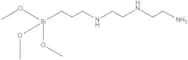
CAS:(3-Trimethoxysilylpropyl)diethylenetriamine; N-[N'-(2-aminoethyl)aminoethyl]-3-aminopropytrimethoxysilane
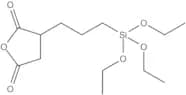
Triamino functional trialkoxy silaneHardener, coupling agent for epoxiesγc of treated surfaces: 37.5 mN/mPrimary amine and two internal secondary amine coupling agentFórmula:C10H27N3O3SiPureza:95%Forma y color:Straw LiquidPeso molecular:265.43(3-TRIETHOXYSILYL)PROPYLSUCCINIC ANHYDRIDE, 95%
CAS:Anhydride Functional Trialkoxy Silane
Silane coupling agents have the ability to form a durable bond between organic and inorganic materials to generate desired heterogeneous environments or to incorporate the bulk properties of different phases into a uniform composite structure. The general formula has two classes of functionality. The hydrolyzable group forms stable condensation products with siliceous surfaces and other oxides such as those of aluminum, zirconium, tin, titanium, and nickel. The organofunctional group alters the wetting or adhesion characteristics of the substrate, utilizes the substrate to catalyze chemical transformations at the heterogeneous interface, orders the interfacial region, or modifies its partition characteristics, and significantly effects the covalent bond between organic and inorganic materials.
3-Triethoxysilylpropylsuccinic anhydride
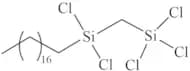
Viscosity: 20 cStCoupling agent for dibasic surfacesAcetic acid-catalyzed hydrolysis yields succinct acid derivativesHardener, coupling agent for for epoxy resinsFórmula:C13H24O6SiPureza:95%Forma y color:Straw LiquidPeso molecular:304.411-n-OCTADECYL-1,1,3,3,3-PENTACHLORO-1,3-DISILAPROPANE, 95%
CAS:Fórmula:C19H39Cl5Si2Pureza:95%Forma y color:LiquidPeso molecular:500.953-{[DIMETHYL(3-TRIMETHOXYSILYL)PROPYL]AMMONIO}PROPANE-1-SULFONATE, tech 95
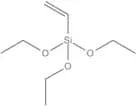
CAS:Fórmula:C11H27NO6SSiPureza:95%Forma y color:White SolidPeso molecular:329.5VINYLTRIETHOXYSILANE
CAS:Olefin Functional Trialkoxy Silane
Silane coupling agents have the ability to form a durable bond between organic and inorganic materials to generate desired heterogeneous environments or to incorporate the bulk properties of different phases into a uniform composite structure. The general formula has two classes of functionality. The hydrolyzable group forms stable condensation products with siliceous surfaces and other oxides such as those of aluminum, zirconium, tin, titanium, and nickel. The organofunctional group alters the wetting or adhesion characteristics of the substrate, utilizes the substrate to catalyze chemical transformations at the heterogeneous interface, orders the interfacial region, or modifies its partition characteristics, and significantly effects the covalent bond between organic and inorganic materials.
Alkenylsilane Cross-Coupling Agent
The cross-coupling reaction is a highly useful methodology for the formation of carbon-carbon bonds. It involves two reagents, with one typically being a suitable organometallic reagent - the nucleophile - and the other a suitable organic substrate, normally an unsaturated halide, tosylate or similar - the electrophile.
Vinyltriethoxysilane; Triethoxyvinylsilane; TEVS; VTES; Ethenyltriethoxysilane; Triethoxysilylethylene; Triethoxy(vinyl)silane
ΔHvap: 6.8 kcal/molΔHform: -463.5 kcal/molDipole moment: 1.69 debyeSpecific wetting surface area: 412 m2/gCopolymerization parameters- e,Q: -0.42, 0.028γc of treated surfaces: 25 mN/mVapor pressure, 20 °C: 5 mmSpecific heat: 0.25 cal/g/°Relative hydrolysis rate versus SIV9220.0, vinyltrimethoxysilane; 0.05Forms copolymers with ethylene for moisture induced coupling of polyethyleneCouples fillers or fiberglass to resinsSee VEE-005 for polymeric versionReacts with enamines to give (E)-β:-silylenamines, which cross-couple with aryl iodides to give β-aryl enaminesEmployed as a coupling agent, adhesion promoter, and crosslinking agentUsed in microparticle surface modification for fillersCompatible with sulfur and peroxide cured rubber, polyester, polyolefin, styrene, and acrylic based materialsFor vinylationsAvailable as an oligomeric hydrolysate, SIV9112.2Extensive review of silicon based cross-coupling agents: Denmark, S. E. et al. "Organic Reactions, Volume 75" Denmark, S. E. ed., John Wiley and Sons, 233, 2011Fórmula:C8H18O3SiPureza:97%Forma y color:LiquidPeso molecular:190.31N,N-BIS(2-HYDROXYETHYL)-3-AMINOPROPYLTRIETHOXYSILANE, 62% in ethanol
CAS:N,N-Bis(2-hydroxyethyl)-3-aminopropyltriethoxysilane; N-triethoxysilylpropyl-N,N-bis(2-hydroxyethyl)amine; 2,2'-[[3- (triethoxysilyl)propyl]imino]bisethanol
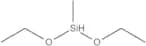
Tertiary amino functional trialkoxy silaneTerminal dihydroxy-functionalityUrethane polymer coupling agentContains 2-3% hydroxyethylaminopropyltriethoxysilaneSpecific wetting surface: 252 m2/gEmployed in surface modification for preparation of oligonucleotide arrays 62% in ethanolFórmula:C13H31NO5SiForma y color:Straw LiquidPeso molecular:309.48METHYLDIETHOXYSILANE
CAS:Tri-substituted Silane Reducing Agent
Organosilanes are hydrocarbon-like and possess the ability to serve as both ionic and free-radical reducing agents. These reagents and their reaction by-products are safer and more easily handled and disposed than many other reducing agents. The metallic nature of silicon and its low electronegativity relative to hydrogen lead to polarization of the Si-H bond yielding a hydridic hydrogen and a milder reducing agent compared to aluminum-, boron-, and other metal-based hydrides. A summary of some key silane reductions are presented in Table 1 of the Silicon-Based Reducing Agents brochure.
Methyldiethoxysilane; Diethoxymethylsilane
ΔHcomb: 3,713 kJ/molWill form high-boiling polymeric by-products with aqueous work-upExtensive review of silicon based reducing agents: Larson, G.; Fry, J. L. "Ionic and Organometallic-Catalyzed Organosilane Reductions", Wipf, P., Ed.; Wiley, 2007Fórmula:C5H14O2SiPureza:97%Forma y color:LiquidPeso molecular:134.25OCTADECYLDIISOBUTYLCHLOROSILANE
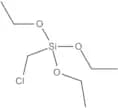
CAS:Fórmula:C26H55ClSiPureza:95%Forma y color:Straw LiquidPeso molecular:431.27CHLOROMETHYLTRIETHOXYSILANE
CAS:Halogen Functional Trialkoxy Silane
Silane coupling agents have the ability to form a durable bond between organic and inorganic materials to generate desired heterogeneous environments or to incorporate the bulk properties of different phases into a uniform composite structure. The general formula has two classes of functionality. The hydrolyzable group forms stable condensation products with siliceous surfaces and other oxides such as those of aluminum, zirconium, tin, titanium, and nickel. The organofunctional group alters the wetting or adhesion characteristics of the substrate, utilizes the substrate to catalyze chemical transformations at the heterogeneous interface, orders the interfacial region, or modifies its partition characteristics, and significantly effects the covalent bond between organic and inorganic materials.
Chloromethyltriethoxysilane; triethoxy(chloromethyl)silane; (chloromethyl)triethoxysilane; (triethoxysilyl)methylchloride
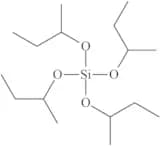
Grignard reacts with chlorosilanes or intermolecularly to form carbosilanesUsed in microparticle surface modificationFórmula:C7H17ClO3SiPureza:97%Forma y color:LiquidPeso molecular:212.75TETRA-s-BUTOXYSILANE
CAS:Fórmula:C16H36O4SiPureza:95%Forma y color:Light Amber LiquidPeso molecular:320.54


![N-[3-(TRIMETHOXYSILYL)PROPYL]HEXADECANAMIDE](/_next/image/?url=https%3A%2Fstatic.cymitquimica.com%2Fproducts%2F3H%2Fthumb-webp%2FSIT8404.0.webp&w=3840&q=75)



![N,N'-BIS[(3-TRIMETHOXYSILYL)PROPYL]ETHYLENEDIAMINE, 95%](/_next/image/?url=https%3A%2Fstatic.cymitquimica.com%2Fproducts%2F3H%2Fthumb-webp%2FSIB1834.1.webp&w=3840&q=75)
![3-{[DIMETHYL(3-TRIMETHOXYSILYL)PROPYL]AMMONIO}PROPANE-1-SULFONATE, tech 95](/_next/image/?url=https%3A%2Fstatic.cymitquimica.com%2Fproducts%2F3H%2Fthumb-webp%2FSID4241.0.webp&w=3840&q=75)