Reactivos metálicos para síntesis orgánica
En esta categoría, encontrará diferentes compuestos metálicos muy útiles para realizar síntesis orgánicas en el laboratorio. Estos reactivos metálicos desempeñan un papel crucial en la catálisis y facilitación de diversas reacciones químicas, lo que los hace indispensables en la síntesis de productos farmacéuticos, agroquímicos y productos químicos finos. En CymitQuimica, ofrecemos una amplia gama de reactivos metálicos de alta calidad para apoyar sus investigaciones y aplicaciones industriales.
Subcategorías de "Reactivos metálicos para síntesis orgánica"
- Compuestos de aluminio (Al)(38 productos)
- Compuestos de bario (Ba)(32 productos)
- Compuestos de berilio (Be)(3 productos)
- Compuestos de calcio (Ca)(92 productos)
- Compuestos de cesio (Cs)(17 productos)
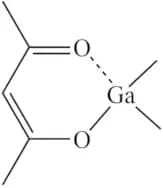
- Compuestos de galio (Ga)(7 productos)
- Compuestos de germanio (Ge)(21 productos)
- Reactivos de Grignard(77 productos)
- Compuestos de indio (en)(10 productos)
- Compuestos de plomo (Pb)(27 productos)
- Compuestos de litio (Li)(110 productos)
- Compuestos de magnesio (Mg)(88 productos)
- Compuestos de potasio (K)(113 productos)
- Compuestos de rubidio (Rb)(4 productos)
- Compuestos de sodio (Na)(257 productos)
- Compuestos de talio (Tl)(2 productos)
- Compuestos de estaño (Sn)(79 productos)
Mostrar 9 subcategorías más
Se han encontrado 27 productos de "Reactivos metálicos para síntesis orgánica"
Ordenar por
Pureza (%)
0
100
|
0
|
50
|
90
|
95
|
100
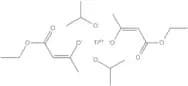
TITANIUM DIISOPROPOXIDE BIS(ETHYLACETOACETATE), 95%
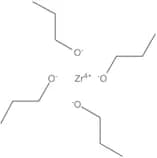
CAS:Fórmula:C18H32O8TiPureza:95%Forma y color:Orange Red LiquidPeso molecular:424.33ZIRCONIUM n-PROPOXIDE, 70% in n-propanol
CAS:Fórmula:C12H28O4ZrForma y color:Light Amber LiquidPeso molecular:327.56TITANIUM TETRACHLORIDE, 99%
CAS:<p>ALD Material<br>Atomic layer deposition (ALD) is a chemically self-limiting deposition technique that is based on the sequential use of a gaseous chemical process. A thin film (as fine as -0.1 Å per cycle) results from repeating the deposition sequence as many times as needed to reach a certain thickness. The major characteristic of the films is the resulting conformality and the controlled deposition manner. Precursor selection is key in ALD processes, namely finding molecules which will have enough reactivity to produce the desired films yet are stable enough to be handled and safely delivered to the reaction chamber.<br>Titanium tetrachloride; Titanium IVv chloride<br>ΔHform: -198.4 kcal/mol<br></p>Fórmula:Cl4TiForma y color:Straw LiquidPeso molecular:189.71MAGNESIUM METHOXIDE, 7-8% in methanol
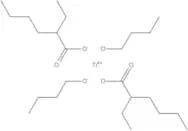
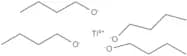
CAS:Fórmula:C2H6MgO2Forma y color:Clear LiquidPeso molecular:86.38TITANIUM DI-n-BUTOXIDE BIS(2-ETHYLHEXANOATE)
Fórmula:C24H48O6TiForma y color:Orange-Red LiquidPeso molecular:480.52ZIRCONIUM n-BUTOXIDE, 80% in n-butanol
CAS:Fórmula:C16H36O4ZrForma y color:Light Amber LiquidPeso molecular:383.68ZIRCONIUM 2-ETHYLHEXANOATE, 90%
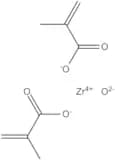
CAS:Fórmula:C32H60O8ZrPureza:90%Forma y color:Amber LiquidPeso molecular:659.99ZIRCONYL DIMETHACRYLATE, hydrate
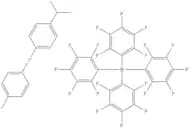
CAS:Fórmula:C8H10O5Zr·xH2OPureza:95%Forma y color:Off-White SolidPeso molecular:293.39(p-ISOPROPYLPHENYL)(p-METHYLPHENYL)IODONIUM TETRAKIS(PENTAFLUOROPHENYL) BORATE
CAS:Fórmula:C40H18BF20IForma y color:White SolidPeso molecular:1015.7TRIS(TRIMETHYLSILOXY)BORON
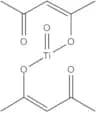
CAS:Fórmula:C9H27BO3Si3Pureza:97%Forma y color:Water White LiquidPeso molecular:273.38TITANIUM OXIDE BIS(2,4-PENTANEDIONATE)
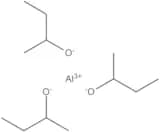
CAS:Fórmula:C10H14O5TiForma y color:Yellow-Orange SolidPeso molecular:262.12ALUMINUM s-BUTOXIDE, 99+%
CAS:Fórmula:C12H27AlO3Pureza:99%Forma y color:Pale Yellow Amber LiquidPeso molecular:246.32TITANIUM ISOPROPOXIDE
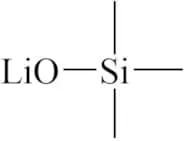
CAS:<p>ALD Material<br>Atomic layer deposition (ALD) is a chemically self-limiting deposition technique that is based on the sequential use of a gaseous chemical process. A thin film (as fine as -0.1 Å per cycle) results from repeating the deposition sequence as many times as needed to reach a certain thickness. The major characteristic of the films is the resulting conformality and the controlled deposition manner. Precursor selection is key in ALD processes, namely finding molecules which will have enough reactivity to produce the desired films yet are stable enough to be handled and safely delivered to the reaction chamber.<br>Titanium isopropoxide; Isopropyltitanate; Titanium tetra(2-propoxide); Tetraisopropyl titanate<br>Viscosity: 2 cStΔHform: -377 kcal/molΔHvap: 14.7 kcal/molMetal content: 16.6-16.9% TiVapor pressure, 50 °C: 0.9 mmVapor pressure, 100 °C: 19 mmSoluble: heptane, isopropanolMolecular complexity: 1.4Vapor phase pyrolysis gives oxideYields coatings of barium titanate in combination with Ba(OR)2Utilized in spray pyrolysis synthesis of BaTiO3 and SrTiO3Catalyst for rearrangement and cleavage of epoxy alcoholsCatalyst for cyclization of ω-amino acids to lactamsIn combination with lead alkyls yields lead zirconate titanate (PZT) films by Metal-Organic Chemical Vapour Deposition (MOCVD)In combination with triethylamine and trimethylchlorosilane extends aldehydes to two carbons to enalsProvides scratch-resistance for glass bottles by pyrolytic coating at 500 °C<br></p>Fórmula:C12H28O4TiForma y color:Pale Yellow LiquidPeso molecular:284.25LITHIUM TRIMETHYLSILANOLATE, 20% in toluene
CAS:Fórmula:C3H9LiOSiForma y color:Dark LiquidPeso molecular:96.13