Building Blocks
Subcategorías de "Building Blocks"
- Ácidos borónicos y derivados del ácido borónico(5.778 productos)
- Building Blocks quirales(1.243 productos)
- Building Blocks de hidrocarburos(6.098 productos)
- Building Blocks orgánicos(61.042 productos)
Se han encontrado 204339 productos de "Building Blocks"
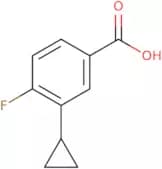
3-cyclopropyl-4-fluorobenzoic acid
CAS:Versatile small molecule scaffold
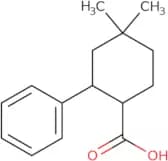
Fórmula:C10H9FO2Pureza:Min. 95%Peso molecular:180.18 g/mol4,4-Dimethyl-2-phenylcyclohexane-1-carboxylic acid
CAS:Versatile small molecule scaffold
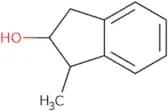
Fórmula:C15H20O2Pureza:Min. 95%Peso molecular:232.32 g/mol1-Methyl-2,3-dihydro-1H-inden-2-ol
CAS:Versatile small molecule scaffold
Fórmula:C10H12OPureza:Min. 95%Peso molecular:148.2 g/molRef: 3D-ACA82313
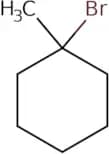
Producto descatalogado1-Bromo-1-methylcyclohexane
CAS:1-Bromo-1-methylcyclohexane is a monomolecular gas that is used as an intermediate in organic synthesis. It reacts with halides to form cyclopentyl derivatives. This reaction has been shown to be faster than the corresponding reaction of 1-bromocyclohexane with chlorides or bromides. The rate of this reaction may be due to the polarizability and conformational changes of the molecule upon substitution by a methyl group. 1-Bromo-1-methylcyclohexane is also an ionizing reagent, which means it can cause electrophilic reactions to occur on other molecules. It has been found that the solvent effect on this product can affect its reactivity, with solvents such as water having more of an effect than solvents such as benzene. 1-Bromo-1-methylcyclohexane has been shown to interact with other compounds in both transfer and complex
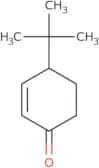
Fórmula:C7H13BrPureza:Min. 95%Peso molecular:177.08 g/mol4-tert-Butylcyclohex-2-en-1-one
CAS:Versatile small molecule scaffold
Fórmula:C10H16OPureza:Min. 95%Peso molecular:152.23 g/molRef: 3D-AAA93707
Producto descatalogado2-[Ethyl(propan-2-yl)amino]ethan-1-ol
CAS:Producto controladoVersatile small molecule scaffold
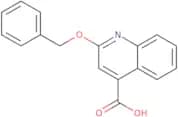
Fórmula:C7H17NOPureza:Min. 95%Peso molecular:131.22 g/mol2-(Benzyloxy)quinoline-4-carboxylic acid
CAS:Versatile small molecule scaffold
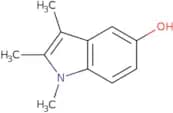
Fórmula:C17H13NO3Pureza:Min. 95%Peso molecular:279.3 g/mol1,2,3-Trimethyl-1H-indol-5-ol
CAS:Versatile small molecule scaffold
Fórmula:C11H13NOPureza:Min. 95%Peso molecular:175.23 g/molRef: 3D-IJB19354
Producto descatalogado1-(Propan-2-yl)-N-[1-(propan-2-yl)-4,5,6,7-tetrahydro-1H-indazol-5-yl]-4,5,6,7-tetrahydro-1H-indazol-5-amine
CAS:Versatile small molecule scaffold
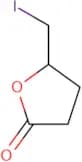
Fórmula:C20H31N5Pureza:Min. 95%Peso molecular:341.5 g/mol5-(Iodomethyl)oxolan-2-one
CAS:Versatile small molecule scaffold
Fórmula:C5H7IO2Pureza:Min. 95%Peso molecular:226.01 g/mol2-[2-(Furan-3-yl)-1,3-thiazol-4-yl]acetic acid
CAS:Versatile small molecule scaffold
Fórmula:C9H7NO3SPureza:Min. 95%Peso molecular:209.22 g/molMethyl 4-chloro-1-ethyl-1H-pyrazole-5-carboxylate
CAS:Versatile small molecule scaffold
Fórmula:C7H9ClN2O2Pureza:Min. 95%Peso molecular:188.61 g/mol2,4-dichloro-7H-pyrrolo[2,3-d]pyrimidine-5-carbaldehyde
CAS:Versatile small molecule scaffold
Fórmula:C7H3Cl2N3OPureza:Min. 95%Peso molecular:216.02 g/mol4,5,6,7-Tetrahydropyrazolo[1,5-a]pyrazine dihydrochloride
CAS:Versatile small molecule scaffoldFórmula:C6H11Cl2N3Pureza:Min. 95%Peso molecular:196.08 g/mol3-Azabicyclo[3.2.1]octan-6-ol hydrochlorides
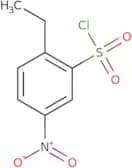
CAS:Versatile small molecule scaffoldFórmula:C7H14ClNOPureza:Min. 95%Peso molecular:163.6 g/mol2-Ethyl-5-nitrobenzene-1-sulfonyl chloride
CAS:Versatile small molecule scaffold
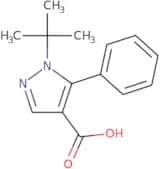
Fórmula:C8H8ClNO4SPureza:Min. 95%Peso molecular:249.67 g/mol1-tert-Butyl-5-phenyl-1H-pyrazole-4-carboxylic acid
CAS:Versatile small molecule scaffold
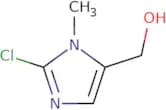
Fórmula:C14H16N2O2Pureza:Min. 95%Peso molecular:244.29 g/mol(2-Chloro-1-methyl-1H-imidazol-5-yl)methanol
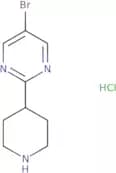
CAS:Versatile small molecule scaffoldFórmula:C5H7ClN2OPureza:Min. 95%Peso molecular:146.57 g/mol5-Bromo-2-(piperidin-4-yl)pyrimidine hydrochloride
CAS:Versatile small molecule scaffold
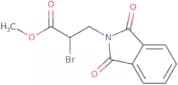
Fórmula:C9H13BrClN3Pureza:Min. 95%Peso molecular:278.58 g/molMethyl 2-bromo-3-(1,3-dioxo-2,3-dihydro-1H-isoindol-2-yl)propanoate
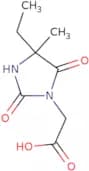
CAS:Versatile small molecule scaffoldFórmula:C12H10BrNO4Pureza:Min. 95%Peso molecular:312.12 g/mol(4-Ethyl-4-methyl-2,5-dioxo-imidazolidin-1-yl)-acetic acid
CAS:Versatile small molecule scaffold
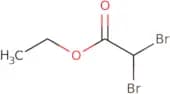
Fórmula:C8H12N2O4Pureza:Min. 95%Peso molecular:200.2 g/molAcetic acid, dibromo-, ethyl ester
CAS:Acetic acid, dibromo-, ethyl ester is a reactive molecule that can be used as a nucleophilic substituent. It has hydroxyl group and ruthenium complex. It is a particle that can be used in the production of monoclonal antibodies. Acetic acid, dibromo-, ethyl ester also has viscosity and polycarboxylic acid. This chemical reacts with β-unsaturated ketones to form polymerization initiator. Acetic acid, dibromo-, ethyl ester also has carbonyl group and monoclonal antibodies. Acetic acid, dibromo-, ethyl ester can be conjugated with ethyl bromoacetate to produce conjugates.
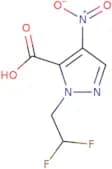
Fórmula:C4H6Br2O2Pureza:Min. 95%Peso molecular:245.9 g/mol1-(2,2-Difluoroethyl)-4-nitro-1H-pyrazole-5-carboxylic acid
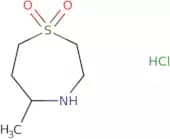
CAS:Versatile small molecule scaffoldFórmula:C6H5F2N3O4Pureza:Min. 95%Peso molecular:221.12 g/mol5-Methyl-1,4-thiazepane-1,1-dione hydrochloride
CAS:Versatile small molecule scaffold
Fórmula:C6H14ClNO2SPureza:Min. 95%Peso molecular:199.7 g/mol5-[(2,4-Difluorophenyl)methyl]-4-methyl-1,3-thiazol-2-amine hydrobromide
CAS:Versatile small molecule scaffold
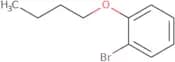
Fórmula:C11H11BrF2N2SPureza:Min. 95%Peso molecular:321.19 g/mol1-Bromo-2-butoxybenzene
CAS:1-Bromo-2-butoxybenzene is a chemical compound that is used in the manufacture of zinc oxide. It is also used as an electrolyte in dye-sensitized solar cells. In these cells, 1-bromo-2-butoxybenzene acts as an electron donor, which provides electrons to the redox dye on the surface of the semiconductor. This process leads to recombination, where electrons and holes recombine to produce electricity. The introduction of alkoxy groups into 1-bromo-2-butoxybenzene molecules allows for increased stability and efficiency in dye-sensitized solar cells.
Fórmula:C10H13BrOPureza:Min. 95%Peso molecular:229.11 g/mol3-(4-Ethylphenyl)butanoic acid
CAS:Versatile small molecule scaffold
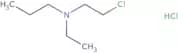
Fórmula:C12H16O2Pureza:Min. 95%Peso molecular:192.25 g/molN-(2-Chloroethyl)-N-ethylpropan-1-amine hydrochloride
CAS:Producto controladoVersatile small molecule scaffold
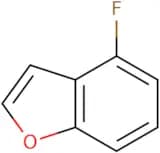
Fórmula:C7H17Cl2NPureza:Min. 95%Peso molecular:186.12 g/mol4-Fluorobenzofuran
CAS:Versatile small molecule scaffold
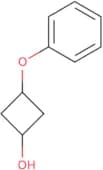
Fórmula:C8H5FOPureza:Min. 95%Peso molecular:136.12 g/mol(1R,3R)-3-Phenoxycyclobutan-1-ol
CAS:Versatile small molecule scaffold
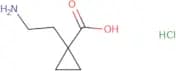
Fórmula:C10H12O2Pureza:Min. 95%Peso molecular:164.2 g/mol1-(2-aminoethyl)cyclopropane-1-carboxylic acid hydrochloride
CAS:Versatile small molecule scaffold
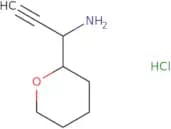
Fórmula:C6H12ClNO2Pureza:Min. 95%Peso molecular:165.62 g/mol1-(Oxan-2-yl)prop-2-yn-1-amine hydrochloride
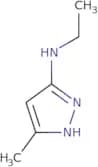
CAS:Versatile small molecule scaffoldFórmula:C8H14ClNOPureza:Min. 95%Peso molecular:175.65 g/molN-Ethyl-5-methyl-1H-pyrazol-3-amine
CAS:Versatile small molecule scaffold
Fórmula:C6H11N3Pureza:Min. 95%Peso molecular:125.17 g/mol2-[(tert-Butyldimethylsilyl)oxy]benzaldehyde
CAS:2-[(tert-Butyldimethylsilyl)oxy]benzaldehyde (BBSA) is a traceless synthetic reagent that is used for the termination of peptide synthesis. It can also be used in the synthesis of benzofurans, carbonyl compounds, and thioacetals. The high yield and chemoselectivity makes BBSA a competitive reagent for these types of reactions. BBSA can be prepared from hydrogen peroxide, esters, enol ethers, or peroxides. These latter reactants are more selective than hydrogen peroxide and do not lead to oxidation of substrates or side products. This product is also useful for the synthesis of thioketals.
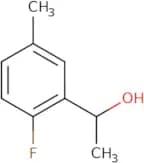
Fórmula:C13H20O2SiPureza:Min. 95%Peso molecular:236.38 g/mol1-(2-Fluoro-5-methylphenyl)ethan-1-ol
CAS:Versatile small molecule scaffoldFórmula:C9H11FOPureza:Min. 95%Peso molecular:154.18 g/mol6-Bromo-3-fluoro-1H-indazole
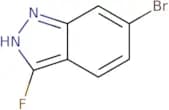
CAS:Versatile small molecule scaffold
Fórmula:C7H4BrFN2Pureza:Min. 95%Peso molecular:215.02 g/mol3-Chloro-1-cyclopropyl-1,2-dihydropyrazin-2-one
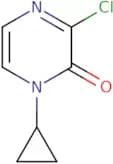
CAS:Versatile small molecule scaffold
Fórmula:C7H7ClN2OPureza:Min. 95%Peso molecular:170.59 g/mol2-Bromo-3,3,3-trifluoro-1-propene
CAS:Producto controlado2-Bromo-3,3,3-trifluoro-1-propene is a chemical compound that has been synthesized in an asymmetric reaction. The reactant is bromopropane and the product is 2,2,2-trifluoropropene. The methylene group on the propene molecule is activated by the nucleophilic attack of a fluoride ion from hydrogen fluoride to form a cavity with a highly strained bond. The kinetic study of this reaction revealed that the activation energy for the reaction is 42 kJ/mol. Palladium-catalyzed coupling reactions are catalyzed by palladium and require nonpolar solvents such as toluene or dichloromethane. This type of reaction has been shown to be exothermic with an isolated yield of 1%.
Fórmula:C3H2BrF3Pureza:Min. 95%Forma y color:Colorless PowderPeso molecular:174.95 g/molPiperyline
CAS:Piperyline is an alkanoic acid that has shown to be effective against skin cancer. It also has antimicrobial properties, which may be due to its ability to bind metal ions and form polymeric compounds. Piperyline inhibits microbial growth by inhibiting the synthesis of proteins and nucleic acids. The antimicrobial activity is related to its cationic polymerization with hydroxyl groups, which forms a structure that can inhibit microbial enzymes and disrupt microbial cell membranes. This compound also interacts with the skin's natural lipids, making it difficult for microorganisms to attach and grow on the skin. Piperyline is synthesized in organic chemistry laboratories as an amide precursor of other pharmaceuticals such as penicillin.
Fórmula:C16H17NO3Pureza:Min. 95%Peso molecular:271.31 g/mol

![2-[Ethyl(propan-2-yl)amino]ethan-1-ol](/_next/image/?url=https%3A%2Fstatic.cymitquimica.com%2Fproducts%2F3D%2Fthumb-webp%2FCAA89361.webp&w=3840&q=75)
![1-(Propan-2-yl)-N-[1-(propan-2-yl)-4,5,6,7-tetrahydro-1H-indazol-5-yl]-4,5,6,7-tetrahydro-1H-indaz…](/_next/image/?url=https%3A%2Fstatic.cymitquimica.com%2Fproducts%2F3D%2Fthumb-webp%2FJDC14931.webp&w=3840&q=75)
![2-[2-(Furan-3-yl)-1,3-thiazol-4-yl]acetic acid](/_next/image/?url=https%3A%2Fstatic.cymitquimica.com%2Fproducts%2F3D%2Fthumb-webp%2FIDC97860.webp&w=3840&q=75)

![2,4-dichloro-7H-pyrrolo[2,3-d]pyrimidine-5-carbaldehyde](/_next/image/?url=https%3A%2Fstatic.cymitquimica.com%2Fproducts%2F3D%2Fthumb-webp%2FNQC76757.webp&w=3840&q=75)
![4,5,6,7-Tetrahydropyrazolo[1,5-a]pyrazine dihydrochloride](/_next/image/?url=https%3A%2Fstatic.cymitquimica.com%2Fproducts%2F3D%2Fthumb-webp%2FQGA89407.webp&w=3840&q=75)
![3-Azabicyclo[3.2.1]octan-6-ol hydrochlorides](/_next/image/?url=https%3A%2Fstatic.cymitquimica.com%2Fproducts%2F3D%2Fthumb-webp%2FFSD25297.webp&w=3840&q=75)
![5-[(2,4-Difluorophenyl)methyl]-4-methyl-1,3-thiazol-2-amine hydrobromide](/_next/image/?url=https%3A%2Fstatic.cymitquimica.com%2Fproducts%2F3D%2Fthumb-webp%2FVWC49324.webp&w=3840&q=75)

![2-[(tert-Butyldimethylsilyl)oxy]benzaldehyde](/_next/image/?url=https%3A%2Fstatic.cymitquimica.com%2Fproducts%2F3D%2Fthumb-webp%2FREA58512.webp&w=3840&q=75)