


Building Blocks
Subcategorías de "Building Blocks"
- Ácidos borónicos y derivados del ácido borónico(5.778 productos)
- Building Blocks quirales(1.243 productos)
- Building Blocks de hidrocarburos(6.099 productos)
- Building Blocks orgánicos(61.038 productos)
Se han encontrado 205376 productos de "Building Blocks"
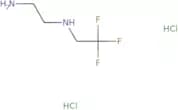
(2-Aminoethyl)(2,2,2-trifluoroethyl)amine dihydrochloride
CAS:Versatile small molecule scaffold
Fórmula:C4H11Cl2F3N2Pureza:Min. 95%Peso molecular:215.04 g/molRef: 3D-JDC14763
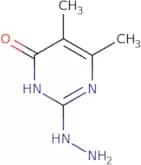
Producto descatalogado2-Hydrazinyl-5,6-dimethyl-3,4-dihydropyrimidin-4-one
CAS:Versatile small molecule scaffold
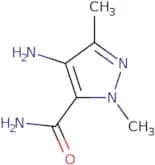
Fórmula:C6H10N4OPureza:Min. 95%Peso molecular:154.17 g/mol4-Amino-1,3-dimethyl-1H-pyrazole-5-carboxamide
CAS:Versatile small molecule scaffold
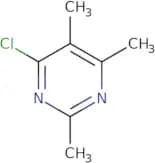
Fórmula:C6H10N4OPureza:Min. 95%Peso molecular:154.17 g/mol4-Chloro-2,5,6-trimethylpyrimidine
CAS:Versatile small molecule scaffold
Fórmula:C7H9ClN2Pureza:Min. 95%Peso molecular:156.61 g/mol4-Bromomethyl-4'-methyl-2,2'-bipyridine
CAS:Please enquire for more information about 4-Bromomethyl-4'-methyl-2,2'-bipyridine including the price, delivery time and more detailed product information at the technical inquiry form on this page
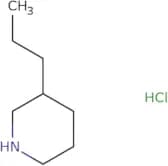
Fórmula:C12H11BrN2Pureza:Min. 91.0 Area-%Peso molecular:263.14 g/mol3-Propylpiperidine hydrochloride
CAS:Versatile small molecule scaffold
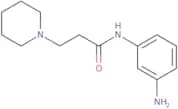
Fórmula:C8H18ClNPureza:Min. 95%Peso molecular:163.69 g/molN-(3-Aminophenyl)-3-(piperidin-1-yl)propanamide
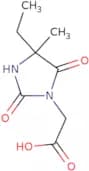
CAS:Versatile small molecule scaffoldFórmula:C14H21N3OPureza:Min. 95%Peso molecular:247.34 g/mol(4-Ethyl-4-methyl-2,5-dioxo-imidazolidin-1-yl)-acetic acid
CAS:Versatile small molecule scaffold
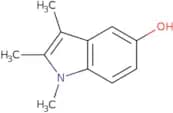
Fórmula:C8H12N2O4Pureza:Min. 95%Peso molecular:200.2 g/mol1,2,3-Trimethyl-1H-indol-5-ol
CAS:Versatile small molecule scaffold
Fórmula:C11H13NOPureza:Min. 95%Peso molecular:175.23 g/molRef: 3D-IJB19354
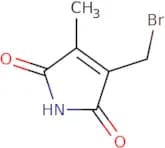
Producto descatalogado3-(Bromomethyl)-4-methyl-2,5-dihydro-1H-pyrrole-2,5-dione
CAS:Versatile small molecule scaffold
Fórmula:C6H6BrNO2Pureza:Min. 95%Peso molecular:204.02 g/molRef: 3D-IIA33370
Producto descatalogado2-[2-(Furan-3-yl)-1,3-thiazol-4-yl]acetic acid
CAS:Versatile small molecule scaffold
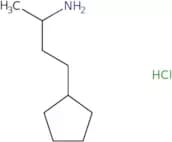
Fórmula:C9H7NO3SPureza:Min. 95%Peso molecular:209.22 g/mol4-Cyclopentylbutan-2-amine hydrochloride
CAS:Versatile small molecule scaffoldFórmula:C9H20ClNPureza:Min. 95%Peso molecular:177.71 g/molRef: 3D-IDC77453
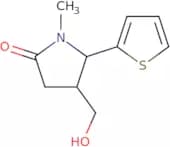
Producto descatalogado4-(Hydroxymethyl)-1-methyl-5-(thiophen-2-yl)pyrrolidin-2-one
CAS:Versatile small molecule scaffold
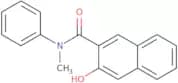
Fórmula:C10H13NO2SPureza:Min. 95%Peso molecular:211.28 g/mol3-Hydroxy-N-methyl-N-phenylnaphthalene-2-carboxamide
CAS:Versatile small molecule scaffold
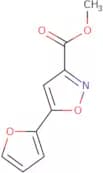
Fórmula:C18H15NO2Pureza:Min. 95%Peso molecular:277.3 g/molMethyl 5-(2-furyl)isoxazole-3-carboxylate
CAS:Versatile small molecule scaffold
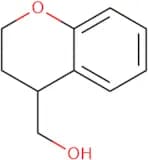
Fórmula:C9H7NO4Pureza:Min. 95%Peso molecular:193.16 g/mol3,4-Dihydro-2H-1-benzopyran-4-ylmethanol
CAS:Versatile small molecule scaffold
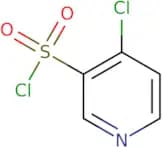
Fórmula:C10H12O2Pureza:Min. 95%Peso molecular:164.2 g/mol4-chloropyridine-3-sulfonyl chloride
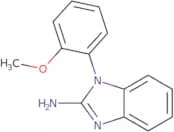
CAS:4-Chloropyridine-3-sulfonyl chloride is a thrombin inhibitor that has been discovered through the use of in vitro screening methods. It is a small molecule with lipophilic properties and oral bioavailability. This compound inhibits thrombin by binding to the active site of the enzyme, which prevents the formation of an enzyme-thrombin complex. The discovery was made using a pharmacophore-based approach and further modifications were made to improve its potency and increase its lipophilicity. This compound also exhibits an acceptable level of bioavailability in vivo, which may be due to its high solubility in water.Fórmula:C5H3Cl2NO2SPureza:Min. 95%Peso molecular:212.1 g/mol1-(2-Methoxyphenyl)-1H-1,3-benzodiazol-2-amine
CAS:Versatile small molecule scaffoldFórmula:C14H13N3OPureza:Min. 95%Peso molecular:239.27 g/mol2-Phenyl-2-[(propan-2-yl)amino]acetic acid
CAS:Versatile small molecule scaffold
Fórmula:C11H15NO2Pureza:Min. 95%Peso molecular:193.24 g/mol3-Bromo-5H,6H,8H-[1,2,4]triazolo[3,4-c][1,4]oxazine
CAS:Versatile small molecule scaffoldFórmula:C5H6BrN3OPureza:Min. 95%Peso molecular:204.02 g/molRef: 3D-HWC64136
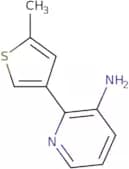
Producto descatalogado2-(5-Methylthiophen-3-yl)pyridin-3-amine
CAS:Versatile small molecule scaffold
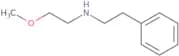
Fórmula:C10H10N2SPureza:Min. 95%Peso molecular:190.27 g/mol(2-Methoxyethyl)(2-phenylethyl)amine
CAS:Producto controladoVersatile small molecule scaffold
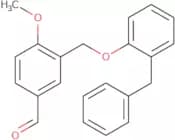
Fórmula:C11H17NOPureza:Min. 95%Peso molecular:179.26 g/mol3-(2-Benzyl-phenoxymethyl)-4-methoxy-benzaldehyde
CAS:Versatile small molecule scaffold
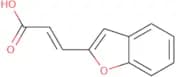
Fórmula:C22H20O3Pureza:Min. 95%Peso molecular:332.4 g/mol(2E)-3-(1-benzofuran-2-yl)prop-2-enoic acid
CAS:(2E)-3-(1-benzofuran-2-yl)prop-2-enoic acid is a white solid that has the chemical formula CHClO. It is soluble in chloroform, ether, and benzene. When heated to 105°C in the presence of air, it decomposes to release oxygen and carbon dioxide. (2E)-3-(1-benzofuran-2-yl)prop-2-enoic acid is used as an intermediate for organic synthesis reactions such as alkylation reactions and Friedel - Crafts reactions. Thermal analysis of this compound indicates that it has a high thermal stability with respect to thermal decomposition. (2E)-3-(1-benzofuran-2-yl)prop-2-enoic acid can be reacted with azide or diphenyl ether to form a coordination complex. This compound also reacts with potassium or phosphorus oxychloride to form oxychlorides.Fórmula:C11H8O3Pureza:Min. 95%Peso molecular:188.18 g/mol2-(Methylsulfonyl)-1H-benzo[d]imidazole
CAS:2-(Methylsulfonyl)-1H-benzo[d]imidazole (MSBI) is a relatively new class of catalysts that can be used to promote the oxidation of alcohols. The catalytic system consists of copper, iodides, and MSBI. The first step in the catalytic cycle is the formation of a complex between MSBI and copper. This complex reacts with an alcohol to give a more reactive species, which then oxidizes iodide to iodine. The iodide is reduced back to iodide by hydrogen peroxide generated from the reaction with water. The spectrum of MSBI shows peaks at 1706 cm-1 and 1684 cm-1 due to its methyl groups, while the peak at 1202 cm-1 corresponds to the stretching vibration in the imidazole ring. Experimental results show that MSBI has a low density and high theoretical activity.
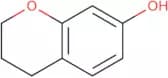
Fórmula:C8H8N2O2SPureza:Min. 95%Peso molecular:196.22 g/mol3,4-dihydro-2H-1-benzopyran-7-ol
CAS:3,4-Dihydro-2H-1-benzopyran-7-ol is a monomer that is used to synthesize medicines. It has the formula CH3COCH=CH(OH)CH3 and belongs to the group of flavonoids. 3,4-Dihydro-2H-1-benzopyran-7-ol has acidic properties, which are due to its isoflavones. It can be used as an acid catalyst in organic synthesis reactions and is a reaction product of chloropropane. 3,4-Dihydro-2H-1-benzopyran-7-ol also has high yield and can act as a bioisostere for other compounds such as chromene.
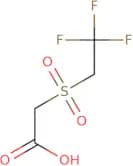
Fórmula:C9H10O2Pureza:Min. 95%Peso molecular:150.18 g/mol2-(2,2,2-Trifluoroethanesulfonyl)acetic acid
CAS:Trifloxacin is a broad-spectrum antibacterial drug that belongs to the class of formyloxy compounds and the cephalosporin family. It has been shown to be active against both Gram-positive and Gram-negative bacteria, with activity against strains resistant to penicillin, ampicillin, erythromycin, and chloramphenicol. Trifloxacin binds to the bacterial ribosome by displacement of a pyridyl group in the ribosomal RNA, inhibiting protein synthesis. This binding inhibits cell growth by preventing the production of proteins that are vital for cell division.
br>
Trifloxacin has also been found to inhibit DNA gyrase and topoisomerase IV in vitro. Trifloxacin's mechanism of action is similar to that of other quinolones such as norfloxacin and ciprofloxacin.Fórmula:C4H5F3O4SPureza:Min. 95%Peso molecular:206.14 g/molN-[3-(Dimethylamino)phenyl]acetamide
CAS:Versatile small molecule scaffold
Fórmula:C10H14N2OPureza:Min. 95%Peso molecular:178.23 g/mol4-Methyl-1,1,3-trioxothieno[3,2-d][1,2]thiazole-5-carboxylic acid
CAS:Versatile small molecule scaffoldFórmula:C7H5NO5S2Pureza:Min. 95%Peso molecular:247.3 g/mol[1-(2-Methoxyethyl)-3,5-dimethyl-1H-pyrazol-4-yl]methanamine
CAS:Versatile small molecule scaffold
Fórmula:C9H17N3OPureza:Min. 95%Peso molecular:183.25 g/mol2-{Imidazo[1,2-a]pyridin-2-yl}-1H-imidazole
CAS:Versatile small molecule scaffoldFórmula:C10H8N4Pureza:Min. 95%Peso molecular:184.2 g/molRef: 3D-FDD52429
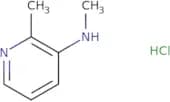
Producto descatalogadoN,2-Dimethylpyridin-3-amine hydrochloride
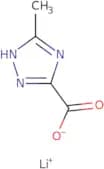
CAS:Versatile small molecule scaffoldFórmula:C7H11ClN2Pureza:Min. 95%Peso molecular:158.63 g/molLithium 5-methyl-1H-1,2,4-triazole-3-carboxylate
CAS:Versatile small molecule scaffold
Fórmula:C4H4LiN3O2Pureza:Min. 95%Peso molecular:133.1 g/molN,N-Dimethyl-2-(1-(1-(pyridin-2-yl)ethyl)-1H-inden-2-yl)ethan-1-amine hydrochloride
CAS:Please enquire for more information about N,N-Dimethyl-2-(1-(1-(pyridin-2-yl)ethyl)-1H-inden-2-yl)ethan-1-amine hydrochloride including the price, delivery time and more detailed product information at the technical inquiry form on this page
Fórmula:C20H24N2•(HCl)2Pureza:Min. 95%Peso molecular:365.34 g/molRef: 3D-FD183759
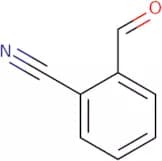
Producto descatalogado2-Cyanobenzaldehyde
CAS:2-Cyanobenzaldehyde is an aldehyde that reacts with nucleophiles such as trifluoromethanesulfonic acid to form a molecule. 2-Cyanobenzaldehyde has potent inhibitory activity against the kinase glycogen synthase kinase 3 (GSK3) and can be used to treat autoimmune diseases. It also reacts with hydrochloric acid in solution to form an intermediate, which is then reacted with glycine and ATP to produce a chiral compound. The product of this reaction has been shown to be active methylene, which was synthesized by asymmetric synthesis.
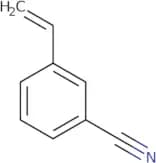
Fórmula:C8H5NOPureza:Min. 95%Forma y color:PowderPeso molecular:131.13 g/mol3-Ethenylbenzonitrile
CAS:3-Ethenylbenzonitrile is an organic compound that can be prepared by photolysis of 2-bromobenzonitrile in the presence of a nonpolar solvent. It is also synthesized by laser induced exciplex reaction between benzene and ethylene. 3-Ethenylbenzonitrile has a conformation that is dependent on the polarity of the solvent. In polar solvents, it adopts a bent structure while in nonpolar solvents, it adopts a linear structure. The molecule undergoes cyclobutane formation and then reacts with electron acceptors such as cations to form intermediates. These intermediates react with other molecules to form products.
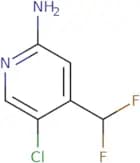
Fórmula:C9H7NPureza:Min. 95%Peso molecular:129.16 g/mol5-Chloro-4-(difluoromethyl)pyridin-2-amine
CAS:Versatile small molecule scaffold
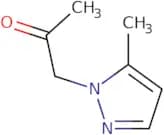
Fórmula:C6H5ClF2N2Pureza:Min. 95%Peso molecular:178.57 g/mol1-(5-Methyl-pyrazol-1-yl)-propan-2-one
CAS:Versatile small molecule scaffoldFórmula:C7H10N2OPureza:Min. 95%Peso molecular:138.17 g/mol2-Methyl-2-(5-methylpyridin-2-yl)propanenitrile
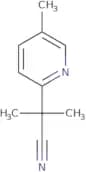
CAS:Versatile small molecule scaffold
Fórmula:C10H12N2Pureza:Min. 95%Peso molecular:160.22 g/molMethyl 4-amino-2-methylbutanoate hydrochloride
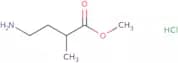
CAS:Versatile small molecule scaffoldFórmula:C6H14ClNO2Pureza:Min. 95%Peso molecular:167.63 g/mol3-(1,2,3,4-Tetrahydroisoquinolin-5-yl)-1,3-oxazolidin-2-one hydrochloride
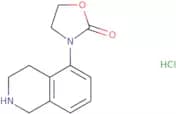
CAS:Versatile small molecule scaffold
Fórmula:C12H15ClN2O2Pureza:Min. 95%Peso molecular:254.71 g/mol2-Methyl-6-nitro-4-(1,2,3,6-tetrahydropyridin-4-yl)aniline hydrochloride
CAS:Versatile small molecule scaffold
Fórmula:C12H16ClN3O2Pureza:Min. 95%Peso molecular:269.73 g/molRef: 3D-EEC96073
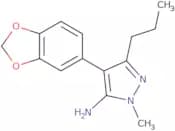
Producto descatalogado4-(1,3-Dioxaindan-5-yl)-2-methyl-5-propyl-2,3-dihydro-1H-pyrazol-3-imine
CAS:Versatile small molecule scaffold
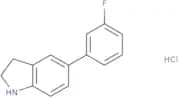
Fórmula:C14H17N3O2Pureza:Min. 95%Peso molecular:259.3 g/mol5-(3-Fluorophenyl)-2,3-dihydro-1H-indole hydrochloride
CAS:Versatile small molecule scaffoldFórmula:C14H13ClFNPureza:Min. 95%Peso molecular:249.71 g/molRef: 3D-EEC95999
Producto descatalogado2,2,2-Trifluoroethyl N-[3-fluoro-4-(1H-pyrazol-1-yl)phenyl]carbamate
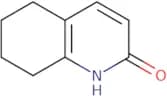
CAS:Versatile small molecule scaffoldFórmula:C12H9F4N3O2Pureza:Min. 95%Peso molecular:303.21 g/mol5,6,7,8-Tetrahydroquinolin-2(1H)-one
CAS:Tetrahydroquinolin-2(1H)-one is a hydrobromide that has been found in the environment as an environmental pollutant. Tetrahydroquinolin-2(1H)-one is used to synthesize amides and has been studied by single-crystal x-ray diffraction. The molecule is centrosymmetric, with a molecular weight of 244.06 g/mol. Tetrahydroquinolin-2(1H)-one can be used as a ligand for metals such as chlorine and magnesium. It does not dissolve in water but does dissolve in organic solvents such as ethers, chloroform, or benzene.
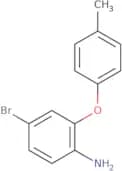
Fórmula:C9H11NOPureza:Min. 95%Peso molecular:149.19 g/mol4-Bromo-2-(4-methylphenoxy)aniline
CAS:Versatile small molecule scaffold
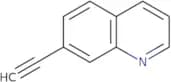
Fórmula:C13H12BrNOPureza:Min. 95%Peso molecular:278.14 g/mol7-Ethynylquinoline
CAS:Versatile small molecule scaffold
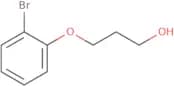
Fórmula:C11H7NPureza:Min. 95%Peso molecular:153.18 g/mol3-(2-Bromophenoxy)propan-1-ol
CAS:Versatile small molecule scaffold
Fórmula:C9H11BrO2Pureza:Min. 95%Peso molecular:231.09 g/mol1-Benzothiophene-5-carbonitrile
CAS:1-Benzothiophene-5-carbonitrile is a heterocyclic compound that is formed by condensation of ethyl azidoacetate with indole under catalysis. It can be used in the synthesis of heterocycles. The yield of 1-benzothiophene-5-carbonitrile is about 56%.
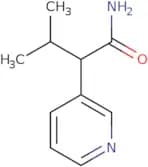
Fórmula:C9H5NSPureza:Min. 95%Peso molecular:159.21 g/mol3-Methyl-2-(pyridin-3-yl)butanamide
CAS:Versatile small molecule scaffold
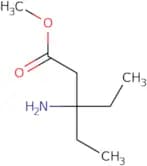
Fórmula:C10H14N2OPureza:Min. 95%Peso molecular:178.23 g/molMethyl 3-amino-3-ethylpentanoate
CAS:Versatile small molecule scaffold
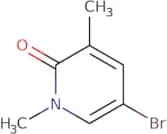
Fórmula:C8H17NO2Pureza:Min. 95%Peso molecular:159.23 g/mol5-Bromo-1,3-dimethylpyridin-2(1H)-one
CAS:Benzyne is a reactive intermediate that is formed by the tautomerization of 5-bromo-1,3-dimethylpyridin-2(1H)-one. It is an adduct between a bromine atom and a benzene ring. This compound has been shown to react with electron-rich olefins to form bicyclic compounds called diels-alder adducts. These reactions are often catalyzed by metals, such as palladium or nickel. Benzyne also reacts with triple bonds or other electron rich centers to form benzyne adducts, which are highly reactive and can be used as chemical probes for electron density in molecules.
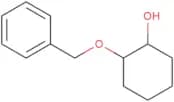
Fórmula:C7H8BrNOPureza:Min. 95%Peso molecular:202.05 g/molrac-(1R,2R)-2-(Benzyloxy)cyclohexan-1-ol
CAS:Versatile small molecule scaffold
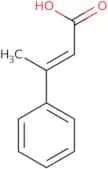
Fórmula:C13H18O2Pureza:Min. 95%Peso molecular:206.28 g/mol3-Phenylbut-2-enoic acid
CAS:3-Phenylbut-2-enoic acid is a prochiral, carbonyl compound that can be used in the synthesis of chiral pharmaceuticals. Mechanistic studies have shown that 3-phenylbut-2-enoic acid is a catalytic hydrogenation reagent that converts prochiral substrates to their corresponding chiral products. When combined with binap and butenoic acid, 3-phenylbut-2-enoic acid can catalyze the asymmetric synthesis of butenoate. The reaction yields high enantiomeric excesses and good yields.
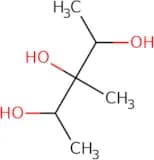
Fórmula:C10H10O2Pureza:Min. 95%Peso molecular:162.19 g/mol3-Methylpentane-2,3,4-triol
CAS:Versatile small molecule scaffold
Fórmula:C6H14O3Pureza:Min. 95%Peso molecular:134.17 g/molRef: 3D-BAA18510
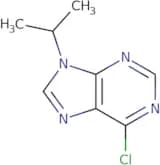
Producto descatalogado6-Chloro-9-(propan-2-yl)-9H-purine
CAS:6-Chloro-9-(propan-2-yl)-9H-purine is an intermediate in the synthesis of nucleoside analogues. It is obtained by the catalyzed reaction of acetonitrile and purines, which undergoes regioisomerization to form a mixture of 6-chloro-9-(propyl)- and 6-chloro-9-(butyl)purine. This intermediate can be used for the alkynylation of amino acids or peptides with alkynes. The selective formation of one regioisomer can be achieved by using a chiral catalyst or by reacting with an optically active reagent such as (+)-camphor sulfonic acid.
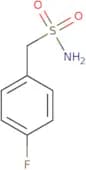
Fórmula:C8H9ClN4Pureza:Min. 95%Peso molecular:196.64 g/mol(4-Fluorophenyl)methanesulfonamide
CAS:Versatile small molecule scaffold
Fórmula:C7H8FNO2SPureza:Min. 95%Peso molecular:189.21 g/mol4-(Dimethyl-1,2-oxazol-4-yl)phenol
CAS:Versatile small molecule scaffold
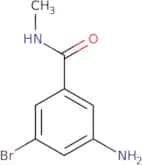
Fórmula:C11H11NO2Pureza:Min. 95%Peso molecular:189.21 g/mol3-Amino-5-bromo-N-methylbenzamide
CAS:Versatile small molecule scaffold
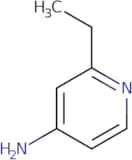
Fórmula:C8H9BrN2OPureza:Min. 95%Peso molecular:229.07 g/mol2-Ethylpyridin-4-amine
CAS:2-Ethylpyridin-4-amine is a pyridine that can be synthesized from the amination of 4-nitrophenol. It can also be synthesized by acylation of 2-ethylpyridine with ethyl chloroformate followed by cyclization. This compound has shown to have high yields in reactions involving pyridines and it is often used as a precursor for other compounds.
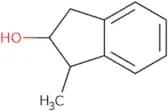
Fórmula:C7H10N2Pureza:Min. 95%Peso molecular:122.17 g/mol1-Methyl-2,3-dihydro-1H-inden-2-ol
CAS:Versatile small molecule scaffold
Fórmula:C10H12OPureza:Min. 95%Peso molecular:148.2 g/molRef: 3D-ACA82313
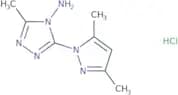
Producto descatalogado3-(3,5-Dimethyl-1H-pyrazol-1-yl)-5-methyl-4H-1,2,4-triazol-4-amine hydrochloride
CAS:Versatile small molecule scaffold
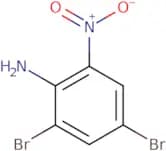
Fórmula:C8H13ClN6Pureza:Min. 95%Peso molecular:228.68 g/mol2,4-Dibromo-6-nitroaniline
CAS:2,4-Dibromo-6-nitroaniline is a nitro compound that has been used in the production of dyes. It is also used as a component in the synthesis of other organic compounds. 2,4-Dibromo-6-nitroaniline can be produced by electrolysis of an acid solution containing radical cations and benzene. The radical cations are formed by proton transfer from the acid to the benzene, followed by electron transfer from benzene to the electrode. This process results in the formation of nitro groups on the benzene ring, which undergoes oxidation to form 2,4-dibromo-6-nitroaniline. The cyclic voltammetry shows that this process occurs via two pathways: one with a fast rate and one with a slow rate. The mechanism for this reaction is not yet known.
Fórmula:C6H4Br2N2O2Pureza:Min. 95%Peso molecular:295.92 g/mol2-Phenyl-1,3,4-oxadiazole
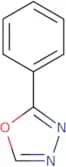
CAS:2-Phenyl-1,3,4-oxadiazole is a 2-phenyloxazole with an oxygen atom at the 1 position. It is a white crystalline solid that is soluble in water and has antibacterial properties. This chemical can be used as a catalyst for the synthesis of organic compounds. 2-Phenyl-1,3,4-oxadiazole reacts with nitro groups to form oxime derivatives and has been shown to inhibit the growth of fungi such as Candida albicans and Aspergillus niger. 2-Phenyl-1,3,4-oxadiazole can also be used as an antifungal agent against Trichophyton rubrum.
2-Phenyl-1,3,4-oxadiazole may be synthesized by reacting phenol with acetone in the presence of nitric acid or sulfuric acid. The structural formula for this compound isFórmula:C8H6N2OPureza:Min. 95%Peso molecular:146.15 g/molMethyl 2-Octynoate
CAS:Methyl 2-octynoate is a chemical that has been shown to bind to the nicotinic acetylcholine receptor. Methyl 2-octynoate has been shown to have antitumor activity in various types of cancer cells, including breast, prostate, and lung cancer cells. This chemical is not known to be chemically stable or film-forming. It also disrupts mitochondrial membrane potential and reduces the endpoints of oxidative phosphorylation. Methyl 2-octynoate was found to have low potency against cancer cells in vitro and in vivo.
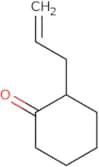
Fórmula:C9H14O2Pureza:Min. 95%Peso molecular:154.21 g/mol2-Allylcyclohexanone
CAS:2-Allylcyclohexanone is an unsaturated ketone that is synthesized by the ring-opening of allyl cyclohexane carboxylate with sodium hydroxide. It can be used as a chemical intermediate for the synthesis of other compounds. 2-Allylcyclohexanone can also be used to react with hydroxide solution to produce a salt and an alcohol. The hydroxide solution can act as a base, reducing the carbonyl group in the presence of an acid to form the corresponding alcohol. This reaction is stereoselective because it only occurs when there are two different groups on adjacent carbons.
2-Allylcyclohexanone has been shown to inhibit non-nucleoside reverse transcriptase inhibitors (NNRTIs) such as nevirapine, efavirenz, and delavirdine. In addition, it has been found to have functional groups that are capable of reactingFórmula:C9H14OPureza:Min. 95%Peso molecular:138.21 g/mol4,5-Dihydro-1H-imidazol-2-amine hydrochloride
CAS:Please enquire for more information about 4,5-Dihydro-1H-imidazol-2-amine hydrochloride including the price, delivery time and more detailed product information at the technical inquiry form on this page
Fórmula:C3H7N3•HClPureza:Min. 95%Peso molecular:121.57 g/molRef: 3D-FD183639
Producto descatalogado2-Bromo-3,3,3-trifluoro-1-propene
CAS:Producto controlado2-Bromo-3,3,3-trifluoro-1-propene is a chemical compound that has been synthesized in an asymmetric reaction. The reactant is bromopropane and the product is 2,2,2-trifluoropropene. The methylene group on the propene molecule is activated by the nucleophilic attack of a fluoride ion from hydrogen fluoride to form a cavity with a highly strained bond. The kinetic study of this reaction revealed that the activation energy for the reaction is 42 kJ/mol. Palladium-catalyzed coupling reactions are catalyzed by palladium and require nonpolar solvents such as toluene or dichloromethane. This type of reaction has been shown to be exothermic with an isolated yield of 1%.
Fórmula:C3H2BrF3Pureza:Min. 95%Forma y color:Colorless PowderPeso molecular:174.95 g/mol3-Hydroxy-5-methylpyridine
CAS:3-Hydroxy-5-methylpyridine (3HMP) is a chemical substance that has been classified as an amine. It is a product of the metabolism of purines, which are nitrogenous bases found in DNA and RNA. 3HMP is produced by aerogenic bacteria (such as Enterobacter), and can be used to estimate the number of these bacteria present in water samples. 3HMP has been shown to have antiviral properties against influenza virus, and can be used as a biomarker for the presence of other viruses in animals. 3HMP also has mineralization properties, which have been studied extensively, particularly with regards to pancreatic disease.
Fórmula:C6H7NOPureza:Min. 95%Forma y color:PowderPeso molecular:109.13 g/molRef: 3D-FH16174
Producto descatalogado1-Hydroxycyclopentane-1-carbonitrile
CAS:1-Hydroxycyclopentane-1-carbonitrile is a monomer that is hydrolyzed to form benzoin and cyanohydrins. It can be used in the production of scifinder as a monomer or dimerizer.
Fórmula:C6H9NOPureza:Min. 95%Peso molecular:111.14 g/moltert-Butyl (2,2-difluoro-3-hydroxypropyl)carbamate
CAS:Versatile small molecule scaffoldFórmula:C10H13NO4Pureza:Min. 95%Peso molecular:211.21 g/mol4-Chloro-2-hydroxy-6-methylphenylboronic acid
CAS:Versatile small molecule scaffoldFórmula:C7H8BClO3Pureza:Min. 95%Peso molecular:186.4 g/mol8-Bromo-2-methylimidazo[1,2-a]pyridine
CAS:Versatile small molecule scaffold
Fórmula:C8H7N2BrPureza:Min. 95%Peso molecular:211.05 g/mol4,5-Dihydroxy-2,3-Pentanedione
CAS:4,5-Dihydroxy-2,3-pentanedione is a carbonyl compound that is the product of the oxidation of ascorbic acid. It is used in wastewater treatment and has antimicrobial properties against infectious diseases. This compound has been shown to inhibit protein synthesis by binding to the ribosome and preventing the formation of peptide bonds between amino acids. 4,5-Dihydroxy-2,3-pentanedione has also been shown to bind to plasma proteins, which may be due to its acyl chain structure. 4,5-Dihydroxy-2,3-pentanedione can be synthesized in a catalytic mechanism that involves dehydroascorbic acid and molecular oxygen.
Fórmula:C5H8O4Pureza:Min. 95%Forma y color:PowderPeso molecular:132.11 g/molRef: 3D-FD180770
Producto descatalogadoPiperyline
CAS:Piperyline is an alkanoic acid that has shown to be effective against skin cancer. It also has antimicrobial properties, which may be due to its ability to bind metal ions and form polymeric compounds. Piperyline inhibits microbial growth by inhibiting the synthesis of proteins and nucleic acids. The antimicrobial activity is related to its cationic polymerization with hydroxyl groups, which forms a structure that can inhibit microbial enzymes and disrupt microbial cell membranes. This compound also interacts with the skin's natural lipids, making it difficult for microorganisms to attach and grow on the skin. Piperyline is synthesized in organic chemistry laboratories as an amide precursor of other pharmaceuticals such as penicillin.
Fórmula:C16H17NO3Pureza:Min. 95%Peso molecular:271.31 g/mol


![2-[2-(Furan-3-yl)-1,3-thiazol-4-yl]acetic acid](/_next/image/?url=https%3A%2Fstatic.cymitquimica.com%2Fproducts%2F3D%2Fthumb-webp%2FIDC97860.webp&w=3840&q=75)
![2-Phenyl-2-[(propan-2-yl)amino]acetic acid](/_next/image/?url=https%3A%2Fstatic.cymitquimica.com%2Fproducts%2F3D%2Fthumb-webp%2FHXA09010.webp&w=3840&q=75)
![3-Bromo-5H,6H,8H-[1,2,4]triazolo[3,4-c][1,4]oxazine](/_next/image/?url=https%3A%2Fstatic.cymitquimica.com%2Fproducts%2F3D%2Fthumb-webp%2FHWC64136.webp&w=3840&q=75)
![2-(Methylsulfonyl)-1H-benzo[d]imidazole](/_next/image/?url=https%3A%2Fstatic.cymitquimica.com%2Fproducts%2F3D%2Fthumb-webp%2FHCA15981.webp&w=3840&q=75)
![N-[3-(Dimethylamino)phenyl]acetamide](/_next/image/?url=https%3A%2Fstatic.cymitquimica.com%2Fproducts%2F3D%2Fthumb-webp%2FHAA47495.webp&w=3840&q=75)
![4-Methyl-1,1,3-trioxothieno[3,2-d][1,2]thiazole-5-carboxylic acid](/_next/image/?url=https%3A%2Fstatic.cymitquimica.com%2Fproducts%2F3D%2Fthumb-webp%2FGEB80217.webp&w=3840&q=75)
![[1-(2-Methoxyethyl)-3,5-dimethyl-1H-pyrazol-4-yl]methanamine](/_next/image/?url=https%3A%2Fstatic.cymitquimica.com%2Fproducts%2F3D%2Fthumb-webp%2FFWB59580.webp&w=3840&q=75)
![2-{Imidazo[1,2-a]pyridin-2-yl}-1H-imidazole](/_next/image/?url=https%3A%2Fstatic.cymitquimica.com%2Fproducts%2F3D%2Fthumb-webp%2FFDD52429.webp&w=3840&q=75)

![2,2,2-Trifluoroethyl N-[3-fluoro-4-(1H-pyrazol-1-yl)phenyl]carbamate](/_next/image/?url=https%3A%2Fstatic.cymitquimica.com%2Fproducts%2F3D%2Fthumb-webp%2FEEC95905.webp&w=3840&q=75)









![8-Bromo-2-methylimidazo[1,2-a]pyridine](/_next/image/?url=https%3A%2Fstatic.cymitquimica.com%2Fproducts%2F3D%2Fthumb-webp%2FUXB37475.webp&w=3840&q=75)

