Building Blocks
Subcategorías de "Building Blocks"
- Ácidos borónicos y derivados del ácido borónico(5.784 productos)
- Building Blocks quirales(1.244 productos)
- Building Blocks de hidrocarburos(6.105 productos)
- Building Blocks orgánicos(61.073 productos)
Se han encontrado 205446 productos de "Building Blocks"
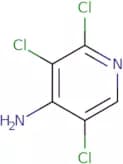
2,3,5-trichloropyridin-4-amine
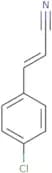
CAS:Versatile small molecule scaffoldFórmula:C5H3Cl3N2Pureza:Min. 95%Peso molecular:197.44 g/mol4-Chlorocinnamonitrile, mixture of cis and trans
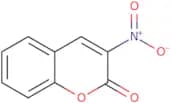
CAS:4-Chlorocinnamonitrile is a deuterium-labeled organic molecule that can be used for the study of hydration. It has been shown to induce apoptosis in cancer cells and to have anti-inflammatory properties. The cis and trans isomers of 4-chlorocinnamonitrile are both able to induce cell death, although the trans isomer is more potent than the cis isomer. The technique of using deuterium atoms to label molecules has been used as a tool in many areas of chemistry, including organometallic and pharmaceutical research.Fórmula:C9H6ClNPureza:Min. 95%Peso molecular:163.6 g/mol3-Nitro-2H-chromen-2-one
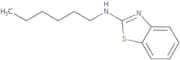
CAS:3-Nitro-2H-chromen-2-one is a ketone that has been found to be an effective inhibitor of the key enzyme in e. coli, cyclopentadiene synthase. This compound was also shown to be a superimposable on the natural product 4-hydroxycoumarin derivatives, which are used as antibiotics and anticancer agents. 3-Nitro-2H-chromen-2-one has a coumarin skeleton and is an organic solvent. It is a stereochemically pure compound with the chemical formula C9H7NO2, and it can be synthesized by reacting cyclopentadiene with nitric acid. 3N2C is an organic chemistry drug candidate for antibiotic development.Fórmula:C9H5NO4Pureza:Min. 95%Peso molecular:191.14 g/molN-Hexyl-1,3-benzothiazol-2-amine
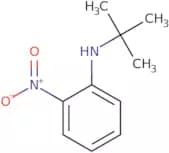
CAS:Versatile small molecule scaffoldFórmula:C13H18N2SPureza:Min. 95%Peso molecular:234.36 g/molN-tert-Butyl-2-nitroaniline
CAS:N-tert-Butyl-2-nitroaniline is a nitrogen containing compound with a dinitroso group. It is used as a precursor for the synthesis of furoxane and nitrosobenzene, which are used in the production of nylon. The nucleophilic nature of the molecule facilitates its reaction with other compounds, such as azoxy and nitro groups. The analogy between this and nitrosobenzene is that both have a similar molecular structure, but differ in their chemical properties. N-tert-Butyl-2-nitroaniline has been shown to be an effective nucleophile for substitution reactions.
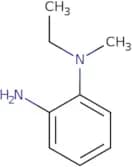
Fórmula:C10H14N2O2Pureza:Min. 95%Peso molecular:194.23 g/mol1-N-Ethyl-1-N-methylbenzene-1,2-diamine
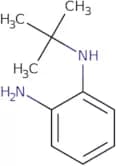
CAS:Versatile small molecule scaffoldFórmula:C9H14N2Pureza:Min. 95%Peso molecular:150.22 g/mol1-N-tert-Butylbenzene-1,2-diamine
CAS:Versatile small molecule scaffold
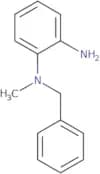
Fórmula:C10H16N2Pureza:Min. 95%Peso molecular:164.25 g/mol1-N-benzyl-1-N-methylbenzene-1,2-diamine
CAS:Versatile small molecule scaffold
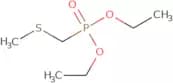
Fórmula:C14H16N2Pureza:90%MinPeso molecular:212.3 g/molDiethyl (Methylthiomethyl)phosphonate
CAS:Diethyl (methylthiomethyl)phosphonate is an exfoliating agent that reacts with proteins to form carbodiimides. Carbodiimides are active in the cleavage of peptide bonds and are used for the synthesis of peptide-based drugs. Diethyl (methylthiomethyl)phosphonate has been shown to inhibit a number of neurodegenerative diseases, such as Alzheimer's, Parkinson's, and Huntington's disease. The phosphonates inhibit protein synthesis by binding to ribosomes and inhibiting translation. Diethyl (methylthiomethyl)phosphonate also inhibits the activation of caspases, which induces apoptosis in cancer cells.
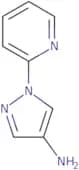
Fórmula:C6H15O3PSPureza:Min. 95%Peso molecular:198.22 g/mol1-(Pyridin-2-yl)-1H-pyrazol-4-amine
CAS:Versatile small molecule scaffold
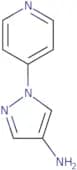
Fórmula:C8H8N4Pureza:Min. 95%Peso molecular:160.18 g/mol1-(Pyridin-4-yl)-1H-pyrazol-4-amine
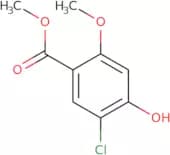
CAS:Versatile small molecule scaffoldFórmula:C8H8N4Pureza:Min. 95%Peso molecular:160.18 g/molMethyl 5-chloro-4-hydroxy-2-methoxybenzoate
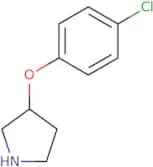
CAS:Versatile small molecule scaffoldFórmula:C9H9ClO4Pureza:Min. 95%Peso molecular:216.62 g/mol3-(4-Chlorophenoxy)pyrrolidine
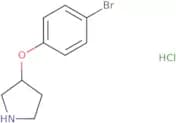
CAS:Versatile small molecule scaffoldFórmula:C10H12ClNOPureza:Min. 95%Peso molecular:197.66 g/mol3-(4-Bromophenoxy)pyrrolidine hydrochloride
CAS:Versatile small molecule scaffold
Fórmula:C10H13BrClNOPureza:Min. 95%Peso molecular:278.57 g/mol4,6-Dimethyl-1H,2H,3H-pyrazolo[3,4-b]pyridin-3-one
CAS:Versatile small molecule scaffoldFórmula:C8H9N3OPureza:Min. 95%Peso molecular:163.18 g/mol5-Chloro-3H-indol-2-amine hydrochloride
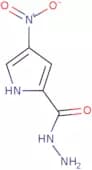
CAS:Versatile small molecule scaffoldFórmula:C8H8Cl2N2Pureza:Min. 95%Peso molecular:203.07 g/mol4-Nitro-1H-pyrrole-2-carbohydrazide
CAS:Versatile small molecule scaffoldFórmula:C5H6N4O3Pureza:Min. 95%Peso molecular:170.13 g/mol5-Amino-[1,2,4]triazolo[1,5-a]pyrimidine-6-carbonitrile
CAS:Versatile small molecule scaffoldFórmula:C6H4N6Pureza:Min. 95%Peso molecular:160.14 g/mol6-(Propan-2-yl)oxan-2-one
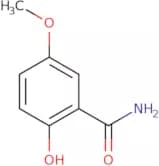
CAS:Versatile small molecule scaffoldFórmula:C8H14O2Pureza:Min. 95%Peso molecular:142.2 g/mol2-Hydroxy-5-methoxybenzamide
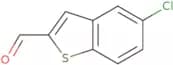
CAS:Versatile small molecule scaffoldFórmula:C8H9NO3Pureza:Min. 95%Peso molecular:167.16 g/mol5-Chloro-1-benzothiophene-2-carboxaldehyde
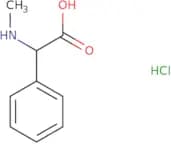
CAS:Versatile small molecule scaffoldFórmula:C9H5ClOSPureza:Min. 95%Peso molecular:196.65 g/molalpha-(Methylamino)benzeneacetic acid HCl
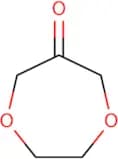
CAS:Versatile small molecule scaffoldFórmula:C9H12ClNO2Pureza:Min. 95%Peso molecular:201.65 g/mol1,4-Dioxepan-6-one
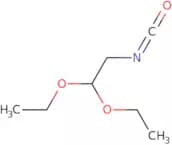
CAS:Versatile small molecule scaffoldFórmula:C5H8O3Pureza:Min. 95%Peso molecular:116.11 g/mol1,1-Diethoxy-2-isocyanatoethane
CAS:Versatile small molecule scaffold
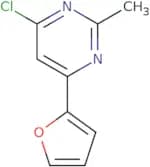
Fórmula:C7H13NO3Pureza:Min. 95%Peso molecular:159.18 g/mol4-Chloro-6-(2-furyl)-2-methylpyrimidine
CAS:Versatile small molecule scaffoldFórmula:C9H7ClN2OPureza:Min. 95%Peso molecular:194.62 g/mol7-Chloro-5-phenyl-[1,2,4]triazolo[1,5-a]pyrimidine
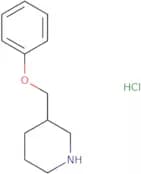
CAS:Versatile small molecule scaffoldFórmula:C11H7ClN4Pureza:Min. 95%Peso molecular:230.65 g/mol3-(Phenoxymethyl)piperidine hydrochloride
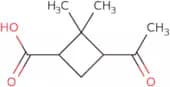
CAS:Versatile small molecule scaffoldFórmula:C12H18ClNOPureza:Min. 95%Peso molecular:227.74 g/molrac-(1R,3S)-3-Acetyl-2,2-dimethylcyclobutane-1-carboxylic acid
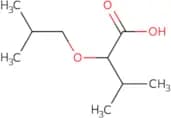
CAS:Versatile small molecule scaffoldFórmula:C9H14O3Pureza:Min. 95%Peso molecular:170.21 g/mol3-Methyl-2-(2-methylpropoxy)butanoic acid
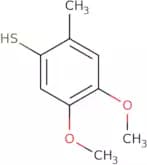
CAS:Versatile small molecule scaffoldFórmula:C9H18O3Pureza:Min. 95%Peso molecular:174.24 g/mol4,5-Dimethoxy-2-methylbenzene-1-thiol
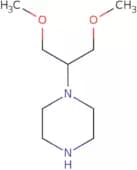
CAS:Versatile small molecule scaffoldFórmula:C9H12O2SPureza:Min. 95%Peso molecular:184.26 g/mol1-(1,3-Dimethoxypropan-2-yl)piperazine
CAS:Versatile small molecule scaffold
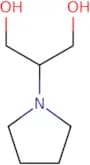
Fórmula:C9H20N2O2Pureza:Min. 95%Peso molecular:188.27 g/mol2-(Pyrrolidin-1-yl)propane-1,3-diol
CAS:Versatile small molecule scaffold
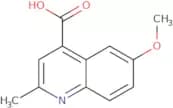
Fórmula:C7H15NO2Pureza:Min. 95%Peso molecular:145.2 g/mol6-Methoxy-2-methylquinoline-4-carboxylic acid
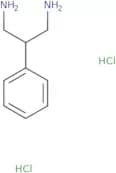
CAS:Versatile small molecule scaffoldFórmula:C12H11NO3Pureza:Min. 95%Peso molecular:217.22 g/mol2-Phenylpropane-1,3-diamine dihydrochloride
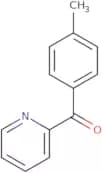
CAS:Versatile small molecule scaffoldFórmula:C9H16Cl2N2Pureza:Min. 95%Peso molecular:223.14 g/mol2-(4-Methylbenzoyl)pyridine
CAS:Versatile small molecule scaffold
Fórmula:C13H11NOPureza:Min. 95%Peso molecular:197.23 g/mol2-(2-Aminoethanesulfonyl)ethan-1-amine dihydrochloride
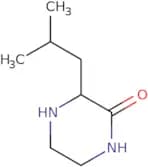
CAS:Versatile small molecule scaffoldFórmula:C4H14Cl2N2O2SPureza:Min. 95%Peso molecular:225.14 g/mol3-(2-Methylpropyl)piperazin-2-one
CAS:Versatile small molecule scaffoldFórmula:C8H16N2OPureza:Min. 95%Peso molecular:156.23 g/mol3-(2-Methylpropyl)-1,4-diazepan-2-one
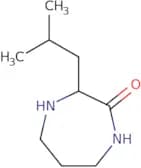
CAS:Versatile small molecule scaffold
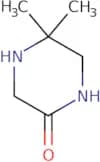
Fórmula:C9H18N2OPureza:Min. 95%Peso molecular:170.25 g/mol5,5-dimethylpiperazin-2-one
CAS:Versatile small molecule scaffoldFórmula:C6H12N2OPureza:Min. 95%Peso molecular:128.18 g/mol3-Benzylpiperazin-2-one
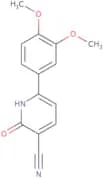
CAS:Versatile small molecule scaffoldFórmula:C11H14N2OPureza:Min. 95%Peso molecular:190.24 g/mol6-(3,4-Dimethoxyphenyl)-2-oxo-1,2-dihydropyridine-3-carbonitrile
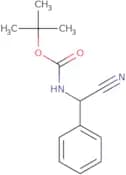
CAS:Versatile small molecule scaffoldFórmula:C14H12N2O3Pureza:Min. 95%Peso molecular:256.26 g/mol(Cyano-phenyl-methyl)-carbamic acid tert-butyl ester
CAS:Versatile small molecule scaffold
Fórmula:C13H16N2O2Pureza:Min. 95%Peso molecular:232.28 g/mol2-Methylpyrazolo[1,5-a]pyrimidine
CAS:The 2-methylpyrazolo[1,5-a]pyrimidine is a white crystalline solid that is soluble in some organic solvents. It has been shown to have a diffraction pattern that can be identified using x-ray diffraction and powder x-ray methods. The 2-methylpyrazolo[1,5-a]pyrimidine has not yet been synthesized in bulk quantities and only exists as a reaction solution or as a crystallizing agent.
Fórmula:C7H7N3Pureza:Min. 95%Peso molecular:133.15 g/molN-{1-[4-(Propan-2-yl)phenyl]propylidene}hydroxylamine
CAS:Versatile small molecule scaffold
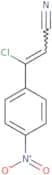
Fórmula:C12H17NOPureza:Min. 95%Peso molecular:191.27 g/mol3-Chloro-3-(4-nitrophenyl)prop-2-enenitrile
CAS:Versatile small molecule scaffold
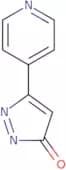
Fórmula:C9H5ClN2O2Pureza:Min. 95%Peso molecular:208.6 g/mol3-(Pyridin-4-yl)-1H-pyrazol-5-ol
CAS:Versatile small molecule scaffold
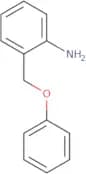
Fórmula:C8H5N3OPureza:Min. 95%Peso molecular:159.14 g/mol2-(Phenoxymethyl)aniline
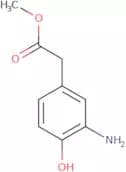
CAS:Versatile small molecule scaffoldFórmula:C13H13NOPureza:Min. 95%Peso molecular:199.25 g/molMethyl 2-(3-amino-4-hydroxyphenyl)acetate
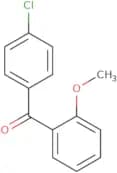
CAS:Versatile small molecule scaffoldFórmula:C9H11NO3Pureza:Min. 95%Peso molecular:181.19 g/mol(4-Chlorophenyl)(2-methoxyphenyl)methanone
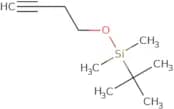
CAS:Versatile small molecule scaffoldFórmula:C14H11ClO2Pureza:Min. 95%Peso molecular:246.69 g/mol4-(tert-Butyldimethylsilyloxy)-1-butyne
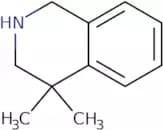
CAS:4-(tert-Butyldimethylsilyloxy)-1-butyne is a monomer that is used in the production of polymers. It has been shown to be an effective treatment for diabetic neuropathy, which is a chronic condition caused by damage to the peripheral nerves. 4-(tert-Butyldimethylsilyloxy)-1-butyne has also been shown to help protect against nerve damage and improve bladder function in rats.Fórmula:C10H20OSiPureza:Min. 95%Peso molecular:184.35 g/mol4,4-Dimethyl-1,2,3,4-tetrahydroisoquinoline
CAS:Versatile small molecule scaffoldFórmula:C11H15NPureza:Min. 95%Peso molecular:161.24 g/mol3-Bromocinnoline
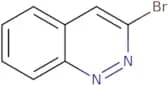
CAS:3-Bromocinnoline is a heterobicyclic, primary amino acid with a carbonyl group. It has been shown to activate cancer cells and may be useful in the treatment of brain infarction. 3-Bromocinnoline has been shown to inhibit the activity of tyrosine kinase, which is involved in many cellular processes including cell growth, differentiation, and proliferation. The stereoisomers of 3-bromocinnoline have been shown to have different effects on protein kinase activity.
Fórmula:C8H5BrN2Pureza:Min. 95%Peso molecular:209.05 g/mol3-Ethynyl-quinoline
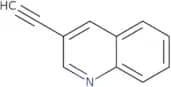
CAS:3-Ethynyl-quinoline is a palladium ligand that can be used in the synthesis of palladium complexes. It is an electron-rich, nitrogen-containing heterocyclic compound. 3-Ethynyl-quinoline has been shown to bind to matrix-assisted laser desorption/ionization (MALDI) mass spectrometry and provide information about the structure of the molecule. The terminal alkynes are considered mesomeric, which means they can adopt different structures depending on the type of environment they are in. 3-Ethynyl-quinoline can undergo bond cleavage, as shown by mouse liver microsomes and profiles. In addition, this compound has been shown to have dopamine D3 receptor binding activity in vivo.Fórmula:C11H7NPureza:Min. 95%Peso molecular:153.18 g/mol6-Ethynylquinoline
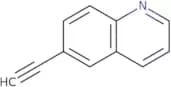
CAS:6-Ethynylquinoline is a biomolecule that has been demonstrated to be efficient in the production of multipolar and dipolar molecules. It is also a quinoline derivative with a quadrupole moment. 6-Ethynylquinoline has been shown to be an analog of quinoline, which can be synthesized from 2-ethynylpyridine and formaldehyde. The compound is also used as a precursor for other compounds such as 3,4-dihydroisoquinolinium iodide (DIQI) and 4,5-dihydronaphthoquinone (DHNQ).
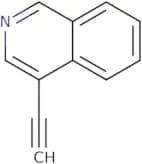
Fórmula:C11H7NPureza:Min. 95%Peso molecular:153.18 g/mol4-Ethynylisoquinoline
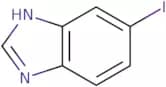
CAS:4-Ethynylisoquinoline is a chemical compound that inhibits rho-kinase, an enzyme that plays a role in the formation of blood clots. It has been shown to be effective in inhibiting cerebral vasospasm and potent at inhibiting chloride ion channels. 4-Ethynylisoquinoline is used as a pharmaceutical preparation to treat dysuria, but should not be administered if the patient is dehydrated or has high blood pressure. 4-Ethynylisoquinoline can also be used as an intermediate for the synthesis of other compounds with similar properties, such as piperidine. This chemical compound is synthesized by reacting chlorobenzene with dimethylformamide and pyridine in the presence of heat.Fórmula:C11H7NPureza:Min. 95%Peso molecular:153.18 g/mol5-Iodo-1H-benzimidazole
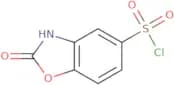
CAS:5-Iodo-1H-benzimidazole is a chemical compound that can be recycled. It is used in medicinal chemistry and organic chemistry, but has not been extensively studied. This compound is used as a precursor to other structures, such as 5-iodo-N-methylbenzamide. The reaction of 5-iodo-1H benzimidazole with zinc powder produces a high yield of the desired product. 5-Iodo benzimidazole can be used as an electron donor in reductive reactions, such as the synthesis of nitroarenes. In addition to its use in organic chemistry, this compound has shown potential for biomolecular applications.Fórmula:C7H5IN2Pureza:Min. 95%Peso molecular:244.03 g/mol2-Oxo-2,3-dihydro-1,3-benzoxazole-5-sulfonyl Chloride
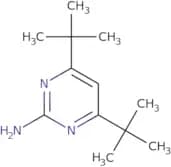
CAS:Versatile small molecule scaffoldFórmula:C7H4NO4SClPureza:Min. 95%Peso molecular:233.62 g/mol4,6-Di-tert-butylpyrimidin-2-amine
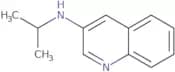
CAS:Versatile small molecule scaffoldFórmula:C12H21N3Pureza:Min. 95%Peso molecular:207.32 g/molN-(Propan-2-yl)quinolin-3-amine
CAS:Versatile small molecule scaffoldFórmula:C12H14N2Pureza:Min. 95%Peso molecular:186.25 g/molEthyl 4-oxotetrahydrothiophene-3-carboxylate
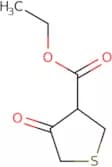
CAS:Ethyl 4-oxotetrahydrothiophene-3-carboxylate is a synthetic compound that can be prepared by the reaction of ethoxycarbonylethyl thioglycolate with diethyl sulfide. It is an acrylate, which can be used to make polynuclear compounds. The target compound is an ethyl ester, which can be obtained by adding ethylene glycol and sulfuric acid to the adduct of methyl thioglycolate and toluene. Ethyl 4-oxotetrahydrothiophene-3-carboxylate has been shown to react with thioglycolic acid in a workup procedure, producing the desired product.Fórmula:C7H10O3SPureza:Min. 95%Peso molecular:174.21 g/mol2-(Pyrrolidin-1-yl)benzoic acid
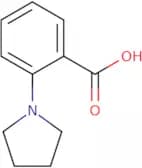
CAS:Versatile small molecule scaffoldFórmula:C11H13NO2Pureza:Min. 95%Peso molecular:191.23 g/molMethyl 3-[(2-methoxy-2-oxoethyl)sulfanyl]butanoate
CAS:Versatile small molecule scaffoldFórmula:C8H14O4SPureza:Min. 95%Peso molecular:206.26 g/mol(4-Amino-2-methylthiophen-3-yl)methyl hydrogen carbonate hydrochloride
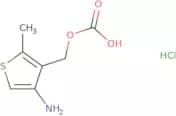
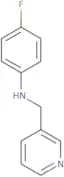
CAS:Versatile small molecule scaffoldFórmula:C7H10ClNO3SPureza:Min. 95%Peso molecular:223.68 g/mol(4-Fluoro-phenyl)-pyridin-3-ylmethyl-amine
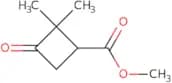
CAS:Versatile small molecule scaffoldFórmula:C12H11FN2Pureza:Min. 95%Peso molecular:202.23 g/molMethyl 2,2-dimethyl-3-oxocyclobutane-1-carboxylate
CAS:Versatile small molecule scaffold
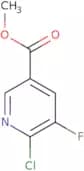
Fórmula:C8H12O3Pureza:Min. 95%Peso molecular:156.18 g/molMethyl 6-chloro-5-fluoronicotinate
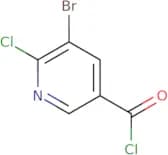
CAS:Versatile small molecule scaffoldFórmula:C7H5ClFNO2Pureza:Min. 95%Peso molecular:189.57 g/mol5-Bromo-6-chloronicotinoyl chloride
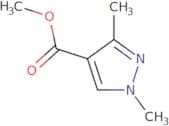
CAS:Versatile small molecule scaffoldFórmula:C6H2BrCl2NOPureza:Min. 95%Peso molecular:254.89 g/molMethyl 1,3-dimethyl-1H-pyrazole-4-carboxylate
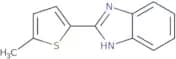
CAS:Versatile small molecule scaffoldFórmula:C7H10N2O2Pureza:Min. 95%Peso molecular:154.17 g/mol2-(5-Methylthiophen-2-yl)-1H-1,3-benzodiazole
CAS:Versatile small molecule scaffoldFórmula:C12H10N2SPureza:Min. 95%Peso molecular:214.29 g/mol5,7-dichloro-[1,2,4]triazolo[1,5-a]pyrimidine
CAS:Versatile small molecule scaffold
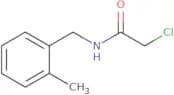
Fórmula:C5H2Cl2N4Pureza:Min. 95%Peso molecular:189 g/mol2-Chloro-N-(2-methylbenzyl)acetamide
CAS:Versatile small molecule scaffoldFórmula:C10H12ClNOPureza:Min. 95%Peso molecular:197.66 g/mol2-Chloro-N-[(3-methylphenyl)methyl]acetamide
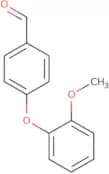
CAS:Versatile small molecule scaffoldFórmula:C10H12ClNOPureza:Min. 95%Peso molecular:197.66 g/mol4-(2-Methoxy-phenoxy)-benzaldehyde
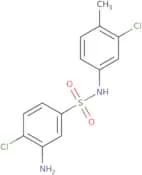
CAS:Versatile small molecule scaffoldFórmula:C14H12O3Pureza:Min. 95%Peso molecular:228.24 g/mol3-Amino-4-chloro-N-(3-chloro-4-methylphenyl)benzene-1-sulfonamide
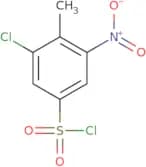
CAS:Versatile small molecule scaffoldFórmula:C13H12Cl2N2O2SPureza:Min. 95%Peso molecular:331.2 g/mol3-Chloro-4-methyl-5-nitrobenzene-1-sulfonyl chloride
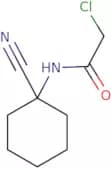
CAS:Versatile small molecule scaffoldFórmula:C7H5Cl2NO4SPureza:Min. 95%Peso molecular:270.09 g/mol2-Chloro-N-(1-cyanocyclohexyl)acetamide
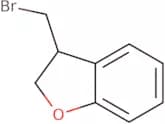
CAS:Versatile small molecule scaffoldFórmula:C9H13ClN2OPureza:Min. 95%Peso molecular:200.66 g/mol3-(Bromomethyl)-2,3-dihydro-1-benzofuran
CAS:Versatile small molecule scaffold
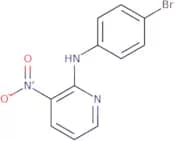
Fórmula:C9H9BrOPureza:Min. 95%Peso molecular:213.07 g/molN-(4-Bromophenyl)-3-nitropyridin-2-amine
CAS:Versatile small molecule scaffoldFórmula:C11H8BrN3O2Pureza:Min. 95%Peso molecular:294.1 g/mol2-N-(4-Bromophenyl)pyridine-2,3-diamine
CAS:Versatile small molecule scaffold
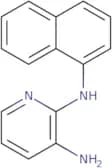
Fórmula:C11H10BrN3Pureza:Min. 95%Peso molecular:264.12 g/mol2-N-(Naphthalen-1-yl)pyridine-2,3-diamine
CAS:Versatile small molecule scaffoldFórmula:C15H13N3Pureza:Min. 95%Peso molecular:235.28 g/mol5-Amino-1,2-dimethyl-1H-imidazole-4-carboxamide
CAS:Versatile small molecule scaffoldFórmula:C6H10N4OPureza:Min. 95%Peso molecular:154.17 g/mol5-fluoro-1H-benzo[d][1,3]oxazine-2,4-dione
CAS:Versatile small molecule scaffold
Fórmula:C8H4NO3FPureza:Min. 95%Peso molecular:181.12 g/mol1h,2h,4h-Thieno[3,2-d][1,3]oxazine-2,4-dione
CAS:Thieno[3,2-d][1,3]oxazin-2,4-dione is a bicyclic organic compound with the chemical formula C6H4N2O. It is an analog of oxazole and it has been shown to react in a nucleophilic fashion. This reactivity makes it useful for synthesizing other compounds. Thieno[3,2-d][1,3]oxazin-2,4-dione is commercially available as an optically pure powder or as a combinatorial library.
Fórmula:C6H3NO3SPureza:Min. 95%Peso molecular:169.16 g/mol7-Bromo-4-methyl-3,4-dihydro-1H-benzo[E][1,4]diazepine-2,5-dione
CAS:Versatile small molecule scaffold
Fórmula:C10H9BrN2O2Pureza:Min. 95%Peso molecular:269.09 g/mol8-Bromo-5,6-dihydro-5-methyl-6-oxo-4H-imidazo[1,5-a][1,4]benzodiazepine-3-carboxylic acid ethyl ester
CAS:8-Bromo-5,6-dihydro-5-methyl-6-oxo-4H-imidazo[1,5a][1,4]benzodiazepine-3-carboxylic acid ethyl ester is a palladium catalyzed reaction that converts aryl bromides to bromides. The optimized yields and functionalized products are the result of optimizing the catalyst and reagents. This reaction can be used to produce triflates from bromides.Fórmula:C15H14BrN3O3Pureza:Min. 95%Peso molecular:364.19 g/mol4-Chloro-2,7-dimethyl-7H-pyrrolo[2,3-d]pyrimidine
CAS:Versatile small molecule scaffoldFórmula:C8H8ClN3Pureza:Min. 95%Peso molecular:181.62 g/mol2-methyl-3,5-dinitrothiophene
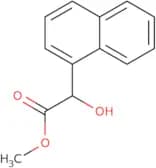
CAS:2-methyl-3,5-dinitrothiophene is an organic solvent with a nonlinear optical response. It has been used as a monomer for the preparation of polymers. 2-Methyl-3,5-dinitrothiophene has shown thermal stability and hydroxy groups that can be used to solvate other molecules. This compound is also soluble in organic solvents such as acetone and chloroform. The chromophore present in 2-methyl-3,5-dinitrothiophene gives it a yellow color at low concentrations and a reddish color at high concentrations.Fórmula:C5H4N2O4SPureza:Min. 95%Peso molecular:188.16 g/molMethyl 2-hydroxy-2-(naphthalen-1-yl)acetate
CAS:Versatile small molecule scaffoldFórmula:C13H12O3Pureza:Min. 95%Peso molecular:216.23 g/mol5-Methyl-5-(naphthalen-2-yl)imidazolidine-2,4-dione
CAS:Versatile small molecule scaffold
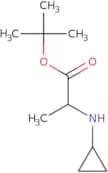
Fórmula:C14H12N2O2Pureza:Min. 95%Peso molecular:240.26 g/moltert-Butyl 2-(cyclopropylamino)propanoate
CAS:Versatile small molecule scaffold
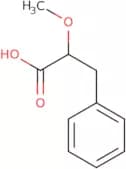
Fórmula:C10H19NO2Pureza:Min. 95%Peso molecular:185.26 g/mol2-Methoxy-3-phenylpropanoic acid
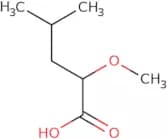
CAS:2-Methoxy-3-phenylpropanoic acid is an ester with a carboxylic acid group at its end. It is a chiral molecule that has two enantiomers, which are mirror images of each other. The stereochemical conformations of these molecules can be determined by the weighting of their conformational energies. This compound is used in the synthesis of various pharmaceuticals and pesticides, such as carbamates and herbicides. The nmr spectroscopic data for this compound show that it has two conformers, A and B, which have different chemical shifts in their nmr spectra. The experimental data show that the equilibrium between these two conformers is weighted heavily to conformer A because it has a lower energy barrier than conformer B.Fórmula:C10H12O3Pureza:Min. 95%Peso molecular:180.2 g/mol2-Methoxy-4-methylpentanoic acid
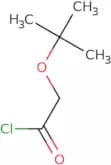
CAS:Versatile small molecule scaffoldFórmula:C7H14O3Pureza:Min. 95%Peso molecular:146.18 g/mol2-(tert-Butoxy)acetyl chloride
CAS:Versatile small molecule scaffoldFórmula:C6H11ClO2Pureza:Min. 95%Peso molecular:150.6 g/mol4-(Benzylsulfanyl)benzaldehyde
CAS:Benzylsulfanylbenzaldehyde is a benzyl derivative that has been studied for its optical properties and electronic structures. The sulfur atom in this molecule is replaced with an electron-donating group, which gives the molecule a positive charge. This change also makes the substituent more polar and thus increases its ability to interact with other molecules. Substituents are groups attached to benzene rings in order to modify their chemical or physical properties. Chromophores are groups of atoms that absorb light and can be used to identify substances by their color. Electron withdrawing groups cause the dipole moment of the molecule to increase, while electron donating groups have the opposite effect on the dipole moment.Fórmula:C14H12OSPureza:Min. 95%Peso molecular:228.31 g/mol3-[5-(4-Chlorophenyl)-1,3,4-oxadiazol-2-yl]propanoic acid
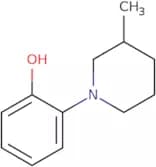
CAS:Versatile small molecule scaffoldFórmula:C11H9ClN2O3Pureza:Min. 95%Peso molecular:252.65 g/mol2-(3-Methylpiperidin-1-yl)phenol
CAS:Versatile small molecule scaffold
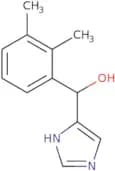
Fórmula:C12H17NOPureza:Min. 95%Peso molecular:191.27 g/mol(2,3-dimethylphenyl)(1H-imidazol-5-yl)methanol
CAS:Versatile small molecule scaffoldFórmula:C12H14N2OPureza:Min. 95%Peso molecular:202.25 g/mol4-[(2,6-Dimethylphenyl)methyl]-1H-imidazole hydrochloride
CAS:Versatile small molecule scaffoldFórmula:C12H15ClN2Pureza:Min. 95%Peso molecular:222.71 g/molMethyl 5-methyl-1H-imidazole-4-carboxylate hydrochloride
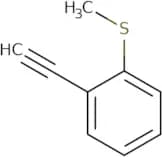
CAS:Versatile small molecule scaffoldFórmula:C6H9ClN2O2Pureza:Min. 95%Peso molecular:176.6 g/mol1-Ethynyl-2-(methylsulfanyl)benzene
CAS:1-Ethynyl-2-(methylsulfanyl)benzene is a potent antioxidant. It has been shown to have antimicrobial activity against both Gram-positive and Gram-negative bacteria, as well as antifungal activity against both mold and yeast. 1-Ethynyl-2-(methylsulfanyl)benzene has been shown to inhibit the growth of S. aureus and E. coli in vitro, having an IC50 of less than 0.1 μg/mL. This compound also inhibits the growth of Bacillus subtilis and B. cereus, with IC50 values of 0.5 and 0.06 μg/mL respectively, but is not active against Escherichia coli or Pseudomonas aeruginosa at concentrations up to 200 μg/mL.Fórmula:C9H8SPureza:Min. 95%Peso molecular:148.23 g/mol

![4,6-Dimethyl-1H,2H,3H-pyrazolo[3,4-b]pyridin-3-one](/_next/image/?url=https%3A%2Fstatic.cymitquimica.com%2Fproducts%2F3D%2Fthumb-webp%2FDBA49167.webp&w=3840&q=75)
![5-Amino-[1,2,4]triazolo[1,5-a]pyrimidine-6-carbonitrile](/_next/image/?url=https%3A%2Fstatic.cymitquimica.com%2Fproducts%2F3D%2Fthumb-webp%2FDBA52458.webp&w=3840&q=75)
![7-Chloro-5-phenyl-[1,2,4]triazolo[1,5-a]pyrimidine](/_next/image/?url=https%3A%2Fstatic.cymitquimica.com%2Fproducts%2F3D%2Fthumb-webp%2FDBA56543.webp&w=3840&q=75)


![2-Methylpyrazolo[1,5-a]pyrimidine](/_next/image/?url=https%3A%2Fstatic.cymitquimica.com%2Fproducts%2F3D%2Fthumb-webp%2FDDA56232.webp&w=3840&q=75)
![N-{1-[4-(Propan-2-yl)phenyl]propylidene}hydroxylamine](/_next/image/?url=https%3A%2Fstatic.cymitquimica.com%2Fproducts%2F3D%2Fthumb-webp%2FDDA57514.webp&w=3840&q=75)
![Methyl 3-[(2-methoxy-2-oxoethyl)sulfanyl]butanoate](/_next/image/?url=https%3A%2Fstatic.cymitquimica.com%2Fproducts%2F3D%2Fthumb-webp%2FDDA64841.webp&w=3840&q=75)
![5,7-dichloro-[1,2,4]triazolo[1,5-a]pyrimidine](/_next/image/?url=https%3A%2Fstatic.cymitquimica.com%2Fproducts%2F3D%2Fthumb-webp%2FDDA70626.webp&w=3840&q=75)
![2-Chloro-N-[(3-methylphenyl)methyl]acetamide](/_next/image/?url=https%3A%2Fstatic.cymitquimica.com%2Fproducts%2F3D%2Fthumb-webp%2FDDA71037.webp&w=3840&q=75)


![5-fluoro-1H-benzo[d][1,3]oxazine-2,4-dione](/_next/image/?url=https%3A%2Fstatic.cymitquimica.com%2Fproducts%2F3D%2Fthumb-webp%2FDDA75594.webp&w=3840&q=75)
![1h,2h,4h-Thieno[3,2-d][1,3]oxazine-2,4-dione](/_next/image/?url=https%3A%2Fstatic.cymitquimica.com%2Fproducts%2F3D%2Fthumb-webp%2FDDA75628.webp&w=3840&q=75)
![7-Bromo-4-methyl-3,4-dihydro-1H-benzo[E][1,4]diazepine-2,5-dione](/_next/image/?url=https%3A%2Fstatic.cymitquimica.com%2Fproducts%2F3D%2Fthumb-webp%2FDDA75636.webp&w=3840&q=75)
![8-Bromo-5,6-dihydro-5-methyl-6-oxo-4H-imidazo[1,5-a][1,4]benzodiazepine-3-carboxylic acid ethyl es…](/_next/image/?url=https%3A%2Fstatic.cymitquimica.com%2Fproducts%2F3D%2Fthumb-webp%2FDDA75637.webp&w=3840&q=75)
![4-Chloro-2,7-dimethyl-7H-pyrrolo[2,3-d]pyrimidine](/_next/image/?url=https%3A%2Fstatic.cymitquimica.com%2Fproducts%2F3D%2Fthumb-webp%2FDDA75680.webp&w=3840&q=75)



![3-[5-(4-Chlorophenyl)-1,3,4-oxadiazol-2-yl]propanoic acid](/_next/image/?url=https%3A%2Fstatic.cymitquimica.com%2Fproducts%2F3D%2Fthumb-webp%2FDDA85861.webp&w=3840&q=75)
![4-[(2,6-Dimethylphenyl)methyl]-1H-imidazole hydrochloride](/_next/image/?url=https%3A%2Fstatic.cymitquimica.com%2Fproducts%2F3D%2Fthumb-webp%2FDDA89245.webp&w=3840&q=75)