Building Blocks
Subcategorías de "Building Blocks"
- Ácidos borónicos y derivados del ácido borónico(5.778 productos)
- Building Blocks quirales(1.243 productos)
- Building Blocks de hidrocarburos(6.098 productos)
- Building Blocks orgánicos(61.042 productos)
Se han encontrado 204339 productos de "Building Blocks"
2-(5-Methyl-1H-pyrazol-1-yl)aniline
CAS:Versatile small molecule scaffold
Fórmula:C10H11N3Pureza:Min. 95%Peso molecular:173.21 g/mol1-Phenyl-2-(trifluoromethoxy)ethan-1-ol
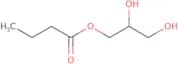
CAS:Versatile small molecule scaffoldFórmula:C9H9F3O2Pureza:Min. 95%Peso molecular:206.16 g/mol1-Monotetranoin
CAS:1-Monotetranoin is a fatty ester that is involved in the process of lipolysis, which is the breakdown of fat cells. Lipolysis occurs when an enzyme called lipase hydrolyzes triglycerides into glycerol and three fatty acids. 1-Monotetranoin has been shown to be a potent stimulator of growth factor production and cell proliferation in vivo models. It has also been shown to be effective at inhibiting angiogenic processes in vitro, including the release of growth factors from fat cells. The neutral pH optimum for 1-monotetranoin is between 7 and 8, which may be due to its hydrophobic nature.
Fórmula:C7H14O4Pureza:Min. 95%Peso molecular:162.18 g/mol(3,4-Dihydro-2H-chromen-6-ylmethyl)ae hydrochloride
CAS:Versatile small molecule scaffold
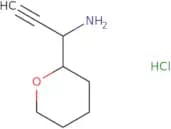
Fórmula:C10H14ClNOPureza:Min. 95%Peso molecular:199.68 g/mol1-(Oxan-2-yl)prop-2-yn-1-amine hydrochloride
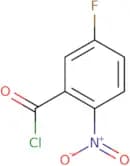
CAS:Versatile small molecule scaffoldFórmula:C8H14ClNOPureza:Min. 95%Peso molecular:175.65 g/mol5-Fluoro-2-nitrobenzoyl chloride
CAS:5-Fluoro-2-nitrobenzoyl chloride is a conformationally locked macrocyclic compound that has been synthesized by solid phase synthesis. It is found in two conformational states and can be made to switch between these two states by applying a force to the molecule. This conformation can be controlled by changing the side chain of 5-fluoro-2-nitrobenzoyl chloride, which can be done experimentally. The conformational behavior of this macrocycle was studied using molecular dynamics simulations and it was found that there are four possible conformations for the molecule. The conformations with different side chains were found to have different energies, which could be used as a measure of their relative stability.
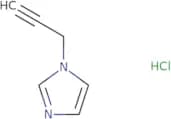
Fórmula:C7H3ClFNO3Pureza:Min. 95%Peso molecular:203.55 g/mol1-(Prop-2-yn-1-yl)-1H-imidazole hydrochloride
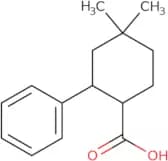
CAS:Versatile small molecule scaffoldFórmula:C6H7ClN2Pureza:Min. 95%Peso molecular:142.58 g/mol4,4-Dimethyl-2-phenylcyclohexane-1-carboxylic acid
CAS:Versatile small molecule scaffold
Fórmula:C15H20O2Pureza:Min. 95%Peso molecular:232.32 g/mol2-[(4-Aminophenyl)sulfanyl]-5-chlorobenzonitrile
CAS:Versatile small molecule scaffold
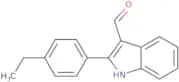
Fórmula:C13H9ClN2SPureza:Min. 95%Peso molecular:260.74 g/mol2-(4-Ethylphenyl)-1H-indole-3-carbaldehyde
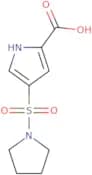
CAS:Versatile small molecule scaffoldFórmula:C17H15NOPureza:Min. 95%Peso molecular:249.31 g/mol4-(Pyrrolidine-1-sulfonyl)-1H-pyrrole-2-carboxylic acid
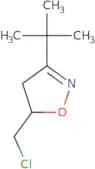
CAS:Versatile small molecule scaffoldFórmula:C9H12N2O4SPureza:Min. 95%Peso molecular:244.27 g/mol3-tert-Butyl-5-(chloromethyl)-4,5-dihydro-1,2-oxazole
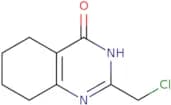
CAS:Versatile small molecule scaffoldFórmula:C8H14ClNOPureza:Min. 95%Peso molecular:175.65 g/mol2-(Chloromethyl)-5,6,7,8-tetrahydroquinazolin-4(3H)-one
CAS:Versatile small molecule scaffold
Fórmula:C9H11ClN2OPureza:Min. 95%Peso molecular:198.65 g/molEthyl 1-amino-1-cyclobutanecarboxylate monohydrochloride
CAS:Ethyl 1-amino-1-cyclobutanecarboxylate monohydrochloride is a cyclic carbonyl compound that is used as a building block in organic synthesis. It has been used to synthesize a number of natural products, such as piperarborenine and cyclobutanes. This compound can be synthesized by reacting ethyl chloroformate with cyclobutanecarbaldehyde in the presence of an acid or base catalyst. The steric and geometric properties of this molecule are highlighted below.
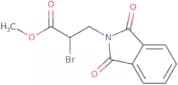
Fórmula:C2H5O2CC4H6NH2·HClPureza:Min. 95%Peso molecular:179.64 g/molMethyl 2-bromo-3-(1,3-dioxo-2,3-dihydro-1H-isoindol-2-yl)propanoate
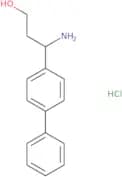
CAS:Versatile small molecule scaffoldFórmula:C12H10BrNO4Pureza:Min. 95%Peso molecular:312.12 g/mol(3S)-3-Amino-3-(4-phenylphenyl)propan-1-ol hydrochloride
CAS:Versatile small molecule scaffoldFórmula:C15H18ClNOPureza:Min. 95%Peso molecular:263.8 g/molRef: 3D-RFC63270
Producto descatalogado2-(Sulfanylmethyl)-4H-pyrido[1,2-a]pyrimidin-4-one
CAS:Versatile small molecule scaffold
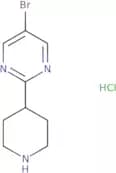
Fórmula:C9H8N2OSPureza:Min. 95%Peso molecular:192.24 g/mol5-Bromo-2-(piperidin-4-yl)pyrimidine hydrochloride
CAS:Versatile small molecule scaffold
Fórmula:C9H13BrClN3Pureza:Min. 95%Peso molecular:278.58 g/mol1-(Pyridin-3-yl)-1H-pyrazole-4-carboxylic acid hydrochloride
CAS:Versatile small molecule scaffold
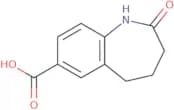
Fórmula:C9H8ClN3O2Pureza:Min. 95%Peso molecular:225.63 g/mol2-Oxo-2,3,4,5-tetrahydro-1H-1-benzazepine-7-carboxylic acid
CAS:Versatile small molecule scaffold
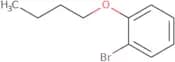
Fórmula:C11H11NO3Pureza:Min. 95%Peso molecular:205.21 g/mol1-Bromo-2-butoxybenzene
CAS:1-Bromo-2-butoxybenzene is a chemical compound that is used in the manufacture of zinc oxide. It is also used as an electrolyte in dye-sensitized solar cells. In these cells, 1-bromo-2-butoxybenzene acts as an electron donor, which provides electrons to the redox dye on the surface of the semiconductor. This process leads to recombination, where electrons and holes recombine to produce electricity. The introduction of alkoxy groups into 1-bromo-2-butoxybenzene molecules allows for increased stability and efficiency in dye-sensitized solar cells.
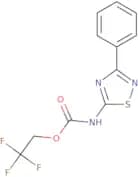
Fórmula:C10H13BrOPureza:Min. 95%Peso molecular:229.11 g/mol2,2,2-Trifluoroethyl N-(3-phenyl-1,2,4-thiadiazol-5-yl)carbamate
CAS:Versatile small molecule scaffold
Fórmula:C11H8F3N3O2SPureza:Min. 95%Peso molecular:303.26 g/mol3-(4-Aminopiperidin-1-yl)propanoic acid dihydrochloride
CAS:Versatile small molecule scaffold
Fórmula:C8H18Cl2N2O2Pureza:Min. 95%Peso molecular:245.14 g/molRef: 3D-LIC70652
Producto descatalogado3,6-Dimethyl-1-{[(propan-2-yl)carbamoyl]methyl}-1H-pyrazolo[3,4-b]pyridine-4-carboxylic acid
CAS:Versatile small molecule scaffoldFórmula:C14H18N4O3Pureza:Min. 95%Peso molecular:290.32 g/mol8-Phenyl-1-oxa-3-azaspiro[4.5]dec-2-en-2-amine
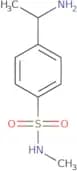
CAS:Versatile small molecule scaffoldFórmula:C14H18N2OPureza:Min. 95%Peso molecular:230.31 g/mol4-(1-Aminoethyl)-N-methylbenzene-1-sulfonamide
CAS:Versatile small molecule scaffold
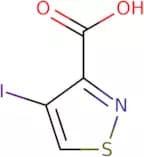
Fórmula:C9H14N2O2SPureza:Min. 95%Peso molecular:214.29 g/mol4-Iodo-1,2-thiazole-3-carboxylic acid
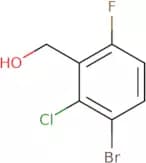
CAS:Versatile small molecule scaffoldFórmula:C4H2INO2SPureza:Min. 95%Peso molecular:255.04 g/mol3-Bromo-2-chloro-6-fluorobenzyl alcohol
CAS:Versatile small molecule scaffold
Fórmula:C7H5BrClFOPureza:Min. 95%Peso molecular:239.47 g/molRef: 3D-JWC62856
Producto descatalogado2-[Ethyl(propan-2-yl)amino]ethan-1-ol
CAS:Producto controladoVersatile small molecule scaffold
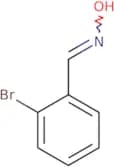
Fórmula:C7H17NOPureza:Min. 95%Peso molecular:131.22 g/mol2-Bromobenzaldoxime
CAS:2-Bromobenzaldoxime is a biologically active molecule that has been shown to have significant physiological activities. It is an aldehyde, which is metabolized by the liver or kidneys into the corresponding alcohol, 2-bromoethanol. 2-Bromobenzaldoxime has been shown to be synthesized from diethyl ether and potassium phosphate in the presence of amino acids. The reaction proceeds with dehydration of the intermediate bromohydrin to form an aldoxime. This molecule can be used as a pharmaceutical drug for various diseases such as diabetes mellitus, hypertension, and inflammation.
Fórmula:C7H6BrNOPureza:Min. 95%Peso molecular:200.03 g/mol2-[2-(Furan-3-yl)-1,3-thiazol-4-yl]acetic acid
CAS:Versatile small molecule scaffold
Fórmula:C9H7NO3SPureza:Min. 95%Peso molecular:209.22 g/molPB-22 3-carboxyindole metabolite solution
CAS:Producto controladoPB-22 is a synthetic cannabinoid, which can be classified as a CB1 receptor agonist. It is one of the many cannabinoids that have been created in an attempt to circumvent drug laws by creating compounds that are similar to those found in cannabis but have different chemical structures. PB-22 has shown to increase locomotor activity and stimulate the cb1 receptor in mice. Magnetic resonance spectroscopy (MRS) and assays were used to determine the binding affinity of PB-22 for the CB1 receptor. The MRS data showed that PB-22 bound with high affinity to the CB1 receptor and had a lower affinity for CB2 receptors. This suggests that PB-22 may be more potent than other synthetic cannabinoids, such as JWH-018 and CP 55,940, which bind better with CB2 receptors than CB1 receptors.
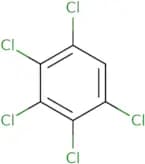
PB-22 is an analog of JWH-073 and has been shown to have a stronger effect on locomotor activity than JWHFórmula:C14H17NO2Pureza:Min. 95%Peso molecular:231.29 g/mol1,2,3,4,5-Pentachlorobenzene
CAS:1,2,3,4,5-Pentachlorobenzene is a chlorinated hydrocarbon that is used in the production of pesticides and herbicides. It is an ingredient in the manufacturing of pentachlorophenol and pentachloronitrobenzene. 1,2,3,4,5-Pentachlorobenzene has been used as a chemical intermediate or solvent for the production of other chemicals. The emissions from this chemical can be harmful to humans and animals because it has been shown to affect enzyme activities at sublethal doses. It also affects rat liver microsomes and causes DNA damage that can lead to cancer.
Fórmula:C6HCl5Pureza:Min. 95%Peso molecular:250.34 g/mol2-(Pyrrolidin-3-yl)ethanol hydrochloride
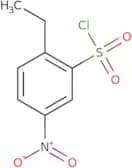
CAS:Versatile small molecule scaffoldFórmula:C6H13NO·HClPureza:Min. 95%Peso molecular:151.64 g/mol2-Ethyl-5-nitrobenzene-1-sulfonyl chloride
CAS:Versatile small molecule scaffold
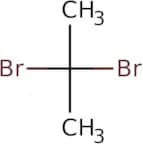
Fórmula:C8H8ClNO4SPureza:Min. 95%Peso molecular:249.67 g/mol2,2-Dibromopropane
CAS:2,2-Dibromopropane is a synthetic chemical that has been used as a precursor in the production of nylon. It is an activator that can be used to form covalent bonds with reactive groups on other molecules. The activation energy for the reaction with piperazine is between 104 and 106 kJ/mol. 2,2-Dibromopropane undergoes acylation reactions under certain conditions, forming reaction products such as 2,2-dibromoethyl acetate and 2,2-dibromoethanol. The molecular weight of 2,2-dibromopropane is 192.19 g/mol and its structural formula is CHBrCHBrCHBrCHBrC≡C≡C≡C≡C≡C≡CC(O)OH.
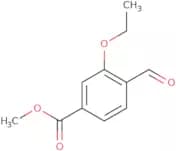
Fórmula:C3H6Br2Pureza:Min. 95%Peso molecular:201.89 g/mol3-ethoxy-4-formyl-benzoic acid methyl ester
CAS:Versatile small molecule scaffoldFórmula:C11H12O4Pureza:Min. 95%Peso molecular:208.21 g/mol2-Bromo-3,3,3-trifluoro-1-propene
CAS:Producto controlado2-Bromo-3,3,3-trifluoro-1-propene is a chemical compound that has been synthesized in an asymmetric reaction. The reactant is bromopropane and the product is 2,2,2-trifluoropropene. The methylene group on the propene molecule is activated by the nucleophilic attack of a fluoride ion from hydrogen fluoride to form a cavity with a highly strained bond. The kinetic study of this reaction revealed that the activation energy for the reaction is 42 kJ/mol. Palladium-catalyzed coupling reactions are catalyzed by palladium and require nonpolar solvents such as toluene or dichloromethane. This type of reaction has been shown to be exothermic with an isolated yield of 1%.
Fórmula:C3H2BrF3Pureza:Min. 95%Forma y color:Colorless PowderPeso molecular:174.95 g/molPiperyline
CAS:Piperyline is an alkanoic acid that has shown to be effective against skin cancer. It also has antimicrobial properties, which may be due to its ability to bind metal ions and form polymeric compounds. Piperyline inhibits microbial growth by inhibiting the synthesis of proteins and nucleic acids. The antimicrobial activity is related to its cationic polymerization with hydroxyl groups, which forms a structure that can inhibit microbial enzymes and disrupt microbial cell membranes. This compound also interacts with the skin's natural lipids, making it difficult for microorganisms to attach and grow on the skin. Piperyline is synthesized in organic chemistry laboratories as an amide precursor of other pharmaceuticals such as penicillin.
Fórmula:C16H17NO3Pureza:Min. 95%Peso molecular:271.31 g/mol



![2-[(4-Aminophenyl)sulfanyl]-5-chlorobenzonitrile](/_next/image/?url=https%3A%2Fstatic.cymitquimica.com%2Fproducts%2F3D%2Fthumb-webp%2FVJC36571.webp&w=3840&q=75)

![2-(Sulfanylmethyl)-4H-pyrido[1,2-a]pyrimidin-4-one](/_next/image/?url=https%3A%2Fstatic.cymitquimica.com%2Fproducts%2F3D%2Fthumb-webp%2FRQB69641.webp&w=3840&q=75)


![3,6-Dimethyl-1-{[(propan-2-yl)carbamoyl]methyl}-1H-pyrazolo[3,4-b]pyridine-4-carboxylic acid](/_next/image/?url=https%3A%2Fstatic.cymitquimica.com%2Fproducts%2F3D%2Fthumb-webp%2FLQB40013.webp&w=3840&q=75)
![8-Phenyl-1-oxa-3-azaspiro[4.5]dec-2-en-2-amine](/_next/image/?url=https%3A%2Fstatic.cymitquimica.com%2Fproducts%2F3D%2Fthumb-webp%2FIJC02845.webp&w=3840&q=75)
![2-[Ethyl(propan-2-yl)amino]ethan-1-ol](/_next/image/?url=https%3A%2Fstatic.cymitquimica.com%2Fproducts%2F3D%2Fthumb-webp%2FCAA89361.webp&w=3840&q=75)
![2-[2-(Furan-3-yl)-1,3-thiazol-4-yl]acetic acid](/_next/image/?url=https%3A%2Fstatic.cymitquimica.com%2Fproducts%2F3D%2Fthumb-webp%2FIDC97860.webp&w=3840&q=75)