Building Blocks
Esta sección contiene productos fundamentales para la síntesis de compuestos orgánicos y biológicos. Building blocks son los materiales de partida esenciales utilizados para construir moléculas complejas a través de diversas reacciones químicas. Desempeñan un papel crítico en el descubrimiento de fármacos, la ciencia de materiales y la investigación química. En CymitQuimica, ofrecemos una gama diversa de building blocks de alta calidad para apoyar sus investigaciones innovadoras y proyectos industriales, asegurando que tenga los componentes esenciales para una síntesis exitosa.
Subcategorías de "Building Blocks"
- Ácidos borónicos y derivados del ácido borónico(5.756 productos)
- Building Blocks quirales(1.242 productos)
- Building Blocks de hidrocarburos(6.095 productos)
- Building Blocks orgánicos(61.055 productos)
Se han encontrado 199650 productos de "Building Blocks"
Ordenar por
Pureza (%)
0
100
|
0
|
50
|
90
|
95
|
100
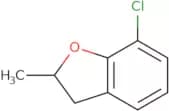
7-Chloro-2-methyl-2,3-dihydro-1-benzofuran
CAS:<p>Versatile small molecule scaffold</p>Fórmula:C9H9ClOPureza:Min. 95%Peso molecular:168.62 g/molImidazo[1,2-a]pyridin-2-ylacetonitrile
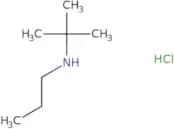
CAS:<p>Versatile small molecule scaffold</p>Fórmula:C9H7N3Pureza:Min. 95%Peso molecular:157.18 g/moltert-Butyl(propyl)amine hydrochloride
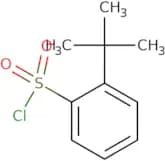
CAS:<p>Versatile small molecule scaffold</p>Fórmula:C7H18ClNPureza:Min. 95%Peso molecular:151.68 g/mol2-tert-Butylbenzene-1-sulfonyl chloride
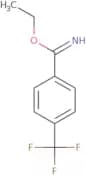
CAS:<p>2-tert-Butylbenzene-1-sulfonyl chloride is a chemical compound with the molecular formula ClCH(C6H5)SO2Cl. It is a colorless to yellowish oily liquid with a strong sulfonate odor. This compound is soluble in water, but poorly soluble in organic solvents and insoluble in most solid materials. Preparation of this compound can be achieved by reacting benzene and tert-butyl chloride in the presence of ethylenediamine, followed by hydrolysis with water solution. The reaction produces chloroacetate as an intermediate product which is then hydrolyzed to 2-tert-butylbenzene-1-sulfonyl chloride using hydrochloric acid. 2-tert-Butylbenzene-1-sulfonyl chloride has been used as an intermediate for preparing other chemicals such as chloroacetic acid, sodium chloroacetate,</p>Fórmula:C10H13ClO2SPureza:Min. 95%Peso molecular:232.73 g/molEthyl 4-(trifluoromethyl)benzene-1-carboximidate
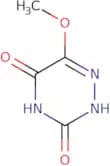
CAS:<p>Versatile small molecule scaffold</p>Fórmula:C10H10F3NOPureza:Min. 95%Peso molecular:217.19 g/mol6-Methoxy-2,3,4,5-tetrahydro-1,2,4-triazine-3,5-dione
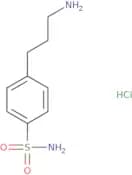
CAS:<p>Versatile small molecule scaffold</p>Fórmula:C4H5N3O3Pureza:Min. 95%Peso molecular:143.1 g/mol4-(3-Aminopropyl)benzene-1-sulfonamide hydrochloride
CAS:<p>Versatile small molecule scaffold</p>Fórmula:C9H15ClN2O2SPureza:Min. 95%Peso molecular:250.75 g/mol4-tert-Butyl-N-[4-(4-tert-butylbenzamido)phenyl]benzamide
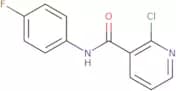
CAS:<p>Versatile small molecule scaffold</p>Fórmula:C28H32N2O2Pureza:Min. 95%Peso molecular:428.6 g/mol2-Chloro-N-(4-fluorophenyl)nicotinamide
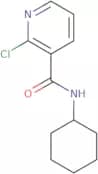
CAS:<p>Versatile small molecule scaffold</p>Fórmula:C12H8ClFN2OPureza:Min. 95%Peso molecular:250.65 g/mol2-Chloro-N-cyclohexylnicotinamide
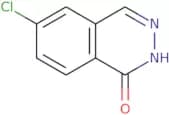
CAS:<p>Versatile small molecule scaffold</p>Fórmula:C12H15ClN2OPureza:Min. 95%Peso molecular:238.71 g/mol6-Chlorophthalazin-1-ol
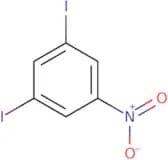
CAS:<p>6-Chlorophthalazin-1-ol is a synthetic organic compound that is used as a medicinal chemical. It has antifungal, anti-inflammatory, and antibacterial properties. 6-Chlorophthalazin-1-ol can be synthesized by the reaction of magnesium with chloroform in the presence of copper, followed by hydrolysis. The synthetic process involves a number of steps and requires a lot of time and effort. The chemical structure contains an ionic bond between the magnesium atom and the chlorine atom. This bond is very strong, which explains its high stability against reactions with other compounds.</p>Fórmula:C8H5ClN2OPureza:Min. 95%Peso molecular:180.59 g/mol1,3-Diiodo-5-nitrobenzene
CAS:<p>1,3-Diiodo-5-nitrobenzene is a congener of 1,2-diaminobenzene. The addition of one iodine atom and one nitro group at the 1 position on the benzene ring enhances the electron density at this site. This leads to an increased rate of electrophilic aromatic substitution reactions by electron deficient reagents such as peroxides. The presence of additives, such as acidic agents or hydrogen peroxide catalysts, also increases the rate of reaction. 1,3-Diiodo-5-nitrobenzene has been shown to react with phenols in a stepwise fashion and can be used in the synthesis of other compounds via reductive amination or nucleophilic addition reactions.</p>Fórmula:C6H3I2NO2Pureza:Min. 95%Peso molecular:374.9 g/mol2-[(Trifluoromethyl)sulfanyl]pyridine
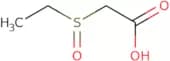
CAS:<p>Versatile small molecule scaffold</p>Fórmula:C6H4F3NSPureza:Min. 95%Peso molecular:179.17 g/mol2-(Ethanesulfinyl)acetic acid
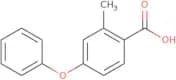
CAS:<p>Versatile small molecule scaffold</p>Fórmula:C4H8O3SPureza:Min. 95%Peso molecular:136.17 g/mol2-Methyl-4-phenoxybenzoic acid
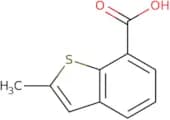
CAS:<p>Versatile small molecule scaffold</p>Fórmula:C14H12O3Pureza:Min. 95%Peso molecular:228.24 g/mol2-Methyl-1-benzothiophene-7-carboxylic acid
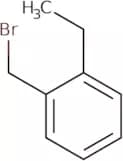
CAS:Versatile small molecule scaffoldFórmula:C10H8O2SPureza:Min. 95%Peso molecular:192.24 g/mol1-(Bromomethyl)-2-ethylbenzene
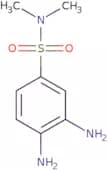
CAS:<p>1-(Bromomethyl)-2-ethylbenzene is a synthetic progestational compound. It has been shown to be a potent progesterone receptor modulator, with selectivity for the progesterone receptor over the estrogen receptor. This compound has been found to have anti-inflammatory and antimicrobial activities, as well as anticancer effects. The chemical structure of 1-(bromomethyl)-2-ethylbenzene is similar to that of natural hormones such as progesterone and 17β-estradiol, which are both steroid hormones.</p>Fórmula:C9H11BrPureza:Min. 95%Peso molecular:199.09 g/mol3,4-Diamino-N,N-dimethylbenzene-1-sulfonamide
CAS:<p>Versatile small molecule scaffold</p>Fórmula:C8H13N3O2SPureza:Min. 95%Peso molecular:215.28 g/mol5-Oxoazelaic acid
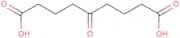
CAS:<p>5-Oxoazelaic acid is a stable organic compound that belongs to the class of organic acids. It is a symmetrical molecule with two carbon atoms and four oxygen atoms. The chemical stability of 5-Oxoazelaic acid is due to the carbonyl group in its structure, which can react with electrophilic compounds such as water, alcohols and amines. 5-Oxoazelaic acid has been shown to be more reactive than a fatty acid because it can lose a hydrogen atom from the carbonyl group when reacting with an electrophile, while fatty acids cannot. 5-Oxoazelaic acid is produced by the oxidation of undecane, which is an anthropogenic product.</p>Fórmula:C9H14O5Pureza:Min. 95%Peso molecular:202.2 g/mol6-Bromohexanamide
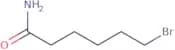
CAS:<p>6-Bromohexanamide is a hydrophobic molecule that has been shown to inhibit the activity of acylases, which are enzymes that catalyze reactions in which an acyl group is transferred from a donor to an acceptor. This compound also inhibits β-lactamase, an enzyme that degrades penicillin and other β-lactam antibiotics. 6-Bromohexanamide binds to serum proteins, but not to nucleophiles such as DNA or RNA. It is also specific for serine residues. 6-Bromohexanamide has been shown to be effective against bacteria such as Staphylococcus aureus and Salmonella enterica.</p>Fórmula:C6H12BrNOPureza:Min. 95%Peso molecular:194.07 g/mol6,7-Dichloro-1H-indole
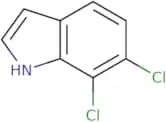
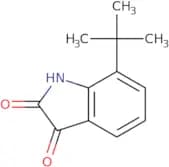
CAS:<p>6,7-Dichloro-1H-indole is a non-steroidal compound that has shown to have pharmacological activity in vivo. It is an acidic compound with a pKa of 4.5 and can be found in venoms such as those of the snake genus Echis and other snakes. 6,7-Dichloro-1H-indole has been shown to inhibit the enzymatic activity of hyaluronidases and acid moieties, which are found in Streptococcus pyogenes and other streptococci. This compound also inhibits the production of toxins from these bacteria and has been shown to damage extracellular matrix proteins in vivo.</p>Fórmula:C8H5NCl2Pureza:Min. 95%Peso molecular:186.03 g/mol7-tert-Butyl-2,3-dihydro-1H-indole-2,3-dione
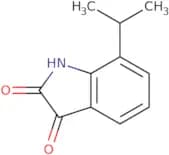
CAS:<p>Versatile small molecule scaffold</p>Fórmula:C12H13NO2Pureza:Min. 95%Peso molecular:203.24 g/mol7-(Propan-2-yl)-2,3-dihydro-1H-indole-2,3-dione
CAS:<p>Versatile small molecule scaffold</p>Fórmula:C11H11NO2Pureza:Min. 95%Peso molecular:189.21 g/mol[4-(Dimethylamino)-2-methylphenyl]phosphinic acid
CAS:<p>D-4-Amino-2-methylphenylphosphinic acid is a drug which is used for implanting. It is an active substance that has been shown to have a diameter of 2.5 mm and can be used in animals. D-4-Amino-2-methylphenylphosphinic acid binds to vitamin B12 and may be effective in humans, but its effect on the pancreas needs to be studied. This active compound has also been shown to stabilize pharmaceutical preparations, such as fatty acids.</p>Fórmula:C9H13NO2PPureza:Min. 95%Peso molecular:198.18 g/mol6-Methyl-2H,8H-[1,3]dioxolo[4,5-G]chromen-8-one
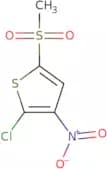
CAS:<p>Versatile small molecule scaffold</p>Fórmula:C11H8O4Pureza:Min. 95%Peso molecular:204.18 g/mol2-Chloro-5-methanesulfonyl-3-nitrothiophene
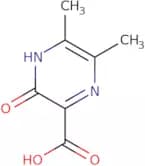
CAS:<p>Versatile small molecule scaffold</p>Fórmula:C5H4ClNO4S2Pureza:Min. 95%Peso molecular:241.7 g/mol5,6-Dimethyl-3-oxo-3,4-dihydropyrazine-2-carboxylic Acid
CAS:<p>Versatile small molecule scaffold</p>Fórmula:C7H8N2O3Pureza:Min. 95%Peso molecular:168.15 g/molN-[(5-Chlorofuran-2-yl)methylidene]hydroxylamine
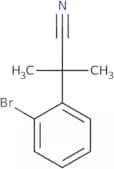
CAS:<p>Versatile small molecule scaffold</p>Fórmula:C5H4ClNO2Pureza:Min. 95%Peso molecular:145.54 g/mol2-(2-Bromophenyl)-2-methylpropanenitrile
CAS:<p>Versatile small molecule scaffold</p>Fórmula:C10H10BrNPureza:Min. 95%Peso molecular:224.1 g/mol5-(Methylsulfanyl)pentan-1-ol
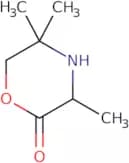
CAS:<p>Versatile small molecule scaffold</p>Fórmula:C6H14OSPureza:Min. 95%Peso molecular:134.24 g/mol3,5,5-Trimethylmorpholin-2-one
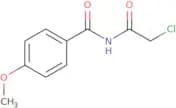
CAS:<p>Versatile small molecule scaffold</p>Fórmula:C7H13NO2Pureza:Min. 95%Peso molecular:143.18 g/molN-(2-Chloroacetyl)-4-methoxybenzamide
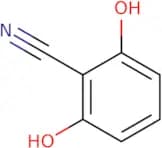
CAS:<p>Versatile small molecule scaffold</p>Fórmula:C10H10ClNO3Pureza:Min. 95%Peso molecular:227.64 g/mol2,6-Dihydroxybenzonitrile
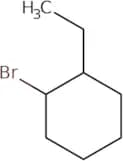
CAS:<p>Versatile small molecule scaffold</p>Fórmula:C7H5NO2Pureza:Min. 95%Peso molecular:135.12 g/mol1-Bromo-2-ethylcyclohexane
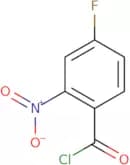
CAS:<p>Versatile small molecule scaffold</p>Fórmula:C8H15BrPureza:Min. 95%Peso molecular:191.11 g/mol4-Fluoro-2-nitrobenzoyl chloride
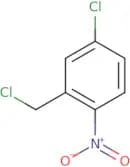
CAS:Versatile small molecule scaffoldFórmula:C7H3ClFNO3Pureza:Min. 95%Peso molecular:203.55 g/mol4-chloro-2-(chloromethyl)-1-nitrobenzene
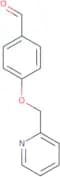
CAS:<p>Versatile small molecule scaffold</p>Fórmula:C7H5Cl2NO2Pureza:Min. 95%Peso molecular:206.02 g/mol4-(Pyridin-2-ylmethoxy)benzaldehyde
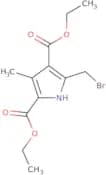
CAS:<p>Versatile small molecule scaffold</p>Fórmula:C13H11NO2Pureza:Min. 95%Peso molecular:213.23 g/mol2,4-Diethyl 5-(bromomethyl)-3-methyl-1H-pyrrole-2,4-dicarboxylate
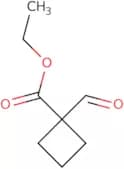
CAS:<p>Versatile small molecule scaffold</p>Fórmula:C12H16BrNO4Pureza:Min. 95%Peso molecular:318.16 g/molEthyl 1-formylcyclobutane-1-carboxylate
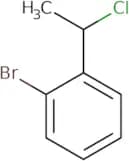
CAS:<p>Versatile small molecule scaffold</p>Fórmula:C8H12O3Pureza:Min. 95%Peso molecular:156.18 g/mol1-Bromo-2-(1-chloroethyl)benzene
CAS:<p>Versatile small molecule scaffold</p>Fórmula:C8H8BrClPureza:Min. 95%Peso molecular:219.5 g/mol1-{6-Methylimidazo[2,1-b][1,3]thiazol-5-yl}ethan-1-one
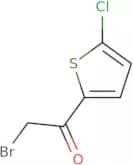
CAS:<p>Versatile small molecule scaffold</p>Fórmula:C8H8N2OSPureza:Min. 95%Peso molecular:180.23 g/mol2-bromo-1-(5-chloro-thiophen-2-yl)-ethanone
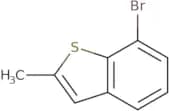
CAS:<p>Versatile small molecule scaffold</p>Fórmula:C6H4BrClOSPureza:Min. 95%Peso molecular:239.52 g/mol7-Bromo-2-methyl-1-benzothiophene
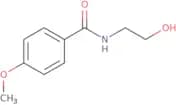
CAS:<p>Versatile small molecule scaffold</p>Fórmula:C9H7BrSPureza:Min. 95%Peso molecular:227.12 g/molN-(2-Hydroxyethyl)-4-methoxybenzamide
CAS:<p>Versatile small molecule scaffold</p>Fórmula:C10H13NO3Pureza:Min. 95%Peso molecular:195.21 g/mol2-[(3-bromophenyl)formamido]acetic acid
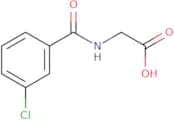
CAS:<p>Versatile small molecule scaffold</p>Fórmula:C9H8BrNO3Pureza:Min. 95%Peso molecular:258.1 g/mol3-Chlorohippuric acid
CAS:<p>3-Chlorohippuric acid is a drug that inhibits the activity of human liver and pancreatic lipase. This compound has been shown to reduce oxidative injury in animal models. 3-Chlorohippuric acid is also used as an antidiabetic agent, which may be due to its ability to inhibit transcriptional regulation in the pancreas. 3-Chlorohippuric acid binds to siderophores, which are iron-binding molecules present in bacteria. The uptake of this drug into bacteria is mediated by siderophores and may be one mechanism for the bactericidal effect of 3-chlorohippurate.</p>Fórmula:C9H8ClNO3Pureza:Min. 95%Peso molecular:213.62 g/mol4H,6H-Furo[3,4-c][1,2]oxazol-6-one
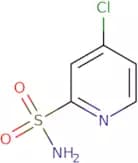
CAS:<p>Versatile small molecule scaffold</p>Fórmula:C5H3NO3Pureza:Min. 95%Peso molecular:125.1 g/mol4-Chloro-2-pyridinesulfonamide
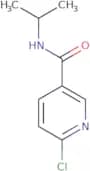
CAS:<p>Versatile small molecule scaffold</p>Fórmula:C5H5ClN2O2SPureza:Min. 95%Peso molecular:192.62 g/mol6-Chloro-N-(propan-2-yl)pyridine-3-carboxamide
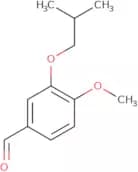
CAS:<p>Versatile small molecule scaffold</p>Fórmula:C9H11ClN2OPureza:Min. 95%Peso molecular:198.65 g/mol4-Methoxy-3-(2-methylpropoxy)benzaldehyde
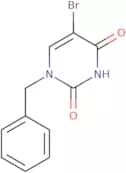
CAS:<p>Versatile small molecule scaffold</p>Fórmula:C12H16O3Pureza:Min. 95%Peso molecular:208.25 g/mol1-Benzyl-5-bromo-1,2,3,4-tetrahydropyrimidine-2,4-dione
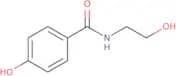
CAS:<p>1-Benzyl-5-bromo-1,2,3,4-tetrahydropyrimidine-2,4-dione is an experimental molecule and has not been studied extensively. It has been shown that this molecule binds to uracil in the cavity of a quadruplex and can form a functional quadruplex. The 1H NMR spectrum of 1-benzyl-5-bromo-1,2,3,4-tetrahydropyrimidine-2,4-dione shows the presence of two peaks at 3.34 and 3.06 ppm corresponding to the protons on the methylene group attached to the nitrogen atom of the pyrimidine ring.</p>Fórmula:C11H9BrN2O2Pureza:Min. 95%Peso molecular:281.1 g/mol4-Hydroxy-N-(2-hydroxyethyl)benzamide
CAS:<p>4-Hydroxy-N-(2-hydroxyethyl)benzamide (4OHEBA) is a natural product that belongs to the class of phenolic compounds. It is found in macroalgae and has been shown to have anti-inflammatory properties, which may be due to its ability to inhibit prostaglandin synthesis. 4OHEBA has also been shown to have chemical diversity and studies show that it can be used in preservative systems.</p>Fórmula:C9H11NO3Pureza:Min. 95%Peso molecular:181.19 g/molcis-hexahydro-1h-furo[3,4-c]pyrrole hcl
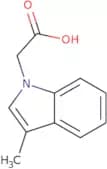
CAS:<p>Versatile small molecule scaffold</p>Fórmula:C6H12ClNOPureza:Min. 95%Peso molecular:149.62 g/mol2-(3-Methyl-1H-indol-1-yl)acetic acid
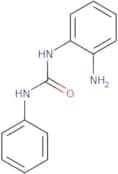
CAS:<p>Versatile small molecule scaffold</p>Fórmula:C11H11NO2Pureza:Min. 95%Peso molecular:189.21 g/mol3-(2-Aminophenyl)-1-phenylurea
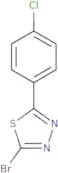
CAS:3-(2-Aminophenyl)-1-phenylurea is a chemical compound that has a phenyl ring and isocyanate group. It has high selectivity for the phenyl isocyanate domain, which provides a selective reactivity to the chain with amino groups. This product can be used as an intermediate in organic synthesis of pharmaceuticals, agrochemicals, and other organic compounds. 3-(2-Aminophenyl)-1-phenylurea can also be used as a reagent for the preparation of polyurethane resins by reacting with isocyanates.Fórmula:C13H13N3OPureza:Min. 95%Forma y color:PowderPeso molecular:227.26 g/mol2-Bromo-5-(4-chlorophenyl)-1,3,4-thiadiazole
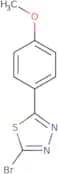
CAS:<p>Versatile small molecule scaffold</p>Fórmula:C8H4BrClN2SPureza:Min. 95%Peso molecular:275.55 g/mol2-Bromo-5-(4-methoxyphenyl)-1,3,4-thiadiazole
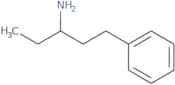
CAS:<p>Versatile small molecule scaffold</p>Fórmula:C9H7BrN2OSPureza:Min. 95%Peso molecular:271.14 g/mol1-Phenylpentan-3-amine
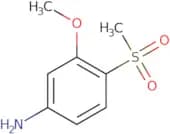
CAS:<p>1-Phenylpentan-3-amine is a primary amino compound that has a phenylalkylamine structure. It is synthesized by reacting benzene with ammonia and hydrogen, or by the reaction of aniline and ethyl acetate. The chemical formula for 1-Phenylpentan-3-amine is C9H12N2. 1-Phenylpentan-3-amine can be used as a precursor to produce other chemicals, such as benzene, benzenes, or amines.</p>Fórmula:C11H17NPureza:Min. 95%Peso molecular:163.26 g/mol4-Methanesulfonyl-3-methoxyaniline
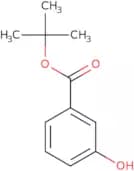
CAS:<p>Versatile small molecule scaffold</p>Fórmula:C8H11NO3SPureza:Min. 95%Peso molecular:201.25 g/moltert-Butyl 3-hydroxybenzoate
CAS:<p>Versatile small molecule scaffold</p>Fórmula:C11H14O3Pureza:Min. 95%Forma y color:PowderPeso molecular:194.23 g/moltert-Butyl 1-pyrazolidinecarboxylate
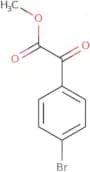
CAS:<p>Tert-butyl 1-pyrazolidinecarboxylate is a synthetic compound that can be used as a building block. It is an inhibitor of the enzyme xanthine oxidase, which catalyses the oxidation of hypoxanthine to xanthine and subsequently to uric acid. Xanthine oxidase inhibitors are used in the treatment of gout and other conditions involving uric acid accumulation. Tert-butyl 1-pyrazolidinecarboxylate has also been shown to inhibit the activity of other enzymes such as phosphodiesterases, proteases, and lipases. The conformational change of tert-butyl 1-pyrazolidinecarboxylate from its tautomeric form to its active form was determined by X-ray crystallography. This compound is a ligand for receptors such as GABA A .</p>Fórmula:C8H16N2O2Pureza:Min. 95%Peso molecular:172.23 g/molMethyl 2-(4-bromophenyl)-2-oxoacetate
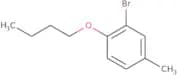
CAS:<p>Versatile small molecule scaffold</p>Fórmula:C9H7BrO3Pureza:Min. 95%Peso molecular:243.06 g/mol2-Bromo-1-butoxy-4-methylbenzene
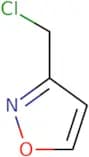
CAS:<p>Versatile small molecule scaffold</p>Fórmula:C11H15BrOPureza:Min. 95%Peso molecular:243.14 g/mol3-(Chloromethyl)isoxazole
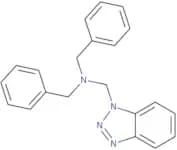
CAS:<p>Versatile small molecule scaffold</p>Fórmula:C4H4ClNOPureza:Min. 95%Peso molecular:117.53 g/mol(1H-1,2,3-Benzotriazol-1-ylmethyl)dibenzylamine
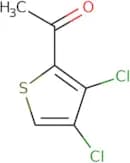
CAS:<p>Versatile small molecule scaffold</p>Fórmula:C21H20N4Pureza:Min. 95%Peso molecular:328.42 g/mol1-(3,4-Dichlorothiophen-2-yl)ethan-1-one
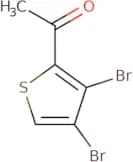
CAS:<p>Versatile small molecule scaffold</p>Fórmula:C6H4Cl2OSPureza:Min. 95%Peso molecular:195.07 g/mol1-(3,4-Dibromo-2-thienyl)-1-ethanone
CAS:<p>Versatile small molecule scaffold</p>Fórmula:C6H4Br2OSPureza:Min. 95%Peso molecular:283.97 g/mol3-Bromo-2-methoxythiophene
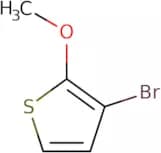
CAS:<p>3-Bromo-2-methoxythiophene is a boron-containing compound that is used as a precursor in organic synthesis. It has been shown to be an effective reagent for the synthesis of esters, boronic acids, and other compounds with various functional groups. 3-Bromo-2-methoxythiophene can be obtained by reacting acetonitrile with dimethyl sulfate in the presence of a base such as potassium carbonate. The reaction yields a mixture of 3-bromo-2-methoxythiophene and methyl 2,3-dibromothiophene. This compound is also available commercially.</p>Fórmula:C5H5BrOSPureza:Min. 95%Peso molecular:193.06 g/molSodium 4-hydroxyundecanoate
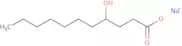
CAS:<p>Versatile small molecule scaffold</p>Fórmula:C11H21NaO3Pureza:Min. 95%Peso molecular:224.27 g/mol1-Methyl-1H-[1,2,3]triazolo[4,5-c]pyridine
CAS:<p>Versatile small molecule scaffold</p>Fórmula:C6H6N4Pureza:Min. 95%Peso molecular:134.14 g/mol3-(Aminomethyl)-N,N-dimethylaniline
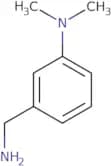
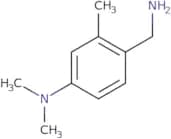
CAS:Versatile small molecule scaffoldFórmula:C9H14N2Pureza:Min. 95%Peso molecular:150.23 g/mol4-(Aminomethyl)-N,N,3-trimethylaniline
CAS:<p>Versatile small molecule scaffold</p>Fórmula:C10H16N2Pureza:Min. 95%Peso molecular:164.25 g/mol2-Chloro-N-{[4-(dimethylamino)phenyl]methyl}acetamide
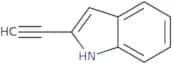
CAS:<p>Versatile small molecule scaffold</p>Fórmula:C11H15ClN2OPureza:Min. 95%Peso molecular:226.7 g/mol2-Ethynyl-1H-indole
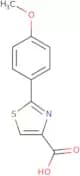
CAS:<p>2-Ethynyl-1H-indole is a synthetic nucleoside analog of the anti-viral drug acyclovir. It is an activated prodrug that is hydrolyzed by esterases to its active form, which inhibits viral polymerase and thus prevents the synthesis of new viral DNA. 2-Ethynyl-1H-indole also has been shown to have inhibitory effects on chronic bronchitis and emphysema, as well as demonstrating cytotoxic activity in vitro. The enantiomers of 2-ethynyl-1H indole have different pharmacological activities. The (R)-enantiomer is more potent than the (S)-enantiomer in inhibiting erythrocyte coagulation and platelet aggregation in vitro.</p>Fórmula:C10H7NPureza:Min. 95%Peso molecular:141.17 g/mol2-(4-Methoxyphenyl)thiazole-4-carboxylic acid
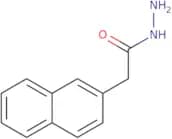
CAS:<p>Versatile small molecule scaffold</p>Fórmula:C11H9NO3SPureza:Min. 95%Peso molecular:235.26 g/mol2-(Naphthalen-2-yl)acetohydrazide
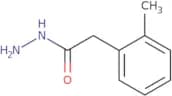
CAS:<p>Versatile small molecule scaffold</p>Fórmula:C12H12N2OPureza:Min. 95%Peso molecular:200.24 g/mol2-(2-Methylphenyl)acetohydrazide
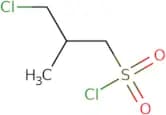
CAS:<p>Versatile small molecule scaffold</p>Fórmula:C9H12N2OPureza:Min. 95%Peso molecular:164.2 g/mol3-Chloro-2-methylpropane-1-sulfonyl chloride
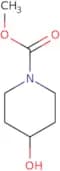
CAS:<p>Versatile small molecule scaffold</p>Fórmula:C4H8Cl2O2SPureza:Min. 95%Peso molecular:191.08 g/molMethyl 4-hydroxypiperidine-1-carboxyl
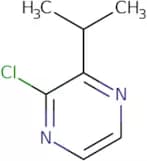
CAS:<p>Versatile small molecule scaffold</p>Fórmula:C7H13NO3Pureza:Min. 95%Peso molecular:159.18 g/mol2-Chloro-3-(propan-2-yl)pyrazine
CAS:<p>Versatile small molecule scaffold</p>Fórmula:C7H9ClN2Pureza:Min. 95%Peso molecular:156.61 g/mol2-[(2,4-Dimethylphenyl)sulfanyl]acetic acid
CAS:<p>Versatile small molecule scaffold</p>Fórmula:C10H12O2SPureza:Min. 95%Peso molecular:196.27 g/molOctahydropyrrolo[1,2-a]pyrimidine
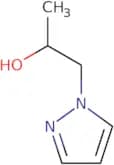
CAS:<p>Octahydropyrrolo[1,2-a]pyrimidine is a cyclic diamine that is catalysed by the enzyme oxidase. In this process, octahydropyrrolo[1,2-a]pyrimidine is oxidized to form the metabolite hexahydropyrimidine. The reaction requires hydrogen peroxide as a co-substrate. Octahydropyrrolo[1,2-a]pyrimidine can also be used as a precursor for spermine and spermidine production. This compound has an aminoaldehyde group at one end of the molecule and a cyclopentane ring at the other end. It can be synthesized from diamines and cyclopentane derivatives in two steps involving dehydrogenation followed by oxidation.</p>Fórmula:C7H14N2Pureza:Min. 95%Peso molecular:126.2 g/mol1-(1H-Pyrazol-1-yl)propan-2-ol
CAS:<p>Versatile small molecule scaffold</p>Fórmula:C6H10N2OPureza:Min. 95%Peso molecular:126.16 g/mol(2R)-4-Methylpentan-2-amine hydrochloride
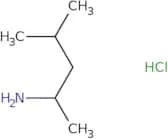
CAS:Producto controlado<p>Versatile small molecule scaffold</p>Fórmula:C6H16ClNPureza:Min. 95%Peso molecular:137.65 g/mol1-Methoxycyclohexane-1-carboxylic acid
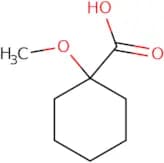
CAS:<p>1-Methoxycyclohexane-1-carboxylic acid is a potent histone deacetylase (HDAC) inhibitor. It binds to the catalytic site of HDACs and prevents them from removing acetyl groups from lysine residues on histones, which are proteins that are important for gene expression. 1-Methoxycyclohexane-1-carboxylic acid has been shown to inhibit the proliferation of recombinant cells and chronic bronchitis in animals. This compound may also be effective against other inflammatory diseases as it inhibits prostaglandin synthesis by inhibiting cyclooxygenases and nitric oxide synthases.</p>Fórmula:C8H14O3Pureza:Min. 95%Peso molecular:158.19 g/mol(((2-Methylbut-3-yn-2-yl)oxy)methyl)benzene
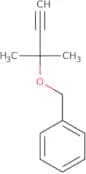
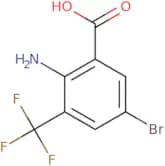
CAS:<p>Versatile small molecule scaffold</p>Fórmula:C12H14OPureza:Min. 95%Peso molecular:174.24 g/mol2-Amino-5-bromo-3-(trifluoromethyl)benzoic acid
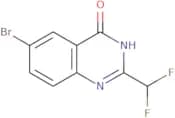
CAS:<p>Versatile small molecule scaffold</p>Fórmula:C8H5NO2F3BrPureza:Min. 95%Peso molecular:284.03 g/mol6-Bromo-2-(difluoromethyl)-3,4-dihydroquinazolin-4-one
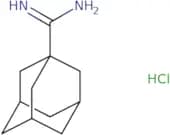
CAS:<p>Versatile small molecule scaffold</p>Fórmula:C9H5BrF2N2OPureza:Min. 95%Peso molecular:275.05 g/molAdamantane-1-carboxamidine hydrochloride
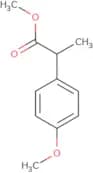
CAS:<p>Versatile small molecule scaffold</p>Fórmula:C11H19ClN2Pureza:Min. 95%Peso molecular:214.73 g/molMethyl 2-(4-methoxyphenyl)propanoate
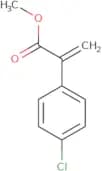
CAS:<p>Versatile small molecule scaffold</p>Fórmula:C11H14O3Pureza:Min. 95%Peso molecular:194.23 g/molMethyl 2-(4-chlorophenyl)prop-2-enoate
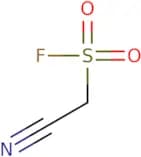
CAS:<p>Versatile small molecule scaffold</p>Fórmula:C10H9ClO2Pureza:Min. 95%Peso molecular:196.63 g/molCyanomethanesulfonyl fluoride
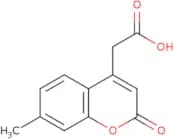
CAS:<p>Versatile small molecule scaffold</p>Fórmula:C2H2FNO2SPureza:Min. 95%Peso molecular:123.11 g/mol(7-Methyl-2-oxo-2H-chromen-4-yl)acetic acid
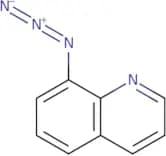
CAS:<p>(7-Methyl-2-oxo-2H-chromen-4-yl)acetic acid is a coumarin derivative that is used as a fluorescent probe to study the interaction of electron donors and acceptors. This compound has been shown to have photophysical properties, such as fluorescence and photoinduced electron transfer, which can be modulated by the presence of electron donors, such as piperidine or styryl. (7-Methyl-2-oxo-2H-chromen-4-yl)acetic acid belongs to the group of ethylenic compounds with moieties that are similar to those found in coumarin and phenothiazine.</p>Fórmula:C12H10O4Pureza:Min. 95%Peso molecular:218.21 g/mol8-Azidoquinoline
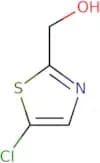
CAS:<p>8-Azidoquinoline is a chemical compound that belongs to the class of x-ray crystal structures. It has been shown to have cytotoxic effects on kidney cells in culture. 8-Azidoquinoline can be used as a precursor for the synthesis of other derivatives that are useful in cancer research, such as 8-azidopurine and 8-azidoadenosine. This chemical can also be used for cross-coupling reactions with amines, which isomerizes the ring and opens it for further reactions. The isomers of this molecule are formed by the replacement of one or more hydrogen atoms with an azide group.</p>Fórmula:C9H6N4Pureza:Min. 95%Peso molecular:170.17 g/mol(5-Chloro-1,3-thiazol-2-yl)methanol
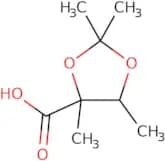
CAS:<p>Versatile small molecule scaffold</p>Fórmula:C4H4NOSClPureza:Min. 95%Peso molecular:149.59 g/mol2,2,4,5-Tetramethyl-1,3-dioxolane-4-carboxylic acid
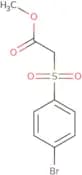
CAS:<p>Versatile small molecule scaffold</p>Fórmula:C8H14O4Pureza:Min. 95%Peso molecular:174.19 g/molMethyl 2-(4-bromobenzenesulfonyl)acetate
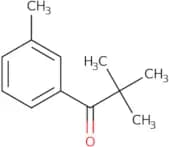
CAS:<p>Versatile small molecule scaffold</p>Fórmula:C9H9BrO4SPureza:Min. 95%Peso molecular:293.14 g/mol2,2-Dimethyl-1-m-tolylpropan-1-one
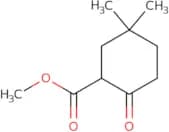
CAS:<p>Versatile small molecule scaffold</p>Fórmula:C12H16OPureza:Min. 95%Peso molecular:176.26 g/molMethyl 5,5-Dimethyl-2-oxocyclohexanecarboxylate
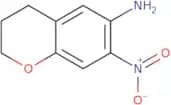
CAS:Versatile small molecule scaffoldFórmula:C10H16O3Pureza:Min. 95%Peso molecular:184.23 g/mol7-Nitro-3,4-dihydro-2H-chromen-6-ylamine
CAS:<p>Versatile small molecule scaffold</p>Fórmula:C9H10N2O3Pureza:Min. 95%Peso molecular:194.19 g/mol

![Imidazo[1,2-a]pyridin-2-ylacetonitrile](/_next/image/?url=https%3A%2Fstatic.cymitquimica.com%2Fproducts%2F3D%2Fthumb-webp%2FHCA89277.webp&w=3840&q=75)
![4-tert-Butyl-N-[4-(4-tert-butylbenzamido)phenyl]benzamide](/_next/image/?url=https%3A%2Fstatic.cymitquimica.com%2Fproducts%2F3D%2Fthumb-webp%2FHCA84441.webp&w=3840&q=75)
![2-[(Trifluoromethyl)sulfanyl]pyridine](/_next/image/?url=https%3A%2Fstatic.cymitquimica.com%2Fproducts%2F3D%2Fthumb-webp%2FHCA83049.webp&w=3840&q=75)
![[4-(Dimethylamino)-2-methylphenyl]phosphinic acid](/_next/image/?url=https%3A%2Fstatic.cymitquimica.com%2Fproducts%2F3D%2Fthumb-webp%2FHCA80864.webp&w=3840&q=75)
![6-Methyl-2H,8H-[1,3]dioxolo[4,5-G]chromen-8-one](/_next/image/?url=https%3A%2Fstatic.cymitquimica.com%2Fproducts%2F3D%2Fthumb-webp%2FHCA80314.webp&w=3840&q=75)
![N-[(5-Chlorofuran-2-yl)methylidene]hydroxylamine](/_next/image/?url=https%3A%2Fstatic.cymitquimica.com%2Fproducts%2F3D%2Fthumb-webp%2FHCA78459.webp&w=3840&q=75)

![1-{6-Methylimidazo[2,1-b][1,3]thiazol-5-yl}ethan-1-one](/_next/image/?url=https%3A%2Fstatic.cymitquimica.com%2Fproducts%2F3D%2Fthumb-webp%2FHCA73811.webp&w=3840&q=75)
![2-[(3-bromophenyl)formamido]acetic acid](/_next/image/?url=https%3A%2Fstatic.cymitquimica.com%2Fproducts%2F3D%2Fthumb-webp%2FHCA72860.webp&w=3840&q=75)
![4H,6H-Furo[3,4-c][1,2]oxazol-6-one](/_next/image/?url=https%3A%2Fstatic.cymitquimica.com%2Fproducts%2F3D%2Fthumb-webp%2FHCA72815.webp&w=3840&q=75)
![cis-hexahydro-1h-furo[3,4-c]pyrrole hcl](/_next/image/?url=https%3A%2Fstatic.cymitquimica.com%2Fproducts%2F3D%2Fthumb-webp%2FHCA71036.webp&w=3840&q=75)

![1-Methyl-1H-[1,2,3]triazolo[4,5-c]pyridine](/_next/image/?url=https%3A%2Fstatic.cymitquimica.com%2Fproducts%2F3D%2Fthumb-webp%2FHCA68052.webp&w=3840&q=75)
![2-Chloro-N-{[4-(dimethylamino)phenyl]methyl}acetamide](/_next/image/?url=https%3A%2Fstatic.cymitquimica.com%2Fproducts%2F3D%2Fthumb-webp%2FHCA67838.webp&w=3840&q=75)
![2-[(2,4-Dimethylphenyl)sulfanyl]acetic acid](/_next/image/?url=https%3A%2Fstatic.cymitquimica.com%2Fproducts%2F3D%2Fthumb-webp%2FADA24312.webp&w=3840&q=75)
![Octahydropyrrolo[1,2-a]pyrimidine](/_next/image/?url=https%3A%2Fstatic.cymitquimica.com%2Fproducts%2F3D%2Fthumb-webp%2FHCA67223.webp&w=3840&q=75)