


Building Blocks
Esta sección contiene productos fundamentales para la síntesis de compuestos orgánicos y biológicos. Building blocks son los materiales de partida esenciales utilizados para construir moléculas complejas a través de diversas reacciones químicas. Desempeñan un papel crítico en el descubrimiento de fármacos, la ciencia de materiales y la investigación química. En CymitQuimica, ofrecemos una gama diversa de building blocks de alta calidad para apoyar sus investigaciones innovadoras y proyectos industriales, asegurando que tenga los componentes esenciales para una síntesis exitosa.
Subcategorías de "Building Blocks"
- Ácidos borónicos y derivados del ácido borónico(5.756 productos)
- Building Blocks quirales(1.242 productos)
- Building Blocks de hidrocarburos(6.095 productos)
- Building Blocks orgánicos(61.055 productos)
Se han encontrado 199650 productos de "Building Blocks"
Ordenar por
Pureza (%)
0
100
|
0
|
50
|
90
|
95
|
100
[2-Fluoro-5-(pyridin-3-yl)phenyl]methanol
CAS:<p>Versatile small molecule scaffold</p>Fórmula:C12H10FNOPureza:Min. 95%Peso molecular:203.21 g/mol2-(3-Bromo-4-(trifluoromethyl)phenyl)acetic acid
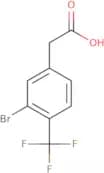
CAS:<p>Versatile small molecule scaffold</p>Fórmula:C9H6BrF3O2Pureza:Min. 95%Peso molecular:283.04 g/molSIRT6-IN-1
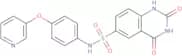
CAS:<p>Versatile small molecule scaffold</p>Fórmula:C19H14N4O5SPureza:Min. 95%Peso molecular:410.4 g/molN-[(Pyridin-2-yl)methyl]piperidin-4-amine trihydrochloride
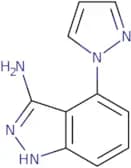
CAS:<p>Versatile small molecule scaffold</p>Fórmula:C11H20Cl3N3Pureza:Min. 95%Peso molecular:300.7 g/mol4-(1H-Pyrazol-1-yl)-1H-indazol-3-amine
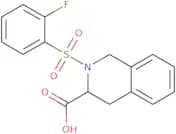
CAS:<p>Versatile small molecule scaffold</p>Fórmula:C10H9N5Pureza:Min. 95%Peso molecular:199.21 g/mol(3S)-2-(2-Fluorobenzenesulfonyl)-1,2,3,4-tetrahydroisoquinoline-3-carboxylic acid
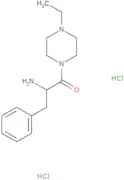
CAS:<p>Versatile small molecule scaffold</p>Fórmula:C16H14FNO4SPureza:Min. 95%Peso molecular:335.4 g/mol2-Amino-1-(4-ethylpiperazin-1-yl)-3-phenylpropan-1-one dihydrochloride
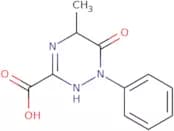
CAS:<p>Versatile small molecule scaffold</p>Fórmula:C15H25Cl2N3OPureza:Min. 95%Peso molecular:334.3 g/mol5-Methyl-6-oxo-1-phenyl-1,4,5,6-tetrahydro-1,2,4-triazine-3-carboxylic acid
CAS:Producto controlado<p>5-Methyl-6-oxo-1-phenyl-1,4,5,6-tetrahydro-1,2,4-triazine-3-carboxylic acid is a research tool that is an activator of ion channels. It can be used to study the gating mechanism of potassium channels and calcium channels. This compound has been shown to inhibit the activity of protein kinase C in cells and tissues. 5-Methyl-6-oxo-1-phenyl-1,4,5,6-tetrahydro-1,2,4--triazine 3 carboxylic acid has been used to identify new ligands for receptors such as the GABA receptor and serotonin receptor. This compound can also be used as a pharmacological agent for peptides and drugs.</p>Fórmula:C11H11N3O3Pureza:Min. 95%Peso molecular:233.22 g/molBenzyl N-[1-oxo-1-(3-oxopiperazin-1-yl)propan-2-yl]carbamate
CAS:Versatile small molecule scaffoldFórmula:C15H19N3O4Pureza:Min. 95%Peso molecular:305.33 g/mol2-[(2-Cyclopropyl-3-oxo-2,3-dihydro-1H-isoindol-1-yl)formamido]acetic acid
CAS:<p>Versatile small molecule scaffold</p>Fórmula:C14H14N2O4Pureza:Min. 95%Peso molecular:274.27 g/mol5-Oxo-2,3,5,9b-tetrahydro[1,3]thiazolo[2,3-a]isoindole-3-carboxylic acid 1-oxide
CAS:<p>Versatile small molecule scaffold</p>Fórmula:C11H9NO4SPureza:Min. 95%Peso molecular:251.26 g/mol2-[(2-Benzyl-3-oxo-2,3-dihydro-1H-isoindol-1-yl)formamido]acetic acid
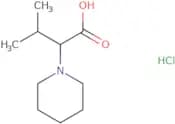
CAS:<p>Versatile small molecule scaffold</p>Fórmula:C18H16N2O4Pureza:Min. 95%Peso molecular:324.3 g/mol3-Methyl-2-(piperidin-1-yl)butanoic acid hydrochloride
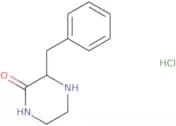
CAS:<p>Versatile small molecule scaffold</p>Fórmula:C10H20ClNO2Pureza:Min. 95%Peso molecular:221.72 g/mol3-Benzylpiperazin-2-one hydrochloride
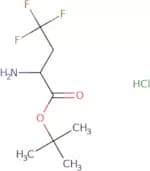
CAS:<p>Versatile small molecule scaffold</p>Fórmula:C11H15ClN2OPureza:Min. 95%Peso molecular:226.7 g/moltert-Butyl 2-amino-4,4,4-trifluorobutanoate hydrochloride
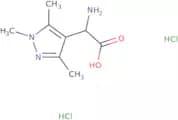
CAS:<p>Versatile small molecule scaffold</p>Fórmula:C8H15ClF3NO2Pureza:Min. 95%Peso molecular:249.66 g/mol2-Amino-2-(trimethyl-1H-pyrazol-4-yl)acetic acid dihydrochloride
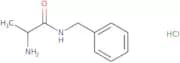
CAS:<p>Versatile small molecule scaffold</p>Fórmula:C8H15Cl2N3O2Pureza:Min. 95%Peso molecular:256.13 g/mol2-Amino-N-benzylpropanamide hydrochloride
CAS:<p>Versatile small molecule scaffold</p>Fórmula:C10H15ClN2OPureza:Min. 95%Peso molecular:214.7 g/mol2-[2-(Aminomethyl)phenoxy]ethan-1-ol hydrochloride
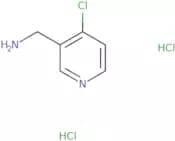
CAS:<p>Versatile small molecule scaffold</p>Fórmula:C9H14ClNO2Pureza:Min. 95%Peso molecular:203.7 g/mol1-(4-Chloropyridin-3-yl)methanamine dihydrochloride
CAS:<p>Versatile small molecule scaffold</p>Fórmula:C6H9Cl3N2Pureza:Min. 95%Peso molecular:215.5 g/mol3-[3-Methyl-4-(trifluoromethyl)phenyl]prop-2-enoic acid
CAS:<p>Versatile small molecule scaffold</p>Fórmula:C11H9F3O2Pureza:Min. 95%Peso molecular:230.18 g/mol(2E)-3-[2-Methyl-4-(trifluoromethyl)phenyl]prop-2-enoic acid
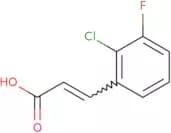
CAS:<p>Versatile small molecule scaffold</p>Fórmula:C11H9F3O2Pureza:Min. 95%Peso molecular:230.18 g/mol(2E)-3-(2-Chloro-3-fluorophenyl)prop-2-enoic acid
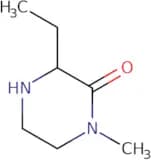
CAS:<p>Versatile small molecule scaffold</p>Fórmula:C9H6ClFO2Pureza:Min. 95%Peso molecular:200.59 g/mol3-Ethyl-1-methylpiperazin-2-one
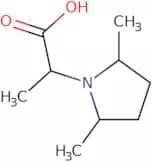
CAS:<p>Versatile small molecule scaffold</p>Fórmula:C7H14N2OPureza:Min. 95%Peso molecular:142.2 g/mol2-(2,5-Dimethylpyrrolidin-1-yl)propanoic acid
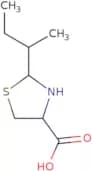
CAS:<p>Versatile small molecule scaffold</p>Fórmula:C9H17NO2Pureza:Min. 95%Peso molecular:171.24 g/mol2-(Butan-2-yl)-1,3-thiazolidine-4-carboxylic acid
CAS:<p>Versatile small molecule scaffold</p>Fórmula:C8H15NO2SPureza:Min. 95%Peso molecular:189.28 g/mol2-[1-(4-Fluorophenyl)-2,5-dioxoimidazolidin-4-yl]acetic acid
CAS:<p>Versatile small molecule scaffold</p>Fórmula:C11H9FN2O4Pureza:Min. 95%Peso molecular:252.2 g/mol6-oxa-2-azaspiro[3.5]nonane
CAS:<p>Versatile small molecule scaffold</p>Fórmula:C7H13NOPureza:Min. 95%Peso molecular:127.2 g/mol7-Oxa-1-azaspiro[3.6]decane
CAS:<p>Versatile small molecule scaffold</p>Fórmula:C8H15NOPureza:Min. 95%Peso molecular:141.21 g/mol6-Bromo-N-methyl-1H-benzo[D]imidazol-2-amine
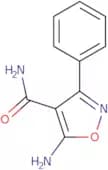
CAS:Versatile small molecule scaffoldFórmula:C8H8BrN3Pureza:Min. 95%Peso molecular:226.07 g/mol5-Amino-3-phenyl-1,2-oxazole-4-carboxamide
CAS:<p>5-Amino-3-phenyl-1,2-oxazole-4-carboxamide (5APOC) is a mitochondria membrane permeable compound that inhibits the growth of cancer cells. 5APOC binds to annexin v, which is a protein found in the outer cell membrane. The binding causes depolarization of the mitochondrial membrane and induces apoptosis. 5APOC also inhibits the growth of colon cancer cells by inhibiting the activity of cytotoxic agents and inducing apoptosis. This drug has been shown to be effective against human colon cancer cells in vitro and in vivo.</p>Fórmula:C10H9N3O2Pureza:Min. 95%Peso molecular:203.2 g/mol2-Cyclopropylglycine
CAS:<p>2-Cyclopropylglycine is a cyclic amino acid that is synthesized from threonine. It is an important intermediate in the biosynthesis of the aminoacyl-tRNA synthetases. The synthesis of 2-cyclopropylglycine begins with the conversion of threonine to homoserine by a series of reactions called the threonine deaminase pathway. Homoserine is converted to 3-hydroxy-2-methylvaleric acid by hydroxymethylglutaryl-CoA synthase and then to 2-cyclopropylglycine by cyclopropane carboxylic acid reductase, which reduces it to 2-cyclopropylmalonic acid, which is then converted to 2-cyclopropylglycine. This compound binds borohydride and forms an unstable complex with phenolic compounds. The affinity for these substrates depends on the pyrroline ring structure, with</p>Fórmula:C5H9NO2Pureza:Min. 95%Peso molecular:115.13 g/mol3-Cyclopropylalanine
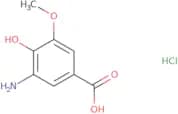
CAS:<p>3-Cyclopropylalanine (3-CPA) is a synthetic amino acid that is used as an enzyme inhibitor for the treatment of metabolic disorders and cancer. 3-CPA inhibits the activity of ns3 protease, which is involved in the production of malonic acid from succinate. The hydrogenated form of 3-CPA has been shown to inhibit protease activity, especially in diagnostic agents. 3-CPA can also be used as a catalyst for chemical reactions and when synthesized as a stable complex with enantiomers, it can be used as a diagnostic agent.</p>Fórmula:C6H11NO2Pureza:Min. 95%Peso molecular:129.16 g/mol3-Amino-4-hydroxy-5-methoxy-benzoic acid, hydrochloride
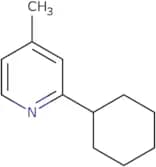
CAS:<p>Versatile small molecule scaffold</p>Fórmula:C8H10ClNO4Pureza:Min. 95%Peso molecular:219.62 g/mol2-Cyclohexyl-4-methylpyridine
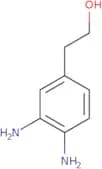
CAS:<p>Versatile small molecule scaffold</p>Fórmula:C12H17NPureza:Min. 95%Peso molecular:175.27 g/mol2-(3,4-Diaminophenyl)ethan-1-ol
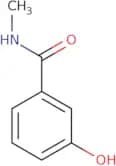
CAS:<p>Versatile small molecule scaffold</p>Fórmula:C8H12N2OPureza:Min. 95%Peso molecular:152.19 g/mol3-Hydroxy-N-methylbenzamide
CAS:<p>Versatile small molecule scaffold</p>Fórmula:C8H9NO2Pureza:Min. 95%Peso molecular:151.16 g/molN-Ethyl-3-hydroxybenzamide
CAS:<p>Versatile small molecule scaffold</p>Fórmula:C9H11NO2Pureza:Min. 95%Peso molecular:165.19 g/mol3-Hydroxy-N-(2-hydroxyethyl)benzamide
CAS:<p>Versatile small molecule scaffold</p>Fórmula:C9H11NO3Pureza:Min. 95%Peso molecular:181.19 g/mol3-Hydroxy-N,N-dimethylbenzamide
CAS:<p>Versatile small molecule scaffold</p>Fórmula:C9H11NO2Pureza:Min. 95%Peso molecular:165.19 g/molN,N-Diethyl-3-hydroxybenzamide
CAS:<p>Versatile small molecule scaffold</p>Fórmula:C11H15NO2Pureza:Min. 95%Peso molecular:193.24 g/mol3-[(Morpholin-4-yl)carbonyl]phenol
CAS:<p>Versatile small molecule scaffold</p>Fórmula:C11H13NO3Pureza:Min. 95%Peso molecular:207.23 g/mol4,6-Dichloro-1,2-dihydro-1,3,5-triazin-2-one
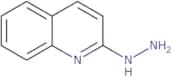
CAS:<p>Versatile small molecule scaffold</p>Fórmula:C3HCl2N3OPureza:Min. 95%Peso molecular:165.96 g/mol2-Hydrazinoquinoline
CAS:<p>2-Hydrazinoquinoline is a metal chelate that can be used as an analytical method to detect the presence of metals in urine samples. It is also used for the detection of methyl ethyl trifluoroacetic acid and other organic compounds. 2-Hydrazinoquinoline reacts with metal ions to form metal complexes, which are detected by spectroscopy or x-ray diffraction data. The reaction mechanism is not well understood, but it has been shown that reactive intermediates are involved.</p>Fórmula:C9H9N3Pureza:Min. 95%Peso molecular:159.19 g/mol2-(Acetyloxy)-2-methylpropanoic acid
CAS:<p>Versatile small molecule scaffold</p>Fórmula:C6H10O4Pureza:Min. 95%Peso molecular:146.14 g/molSpiro[2.5]octan-6-one
CAS:<p>Spiro[2.5]octan-6-one is a cyclopropanated biphenylene that reacts with diazomethane to form the chloride, resulting in an electron-rich spiro compound. The chloride is converted to the corresponding electron-deficient biphenylene by treatment with lead tetraacetate and cyclopropanes. The resulting biphenylenes can be reacted with an excess of cyclohexane in the presence of a catalytic amount of oriented Ni(0) to form the vinylcyclopropanes. This reaction can be used for the synthesis of dimers by reacting two vinylcyclopropanes together.</p>Fórmula:C8H12OPureza:Min. 95%Forma y color:Clear LiquidPeso molecular:124.18 g/mol2-(2,4-Dimethylbenzoyl)furan
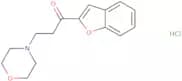
CAS:<p>Versatile small molecule scaffold</p>Fórmula:C13H12O2Pureza:Min. 95%Peso molecular:200.23 g/mol1-(1-Benzofuran-2-yl)-3-(morpholin-4-yl)propan-1-one hydrochloride
CAS:Versatile small molecule scaffoldFórmula:C15H18ClNO3Pureza:Min. 95%Peso molecular:295.76 g/molN-[(4-Methylphenyl)methyl]aniline
CAS:<p>Versatile small molecule scaffold</p>Fórmula:C14H15NPureza:Min. 95%Peso molecular:197.27 g/mol1-Acetylpiperidine-3-carboxamide
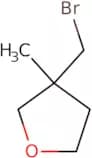
CAS:<p>Versatile small molecule scaffold</p>Fórmula:C8H14N2O2Pureza:Min. 95%Peso molecular:170.21 g/mol3-(Bromomethyl)-3-methyloxolane
CAS:Versatile small molecule scaffoldFórmula:C6H11BrOPureza:Min. 95%Peso molecular:179.05 g/mol3,3-Dimethylbutane-1,2,4-triol
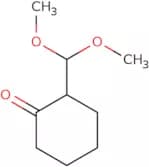
CAS:<p>3,3-Dimethylbutane-1,2,4-triol is a triol that is used as an intermediate in the synthesis of polyvinyl chloride. It is also a plasticizer and an intermediate for the production of neopentyl glycol. 3,3-Dimethylbutane-1,2,4-triol can be hydrogenated to form 1,2-dimethoxyethane at temperatures ranging from 40° C to 100° C and pressures ranging from atmospheric pressure to 100 psi. This compound can also be chlorinated to form 1,2-dichloroethane under catalytic conditions at temperatures ranging from 50° C to 120°C and pressures ranging from atmospheric pressure to 5 psi. 3,3-Dimethylbutane-1,2,4-triol can also be solvolyzed with solvents such as ethanol or diethylether under pressures up to 200 psi.</p>Fórmula:C6H14O3Pureza:Min. 95%Peso molecular:134.17 g/mol2-(Dimethoxymethyl)cyclohexan-1-one
CAS:<p>2-(Dimethoxymethyl)cyclohexan-1-one is a cyclohexanone derivative that has the axial geometry. It is an isomer of 2-(dimethoxy)methylcyclohexanone, which has the same chemical formula and molecular weight but a different geometry (planar). The two compounds have similar spectra, with the exception that 2-(dimethoxymethyl)cyclohexan-1-one has a single proton resonance at δ = 4.71 ppm, whereas 2-(dimethoxy)methylcyclohexanone has two proton resonances at δ = 4.71 ppm and δ = 3.07 ppm. The presence of this single resonance suggests that the molecule is in the axial conformation.</p>Fórmula:C9H16O3Pureza:Min. 95%Peso molecular:172.22 g/mol2-(Dimethoxymethyl)cyclopentan-1-one
CAS:<p>Versatile small molecule scaffold</p>Fórmula:C8H14O3Pureza:Min. 95%Peso molecular:158.19 g/molEthyl 2-(cyclopent-2-en-1-yl)acetate
CAS:Versatile small molecule scaffoldFórmula:C9H14O2Pureza:Min. 95%Peso molecular:154.21 g/mol3-[3-(4-Methoxyphenyl)oxirane-2-carbonyl]-1H-indole
CAS:<p>Versatile small molecule scaffold</p>Fórmula:C18H15NO3Pureza:Min. 95%Peso molecular:293.3 g/mol4-(4-Propoxyphenyl)-1,3-thiazol-2-amine
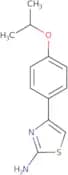
CAS:<p>Versatile small molecule scaffold</p>Fórmula:C12H14N2OSPureza:Min. 95%Peso molecular:234.32 g/mol4-(4-Isopropoxy-phenyl)-thiazol-2-ylamine
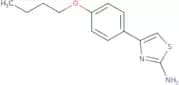
CAS:<p>Versatile small molecule scaffold</p>Fórmula:C12H14N2OSPureza:Min. 95%Peso molecular:234.32 g/mol4-(4-Butoxyphenyl)-1,3-thiazol-2-amine
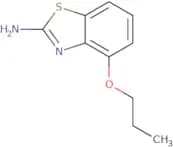
CAS:<p>Versatile small molecule scaffold</p>Fórmula:C13H16N2OSPureza:Min. 95%Peso molecular:248.35 g/mol4-Propoxy-1,3-benzothiazol-2-amine
CAS:<p>Versatile small molecule scaffold</p>Fórmula:C10H12N2OSPureza:Min. 95%Peso molecular:208.28 g/molBenzyl[2-(diethylamino)ethyl]amine
CAS:<p>Versatile small molecule scaffold</p>Fórmula:C13H22N2Pureza:Min. 95%Peso molecular:206.33 g/mol3,4-dihydro-2H-1-benzothiopyran-4-amine hydrochloride
CAS:<p>Versatile small molecule scaffold</p>Fórmula:C9H11NS·HClPureza:Min. 95%Peso molecular:201.71 g/mol5-Bromo-2,3-dihydro-1H-indole hydrochloride
CAS:<p>5-Bromo-2,3-dihydro-1H-indole hydrochloride is an indoline that is used in the transformation of compounds. It is a precursor to other compounds such as 2,3-dichloroindole and 5-bromoindole.</p>Fórmula:C8H9BrClNPureza:Min. 95%Peso molecular:234.52 g/molIndoline-6-carbonitrile hydrochloride
CAS:<p>Versatile small molecule scaffold</p>Fórmula:C9H9ClN2Pureza:Min. 95%Peso molecular:180.63 g/mol2,3-Dihydro-1H-indole-7-carboxylic acid
CAS:<p>Versatile small molecule scaffold</p>Fórmula:C9H9NO2Pureza:Min. 95%Peso molecular:163.17 g/mol5-Amino-3-bromo-1-methyl-1,2-dihydropyridin-2-one
CAS:<p>Versatile small molecule scaffold</p>Fórmula:C6H7BrN2OPureza:Min. 95%Peso molecular:203.04 g/mol1-Oxo-1H-isochromene-4-carboxylic acid
CAS:<p>Versatile small molecule scaffold</p>Fórmula:C10H6O4Pureza:Min. 95%Peso molecular:190.15 g/molN-(1,3-Thiazol-4-ylmethyl)aniline
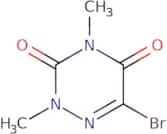
CAS:<p>Versatile small molecule scaffold</p>Fórmula:C10H10N2SPureza:Min. 95%Peso molecular:190.27 g/mol6-Bromo-2,4-dimethyl-2,3,4,5-tetrahydro-1,2,4-triazine-3,5-dione
CAS:<p>Versatile small molecule scaffold</p>Fórmula:C5H6BrN3O2Pureza:Min. 95%Peso molecular:220.02 g/mol7,7,9,9-Tetramethyl-1,3,8-triazaspiro[4.5]decane-2,4-dione
CAS:<p>Versatile small molecule scaffold</p>Fórmula:C11H19N3O2Pureza:Min. 95%Peso molecular:225.29 g/mol6-(Benzylamino)pyridine-3-carbonitrile
CAS:<p>Versatile small molecule scaffold</p>Fórmula:C13H11N3Pureza:Min. 95%Peso molecular:209.25 g/mol2-(2,4,6-Trimethoxyphenyl)ethan-1-amine
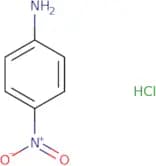
CAS:Producto controlado<p>Versatile small molecule scaffold</p>Fórmula:C11H17NO3Pureza:Min. 95%Peso molecular:211.26 g/mol4-Nitroaniline Hydrochloride
CAS:<p>4-Nitroaniline Hydrochloride is a synthetic substrate that has been shown to inhibit the serine protease activity of human neutrophils. It is a potent inhibitor of the inflammatory response in k562 cells and is also an inhibitor of hydrolysis reactions catalyzed by p-hydroxybenzoic acid. The inhibition of these enzymes may be due to a kinetic or chemical reaction with hydrogen chloride, which acts as a catalyst. 4-Nitroaniline Hydrochloride has not been tested in clinical trials, but it has been shown to have an inhibitory effect on inflammatory diseases in animal models.</p>Fórmula:C6H6N2O2·HClPureza:Min. 95%Peso molecular:174.58 g/mol2-Hydroxy-3-methyl-2-phenylbutanoic acid
CAS:<p>Versatile small molecule scaffold</p>Fórmula:C11H14O3Pureza:Min. 95%Peso molecular:194.23 g/mol5-(2-Methoxy-ethyl)-[1,3,4]thiadiazol-2-ylamine
CAS:<p>Versatile small molecule scaffold</p>Fórmula:C5H9N3OSPureza:Min. 95%Peso molecular:159.21 g/mol1-Chloro-4-{[(chloromethyl)sulfanyl]methyl}benzene
CAS:<p>Versatile small molecule scaffold</p>Fórmula:C8H8Cl2SPureza:Min. 95%Peso molecular:207.12 g/molSodium 3-methylbenzene-1-sulfinate
CAS:<p>Versatile small molecule scaffold</p>Fórmula:C7H7NaO2SPureza:Min. 95%Peso molecular:178.19 g/mol1-Bromo-5,5-dimethylhexane
CAS:<p>Versatile small molecule scaffold</p>Fórmula:C8H17BrPureza:Min. 95%Peso molecular:193.12 g/mol6,6-Dimethylheptanoic acid
CAS:<p>6,6-Dimethylheptanoic acid is a polybasic fatty acid that is used as an antifungal agent. It has been shown to inhibit the growth of various yeast and fungi in laboratory studies. 6,6-Dimethylheptanoic acid has also been shown to have anticancer properties due to its ability to cause tumor cell apoptosis. This compound may be used for coatings or treatments on surfaces, such as skin or teeth, and can be used in the production of polymers with antimicrobial activities. 6,6-Dimethylheptanoic acid has been shown to have anti-inflammatory properties and may be useful for the treatment of nociceptive pain.</p>Fórmula:C9H18O2Pureza:Min. 95%Peso molecular:158.24 g/mol2-Methyl-2-(propan-2-yl)cyclopropane-1-carboxylic acid
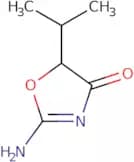
CAS:<p>Versatile small molecule scaffold</p>Fórmula:C8H14O2Pureza:Min. 95%Peso molecular:142.2 g/mol4(5H)-Oxazolone, 2-amino-5-(1-methylethyl)-
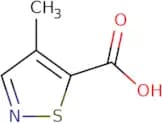
CAS:<p>Versatile small molecule scaffold</p>Fórmula:C6H10N2O2Pureza:Min. 95%Peso molecular:142.16 g/mol4-Methyl-isothiazole-5-carboxylic acid
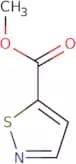
CAS:<p>Versatile small molecule scaffold</p>Fórmula:C5H5NO2SPureza:Min. 95%Peso molecular:143.16 g/molIsothiazole-5-carboxylic acid methyl ester
CAS:<p>Versatile small molecule scaffold</p>Fórmula:C5H5NO2SPureza:Min. 95%Peso molecular:143.16 g/molMethyl 5-methyl-1,2-thiazole-4-carboxylate
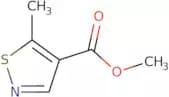
CAS:Versatile small molecule scaffoldFórmula:C6H7NO2SPureza:Min. 95%Peso molecular:157.19 g/mol3-Methylisothiazole-4-carboxylic acid
CAS:<p>3-Methylisothiazole-4-carboxylic acid is an amino acid that has shown anti-tumor activity. It has been shown to inhibit the growth of leukemia cells in mice and to prevent the proliferation of human cancer cells in vitro. 3-Methylisothiazole-4-carboxylic acid is a competitive inhibitor of benzoylamino, which is a key enzyme involved in the synthesis of DNA. The compound inhibits DNA replication by binding to nucleic acids at the site where they are synthesized, blocking the formation of base pairs. This drug also has immunosuppressive properties and can be used as an adjuvant therapy for hypersensitivity reactions such as asthma and allergies.</p>Fórmula:C5H5NO2SPureza:Min. 95%Peso molecular:143.16 g/mol3-(2,4-Dimethylphenoxy)propanoic acid
CAS:<p>Versatile small molecule scaffold</p>Fórmula:C11H14O3Pureza:Min. 95%Peso molecular:194.23 g/mol3-Amino-2,2,4-trimethylpentan-1-ol
CAS:<p>Versatile small molecule scaffold</p>Fórmula:C8H19NOPureza:Min. 95%Peso molecular:145.24 g/molN-Phenylcyclobutanecarboxamide
CAS:<p>N-Phenylcyclobutanecarboxamide is a sulfone that is used as a chemotherapy agent. It has been shown to be effective in the treatment of peritoneal carcinomatosis and pancreatic cancer. This drug inhibits the growth of cancer cells by interfering with DNA synthesis and protein synthesis, which prevents cell division. N-Phenylcyclobutanecarboxamide also causes tumor cells to die by causing them to undergo apoptosis.</p>Fórmula:C11H13NOPureza:Min. 95%Peso molecular:175.23 g/mol3-Amino-1H,4H,5H-pyrazolo[3,4-d]pyrimidin-4-one
CAS:<p>Versatile small molecule scaffold</p>Fórmula:C5H5N5OPureza:Min. 95%Peso molecular:151.1 g/mol3,4-Dimethyl-6H,7H-[1,2]oxazolo[3,4-d]pyridazin-7-one
CAS:<p>Versatile small molecule scaffold</p>Fórmula:C7H7N3O2Pureza:Min. 95%Peso molecular:165.15 g/moliso-Butyrylglycine
CAS:<p>Iso-butyrlglycine is an intermediate in the metabolism of amino acids. It has been used as a diagnostic marker for the detection of dehydrogenase deficiency and other diseases. Iso-butyrlglycine is also used to assess the activity index of enzymes such as fatty acid synthase, which are involved in energy metabolism.</p>Fórmula:C6H11NO3Pureza:Min. 95%Peso molecular:145.16 g/mol2-Phenyl-1,3-oxazole-4,5-dicarboxylic acid
CAS:<p>Versatile small molecule scaffold</p>Fórmula:C11H7NO5Pureza:Min. 95%Peso molecular:233.18 g/mol1,8-Naphthyridine-2(1H)-one
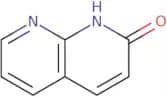
CAS:<p>1,8-Naphthyridine-2(1H)-one is a naphthyridone that inhibits the growth of gram-positive bacteria. This compound binds to the CB2 receptor site on the cell membrane and blocks the transfer of electrons from cytochrome c to molecular oxygen, which inhibits the production of reactive oxygen species. This inhibition causes an accumulation of hydrogen peroxide in the bacterial cell and leads to necrosis. 1,8-Naphthyridine-2(1H)-one has also been shown to inhibit HIV infection by inhibiting reverse transcriptase activity through metal chelate formation.</p>Fórmula:C8H6N2OPureza:Min. 95%Peso molecular:146.15 g/mol2-Chloro-1,8-naphthyridine
CAS:<p>2-Chloro-1,8-naphthyridine is a configurational isomer of 1,8-naphthyridine. It has two phenyl groups and a cyclic configuration. 2-Chloro-1,8-naphthyridine is synthesized from 2,6-dichloronaphthalene by oxidation with potassium permanganate and subsequent reduction with iron powder. The compound can reversibly form metal complexes with potassium. 2-Chloro-1,8-naphthyridine exhibits reversible changes in its conductance when subjected to cyclic voltammetry.</p>Fórmula:C8H5ClN2Pureza:Min. 95%Peso molecular:164.59 g/mol2-(3-Methylbut-2-en-1-yl)-2,3-dihydro-1H-isoindole-1,3-dione
CAS:<p>Versatile small molecule scaffold</p>Fórmula:C13H13NO2Pureza:Min. 95%Peso molecular:215.25 g/mol5-Bromo-7-methyl-1H-indole-2-carboxylic acid
CAS:<p>Versatile small molecule scaffold</p>Fórmula:C10H8BrNO2Pureza:Min. 95%Peso molecular:254.08 g/mol5-Bromo-7-methyl-1H-indole
CAS:<p>5-Bromo-7-methyl-1H-indole is a serotonin receptor antagonist that blocks the binding of serotonin to its receptors, which are located on nerve cells. This drug has been used in animal studies to study the role of serotonin in brain function. 5-Bromo-7-methyl-1H-indole has also been shown to be an effective antiserotonin agent for the treatment of depression and anxiety.</p>Fórmula:C9H8BrNPureza:Min. 95%Peso molecular:210.07 g/mol5-Chloro-7-methyl-1H-indole-3-carbaldehyde
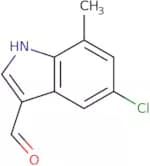
CAS:<p>Versatile small molecule scaffold</p>Fórmula:C10H8ClNOPureza:Min. 95%Peso molecular:193.63 g/mol2-[(2-bromophenyl)sulfanyl]acetic acid
CAS:<p>Versatile small molecule scaffold</p>Fórmula:C8H7BrO2SPureza:Min. 95%Peso molecular:247.1 g/mol4-Cyanobicyclo[2.2.2]octane-1-carboxylic acid
CAS:<p>Versatile small molecule scaffold</p>Fórmula:C10H13NO2Pureza:Min. 95%Peso molecular:179.22 g/mol3-Methyl-5-oxocyclohexane-1,2-dicarboxylic acid
CAS:<p>Versatile small molecule scaffold</p>Fórmula:C9H12O5Pureza:Min. 95%Peso molecular:200.19 g/mol
![[2-Fluoro-5-(pyridin-3-yl)phenyl]methanol](/_next/image/?url=https%3A%2Fstatic.cymitquimica.com%2Fproducts%2F3D%2Fthumb-webp%2FPYB39135.webp&w=3840&q=75)

![N-[(Pyridin-2-yl)methyl]piperidin-4-amine trihydrochloride](/_next/image/?url=https%3A%2Fstatic.cymitquimica.com%2Fproducts%2F3D%2Fthumb-webp%2FPYB62242.webp&w=3840&q=75)
![Benzyl N-[1-oxo-1-(3-oxopiperazin-1-yl)propan-2-yl]carbamate](/_next/image/?url=https%3A%2Fstatic.cymitquimica.com%2Fproducts%2F3D%2Fthumb-webp%2FPYB65870.webp&w=3840&q=75)
![2-[(2-Cyclopropyl-3-oxo-2,3-dihydro-1H-isoindol-1-yl)formamido]acetic acid](/_next/image/?url=https%3A%2Fstatic.cymitquimica.com%2Fproducts%2F3D%2Fthumb-webp%2FPYB66119.webp&w=3840&q=75)
![5-Oxo-2,3,5,9b-tetrahydro[1,3]thiazolo[2,3-a]isoindole-3-carboxylic acid 1-oxide](/_next/image/?url=https%3A%2Fstatic.cymitquimica.com%2Fproducts%2F3D%2Fthumb-webp%2FPYB66623.webp&w=3840&q=75)
![2-[(2-Benzyl-3-oxo-2,3-dihydro-1H-isoindol-1-yl)formamido]acetic acid](/_next/image/?url=https%3A%2Fstatic.cymitquimica.com%2Fproducts%2F3D%2Fthumb-webp%2FPYB67248.webp&w=3840&q=75)
![2-[2-(Aminomethyl)phenoxy]ethan-1-ol hydrochloride](/_next/image/?url=https%3A%2Fstatic.cymitquimica.com%2Fproducts%2F3D%2Fthumb-webp%2FPYB72858.webp&w=3840&q=75)
![3-[3-Methyl-4-(trifluoromethyl)phenyl]prop-2-enoic acid](/_next/image/?url=https%3A%2Fstatic.cymitquimica.com%2Fproducts%2F3D%2Fthumb-webp%2FPYB79035.webp&w=3840&q=75)
![(2E)-3-[2-Methyl-4-(trifluoromethyl)phenyl]prop-2-enoic acid](/_next/image/?url=https%3A%2Fstatic.cymitquimica.com%2Fproducts%2F3D%2Fthumb-webp%2FPYB79049.webp&w=3840&q=75)
![2-[1-(4-Fluorophenyl)-2,5-dioxoimidazolidin-4-yl]acetic acid](/_next/image/?url=https%3A%2Fstatic.cymitquimica.com%2Fproducts%2F3D%2Fthumb-webp%2FPYB84225.webp&w=3840&q=75)
![6-oxa-2-azaspiro[3.5]nonane](/_next/image/?url=https%3A%2Fstatic.cymitquimica.com%2Fproducts%2F3D%2Fthumb-webp%2FPYB87508.webp&w=3840&q=75)
![7-Oxa-1-azaspiro[3.6]decane](/_next/image/?url=https%3A%2Fstatic.cymitquimica.com%2Fproducts%2F3D%2Fthumb-webp%2FPYB87516.webp&w=3840&q=75)
![6-Bromo-N-methyl-1H-benzo[D]imidazol-2-amine](/_next/image/?url=https%3A%2Fstatic.cymitquimica.com%2Fproducts%2F3D%2Fthumb-webp%2FPYB89975.webp&w=3840&q=75)




![3-[(Morpholin-4-yl)carbonyl]phenol](/_next/image/?url=https%3A%2Fstatic.cymitquimica.com%2Fproducts%2F3D%2Fthumb-webp%2FQAA78905.webp&w=3840&q=75)


![Spiro[2.5]octan-6-one](/_next/image/?url=https%3A%2Fstatic.cymitquimica.com%2Fproducts%2F3D%2Fthumb-webp%2FQAA81121.webp&w=3840&q=75)

![N-[(4-Methylphenyl)methyl]aniline](/_next/image/?url=https%3A%2Fstatic.cymitquimica.com%2Fproducts%2F3D%2Fthumb-webp%2FQAA81864.webp&w=3840&q=75)




![3-[3-(4-Methoxyphenyl)oxirane-2-carbonyl]-1H-indole](/_next/image/?url=https%3A%2Fstatic.cymitquimica.com%2Fproducts%2F3D%2Fthumb-webp%2FQAA84958.webp&w=3840&q=75)

![Benzyl[2-(diethylamino)ethyl]amine](/_next/image/?url=https%3A%2Fstatic.cymitquimica.com%2Fproducts%2F3D%2Fthumb-webp%2FQAA85537.webp&w=3840&q=75)


![7,7,9,9-Tetramethyl-1,3,8-triazaspiro[4.5]decane-2,4-dione](/_next/image/?url=https%3A%2Fstatic.cymitquimica.com%2Fproducts%2F3D%2Fthumb-webp%2FQAA87154.webp&w=3840&q=75)



![5-(2-Methoxy-ethyl)-[1,3,4]thiadiazol-2-ylamine](/_next/image/?url=https%3A%2Fstatic.cymitquimica.com%2Fproducts%2F3D%2Fthumb-webp%2FQAA88490.webp&w=3840&q=75)
![1-Chloro-4-{[(chloromethyl)sulfanyl]methyl}benzene](/_next/image/?url=https%3A%2Fstatic.cymitquimica.com%2Fproducts%2F3D%2Fthumb-webp%2FQAA89425.webp&w=3840&q=75)




![3-Amino-1H,4H,5H-pyrazolo[3,4-d]pyrimidin-4-one](/_next/image/?url=https%3A%2Fstatic.cymitquimica.com%2Fproducts%2F3D%2Fthumb-webp%2FQAA90868.webp&w=3840&q=75)
![3,4-Dimethyl-6H,7H-[1,2]oxazolo[3,4-d]pyridazin-7-one](/_next/image/?url=https%3A%2Fstatic.cymitquimica.com%2Fproducts%2F3D%2Fthumb-webp%2FQAA91116.webp&w=3840&q=75)




![2-[(2-bromophenyl)sulfanyl]acetic acid](/_next/image/?url=https%3A%2Fstatic.cymitquimica.com%2Fproducts%2F3D%2Fthumb-webp%2FQAA93985.webp&w=3840&q=75)
![4-Cyanobicyclo[2.2.2]octane-1-carboxylic acid](/_next/image/?url=https%3A%2Fstatic.cymitquimica.com%2Fproducts%2F3D%2Fthumb-webp%2FQAA94109.webp&w=3840&q=75)
