Building Blocks
Esta sección contiene productos fundamentales para la síntesis de compuestos orgánicos y biológicos. Building blocks son los materiales de partida esenciales utilizados para construir moléculas complejas a través de diversas reacciones químicas. Desempeñan un papel crítico en el descubrimiento de fármacos, la ciencia de materiales y la investigación química. En CymitQuimica, ofrecemos una gama diversa de building blocks de alta calidad para apoyar sus investigaciones innovadoras y proyectos industriales, asegurando que tenga los componentes esenciales para una síntesis exitosa.
Subcategorías de "Building Blocks"
- Ácidos borónicos y derivados del ácido borónico(5.756 productos)
- Building Blocks quirales(1.242 productos)
- Building Blocks de hidrocarburos(6.095 productos)
- Building Blocks orgánicos(61.038 productos)
Se han encontrado 196817 productos de "Building Blocks"
Ordenar por
Pureza (%)
0
100
|
0
|
50
|
90
|
95
|
100
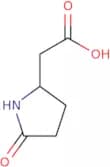
5-Oxo-2-pyrrolidineacetic Acid
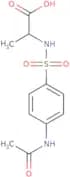
CAS:<p>Versatile small molecule scaffold</p>Fórmula:C6H9NO3Pureza:Min. 95%Peso molecular:143.14 g/mol(2S)-2-(4-Acetamidobenzenesulfonamido)propanoic acid
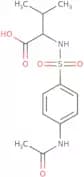
CAS:<p>Versatile small molecule scaffold</p>Fórmula:C11H14N2O5SPureza:Min. 95%Peso molecular:286.31 g/mol2-(4-Acetamidobenzenesulfonamido)-3-methylbutanoic acid
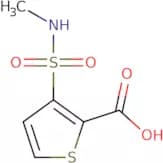
CAS:<p>2-(4-Acetamidobenzenesulfonamido)-3-methylbutanoic acid is a disordered molecule that has an isopropanol group at the 4th carbon. The benzene ring and methyl groups are in the 2nd and 3rd positions, respectively. The orientation of the isopropyl group determines how the molecule folds. This molecule has hydrogen bonds between its N-H and C=O groups, as well as intramolecular hydrogen bonds along with coplanar dihedral angles.<br>2-(4-Acetamidobenzenesulfonamido)-3-methylbutanoic acid is used for research purposes to study benzene rings, methyl groups, and acetamide orientations.</p>Fórmula:C13H18N2O5SPureza:Min. 95%Peso molecular:314.36 g/mol3-(Methylsulfamoyl)thiophene-2-carboxylic acid
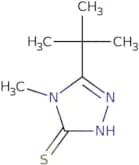
CAS:<p>Versatile small molecule scaffold</p>Fórmula:C6H7NO4S2Pureza:Min. 95%Peso molecular:221.3 g/mol5-tert-Butyl-4-methyl-4H-1,2,4-triazole-3-thiol
CAS:<p>Versatile small molecule scaffold</p>Fórmula:C7H13N3SPureza:Min. 95%Peso molecular:171.27 g/mol4-Bromo-N-[2-(morpholin-4-yl)ethyl]benzamide
CAS:<p>Versatile small molecule scaffold</p>Fórmula:C13H17BrN2O2Pureza:Min. 95%Peso molecular:313.19 g/mol4-(Pyridin-4-ylsulfanyl)phenol
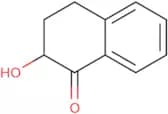
CAS:<p>Versatile small molecule scaffold</p>Fórmula:C11H9NOSPureza:Min. 95%Peso molecular:203.26 g/mol2-Hydroxy-1,2,3,4-tetrahydronaphthalen-1-one
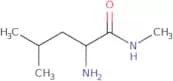
CAS:<p>2-Hydroxy-1,2,3,4-tetrahydronaphthalen-1-one is a synthetic drug that binds to the opioid receptor and is used as an analgesic. It has been shown to have a strong affinity for opioid receptors in the central nervous system and intestine. 2-Hydroxy-1,2,3,4-tetrahydronaphthalen-1-one has been found to have an uptake of 40% in the brain and intestine. This drug also has a high affinity for opioid receptors in the brain and intestinal tissue and acts as a full agonist on these sites. 2-Hydroxy-1,2,3,4-tetrahydronaphthalen-1-one also has been found to be effective in treating Alzheimer's disease. This drug can be administered orally or intravenously.</p>Fórmula:C10H10O2Pureza:Min. 95%Peso molecular:162.18 g/mol(2S)-2-Amino-N,4-dimethylpentanamide
CAS:<p>(2S)-2-Amino-N,4-dimethylpentanamide is an amide that is a metabolite of the amino acid l-tert-leucine. This drug has been shown to have bioactive properties and may be used in pharmaceutical preparations for the treatment of degenerative diseases. (2S)-2-Amino-N,4-dimethylpentanamide binds to cannabinoid receptors, which are found on the surface of cells. It also inhibits matrix metalloproteinase activity, leading to increased bone resorption and ulceration. The stereoisomers of this compound have different activities: 2R-(+)-(2S)-2-amino-N,4-dimethylpentanamide inhibits the production of inflammatory proteins and is used as a pharmaceutical preparation for the treatment of ulcers; 2S-(+)-(2S)-2-amino-N,4-dimethylpentanamide has</p>Fórmula:C7H16N2OPureza:Min. 95%Peso molecular:144.21 g/molEthyl N-[3-(2-oxopropyl)-1,2,4-thiadiazol-5-yl]carbamate
CAS:<p>Versatile small molecule scaffold</p>Fórmula:C8H11N3O3SPureza:Min. 95%Peso molecular:229.26 g/mol(1H-Benzo[D]imidazol-4-yl)methanamine dihydrochloride
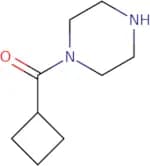
CAS:<p>Versatile small molecule scaffold</p>Fórmula:C8H11Cl2N3Pureza:Min. 95%Peso molecular:220.1 g/molcyclobutyl(piperazin-1-yl)methanone
CAS:<p>Versatile small molecule scaffold</p>Fórmula:C9H16N2OPureza:Min. 95%Peso molecular:168.24 g/mol1-[Chloro(4-chlorophenyl)methyl]-4-fluorobenzene
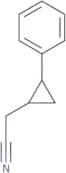
CAS:<p>Versatile small molecule scaffold</p>Fórmula:C13H9Cl2FPureza:Min. 95%Peso molecular:255.11 g/mol2-(2-Phenylcyclopropyl)acetonitrile
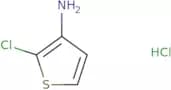
CAS:<p>Versatile small molecule scaffold</p>Fórmula:C11H11NPureza:Min. 95%Peso molecular:157.21 g/mol2-Chlorothiophen-3-amine hydrochloride
CAS:<p>Versatile small molecule scaffold</p>Fórmula:C4H5Cl2NSPureza:Min. 95%Peso molecular:170.06 g/mol(S)-1-Phenyl-2-propyn-1-ol
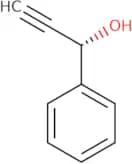
CAS:<p>(S)-1-phenyl-2-propyn-1-ol is a bicyclic compound that is used in the metathesis reaction. This chemical can undergo a metathesis reaction, where two different types of bonds are broken and two new ones are formed. (S)-1-Phenyl-2-propyn-1-ol can be used for the synthesis of polymers, pharmaceuticals, and agrochemicals.</p>Fórmula:C9H8OPureza:Min. 95%Peso molecular:132.16 g/mol5-Bromo-6-(chloromethyl)-1,3-dioxaindane
CAS:<p>Versatile small molecule scaffold</p>Fórmula:C8H6BrClO2Pureza:Min. 95%Peso molecular:249.49 g/mol3-(2-Formylphenoxy)propanoic acid
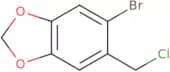
CAS:<p>3-(2-Formylphenoxy)propanoic acid is a carboxylic acid that is used in the synthesis of pharmaceuticals. The carboxylic acid group of 3-(2-Formylphenoxy)propanoic acid reacts with amines to form amides. It can also be reacted with alcohols to form esters. The propanoic acid group in this compound can undergo reactions that generate carboxylic acids, alcohols, and hydrocarbons. 3-(2-Formylphenoxy)propanoic acid has two carboxylic acid groups, one on each end of the molecule. These groups are positioned so they react with other molecules by donating their electrons to create new bonds. This conformation is called a dimer.</p>Fórmula:C10H10O4Pureza:Min. 95%Peso molecular:194.18 g/mol2-Chloro-5-(pyrrolidine-1-sulfonyl)pyridine
CAS:<p>Versatile small molecule scaffold</p>Fórmula:C9H11ClN2O2SPureza:Min. 95%Peso molecular:246.71 g/mol2-Chloro-5-(piperidine-1-sulfonyl)pyridine
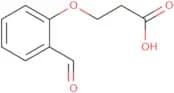
CAS:<p>Versatile small molecule scaffold</p>Fórmula:C10H13ClN2O2SPureza:Min. 95%Peso molecular:260.74 g/mol1-[(6-Chloropyridin-3-yl)sulfonyl]-4-methylpiperazine
CAS:<p>Versatile small molecule scaffold</p>Fórmula:C10H14ClN3O2SPureza:Min. 95%Peso molecular:275.76 g/mol6-Chloro-N-(propan-2-yl)pyridine-3-sulfonamide
CAS:<p>Versatile small molecule scaffold</p>Fórmula:C8H11ClN2O2SPureza:Min. 95%Peso molecular:234.7 g/mol2-amino-4-cyanobenzoic acid
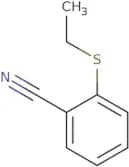
CAS:<p>Versatile small molecule scaffold</p>Fórmula:C8H6N2O2Pureza:Min. 95%Peso molecular:162.15 g/mol2-(Ethylsulfanyl)benzonitrile
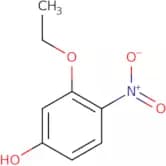
CAS:<p>Versatile small molecule scaffold</p>Fórmula:C9H9NSPureza:Min. 95%Peso molecular:163.24 g/mol3-Ethoxy-4-nitrophenol
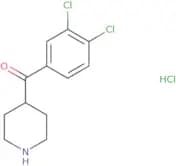
CAS:<p>3-Ethoxy-4-nitrophenol is a nitro compound that is used in the synthesis of dibenzofurans, polychlorinated biphenyls, and other organic compounds. It can be used to generate nitro groups in organic synthesis and has been shown to have high yields. 3-Ethoxy-4-nitrophenol is metabolized by the liver with a half life of approximately 10 hours and is excreted unchanged in the urine. This compound may cause adverse health effects at high doses due to its toxicity as a nitrosating agent, which may result in DNA damage or cancer.</p>Fórmula:C8H9NO4Pureza:Min. 95%Peso molecular:183.16 g/mol4-(3,4-Dichlorobenzoyl)piperidine hydrochloride
CAS:<p>Versatile small molecule scaffold</p>Fórmula:C12H14Cl3NOPureza:Min. 95%Peso molecular:294.6 g/mol2-Chloro-2-methylcycloheptan-1-one
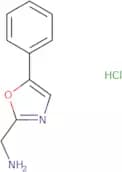
CAS:<p>2-Chloro-2-methylcycloheptan-1-one (2C7) is a cyclization agent used in organic synthesis. It is typically used to produce cyclohexyl and cyclopentyl compounds by radical cyclization of hydroperoxides or allylic hydroperoxides. 2C7 can also be used for the regioselective synthesis of substituted 2,4,6-trichlorocyclohexanes from chlorinated alkenes. The efficiency of this reaction has been shown to depend on structural features of the substituents on the alkyne. Treatment with sulfate ions has been shown to affect the reactivity of 2C7.</p>Fórmula:C8H13ClOPureza:Min. 95%Peso molecular:160.64 g/mol(5-Phenyl-1,3-oxazol-2-yl)methanamine hydrochloride
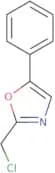
CAS:<p>Versatile small molecule scaffold</p>Fórmula:C10H11ClN2OPureza:Min. 95%Peso molecular:210.66 g/mol2-(chloromethyl)-5-phenyl-1,3-oxazole
CAS:<p>2-(Chloromethyl)-5-phenyl-1,3-oxazole is an inhibitor of cholesterol ester transfer protein (CETP) that belongs to the family of amides. It binds to the active site of CETP, preventing it from cleaving cholesteryl esters from HDL and transferring them to LDL. This prevents the formation of cholesteryl ester/LDL complexes, which are believed to be one cause of atherosclerosis. 2-(Chloromethyl)-5-phenyl-1,3-oxazole also inhibits cholesterol synthesis in liver cells by inhibiting HMG CoA reductase.</p>Fórmula:C10H8ClNOPureza:Min. 95%Peso molecular:193.63 g/mol2-(Chloromethyl)-5-(3-chlorophenyl)-1,3-oxazole
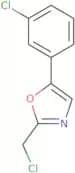
CAS:<p>Versatile small molecule scaffold</p>Fórmula:C10H7Cl2NOPureza:Min. 95%Peso molecular:228.07 g/mol2-(Chloromethyl)-5-(2-chlorophenyl)-1,3-oxazole
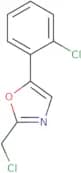
CAS:<p>Versatile small molecule scaffold</p>Fórmula:C10H7Cl2NOPureza:Min. 95%Peso molecular:228.07 g/mol5-(4-Bromophenyl)-2-(chloromethyl)-1,3-oxazole
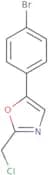
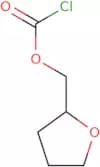
CAS:<p>Versatile small molecule scaffold</p>Fórmula:C10H7BrClNOPureza:Min. 95%Peso molecular:272.52 g/molOxolan-2-ylmethyl chloroformate
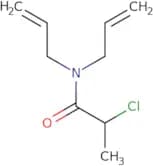
CAS:<p>Oxolan-2-ylmethyl chloroformate is an intermediate in the synthesis of pharmaceutical formulations. It can be used to synthesize various compounds such as nitroso, aliphatic hydrocarbon, formic acid, carbamic acid, aziridine, copper, alkenyl and pyridyl. Oxalan-2-ylmethyl chloroformate is a reactive compound that can react with amides to produce amides.</p>Fórmula:C6H9ClO3Pureza:Min. 95%Peso molecular:164.59 g/mol2-Chloro-N,N-bis(prop-2-en-1-yl)propanamide
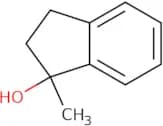
CAS:<p>Versatile small molecule scaffold</p>Fórmula:C9H14ClNOPureza:Min. 95%Peso molecular:187.66 g/mol1-Methyl-2,3-dihydro-1H-inden-1-ol
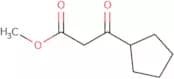
CAS:<p>1-Methyl-2,3-dihydro-1H-inden-1-ol is a carboxylic acid that can be synthesized from indene. The compound has been found to be reactive with electron microscopes and gas chromatography/mass spectrometers. 1-Methyl-2,3-dihydro-1H-inden-1-ol can be extracted from the following compounds:</p>Fórmula:C10H12OPureza:Min. 95%Peso molecular:148.2 g/molMethyl 3-cyclopentyl-3-oxopropanoate
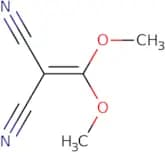
CAS:<p>Versatile small molecule scaffold</p>Fórmula:C9H14O3Pureza:Min. 95%Peso molecular:170.21 g/mol2-(Dimethoxymethylidene)propanedinitrile
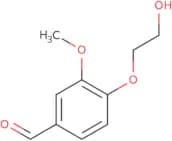
CAS:<p>Versatile small molecule scaffold</p>Fórmula:C6H6N2O2Pureza:Min. 95%Peso molecular:138.12 g/mol4-(2-Hydroxy-ethoxy)-3-methoxy-benzaldehyde
CAS:<p>4-(2-Hydroxy-ethoxy)-3-methoxybenzaldehyde (HMB) is a molecule that is commercially available as a white solid. It can be used in the production of polymers and resins, where it is used as a monomer in the polymerization process. HMB has been shown to form orthogonal polymers with other molecules. The yields for this synthesis are dependent on the solvent and reaction conditions. HMB has been shown to be stable under almost all conditions, with the exception of chlorides or benzohydrazide. This molecule also has an optimal molecular weight of 300 g/mol.</p>Fórmula:C10H12O4Pureza:Min. 95%Peso molecular:196.2 g/mol3-Hydroxy-3-methyl-2-phenoxybutanoic acid
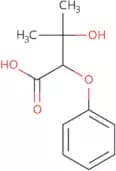
CAS:<p>Versatile small molecule scaffold</p>Fórmula:C11H14O4Pureza:Min. 95%Peso molecular:210.23 g/mol4-Fluoro-2-methyl-5-nitrobenzoic acid
CAS:<p>Versatile small molecule scaffold</p>Fórmula:C8H6FNO4Pureza:Min. 95%Peso molecular:199.14 g/mol2-Bromo-4-fluoro-5-nitrotoluene
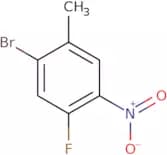
CAS:<p>Versatile small molecule scaffold</p>Fórmula:C7H5BrFNO2Pureza:Min. 95%Peso molecular:234.02 g/mol2-Bromo-5-fluoro-4-methoxybenzoic acid
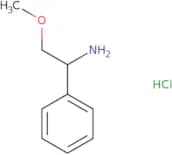
CAS:<p>Versatile small molecule scaffold</p>Fórmula:C8H6BrFO3Pureza:Min. 95%Peso molecular:249.03 g/mol(1R)-2-Methoxy-1-phenylethanamine, hydrochloride
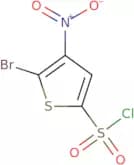
CAS:<p>Versatile small molecule scaffold</p>Fórmula:C9H14ClNOPureza:Min. 95%Peso molecular:187.66 g/mol5-Bromo-4-nitrothiophene-2-sulfonyl chloride
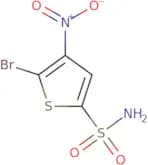
CAS:<p>Versatile small molecule scaffold</p>Fórmula:C4HBrClNO4S2Pureza:Min. 95%Peso molecular:306.5 g/mol5-Bromo-4-nitrothiophene-2-sulfonamide
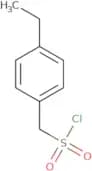
CAS:<p>Versatile small molecule scaffold</p>Fórmula:C4H3N2O4S2BrPureza:Min. 95%Peso molecular:287.11 g/mol(4-Ethylphenyl)methanesulfonyl chloride
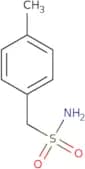
CAS:<p>Versatile small molecule scaffold</p>Fórmula:C9H11ClO2SPureza:Min. 95%Peso molecular:218.7 g/mol4-Methylbenzylsulfonamide
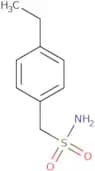
CAS:<p>Versatile small molecule scaffold</p>Fórmula:C8H11NO2SPureza:Min. 95%Peso molecular:185.24 g/mol(4-Ethylphenyl)methanesulfonamide
CAS:<p>Versatile small molecule scaffold</p>Fórmula:C9H13NO2SPureza:Min. 95%Peso molecular:199.27 g/mol[4-(Propan-2-yl)phenyl]methanesulfonamide
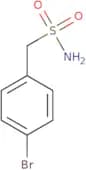
CAS:<p>Versatile small molecule scaffold</p>Fórmula:C10H15NO2SPureza:Min. 95%Peso molecular:213.3 g/mol(4-Bromophenyl)methanesulfonamide
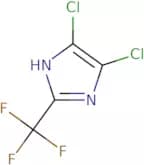
CAS:<p>Versatile small molecule scaffold</p>Fórmula:C7H8BrNO2SPureza:Min. 95%Peso molecular:250.11 g/mol4,5-Dichloro-2-(trifluoromethyl)imidazole
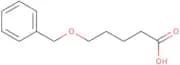
CAS:<p>Versatile small molecule scaffold</p>Fórmula:C4HCl2F3N2Pureza:Min. 95%Peso molecular:204.96 g/mol5-(Phenylmethoxy)pentanoic Acid
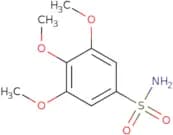
CAS:<p>5-(Phenylmethoxy)pentanoic Acid is a chiral, nucleophilic carboxylate used as a buffer. It has the ability to act as a bifunctional catalyst in reactions such as the Suzuki-Miyaura coupling, which is a reaction that generally requires harsh conditions. This compound has also been shown to enhance asymmetric alkylation reactions by acting as an anion and stabilizing the transition state of the reaction. 5-(Phenylmethoxy)pentanoic Acid has been shown to be effective in catalysis when used in conjunction with aspirin. The aspirin molecule catalyzes the reaction between 5-(Phenylmethoxy)pentanoic Acid and methyl acrylate, leading to an increase in yield of the desired product.</p>Fórmula:C12H16O3Pureza:Min. 95%Peso molecular:208.25 g/mol3,4,5-Trimethoxybenzene-1-sulfonamide
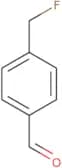
CAS:<p>Versatile small molecule scaffold</p>Fórmula:C9H13NO5SPureza:Min. 95%Peso molecular:247.3 g/mol4-(Fluoromethyl)benzaldehyde
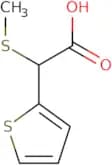
CAS:<p>Versatile small molecule scaffold</p>Fórmula:C8H7FOPureza:Min. 95%Peso molecular:138.14 g/mol2-(Methylsulfanyl)-2-(thiophen-2-yl)acetic acid
CAS:<p>Versatile small molecule scaffold</p>Fórmula:C7H8O2S2Pureza:Min. 95%Peso molecular:188.3 g/mol3-[4-(2-Methylpropyl)phenyl]butan-2-one
CAS:<p>Versatile small molecule scaffold</p>Fórmula:C14H20OPureza:Min. 95%Peso molecular:204.31 g/mol2,2-Diethyl spiro[3.3]heptane-2,2-dicarboxylate
CAS:<p>Versatile small molecule scaffold</p>Fórmula:C13H20O4Pureza:Min. 95%Peso molecular:240.29 g/molSpiro[3.3]heptane-2,2-dicarboxylic acid
CAS:<p>Versatile small molecule scaffold</p>Fórmula:C9H12O4Pureza:Min. 95%Peso molecular:184.19 g/mol2-[3,5-Dimethoxy-4-(propan-2-yloxy)phenyl]ethan-1-amine
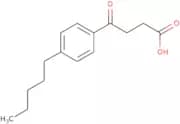
CAS:Producto controlado<p>Versatile small molecule scaffold</p>Fórmula:C13H21NO3Pureza:Min. 95%Peso molecular:239.31 g/mol4-Oxo-4-(4-pentylphenyl)butanoic acid
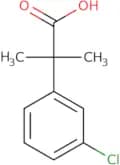
CAS:<p>Versatile small molecule scaffold</p>Fórmula:C15H20O3Pureza:Min. 95%Peso molecular:248.32 g/mol2-(3-Chlorophenyl)-2-methylpropanoic acid
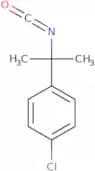
CAS:<p>Versatile small molecule scaffold</p>Fórmula:C10H11ClO2Pureza:Min. 95%Peso molecular:198.65 g/mol1-Chloro-4-(2-isocyanatopropan-2-yl)benzene
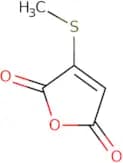
CAS:<p>Versatile small molecule scaffold</p>Fórmula:C10H10ClNOPureza:Min. 95%Peso molecular:195.64 g/mol3-(Methylsulfanyl)-2,5-dihydrofuran-2,5-dione
CAS:<p>Versatile small molecule scaffold</p>Fórmula:C5H4O3SPureza:Min. 95%Peso molecular:144.15 g/molMethyl 3-oxobicyclo[2.2.1]hept-5-ene-2-carboxylate
CAS:<p>Versatile small molecule scaffold</p>Fórmula:C9H10O3Pureza:Min. 95%Peso molecular:166.2 g/molMethyl 3-oxobicyclo[2.2.1]heptane-2-carboxylate
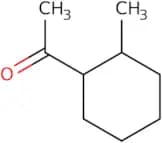
CAS:<p>Versatile small molecule scaffold</p>Fórmula:C9H12O3Pureza:Min. 95%Peso molecular:168.19 g/mol1-(2-Methylcyclohexyl)ethan-1-one
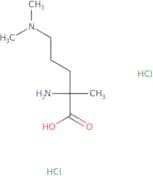
CAS:<p>1-(2-Methylcyclohexyl)ethan-1-one is an unsaturated ketone that can be obtained by the reaction of cyclopentadiene with ethylene oxide. It is a colorless liquid that has been shown to yield a number of different products upon treatment with various reagents. 1-(2-Methylcyclohexyl)ethan-1-one can also be used for mechanistic studies in chemistry, as its fragmentation patterns are similar to those of other unsaturated ketones.</p>Fórmula:C9H16OPureza:Min. 95%Peso molecular:140.22 g/mol2-Amino-5-(dimethylamino)-2-methylpentanoic acid dihydrochloride
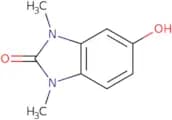
CAS:<p>Versatile small molecule scaffold</p>Fórmula:C8H20Cl2N2O2Pureza:Min. 95%Peso molecular:247.16 g/mol5-Hydroxy-1,3-dimethyl-2,3-dihydro-1H-1,3-benzodiazol-2-one
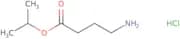
CAS:<p>Versatile small molecule scaffold</p>Fórmula:C9H10N2O2Pureza:Min. 95%Peso molecular:178.19 g/molPropan-2-yl 4-aminobutanoate hydrochloride
CAS:<p>Versatile small molecule scaffold</p>Fórmula:C7H16ClNO2Pureza:Min. 95%Peso molecular:181.66 g/mol2-{[(3-Chlorophenyl)methyl]amino}ethan-1-ol
CAS:<p>Versatile small molecule scaffold</p>Fórmula:C9H12ClNOPureza:Min. 95%Peso molecular:185.65 g/mol2-{[(4-Chlorophenyl)methyl]amino}ethan-1-ol hydrochloride
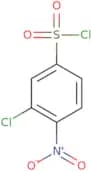
CAS:<p>Versatile small molecule scaffold</p>Fórmula:C9H13Cl2NOPureza:Min. 95%Peso molecular:222.11 g/mol3-Chloro-4-nitrobenzenesulfonyl chloride
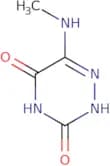
CAS:<p>Versatile small molecule scaffold</p>Fórmula:C6H3Cl2NO4SPureza:Min. 95%Peso molecular:256.06 g/mol6-(Methylamino)-2,3,4,5-tetrahydro-1,2,4-triazine-3,5-dione
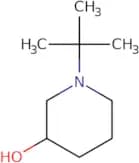
CAS:<p>Versatile small molecule scaffold</p>Fórmula:C4H6N4O2Pureza:Min. 95%Peso molecular:142.1 g/mol1-tert-Butylpiperidin-3-ol
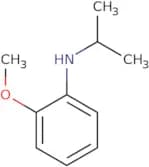
CAS:<p>Versatile small molecule scaffold</p>Fórmula:C9H19NOPureza:Min. 95%Peso molecular:157.25 g/mol2-Methoxy-N-(propan-2-yl)aniline
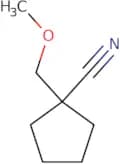
CAS:<p>Versatile small molecule scaffold</p>Fórmula:C10H15NOPureza:Min. 95%Peso molecular:165.23 g/mol1-(Methoxymethyl)cyclopentane-1-carbonitrile
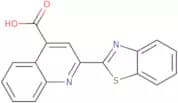
CAS:<p>Versatile small molecule scaffold</p>Fórmula:C8H13NOPureza:Min. 95%Peso molecular:139.19 g/mol2-(1,3-Benzothiazol-2-yl)quinoline-4-carboxylic acid
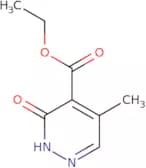
CAS:<p>Versatile small molecule scaffold</p>Fórmula:C17H10N2O2SPureza:Min. 95%Peso molecular:306.3 g/molEthyl 3-hydroxy-5-methylpyridazine-4-carboxylate
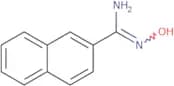
CAS:<p>Versatile small molecule scaffold</p>Fórmula:C8H10N2O3Pureza:Min. 95%Peso molecular:182.18 g/molNaphthalene-2-amidoxime
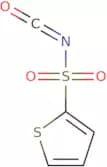
CAS:<p>Versatile small molecule scaffold</p>Fórmula:C11H10N2OPureza:Min. 95%Peso molecular:186.21 g/molThiophene-2-sulfonyl isocyanate
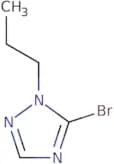
CAS:<p>Versatile small molecule scaffold</p>Fórmula:C5H3NO3S2Pureza:Min. 95%Peso molecular:189.2 g/mol5-Bromo-1-propyl-1H-1,2,4-triazole
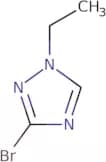
CAS:<p>Versatile small molecule scaffold</p>Fórmula:C5H8BrN3Pureza:Min. 95%Peso molecular:190.04 g/mol3-Bromo-1-ethyl-1H-1,2,4-triazole
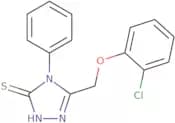
CAS:<p>Versatile small molecule scaffold</p>Fórmula:C4H6BrN3Pureza:Min. 95%Peso molecular:176.01 g/mol5-(2-Chlorophenoxymethyl)-4-phenyl-4H-1,2,4-triazole-3-thiol
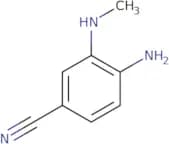
CAS:<p>Versatile small molecule scaffold</p>Fórmula:C15H12ClN3OSPureza:Min. 95%Peso molecular:317.8 g/mol4-Amino-3-(methylamino)benzonitrile
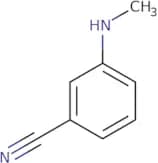
CAS:<p>Versatile small molecule scaffold</p>Fórmula:C8H9N3Pureza:Min. 95%Peso molecular:147.18 g/mol3-(methylamino)benzonitrile
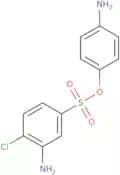
CAS:<p>3-(methylamino)benzonitrile is an analogue of benzodiazepine compounds that has potent anxiolytic activity. It is a white, crystalline solid that is soluble in organic solvents. 3-(Methylamino)benzonitrile has been shown to have toxic effects on the liver and kidneys, as well as to produce neurological disorders such as seizures and coma. This drug is broken down by the body into a number of metabolites, including benzylamine, which can be found in the urine of patients taking this drug.</p>Fórmula:C8H8N2Pureza:Min. 95%Peso molecular:132.16 g/mol3-Amino-4-chloro-benzenesulfonic acid 4-amino-phenyl ester
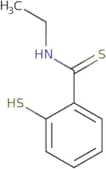
CAS:<p>Versatile small molecule scaffold</p>Fórmula:C12H11ClN2O3SPureza:Min. 95%Peso molecular:298.75 g/molN-Ethyl-2-sulfanylbenzene-1-carbothioamide
CAS:<p>Versatile small molecule scaffold</p>Fórmula:C9H11NS2Pureza:Min. 95%Peso molecular:197.3 g/mol1-((Benzyloxy)carbonyl)-2-methylpiperidine-2-carboxylic acid
CAS:<p>Versatile small molecule scaffold</p>Fórmula:C15H19NO4Pureza:Min. 95%Peso molecular:277.31 g/mol7-benzyl-3-thia-7-azabicyclo[3.3.1]nonan-9-one
CAS:<p>7-benzyl-3-thia-7-azabicyclo[3.3.1]nonan-9-one (7BAN) is a compound that has been shown to have antiarrhythmic effects in animal models. The conformational stability of 7BAN has been determined by single crystal x-ray diffraction data, and the conformers have been determined by conformational analysis. The conformation of this drug is stabilized by the benzyl group and the azabicyclo group, which are responsible for its antiarrhythmic activity.</p>Fórmula:C14H17NOSPureza:Min. 95%Peso molecular:247.36 g/mol3-(Ethylsulfanyl)benzonitrile
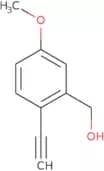
CAS:<p>Versatile small molecule scaffold</p>Fórmula:C9H9NSPureza:Min. 95%Peso molecular:163.24 g/mol(2-Ethynyl-5-methoxyphenyl)methanol
CAS:<p>Versatile small molecule scaffold</p>Fórmula:C10H10O2Pureza:Min. 95%Peso molecular:162.19 g/mol5-Bromo-2-N-methylpyridine-2,3-diamine
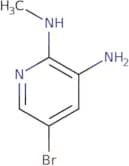
CAS:<p>Versatile small molecule scaffold</p>Fórmula:C6H8BrN3Pureza:Min. 95%Peso molecular:202.05 g/mol5-(Methoxymethyl)-3-methyl-1H-1,2,4-triazole
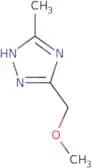
CAS:<p>Versatile small molecule scaffold</p>Fórmula:C5H9N3OPureza:Min. 95%Peso molecular:127.14 g/mol(1,3-dihydro-2-benzofuran-5-yl)methanol
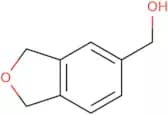
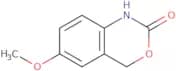
CAS:<p>Versatile small molecule scaffold</p>Fórmula:C9H10O2Pureza:Min. 95%Peso molecular:150.18 g/mol6-Methoxy-2,4-dihydro-1H-3,1-benzoxazin-2-one
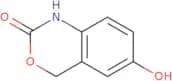
CAS:<p>Versatile small molecule scaffold</p>Fórmula:C9H9NO3Pureza:Min. 95%Peso molecular:179.17 g/mol6-Hydroxy-2,4-dihydro-1H-3,1-benzoxazin-2-one
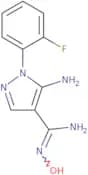
CAS:<p>Versatile small molecule scaffold</p>Fórmula:C8H7NO3Pureza:Min. 95%Peso molecular:165.15 g/mol5-Amino-1-(2-fluorophenyl)-N'-hydroxy-1H-pyrazole-4-carboximidamide
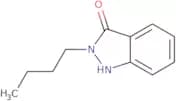
CAS:<p>Versatile small molecule scaffold</p>Fórmula:C10H10FN5OPureza:Min. 95%Peso molecular:235.22 g/mol2-Butyl-2,3-dihydro-1H-indazol-3-one
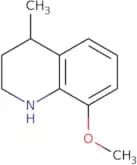
CAS:<p>Versatile small molecule scaffold</p>Fórmula:C11H14N2OPureza:Min. 95%Peso molecular:190.24 g/mol8-Methoxy-4-methyl-1,2,3,4-tetrahydroquinoline
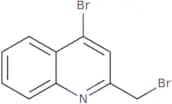
CAS:<p>Versatile small molecule scaffold</p>Fórmula:C11H15NOPureza:Min. 95%Peso molecular:177.24 g/mol4-Bromo-2-(bromomethyl)quinoline
CAS:<p>Versatile small molecule scaffold</p>Fórmula:C10H7Br2NPureza:Min. 95%Peso molecular:300.98 g/mol

![4-Bromo-N-[2-(morpholin-4-yl)ethyl]benzamide](/_next/image/?url=https%3A%2Fstatic.cymitquimica.com%2Fproducts%2F3D%2Fthumb-webp%2FPCA54419.webp&w=3840&q=75)
![Ethyl N-[3-(2-oxopropyl)-1,2,4-thiadiazol-5-yl]carbamate](/_next/image/?url=https%3A%2Fstatic.cymitquimica.com%2Fproducts%2F3D%2Fthumb-webp%2FPCA57297.webp&w=3840&q=75)
![(1H-Benzo[D]imidazol-4-yl)methanamine dihydrochloride](/_next/image/?url=https%3A%2Fstatic.cymitquimica.com%2Fproducts%2F3D%2Fthumb-webp%2FPCA57423.webp&w=3840&q=75)
![1-[Chloro(4-chlorophenyl)methyl]-4-fluorobenzene](/_next/image/?url=https%3A%2Fstatic.cymitquimica.com%2Fproducts%2F3D%2Fthumb-webp%2FPCA58339.webp&w=3840&q=75)
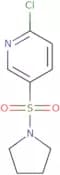
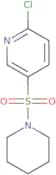
![1-[(6-Chloropyridin-3-yl)sulfonyl]-4-methylpiperazine](/_next/image/?url=https%3A%2Fstatic.cymitquimica.com%2Fproducts%2F3D%2Fthumb-webp%2FPCA61453.webp&w=3840&q=75)
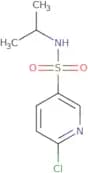
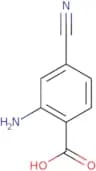



![[4-(Propan-2-yl)phenyl]methanesulfonamide](/_next/image/?url=https%3A%2Fstatic.cymitquimica.com%2Fproducts%2F3D%2Fthumb-webp%2FPCA73236.webp&w=3840&q=75)
![3-[4-(2-Methylpropyl)phenyl]butan-2-one](/_next/image/?url=https%3A%2Fstatic.cymitquimica.com%2Fproducts%2F3D%2Fthumb-webp%2FPCA75890.webp&w=3840&q=75)
![2,2-Diethyl spiro[3.3]heptane-2,2-dicarboxylate](/_next/image/?url=https%3A%2Fstatic.cymitquimica.com%2Fproducts%2F3D%2Fthumb-webp%2FPCA77596.webp&w=3840&q=75)
![Spiro[3.3]heptane-2,2-dicarboxylic acid](/_next/image/?url=https%3A%2Fstatic.cymitquimica.com%2Fproducts%2F3D%2Fthumb-webp%2FPCA77597.webp&w=3840&q=75)
![2-[3,5-Dimethoxy-4-(propan-2-yloxy)phenyl]ethan-1-amine](/_next/image/?url=https%3A%2Fstatic.cymitquimica.com%2Fproducts%2F3D%2Fthumb-webp%2FPCA77872.webp&w=3840&q=75)
![Methyl 3-oxobicyclo[2.2.1]hept-5-ene-2-carboxylate](/_next/image/?url=https%3A%2Fstatic.cymitquimica.com%2Fproducts%2F3D%2Fthumb-webp%2FPCA81011.webp&w=3840&q=75)
![Methyl 3-oxobicyclo[2.2.1]heptane-2-carboxylate](/_next/image/?url=https%3A%2Fstatic.cymitquimica.com%2Fproducts%2F3D%2Fthumb-webp%2FPCA81014.webp&w=3840&q=75)
![2-{[(3-Chlorophenyl)methyl]amino}ethan-1-ol](/_next/image/?url=https%3A%2Fstatic.cymitquimica.com%2Fproducts%2F3D%2Fthumb-webp%2FPCA83459.webp&w=3840&q=75)
![2-{[(4-Chlorophenyl)methyl]amino}ethan-1-ol hydrochloride](/_next/image/?url=https%3A%2Fstatic.cymitquimica.com%2Fproducts%2F3D%2Fthumb-webp%2FPCA83467.webp&w=3840&q=75)

![7-benzyl-3-thia-7-azabicyclo[3.3.1]nonan-9-one](/_next/image/?url=https%3A%2Fstatic.cymitquimica.com%2Fproducts%2F3D%2Fthumb-webp%2FPDA39804.webp&w=3840&q=75)