Building Blocks
Subcategorías de "Building Blocks"
- Ácidos borónicos y derivados del ácido borónico(5.783 productos)
- Building Blocks quirales(1.242 productos)
- Building Blocks de hidrocarburos(6.105 productos)
- Building Blocks orgánicos(61.055 productos)
Se han encontrado 205383 productos de "Building Blocks"
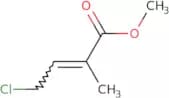
Methyl (2E)-4-chloro-2-methylbut-2-enoate
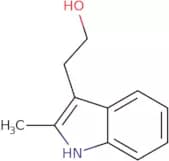
CAS:Versatile small molecule scaffoldFórmula:C6H9ClO2Pureza:Min. 95%Peso molecular:148.59 g/mol2-(2-Methyl-1H-indol-3-yl)ethan-1-ol
CAS:Versatile small molecule scaffold
Fórmula:C11H13NOPureza:Min. 95%Peso molecular:175.23 g/mol2-[5-(2-Chlorophenyl)-1,3,4-oxadiazol-2-yl]benzoic acid
CAS:Versatile small molecule scaffold
Fórmula:C15H9ClN2O3Pureza:Min. 95%Peso molecular:300.69 g/mol4,6-Dimethylisothiazolo[5,4-b]pyridin-3-amine
CAS:Versatile small molecule scaffold
Fórmula:C8H9N3SPureza:Min. 95%Peso molecular:179.24 g/mol7-Aminothieno[2,3-b]pyrazine-6-carboxylic acid
CAS:7-Aminothieno[2,3-b]pyrazine-6-carboxylic acid is an organic solvent that is soluble in water. It has a nitrogen atom, two silver atoms and a fatty acid. This compound has shown to have insulin resistance properties when it was expressed in mice and rats. 7-Aminothieno[2,3-b]pyrazine-6-carboxylic acid also has the ability to inhibit the growth of bacteria. It binds to silver halide and halide ions, which are found in tissues, and can be used as a contrast agent for X-rays or MRI scans of tissues.
Fórmula:C7H5N3O2SPureza:Min. 95%Peso molecular:195.2 g/molEthyl 7-aminothieno[2,3-b]pyrazine-6-carboxylate
CAS:Versatile small molecule scaffold
Fórmula:C9H9N3O2SPureza:Min. 95%Peso molecular:223.26 g/mol3-[(1-Hydroxy-2-methylpropan-2-yl)amino]-1λ⁶-thiolane-1,1-dione
CAS:Versatile small molecule scaffoldFórmula:C8H17NO3SPureza:Min. 95%Peso molecular:207.29 g/molRef: 3D-GCA87892
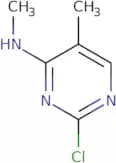
Producto descatalogado(2-Chloro-5-methyl-pyrimidin-4-yl)-methyl-amine
CAS:Versatile small molecule scaffold
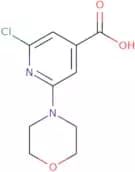
Fórmula:C6H8ClN3Pureza:Min. 95%Peso molecular:157.6 g/mol2-Chloro-6-(morpholin-4-yl)pyridine-4-carboxylic acid
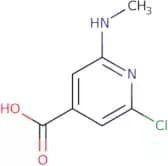
CAS:Versatile small molecule scaffoldFórmula:C10H11ClN2O3Pureza:Min. 95%Peso molecular:242.66 g/mol2-Chloro-6-(methylamino)pyridine-4-carboxylic acid
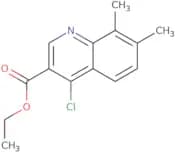
CAS:Versatile small molecule scaffoldFórmula:C7H7ClN2O2Pureza:Min. 95%Peso molecular:186.59 g/molEthyl 4-Chloro-7,8-dimethylquinoline-3-carboxylate
CAS:Versatile small molecule scaffold
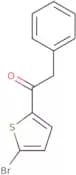
Fórmula:C14H14NO2ClPureza:Min. 95%Peso molecular:263.71 g/mol1-(5-Bromothiophen-2-yl)-2-phenylethan-1-one
CAS:Versatile small molecule scaffoldFórmula:C12H9BrOSPureza:Min. 95%Peso molecular:281.17 g/mol2,3,4-Triiodo-1H-pyrrole
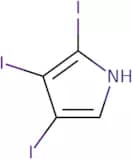
CAS:2,3,4-Triiodo-1H-pyrrole is a model compound that is used to study the reactivity of the functional groups on the molecule. The functional groups include an olefinic group (double bond) and a carbonyl group (single bond). The reactivity of these functional groups depends on their position in the molecule. If they are on adjacent carbon atoms, they will have similar reactivity. This model compound is classified as a reductant because it can be reduced by glutathione and other reductants. It has been shown that 2,3,4-Triiodo-1H-pyrrole can be synthesized from salicylic acid and lead iodide in a reaction with catalytic amounts of sodium borohydride.
Fórmula:C4H2I3NPureza:Min. 95%Peso molecular:444.78 g/mol5-(3-Hydroxyphenyl)pentanoic acid
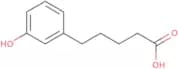
CAS:5-(3-Hydroxyphenyl)pentanoic acid (5HPP) is a fatty acid that has been isolated from the leaves of Cardunculus sp. and has shown pharmacological and nutritional properties. 5HPP has been shown to inhibit bacterial growth, which may be due to its ability to bind to bacterial DNA. 5HPP also binds to protein markers, such as methoxyphenol and phenolic, which are associated with antioxidant activity. 5HPP profiles have been determined using liquid chromatography in order to identify the major compounds in this phytochemical.
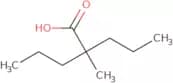
Fórmula:C11H14O3Pureza:Min. 95%Peso molecular:194.23 g/mol2-Methyl-2-propylpentanoic acid
CAS:2-Methyl-2-propylpentanoic acid is an organic compound that belongs to the class of primary alcohols with a chemical formula CH3(CH2)5COOH. It is an acidic, fatty acid ester that can be synthesized by methylation of pentanoic acid. 2-Methyl-2-propylpentanoic acid has been used as a preservative in food and cosmetics, but it is also used as an intermediate for pharmaceuticals and other organic compounds. The use of 2-methyl-2-propylpentanoic acid as a solvent has been limited because it is highly reactive and corrosive to metal surfaces. This product can react with other compounds to produce new products, such as hippuric acid or citric acid. One theory about the mechanism of this reaction suggests that the reaction proceeds through a free radical chain mechanism.
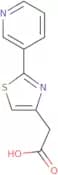
Fórmula:C9H18O2Pureza:Min. 95%Peso molecular:158.24 g/mol2-(2-(Pyridin-3-yl)thiazol-4-yl)acetic acid
CAS:Versatile small molecule scaffold
Fórmula:C10H8N2O2SPureza:Min. 95%Peso molecular:220.25 g/mol2-[(3,5-Dichlorophenyl)formamido]-2-methylpropanoic acid
CAS:Versatile small molecule scaffold
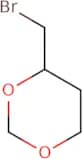
Fórmula:C11H11Cl2NO3Pureza:Min. 95%Peso molecular:276.11 g/mol4-(Bromomethyl)-1,3-dioxane
CAS:Versatile small molecule scaffold
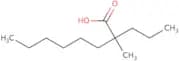
Fórmula:C5H9BrO2Pureza:Min. 95%Peso molecular:181.03 g/mol2-Methyl-2-propyloctanoic acid
CAS:Versatile small molecule scaffold
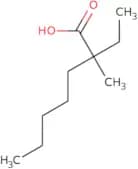
Fórmula:C12H24O2Pureza:Min. 95%Peso molecular:200.32 g/mol2-Ethyl-2-methylheptanoic acid
CAS:2-Ethyl-2-methylheptanoic acid is a monoester of 2-ethylhexanol. It has a crystalline structure and can be found in the form of spherical particles. 2-Ethyl-2-methylheptanoic acid has been shown to have synergistic effects with other surfactants, such as phosphoric acid solution, to extract organic compounds from various surfaces. The extraction process involves lowering the surface tension by adsorbing at least one molecule of the organic compound on the surface and then extracting it by contacting it with an appropriate solvent. Techniques such as scanning electron microscopy (SEM) are used to study the morphology of these spherical particles.
Fórmula:C10H20O2Pureza:Min. 95%Peso molecular:172.26 g/mol

![2-[5-(2-Chlorophenyl)-1,3,4-oxadiazol-2-yl]benzoic acid](/_next/image/?url=https%3A%2Fstatic.cymitquimica.com%2Fproducts%2F3D%2Fthumb-webp%2FGCA89441.webp&w=3840&q=75)
![4,6-Dimethylisothiazolo[5,4-b]pyridin-3-amine](/_next/image/?url=https%3A%2Fstatic.cymitquimica.com%2Fproducts%2F3D%2Fthumb-webp%2FGCA89166.webp&w=3840&q=75)
![7-Aminothieno[2,3-b]pyrazine-6-carboxylic acid](/_next/image/?url=https%3A%2Fstatic.cymitquimica.com%2Fproducts%2F3D%2Fthumb-webp%2FGCA88131.webp&w=3840&q=75)
![Ethyl 7-aminothieno[2,3-b]pyrazine-6-carboxylate](/_next/image/?url=https%3A%2Fstatic.cymitquimica.com%2Fproducts%2F3D%2Fthumb-webp%2FGCA88121.webp&w=3840&q=75)
![3-[(1-Hydroxy-2-methylpropan-2-yl)amino]-1λ⁶-thiolane-1,1-dione](/_next/image/?url=https%3A%2Fstatic.cymitquimica.com%2Fproducts%2F3D%2Fthumb-webp%2FGCA87892.webp&w=3840&q=75)
![2-[(3,5-Dichlorophenyl)formamido]-2-methylpropanoic acid](/_next/image/?url=https%3A%2Fstatic.cymitquimica.com%2Fproducts%2F3D%2Fthumb-webp%2FGBA11041.webp&w=3840&q=75)