Building Blocks
Subcategorías de "Building Blocks"
- Ácidos borónicos y derivados del ácido borónico(5.780 productos)
- Building Blocks quirales(1.240 productos)
- Building Blocks de hidrocarburos(6.100 productos)
- Building Blocks orgánicos(61.009 productos)
Se han encontrado 205248 productos de "Building Blocks"
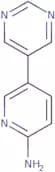
5-(Pyrimidin-5-yl)pyridin-2-amine
CAS:Versatile small molecule scaffold
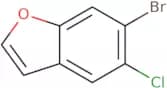
Fórmula:C9H8N4Pureza:Min. 95%Peso molecular:172.19 g/mol6-Bromo-5-chloro-1-benzofuran
CAS:Versatile small molecule scaffold
Fórmula:C8H4BrClOPureza:Min. 95%Peso molecular:231.47 g/molRef: 3D-CHC36844
Producto descatalogado1-Methoxypiperidin-4-amine
CAS:Versatile small molecule scaffold
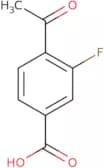
Fórmula:C6H14N2OPureza:Min. 95%Peso molecular:130.19 g/mol4-Acetyl-3-fluorobenzoic acid
CAS:Versatile small molecule scaffold
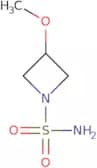
Fórmula:C9H7FO3Pureza:Min. 95%Peso molecular:182.15 g/mol3-Methoxyazetidine-1-sulfonamide
CAS:Versatile small molecule scaffold
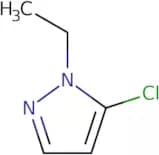
Fórmula:C4H10N2O3SPureza:Min. 95%Peso molecular:166.2 g/mol5-Chloro-1-ethyl-1H-pyrazole
CAS:5-Chloro-1-ethyl-1H-pyrazole is an alkylhydrazine. It can be prepared by reacting 5-chloro-1,2-dihydro-3H-[1,2,4]triazole with ethyl chloride and sodium hydroxide in water. The yield of 5-chloro-1,2-dihydro-[3H]-pyrazole can be increased by using a dimethylhydrazine as the starting material. The reaction of 5-chloro-[3H]-pyrazole with benzoyl chloride in acetic acid yields the corresponding alkylhydrazone. The reaction of 5-(chloromethyl)-1,2-(dihydro)pyrazole with potassium bromide yields the corresponding dimethylhydrazine. Hydrazines and hydrazones are both nitrogen containing compounds that react with organic compounds in a similar way to form
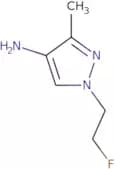
Fórmula:C5H7ClN2Pureza:Min. 95%Peso molecular:130.57 g/mol1-(2-Fluoroethyl)-3-methyl-1H-pyrazol-4-amine
CAS:Versatile small molecule scaffoldFórmula:C6H10FN3Pureza:Min. 95%Peso molecular:143.16 g/molrac-(3R,4R)-1-{[(9H-Fluoren-9-yl)methoxy]carbonyl}pyrrolidine-3,4-dicarboxylic acid
CAS:Versatile small molecule scaffold
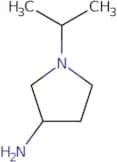
Fórmula:C21H19NO6Pureza:Min. 95%Peso molecular:381.4 g/mol1-(Propan-2-yl)pyrrolidin-3-amine
CAS:Versatile small molecule scaffold
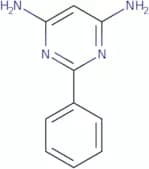
Fórmula:C7H16N2Pureza:Min. 95%Peso molecular:128.22 g/mol2-Phenylpyrimidine-4,6-diamine
CAS:Versatile small molecule scaffold
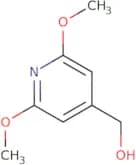
Fórmula:C10H10N4Pureza:Min. 95%Peso molecular:186.21 g/mol2,6-Dimethoxy-4-pyridinemethanol
CAS:Versatile small molecule scaffold
Fórmula:C8H11NO3Pureza:Min. 95%Peso molecular:169.18 g/mol2-[(2-Methylphenyl)amino]benzonitrile
CAS:Versatile small molecule scaffold
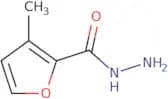
Fórmula:C14H12N2Pureza:Min. 95%Peso molecular:208.26 g/mol3-Methylfuran-2-carbohydrazide
CAS:Versatile small molecule scaffold
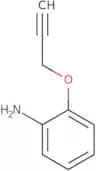
Fórmula:C6H8N2O2Pureza:Min. 95%Peso molecular:140.14 g/mol2-(2-Propyn-1-yloxy)aniline
CAS:Versatile small molecule scaffold
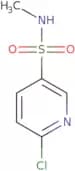
Fórmula:C9H9NOPureza:Min. 95%Peso molecular:147.17 g/mol6-Chloro-N-methylpyridine-3-sulfonamide
CAS:Versatile small molecule scaffold
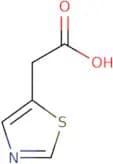
Fórmula:C6H7ClN2O2SPureza:Min. 95%Peso molecular:206.65 g/mol2-(Thiazol-5-yl)acetic acid
CAS:2-(Thiazol-5-yl)acetic acid is an antimicrobial that is used as a fungicide. It has been shown to inhibit the growth of Fusarium and Curvularia. 2-(Thiazol-5-yl)acetic acid also has fungicidal activity against Refluxing, butanoic acid, and Oxysporum. This compound has been found to be effective against fungi in a number of different studies. 2-(Thiazol-5-yl)acetic acid inhibits the synthesis of ribosomes by inhibiting mRNA translation, leading to cell death by inhibition of protein synthesis.
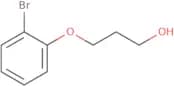
Fórmula:C5H5NO2SPureza:Min. 95%Peso molecular:143.16 g/mol3-(2-Bromophenoxy)propan-1-ol
CAS:Versatile small molecule scaffold
Fórmula:C9H11BrO2Pureza:Min. 95%Peso molecular:231.09 g/molN-Methylquinolin-2-amine
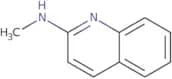
CAS:N-Methylquinolin-2-amine is a quinoline derivative that binds to the fatty acid ester of amides, which are found on the surface of cells. It has high specificity for hydroxy groups and is operational in aqueous solutions. N-Methylquinolin-2-amine has been shown to have activity against Alzheimer's disease by binding to the fatty acid ester of amide and blocking the function of ligands. The reaction time can be reduced by adding hydroxy group and alkyl group to the molecule. A molecular orbital diagram shows how this compound reacts with an amide substrate. This drug can be used as a diagnostic or postoperative treatment for Alzheimer's disease.
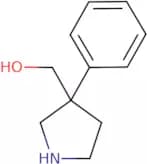
Fórmula:C10H10N2Pureza:Min. 95%Peso molecular:158.2 g/mol(3-Phenylpyrrolidin-3-yl)methanol
CAS:Versatile small molecule scaffold
Fórmula:C11H15NOPureza:Min. 95%Peso molecular:177.24 g/molRef: 3D-CCA42375
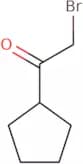
Producto descatalogado2-bromo-1-cyclopentylethan-1-one
CAS:2-bromo-1-cyclopentylethan-1-one is a racemic mixture of two enantiomers, 2-bromo-1-(2-methylpropyl)ethanone and 1-(2-methylpropyl)-2-(phenyl)ethanone. The compound has been shown to inhibit cell proliferation in vitro and has been used in the treatment of allergies without any observed side effects. This drug may act by inhibition of the synthesis of L-amino acids or vitamin B6, which are required for cell division. It may also have an effect on alkylating DNA, leading to inhibition of protein synthesis.
Fórmula:C7H11BrOPureza:Min. 95%Peso molecular:191.07 g/mol


![rac-(3R,4R)-1-{[(9H-Fluoren-9-yl)methoxy]carbonyl}pyrrolidine-3,4-dicarboxylic acid](/_next/image/?url=https%3A%2Fstatic.cymitquimica.com%2Fproducts%2F3D%2Fthumb-webp%2FCHB98408.webp&w=3840&q=75)
![2-[(2-Methylphenyl)amino]benzonitrile](/_next/image/?url=https%3A%2Fstatic.cymitquimica.com%2Fproducts%2F3D%2Fthumb-webp%2FCCA57772.webp&w=3840&q=75)