Building Blocks
Subcategorías de "Building Blocks"
- Ácidos borónicos y derivados del ácido borónico(5.780 productos)
- Building Blocks quirales(1.241 productos)
- Building Blocks de hidrocarburos(6.100 productos)
- Building Blocks orgánicos(61.017 productos)
Se han encontrado 205265 productos de "Building Blocks"
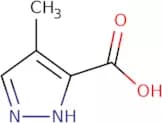
4-Methylpyrazole-3-carboxylic acid
CAS:4-Methylpyrazole-3-carboxylic acid is a monocarboxylic acid. It is a byproduct of the reaction between chloride and hydrogen chloride. 4-Methylpyrazole-3-carboxylic acid has been shown to have carcinogenic properties in animals, but not in humans. The mechanism for this effect is thought to be due to its ability to inhibit IL-17a production, which may lead to an increase in tumor growth. 4-Methylpyrazole-3-carboxylic acid has been shown to inhibit muscle glycogen synthesis and focus formation. It also inhibits the oxidation of fatty acids by binding with the enzyme acyl CoA oxidase. This compound can be used as an agrochemical and dechlorinated organic solvent for the extraction of phenylephrine from plants like tobacco leaves.
Fórmula:C5H6N2O2Pureza:Min. 95%Forma y color:PowderPeso molecular:126.11 g/mol4-(p-Tolyl)butan-2-one
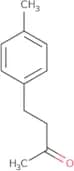
CAS:4-(p-Tolyl)butan-2-one (4PtBA) is a chemical intermediate that is used in the synthesis of other compounds, such as pharmaceuticals. The reaction sequence begins with the addition of acetone to a solution of triphenylphosphine in an inert solvent. The resulting solution is then treated with a catalytic amount of rhodium and carbon monoxide gas. This yields 4PtBA and phosphine oxide, which are separated by distillation. 4PtBA can be reacted with phenylacetylene to produce diphenyldibenzofuran.
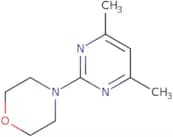
Fórmula:C11H14OPureza:Min. 95%Peso molecular:162.23 g/mol4-(4,6-Dimethylpyrimidin-2-yl)morpholine
CAS:Versatile small molecule scaffold
Fórmula:C10H15N3OPureza:Min. 95%Peso molecular:193.25 g/molRef: 3D-HAA74951
Producto descatalogado2-(Thiazol-4-yl)ethanamine
CAS:2-(Thiazol-4-yl)ethanamine is a histamine H1 receptor agonist that is used in tumor models to study the activation of histamine receptors. It has been shown to be an orally active ligand for the histamine H1 receptor. 2-(Thiazol-4-yl)ethanamine binds to the benzyl group, which is present in both histamine and the h1 receptor, and interacts with the imidazole ring of histamine and phenyl ring of the h1 receptor. This drug has physicochemical properties that are similar to those of histamine.
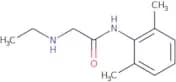
Fórmula:C5H8N2SPureza:Min. 95%Peso molecular:128.2 g/molMonoethylglycinexylidine
CAS:Monoethylglycinexylidine (MEGX) is a drug that has been shown to be effective in the treatment of chronic viral hepatitis. It has an activity index of 0.6-2.0 and can be used as a diagnostic tool for hepatic impairment. MEGX has also been found to be more effective in patients with primary sclerosing cholangitis than in those with non-primary sclerosing cholangitis. MEGX inhibits the P450 enzyme, which is involved in the metabolism of xenobiotics and endogenous compounds, and also inhibits Lidocaine-induced bronchoconstriction. The structural analysis of MEGX showed that it forms a stable complex with the active site of P450 enzymes, but does not form stable complexes with other enzymes such as cytochrome P450 reductase or epoxide hydrolase. In vivo experiments have shown that MEGX inhibits liver regeneration in mice by inhibiting hepatocyte
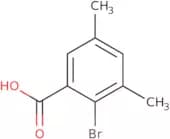
Fórmula:C12H18N2OPureza:Min. 95%Peso molecular:206.28 g/mol2-Bromo-3,5-dimethylbenzoic acid
CAS:Versatile small molecule scaffold
Fórmula:C9H9BrO2Pureza:Min. 95%Peso molecular:229.07 g/mol5-Methylquinoline
CAS:5-Methylquinoline is a quinoline derivative that is used in the synthesis of other quinoline derivatives. It can be synthesized from cinnamaldehyde, which can be obtained from cinnamic acid or benzaldehyde. 5-Methylquinoline has been shown to have antioxidant properties and inhibit colorectal carcinoma cells in vitro. The compound also inhibits the growth of caco-2 cells. One isomer of 5-methylquinoline, ethenyl, has been shown to cause a shift in the spectrum of light absorbed by caco-2 cells.
Fórmula:C10H9NPureza:Min. 95%Peso molecular:143.18 g/mol7-Ethylquinoline
CAS:7-Ethylquinoline is a quinoline derivative that has been shown to have potential as an antimalarial drug. 7-Ethylquinoline has been found to be effective against malaria parasites in the laboratory, with many of its derivatives having high yields and low toxicity. The structure of 7-ethylquinoline can be analysed by nuclear magnetic resonance (NMR) spectroscopy, which can also be used to identify the isomers present. 7-Ethylquinoline is a heterocyclic ring that contains a basicity at position 3, with a pKa value of 10.2. This chemical does not contain any contaminants and can be produced using various techniques.
Fórmula:C11H11NPureza:Min. 95%Peso molecular:157.21 g/mol1-(2-Methylpropyl)-2,5-dihydro-1H-1,2,3,4-tetrazole-5-thione
CAS:Versatile small molecule scaffold
Fórmula:C5H10N4SPureza:Min. 95%Peso molecular:158.23 g/mol3-(3-Methoxyphenyl)prop-2-ynoic acid
CAS:Versatile small molecule scaffold
Fórmula:C10H8O3Pureza:Min. 95%Peso molecular:176.17 g/mol(R)-1-(Pyridin-3-yl)ethanol
CAS:The reaction rate of (R)-1-(pyridin-3-yl)ethanol is dependent on the type of organic ligands that are present. The biotransformations of this compound include triazolium, mutant, and biomolecular stereoselective reactions. The coordination of this compound with ionic liquids has been shown to be stereoselective. This molecule has also been synthesized using chiral ruthenium complexes as catalysts in order to generate a chiral product.
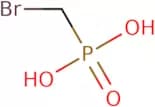
Fórmula:C7H9NOPureza:Min. 95%Peso molecular:123.16 g/mol(Bromomethyl)phosphonic acid
CAS:Bromomethylphosphonic acid is a molecule that contains a carbonyl group, aliphatic hydrocarbon and an aromatic hydrocarbon. When reacted with humans, the molecule can be found in the reaction solution. Bromomethylphosphonic acid has been shown to have chemical stability and is not affected by alcohol residue or nitro groups. It has also been observed to inhibit fatty acid synthesis and to inhibit the activity of animal enzymes such as carboxylesterases in animals. This compound has optical properties that are acidic and are used in pharmaceutical preparations.
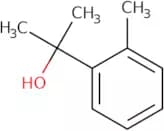
Fórmula:CH4BrO3PPureza:Min. 95%Peso molecular:174.92 g/mol2-(2-Methylphenyl)propan-2-ol
CAS:2-(2-Methylphenyl)propan-2-ol is an abiotic chemical that is used as a solvent for ethanol. It has been shown to be toxic to microalgae and fatty acids, by inhibiting the conversion of nitrate into nitrogen gas. 2-(2-Methylphenyl)propan-2-ol has also been shown to inhibit denitrification in the presence of nitrate and carbon sources. The mechanism of inhibition is unknown, but it may be due to the formation of an unidentified aromatic hydrocarbon that prevents nitrite reduction.
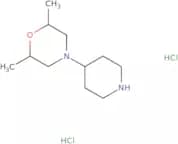
Fórmula:C10H14OPureza:Min. 95%Peso molecular:150.22 g/mol2,6-Dimethyl-4-(piperidin-4-yl)morpholine dihydrochloride
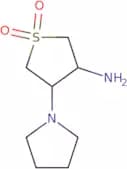
CAS:Versatile small molecule scaffoldFórmula:C11H24Cl2N2OPureza:Min. 95%Peso molecular:271.22 g/molTetrahydro-4-(1-pyrrolidinyl)-3-thiophenamine 1,1-dioxide
CAS:Versatile small molecule scaffold
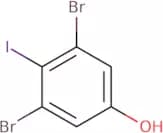
Fórmula:C8H16N2O2SPureza:Min. 95%Peso molecular:204.29 g/mol3,5-Dibromo-4-iodophenol
CAS:Versatile small molecule scaffold
Fórmula:C6H3Br2IOPureza:Min. 95%Peso molecular:377.8 g/mol2-{1-[(tert-Butoxy)carbonyl]azetidin-2-yl}acetic acid
CAS:Versatile small molecule scaffold
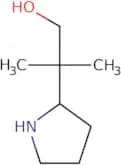
Fórmula:C10H17NO4Pureza:Min. 95%Peso molecular:215.25 g/mol2-Methyl-2-(pyrrolidin-2-yl)propan-1-ol
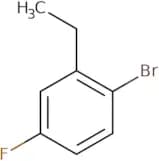
CAS:Versatile small molecule scaffoldFórmula:C8H17NOPureza:Min. 95%Peso molecular:143.23 g/mol1-Bromo-2-ethyl-4-fluorobenzene
CAS:Versatile small molecule scaffold
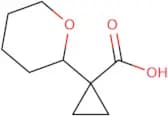
Fórmula:C8H8BrFPureza:Min. 95%Peso molecular:203.05 g/mol1-(Oxan-2-yl)cyclopropane-1-carboxylic acid
CAS:Versatile small molecule scaffoldFórmula:C9H14O3Pureza:Min. 95%Peso molecular:170.21 g/mol



![2-{1-[(tert-Butoxy)carbonyl]azetidin-2-yl}acetic acid](/_next/image/?url=https%3A%2Fstatic.cymitquimica.com%2Fproducts%2F3D%2Fthumb-webp%2FGWC96879.webp&w=3840&q=75)