Building Blocks
Esta sección contiene productos fundamentales para la síntesis de compuestos orgánicos y biológicos. Building blocks son los materiales de partida esenciales utilizados para construir moléculas complejas a través de diversas reacciones químicas. Desempeñan un papel crítico en el descubrimiento de fármacos, la ciencia de materiales y la investigación química. En CymitQuimica, ofrecemos una gama diversa de building blocks de alta calidad para apoyar sus investigaciones innovadoras y proyectos industriales, asegurando que tenga los componentes esenciales para una síntesis exitosa.
Subcategorías de "Building Blocks"
- Ácidos borónicos y derivados del ácido borónico(5.774 productos)
- Building Blocks quirales(1.237 productos)
- Building Blocks de hidrocarburos(6.098 productos)
- Building Blocks orgánicos(60.970 productos)
Se han encontrado 205134 productos de "Building Blocks"
Ordenar por
Pureza (%)
0
100
|
0
|
50
|
90
|
95
|
100
Potassium hydrogen [2-carboxy-2-(propan-2-ylidene)ethyl]phosphonate
CAS:Versatile small molecule scaffold
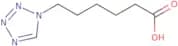
Fórmula:C6H10KO5PPureza:Min. 95%Peso molecular:232.21 g/mol6-(1H-1,2,3,4-Tetrazol-1-yl)hexanoic acid
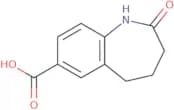
CAS:Versatile small molecule scaffoldFórmula:C7H12N4O2Pureza:Min. 95%Peso molecular:184.2 g/mol2-Oxo-2,3,4,5-tetrahydro-1H-1-benzazepine-7-carboxylic acid
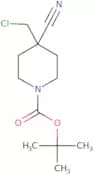
CAS:Versatile small molecule scaffoldFórmula:C11H11NO3Pureza:Min. 95%Peso molecular:205.21 g/moltert-Butyl 4-(chloromethyl)-4-cyanopiperidine-1-carboxylate
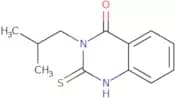
CAS:Versatile small molecule scaffoldFórmula:C12H19ClN2O2Pureza:Min. 95%Peso molecular:258.74 g/mol2,3-Dihydro-3-isobutyl-2-thioxoquinazolin-4(1H)-one
CAS:Versatile small molecule scaffoldFórmula:C12H14N2OSPureza:Min. 95%Peso molecular:234.32 g/mol2-(Bromomethyl)-1-oxaspiro[4.5]decane
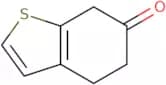
CAS:Versatile small molecule scaffoldFórmula:C10H17BrOPureza:Min. 95%Peso molecular:233.14 g/mol4,5,6,7-Tetrahydro-1-benzothiophen-6-one
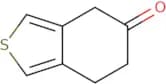
CAS:Versatile small molecule scaffoldFórmula:C8H8OSPureza:Min. 95%Peso molecular:152.22 g/mol4,5,6,7-Tetrahydro-2-benzothiophen-5-one
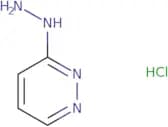
CAS:Versatile small molecule scaffoldFórmula:C8H8OSPureza:Min. 95%Peso molecular:152.22 g/mol3-Hydrazinopyridazine hydrochloride
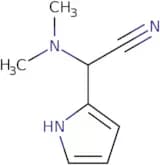
CAS:3-Hydrazinopyridazine hydrochloride is an inorganic compound with the chemical formula (NH)NCl. It is a white solid that is soluble in water and alcohols. 3-Hydrazinopyridazine hydrochloride catalyzes the reduction of various compounds, including hydrazine to ammonia, phosphorus to phosphine, and carbon dioxide to methane. This chemical is used as a catalyst for the synthesis of other compounds. 3-Hydrazinopyridazine hydrochloride also has hypotensive effects and can be used as a pharmaceutical agent.Fórmula:C4H7ClN4Pureza:Min. 95%Peso molecular:146.58 g/mol2-(Dimethylamino)-2-(1H-pyrrol-2-yl)acetonitrile
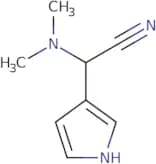
CAS:Versatile small molecule scaffoldFórmula:C8H11N3Pureza:Min. 95%Peso molecular:149.19 g/mol2-(Dimethylamino)-2-(1H-pyrrol-3-yl)acetonitrile
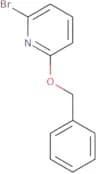
CAS:Versatile small molecule scaffoldFórmula:C8H11N3Pureza:Min. 95%Peso molecular:149.19 g/mol2-Bromo-6-benzyloxypyridine
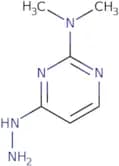
CAS:2-Bromo-6-benzyloxypyridine is a nitrate compound that has been synthesized to form a new ligand. It has shown magnetic and hydrogenolysis properties. The molecular weight of the compound is 242.2 g/mol. 2-Bromo-6-benzyloxypyridine is soluble in chloroform, ethanol, acetone, and ether. The melting point of this compound is 210 °C, and it crystallizes in the orthorhombic system with a space group Pna21. The crystal x-ray diffraction pattern of this compound was obtained at 100 KV and 40 mA, which showed that the sample contained hydrogen atoms as well as chloride ions. This compound can be used for amination reactions and may also be useful for sodium trifluoroacetate synthesis.Fórmula:C12H10BrNOPureza:Min. 95%Peso molecular:264.12 g/mol4-Hydrazinylidene-N,N-dimethyl-1,4-dihydropyrimidin-2-amine
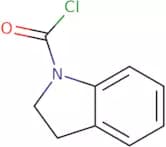
CAS:Versatile small molecule scaffoldFórmula:C6H11N5Pureza:Min. 95%Peso molecular:153.19 g/mol2,3-Dihydro-1H-indole-1-carbonyl chloride
CAS:Versatile small molecule scaffold
Fórmula:C9H8ClNOPureza:Min. 95%Peso molecular:181.62 g/mol1-(2-Chloropyridine-3-yl)hydrazine hydrochloride
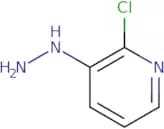
CAS:1-(2-Chloropyridine-3-yl)hydrazine hydrochloride is a white crystalline solid that is soluble in water and ethanol. It has the chemical formula C6H5NClNHNH2. This compound is an isothiocyanate that reacts with acetal, hydrazine, thiazolidone, diethyl, hydrochloric acid, dimethyl or dicarboxylate to form a cyclized product. This product can be used as a herbicide by reacting with the phenyl group of acetaldehyde to form a phenoxyacetal. It also reacts with nitrous acid to form an aziridinium ion intermediate that reacts with ethoxycarbonylmethyl to form ethoxycarbonylmethylthioisothiocyanate.Fórmula:C5H7Cl2N3Pureza:Min. 95%Peso molecular:180.03 g/mol2-Amino-N-(cyanomethyl)acetamide methanesulfonate
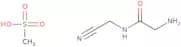
CAS:Versatile small molecule scaffoldFórmula:C5H11N3O4SPureza:Min. 95%Peso molecular:209.23 g/mol5-Amino-2-(hydroxymethyl)phenylboronic Acid Cyclic Monoester
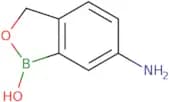
CAS:5-Amino-2-(hydroxymethyl)phenylboronic acid cyclic monoester is an organic compound that is a ligand for metal ions. It binds to metal ions by donating a hydrogen atom from the hydroxyl group and forming a covalent bond with the metal ion. This ligand has been used in the synthesis of nanoparticles and it has also been used as a ligand in binding constants and affinity constants. 5-Amino-2-(hydroxymethyl)phenylboronic acid cyclic monoester has been shown to have high affinity for phenylboronic acid. This ligand undergoes nucleophilic attack by water, which leads to the release of boric acid and alcohol.Fórmula:C7H8BNO2Pureza:Min. 95%Peso molecular:148.96 g/mol4-{[(tert-Butyldimethylsilyl)oxy]methyl}cyclohexan-1-ol
CAS:Versatile small molecule scaffoldFórmula:C13H28O2SiPureza:Min. 95%Peso molecular:244.44 g/mol1-[2-(4-Methoxy-phenoxy)-ethyl]-piperazine
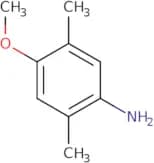
CAS:Versatile small molecule scaffoldFórmula:C13H20N2O2Pureza:Min. 95%Peso molecular:236.32 g/mol4-Methoxy-2,5-dimethylaniline
CAS:Versatile small molecule scaffoldFórmula:C9H13NOPureza:Min. 95%Peso molecular:151.21 g/mol
![Potassium hydrogen [2-carboxy-2-(propan-2-ylidene)ethyl]phosphonate](/_next/image/?url=https%3A%2Fstatic.cymitquimica.com%2Fproducts%2F3D%2Fthumb-webp%2FSEA01281.webp&w=3840&q=75)

![2-(Bromomethyl)-1-oxaspiro[4.5]decane](/_next/image/?url=https%3A%2Fstatic.cymitquimica.com%2Fproducts%2F3D%2Fthumb-webp%2FSEA03886.webp&w=3840&q=75)
![4-{[(tert-Butyldimethylsilyl)oxy]methyl}cyclohexan-1-ol](/_next/image/?url=https%3A%2Fstatic.cymitquimica.com%2Fproducts%2F3D%2Fthumb-webp%2FSEA10708.webp&w=3840&q=75)
![1-[2-(4-Methoxy-phenoxy)-ethyl]-piperazine](/_next/image/?url=https%3A%2Fstatic.cymitquimica.com%2Fproducts%2F3D%2Fthumb-webp%2FSEA13244.webp&w=3840&q=75)