Building Blocks
Esta sección contiene productos fundamentales para la síntesis de compuestos orgánicos y biológicos. Building blocks son los materiales de partida esenciales utilizados para construir moléculas complejas a través de diversas reacciones químicas. Desempeñan un papel crítico en el descubrimiento de fármacos, la ciencia de materiales y la investigación química. En CymitQuimica, ofrecemos una gama diversa de building blocks de alta calidad para apoyar sus investigaciones innovadoras y proyectos industriales, asegurando que tenga los componentes esenciales para una síntesis exitosa.
Subcategorías de "Building Blocks"
- Ácidos borónicos y derivados del ácido borónico(5.778 productos)
- Building Blocks quirales(1.243 productos)
- Building Blocks de hidrocarburos(6.097 productos)
- Building Blocks orgánicos(61.048 productos)
Se han encontrado 203115 productos de "Building Blocks"
Ordenar por
Pureza (%)
0
100
|
0
|
50
|
90
|
95
|
100
4-[1-(tert-Butoxy)-2-methyl-1-oxopropan-2-yl]benzoic acid
CAS:<p>Versatile small molecule scaffold</p>Fórmula:C15H20O4Pureza:Min. 95%Peso molecular:264.32 g/mol2-Naphthol-6,8-disulfonic acid
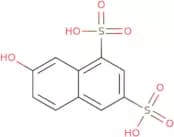
CAS:2-Naphthol-6,8-disulfonic acid is a synthetic organic compound that was identified as an impurity in the glyphosate formulation, Roundup. 2-Naphthol-6,8-disulfonic acid has been shown to have good analytical properties and can be used for the analysis of glyphosate in wastewater samples. It is thermally stable with a melting point of about 220°C. The UV detection wavelength ranges from 220nm to 240nm and the chloride ion is detectable at concentrations greater than 0.1 ppm. 2-Naphthol-6,8-disulfonic acid can also be used for the analysis of fatty acids in plants and animals.Fórmula:C10H8O7S2Pureza:Min. 95%Forma y color:White PowderPeso molecular:304.3 g/mol2-(4-Methoxyphenyl)ethyl bromide
CAS:2-(4-Methoxyphenyl)ethyl bromide is an adenosine receptor antagonist that can be used in cancer treatment. It has been shown to inhibit the growth of cancer cells by blocking the binding of adenosine to its receptors and inhibiting phosphodiesterase, which is an enzyme that breaks down the key cellular messenger, cyclic AMP (cAMP). 2-(4-Methoxyphenyl)ethyl bromide also inhibits the production of aphanorphine, a morphine analogue that has been shown to stimulate endoplasmic reticulum stress and apoptosis in cancer cells. This compound has been synthesised and tested on animal models with promising results.Fórmula:C9H11BrOPureza:Min. 95%Peso molecular:215.09 g/molBromo-PEG4-azide
CAS:<p>Bromo-PEG4-azide is a PEG compound with two different functional groups (also known as heterobifunctional). Unlike homobifunctional PEG compounds (same functional group on both ends), this type of compounds are more versatile as have two different anchor points. Bromo-PEG4-azide is used as a linker and spacer to add a PEG moiety, via pegylation (a bioconjugation technique) to proteins, peptides, oligonucleotides, small molecules and nanoparticles.</p>Fórmula:C10H20BrN3O4Pureza:Min. 95%Peso molecular:326.19 g/mol3,4,5-Trimethoxybenzoyl chloride
CAS:<p>3,4,5-Trimethoxybenzoyl Chloride is a reactive, active chemical that is used in the synthesis of cytotoxic amides. It is prepared by reacting 3,4,5-trimethoxybenzoic acid with an amine or ammonia in the presence of a base. The reaction yields an amide substituted at the 3- and 4-positions with trimethoxyphenyl groups.</p>Fórmula:C10H11ClO4Pureza:Min. 95%Peso molecular:230.64 g/molL-Glutamic acid 5-benzyl ester
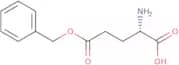
CAS:L-Glutamic acid 5-benzyl ester is an amino acid that has been synthesized to have a lysine residue. It is an ester hydrochloride and has been shown to have broad-spectrum antimicrobial properties. L-glutamic acid 5-benzyl ester's antimicrobial activity is thought to be due to its chemical structure which allows it to act as an antimicrobial peptide, binding to receptors on the surface of bacterial cells and inhibiting their growth. L-glutamic acid 5-benzyl ester also inhibits osteogenic genes in cervical cancer cells, but not in normal cells.Fórmula:C12H15NO4Pureza:Min. 95%Forma y color:White Off-White PowderPeso molecular:237.25 g/moltert-Butyl 3-(4-aminophenyl)pyrrolidine-1-carboxylate
CAS:Versatile small molecule scaffoldFórmula:C15H22N2O2Pureza:Min. 95%Peso molecular:262.35 g/moltert-Butyl 7-bromoheptanoate
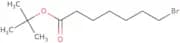
CAS:<p>Versatile small molecule scaffold</p>Fórmula:C11H21BrO2Pureza:Min. 95%Peso molecular:265.19 g/mol4-Benzyloxy-1-butanol
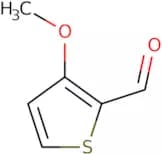
CAS:Producto controlado<p>Versatile small molecule scaffold</p>Fórmula:C11H16O2Pureza:Min. 95%Peso molecular:180.24 g/mol3-Methoxythiophene-2-carbaldehyde
CAS:<p>3-Methoxythiophene-2-carbaldehyde is a ligand that has been shown to form a stable complex with potassium chloride. This compound is also reactive, and can be stabilized in the reaction vessel. In the presence of sulfate ions, 3-methoxythiophene-2-carbaldehyde will react to form a phosphotungstic acid precipitate. The dehydrated salt can be recrystallized by adding phosphotungstic acid, which stabilizes the product.</p>Fórmula:C6H6O2SPureza:Min. 95%Peso molecular:142.18 g/mol5-(2-Aminoethyl)thiophene-2-sulfonamide hydrochloride
CAS:Versatile small molecule scaffoldFórmula:C6H11ClN2O2S2Pureza:Min. 95%Peso molecular:242.8 g/mol(2S,3R)-2-((((9H-Fluoren-9-yl)methoxy)carbonyl)amino)-3-methoxybutanoic acid
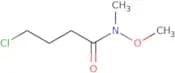
CAS:Versatile small molecule scaffoldFórmula:C20H21NO5Pureza:Min. 95%Peso molecular:355.4 g/mol4-Chloro-N-methoxy-N-methylbutanamide
CAS:<p>Versatile small molecule scaffold</p>Fórmula:C6H12ClNO2Pureza:Min. 95%Peso molecular:165.62 g/mol4(4,4,5,5-Tetramethyl-1,3,2-dioxaborolan-2-yl)-2,3-dihydro-1H-inden-1-one
CAS:<p>Versatile small molecule scaffold</p>Fórmula:C15H19BO3Pureza:Min. 95%Peso molecular:258.12 g/mol5-bromo-3-iodopyrazolo[1,5-a]pyridine
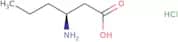
CAS:Versatile small molecule scaffoldFórmula:C7H4BrIN2Pureza:Min. 95%Peso molecular:322.9 g/mol(S)-3-Aminohexanoic acid hydrochloride ee
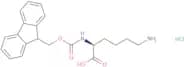
CAS:<p>Versatile small molecule scaffold</p>Fórmula:C6H14ClNO2Pureza:Min. 95%Peso molecular:167.63 g/molFmoc-Lys-OH·HCl
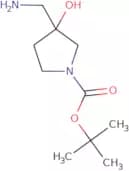
CAS:<p>Fmoc-Lys-OH·HCl is an acidic pyrylium that has been shown to be a potent inhibitor of tumor vasculature. It binds to the human serum albumin and inhibits the binding of ligands to the receptor tyrosine kinases, which are involved in brain tumor proliferation. Fmoc-Lys-OH·HCl has also been shown to inhibit the growth of cancer cells by binding to cell membrane receptors and inhibiting protein synthesis. This compound is also isomeric, meaning it can exist in different forms with different properties.</p>Fórmula:C21H24N2O4·HClPureza:Min. 95 Area-%Forma y color:White PowderPeso molecular:404.89 g/moltert-butyl 3-(aminomethyl)-3-hydroxypyrrolidine-1-carboxylate
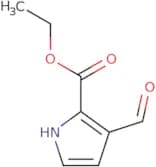
CAS:Versatile small molecule scaffoldFórmula:C10H20N2O3Pureza:Min. 95%Peso molecular:216.3 g/molethyl 3-formyl-1H-pyrrole-2-carboxylate
CAS:<p>Ethyl 3-formyl-1H-pyrrole-2-carboxylate is a formyl compound with the molecular formula C8H8O3. It is a colorless liquid that has a strong odor. The compound can be obtained by the reaction of ethyl acetoacetate and pyrrole in the presence of aluminum chloride. The compound has been studied for its nuclear magnetic resonance (NMR) properties. It has two conformers, which are distinguished by their different chemical shifts, and this difference can be used to study coupling between the carbonyl group and other groups in the molecule.</p>Fórmula:C8H9NO3Pureza:Min. 95%Peso molecular:167.2 g/mol1-Phenyl-1H-pyrazol-4-amine
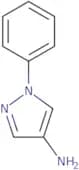
CAS:1-Phenyl-1H-pyrazol-4-amine is a white crystalline solid that can be used in organic synthesis. It is soluble in water and acetone, but insoluble in ether and chloroform. The chemical formula for 1-phenyl-1H-pyrazol-4-amine is C6H5N3O. It has a molecular weight of 147.17, an empirical formula of C6H5N3O and a density of 1.47g/mL at 20°C. 1-Phenyl-1H-pyrazol-4-amine reacts with the hydroxyl group on l -glutamic acid to form the corresponding ester, which can be hydrolyzed under alkaline conditions to produce ammonia and benzoic acid. This molecule also contains an anion that can be deprotonated by an alkali metal such as sodium or potassium to form the corresponding salt, whichFórmula:C9H9N3Pureza:Min. 95%Peso molecular:159.19 g/mol
![4-[1-(tert-Butoxy)-2-methyl-1-oxopropan-2-yl]benzoic acid](/_next/image/?url=https%3A%2Fstatic.cymitquimica.com%2Fproducts%2F3D%2Fthumb-webp%2FNKD15780.webp&w=3840&q=75)








![5-bromo-3-iodopyrazolo[1,5-a]pyridine](/_next/image/?url=https%3A%2Fstatic.cymitquimica.com%2Fproducts%2F3D%2Fthumb-webp%2FCEC88182.webp&w=3840&q=75)