Building Blocks
Esta sección contiene productos fundamentales para la síntesis de compuestos orgánicos y biológicos. Building blocks son los materiales de partida esenciales utilizados para construir moléculas complejas a través de diversas reacciones químicas. Desempeñan un papel crítico en el descubrimiento de fármacos, la ciencia de materiales y la investigación química. En CymitQuimica, ofrecemos una gama diversa de building blocks de alta calidad para apoyar sus investigaciones innovadoras y proyectos industriales, asegurando que tenga los componentes esenciales para una síntesis exitosa.
Subcategorías de "Building Blocks"
- Ácidos borónicos y derivados del ácido borónico(5.778 productos)
- Building Blocks quirales(1.243 productos)
- Building Blocks de hidrocarburos(6.099 productos)
- Building Blocks orgánicos(61.038 productos)
Se han encontrado 205376 productos de "Building Blocks"
Ordenar por
Pureza (%)
0
100
|
0
|
50
|
90
|
95
|
100
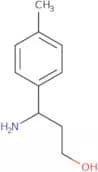
DL-beta-3-p-tolylalaninol
CAS:Versatile small molecule scaffold
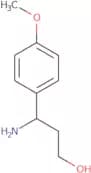
Fórmula:C10H15NOPureza:Min. 95%Peso molecular:165.23 g/mol3-Amino-3-(4-methoxyphenyl)propan-1-ol
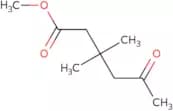
CAS:Versatile small molecule scaffoldFórmula:C10H15NO2Pureza:Min. 95%Peso molecular:181.23 g/molMethyl 3,3-dimethyl-5-oxohexanoate
CAS:Versatile small molecule scaffold
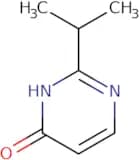
Fórmula:C9H16O3Pureza:Min. 95%Peso molecular:172.22 g/mol-2(Propan-2-Yl)Pyrimidin-4-Ol
CAS:Versatile small molecule scaffold
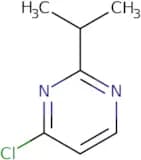
Fórmula:C7H10N2OPureza:Min. 95%Peso molecular:138.17 g/mol4-chloro-2-(propan-2-yl)pyrimidine
CAS:Versatile small molecule scaffold
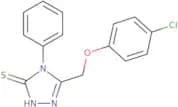
Fórmula:C7H9N2ClPureza:Min. 95%Peso molecular:156.61 g/mol5-(4-Chlorophenoxymethyl)-4-phenyl-4H-1,2,4-triazole-3-thiol
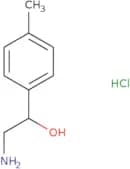
CAS:Versatile small molecule scaffoldFórmula:C15H12ClN3OSPureza:Min. 95%Peso molecular:317.8 g/mol2-Amino-1-(4-methylphenyl)ethan-1-ol hydrochloride
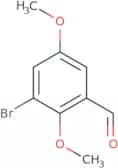
CAS:Versatile small molecule scaffoldFórmula:C9H14ClNOPureza:Min. 95%Peso molecular:187.66 g/mol3-bromo-2,5-dimethoxybenzaldehyde
CAS:3-bromo-2,5-dimethoxybenzaldehyde is a synthetic compound that is an incompletely nucleophilic anionic molecule. It has been used to advance the study of aromaticity and analyzes the spectrum of compounds. 3-bromo-2,5-dimethoxybenzaldehyde has been used in the synthesis of anthracyclines and tetracyclic antibiotics. The chemical structure of 3-bromo-2,5-dimethoxybenzaldehyde includes an aryl group at one end and a tetracyclic ring system at the other end. This chemical is not active as a chemotherapeutic agent because it does not have any biological activity.Fórmula:C9H9BrO3Pureza:Min. 95%Peso molecular:245.07 g/molN-[(Benzyloxy)carbonyl]-3-methylvaline
CAS:Versatile small molecule scaffold
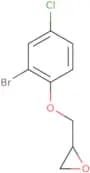
Fórmula:C14H19NO4Pureza:Min. 95%Peso molecular:265.3 g/mol2-(2-Bromo-4-chlorophenoxymethyl)oxirane
CAS:Versatile small molecule scaffoldFórmula:C9H8BrClO2Pureza:Min. 95%Peso molecular:263.51 g/mol3-Chloro-2,3-dihydro-1H-indol-2-one
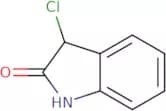
CAS:3-Chloro-2,3-dihydro-1H-indol-2-one is a chiral molecule that has two different forms: the axial form and the atropisomer. This compound is a precursor to 3-chloro-2,3,5,6-tetrahydrobenzo[b]thiophene, which can be used in the synthesis of other compounds such as atropine. It has been shown that 3-chloro-2,3,5,6-tetrahydrobenzo[b]thiophene can act as an antagonist of muscarinic acetylcholine receptors. Chloride ions are required for this reaction. This compound also reacts with titanium tetrachloride and titanium metal in the presence of boron trifluoride etherate to produce axially chiral molecules.Fórmula:C8H6ClNOPureza:Min. 95%Peso molecular:167.59 g/mol6-Chloropyrido[3,2-b]pyrazine
CAS:6-Chloropyrido[3,2-b]pyrazine is a chemical compound that has been shown to be a good candidate for dechlorination and debromination reactions. It can be used as an intermediate in the synthesis of potassium amides and anionically charged compounds. The product is unreactive but reactive towards reductive conditions. 6-Chloropyrido[3,2-b]pyrazine is stable at room temperature and does not react with water.Fórmula:C7H4ClN3Pureza:Min. 95%Peso molecular:165.58 g/mol2-chloro-6,7-dimethoxyquinoline
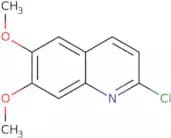
CAS:Versatile small molecule scaffold
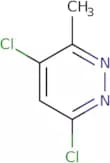
Fórmula:C11H10ClNO2Pureza:Min. 95%Peso molecular:223.66 g/mol4,6-Dichloro-3-methylpyridazine
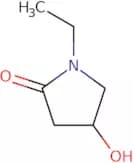
CAS:Versatile small molecule scaffoldFórmula:C5H4Cl2N2Pureza:Min. 95%Peso molecular:163.01 g/mol1-Ethyl-4-hydroxypyrrolidin-2-one
CAS:Versatile small molecule scaffold
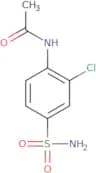
Fórmula:C6H11NO2Pureza:Min. 95%Peso molecular:129.16 g/molN-(2-Chloro-4-sulfamoylphenyl)acetamide
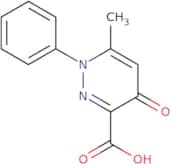
CAS:Versatile small molecule scaffoldFórmula:C8H9ClN2O3SPureza:Min. 95%Peso molecular:248.69 g/mol6-Methyl-4-oxo-1-phenyl-1,4-dihydropyridazine-3-carboxylic acid
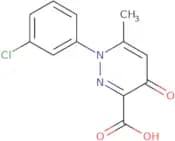
CAS:Versatile small molecule scaffoldFórmula:C12H10N2O3Pureza:Min. 95%Peso molecular:230.22 g/mol1-(3-Chlorophenyl)-6-methyl-4-oxo-1,4-dihydropyridazine-3-carboxylic acid
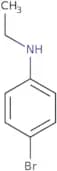
CAS:Versatile small molecule scaffoldFórmula:C12H9ClN2O3Pureza:Min. 95%Peso molecular:264.66 g/molN-Ethyl-4-bromo-benzenamine
CAS:N-Ethyl-4-bromo-benzenamine is a preorganized molecule with a covalent amide bond that is stabilized by interactions with the macrocyclic moiety. The helical conformation of this molecule is stabilized by its substructures, which are the two N-ethyl groups and the bromine atom. The helicity of this compound is high, and it has been shown to have a yield of 100%.Fórmula:C8H10BrNPureza:Min. 95%Peso molecular:200.08 g/mol2-(6-Methoxy-1,2,3,4-tetrahydronaphthalen-1-yl)acetic acid
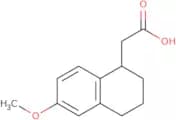
CAS:Versatile small molecule scaffoldFórmula:C13H16O3Pureza:Min. 95%Peso molecular:220.26 g/mol

![N-[(Benzyloxy)carbonyl]-3-methylvaline](/_next/image/?url=https%3A%2Fstatic.cymitquimica.com%2Fproducts%2F3D%2Fthumb-webp%2FTCA22259.webp&w=3840&q=75)
![6-Chloropyrido[3,2-b]pyrazine](/_next/image/?url=https%3A%2Fstatic.cymitquimica.com%2Fproducts%2F3D%2Fthumb-webp%2FTCA23603.webp&w=3840&q=75)