Building Blocks
Subcategorías de "Building Blocks"
- Ácidos borónicos y derivados del ácido borónico(5.774 productos)
- Building Blocks quirales(1.237 productos)
- Building Blocks de hidrocarburos(6.098 productos)
- Building Blocks orgánicos(60.970 productos)
Se han encontrado 205134 productos de "Building Blocks"
2-Aminobenzo[D]thiazole-7-carbonitrile
CAS:Versatile small molecule scaffoldFórmula:C8H5N3SPureza:Min. 95%Peso molecular:175.21 g/moltert-Butyl 4-[(piperazin-1-yl)methyl]piperidine-1-carboxylate
CAS:Versatile small molecule scaffoldFórmula:C15H29N3O2Pureza:Min. 95%Peso molecular:283.41 g/molCASIN
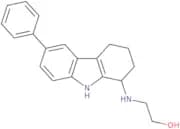
CAS:CASIN is a lysine-derived antimicrobial agent that inhibits the growth of bacteria by binding to the peptide chains of collagen, which are found in skin and mucous membranes. CASIN has been shown to inhibit the growth of many bacterial species, including those that are resistant to other antibiotics. CASIN can be used for the treatment of infectious diseases caused by bacteria, such as bacterial vaginosis or chlamydia. CASIN has also been shown to reduce body mass index in animal models. The mechanism of action is not known but may involve interference with an enzyme that controls the biosynthesis of fatty acids. The use of CASIN in humans is limited due to its toxicity on human cells and potential safety concerns.
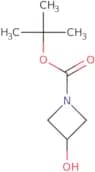
Fórmula:C20H22N2OPureza:Min. 95%Peso molecular:306.4 g/molN-Boc-3-Azetidinol
CAS:This linker is chemically stable and not cleavable under standard intracellular or extracellular conditions. N-Boc-3-Azetidinol is also a versatile organic intermediate used primarily in the pharmaceutical industry for synthesizing a wide range of drugs, including antibacterials, immunosuppressants, and cancer therapies.Fórmula:C8H15NO3Pureza:Min. 95%Peso molecular:173.21 g/mol4-Bromopyridine hydrochloride
CAS:4-Bromopyridine HCl is a chemical compound with the molecular formula C6H5BrN. It is an aromatic heterocycle and is used in organic synthesis as a coupling partner in cross-coupling reactions. The bromine atom of 4-bromopyridine is replaced by chloride, resulting in 4-chloropyridine. The chlorination reaction can be conducted using either hydrochloric acid or thionyl chloride. This process can be done on an industrial scale and the chlorinated product has been used in the manufacture of pharmaceuticals, dyes, and pesticides. The reaction mechanism for this substitution reaction involves a nucleophilic attack by chlorine on the pyridine ring at carbon atom 2 followed by displacement of hydrogen from the adjacent position on nitrogen atom 3. Acylation reactions are oxidation processes that involve conversion of carboxylic acids to acyl halides or acyl chlorides through treatment with acidified halogenating agents such
Fórmula:C5H4BrN•HClPureza:Min. 95%Forma y color:White PowderPeso molecular:194.46 g/mol5-Bromo-2-iodopyridine
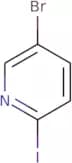
CAS:5-Bromo-2-iodopyridine is an antibiotic that is used to treat bacterial infections. It has been shown to inhibit the growth of bacteria by binding to the 50S ribosomal subunit. This drug also has a toxic effect on respiratory system cells, which may be due to its ability to induce apoptosis. 5-Bromo-2-iodopyridine interacts with DNA in a triazine ring and inhibits bacterial growth by inhibiting protein synthesis. The drug binds to the 50S ribosomal subunit at a site that is different from that of rifampin and other antibiotics. The reaction is catalyzed by palladium at high temperatures and takes place in organic solvents such as chloroform or benzene. This synthetic process can be made more efficient by using inexpensive starting materials, such as bromine, iodine, and acetone, rather than expensive starting materials like platinum or gold salts.
Fórmula:C5H3BrINPureza:Min. 95%Forma y color:Slightly Yellow PowderPeso molecular:283.89 g/mol5-Bromo-2-dimethylaminopyridine
CAS:Producto controladoPlease enquire for more information about 5-Bromo-2-dimethylaminopyridine including the price, delivery time and more detailed product information at the technical inquiry form on this pageFórmula:C7H9BrN2Pureza:Min. 95%Peso molecular:201.01 g/mol4-Bromobenzaldehyde
CAS:4-Bromobenzaldehyde is a chemical compound that belongs to the group of aromatic compounds. It has been shown to have a potent stimulatory effect on locomotor activity in mice, which may be due to its ability to increase levels of epidermal growth factor and gamma-aminobutyric acid in the brain. 4-Bromobenzaldehyde can be synthesized from 2,4-dibromophenol and anhydrous copper chloride in the presence of sodium hydroxide. The reaction mechanism for this synthesis is believed to involve an intermediate enamine form of 4-bromobenzaldehyde, which can then undergo hydrolysis into 2,4-dibromophenol and benzaldehyde. This product is used as a reagent in organic synthesis because it can be used to form esters with trifluoroacetic acid or hydrochloric acid in high yield.
Fórmula:C7H5BrOPureza:Min. 90 Area-%Forma y color:White PowderPeso molecular:185.02 g/mol1-Benzofuran-5-carbaldehyde
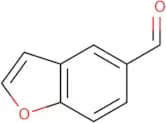
CAS:1-Benzofuran-5-carbaldehyde is a synthetic compound that inhibits the enzyme ido1. It has been shown to have potent cytotoxicity, potent inhibition, and neurotrophic properties in a number of cell lines. 1-Benzofuran-5-carbaldehyde also exhibits inhibitory effects on the enzymes hydrolyzing dopamine, which is involved in the synthesis of norepinephrine and epinephrine. The chemical structure of 1-benzofuran-5-carbaldehyde closely resembles that of dopamine and its derivatives, and can be used for the treatment of neurodegenerative diseases such as Parkinson's disease.Fórmula:C9H6O2Pureza:Min. 95%Forma y color:Yellow To Brown SolidPeso molecular:146.14 g/mol3-Bromo-4-chloroaniline
CAS:3-Bromo-4-chloroaniline is a chloroaniline compound. It is synthesized by reacting hexamethylenetetramine with chlorine gas in the presence of formaldehyde and paraformaldehyde. 3-Bromo-4-chloroaniline has been used to produce other compounds, such as trimethylchlorosilane, which is used in the production of silicone rubber. Chloroanilines are toxic chemicals that can be found in the environment and react with formaldehyde to produce carcinogenic substances called halofuginones.
Fórmula:C6H5BrClNPureza:Min. 95%Peso molecular:206.47 g/mol2-Bromobenzo[d]thiazol-6-amine
CAS:Please enquire for more information about 2-Bromobenzo[d]thiazol-6-amine including the price, delivery time and more detailed product information at the technical inquiry form on this pageFórmula:C7H5BrN2SPureza:Min. 95%Peso molecular:229.1 g/mol2-Bromo-5-hydroxypyridine
CAS:2-Bromo-5-hydroxypyridine is an aromatic compound that is used in the synthesis of a variety of pharmaceuticals and other organic compounds. It can be synthesized by the Suzuki coupling reaction from 2-bromobenzaldehyde and 5-aminopyridine. 2-Bromo-5-hydroxypyridine has been shown to be a hepatotoxin in humans, with possible carcinogenic activity. It also has cholinergic properties, as well as being able to cause fluorescence when exposed to halogens. The carbon next to the hydroxyl group is a stereocenter, so there are two different configurations for this molecule. The configuration shown above (R) is the more stable form of this molecule due to its electron withdrawing power on the neighboring oxygen atom.Fórmula:C5H4BrNOPureza:Min. 95%Forma y color:White PowderPeso molecular:174 g/molBisaboloxide A
CAS:Please enquire for more information about Bisaboloxide A including the price, delivery time and more detailed product information at the technical inquiry form on this pageFórmula:C15H26O2Pureza:Min. 95%Peso molecular:238.37 g/mol6-Bromo-4-hydroxypyrazolo[1,5-a]pyridine-3-carbonitrile
CAS:Please enquire for more information about 6-Bromo-4-hydroxypyrazolo[1,5-a]pyridine-3-carbonitrile including the price, delivery time and more detailed product information at the technical inquiry form on this pageFórmula:C8H4BrN3OPureza:Min. 95%Peso molecular:238.04 g/moltert-Butyl (R)-3-(piperidin-3-yl)azetidine-1-carboxylate
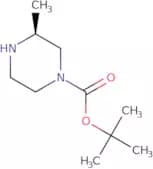
CAS:A useful building block for organic synthesis.Fórmula:C13H24N2O2Peso molecular:240.34 g/mol(S)-1-Boc-3-methylpiperazine
CAS:(S)-1-Boc-3-methylpiperazine is a hydrophobic compound that is structurally modified from the tetracyclic family of drugs. It has been shown to inhibit tumor cell growth by binding to the oncogene, KRASG12C, and downregulating its expression. (S)-1-Boc-3-methylpiperazine also inhibits cancer cell growth through the inhibition of the PI3K/AKT signaling pathway. The pharmacological effects of (S)-1-Boc-3-methylpiperazine are dependent on its ability to bind with high affinity to KRASG12C and inhibit its activity.Fórmula:C10H20N2O2Pureza:Min. 95%Forma y color:White PowderPeso molecular:200.28 g/mol1,3-Bis(diphenylphosphino)propane
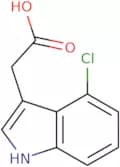
CAS:1,3-Bis(diphenylphosphino)propane is a chelate ligand that forms complexes with a wide range of transition metal ions. It has been shown to be an effective catalyst for the conversion of aryl halides to acid derivatives. The compound has been found to have an excellent stability in aqueous solutions and does not hydrolyze readily in human serum or water. 1,3-Bis(diphenylphosphino)propane is also used as an additive in many industrial processes, such as the production of nylon and polyester fibers.Fórmula:C27H26P2Pureza:Min 96.0%Forma y color:White Off-White PowderPeso molecular:412.44 g/mol4-Chloroindole-3-acetic acid
CAS:4-Chloroindole-3-acetic acid is a fine chemical that is used as a building block in the synthesis of complex compounds. It is also used as a reagent and speciality chemical. The compound is versatile and can be used as a reaction component or as an intermediate to produce useful scaffolds. 4-Chloroindole-3-acetic acid has been shown to be effective in the synthesis of certain pharmaceuticals, such as antipsychotics, antidepressants, and antihistamines. It has also been shown to have antiviral properties against HIV and HSV viruses.Fórmula:C10H8ClNO2Pureza:Min. 95.0 Area-%Peso molecular:209.63 g/molRef: 3D-C-4325
1gA consultar5gA consultar10gA consultar25gA consultar2500mgA consultar-Unit-ggA consultar1-Bromo-4-isobutylbenzene
CAS:1-Bromo-4-isobutylbenzene is a ketone that can be synthesized by the reaction of benzene with acetonitrile in the presence of a catalytic amount of oxone. The synthesis is an example of an arylation, which is the addition of an aromatic group to another molecule. It has been shown experimentally that 1-bromo-4-isobutylbenzene undergoes a transition from the x-ray structure analysis to the crystal x-ray structure when dissolved in acetonitrile and heated to 100°C. The final product is then purified by recrystallization with ethylene as a solvent.Fórmula:C10H13BrPureza:Min. 95%Peso molecular:213.11 g/mol5-Bromo-1-methyl-1H-pyrazole-4-carboxylic acid
CAS:Versatile small molecule scaffoldFórmula:C5H5BrN2O2Pureza:Min. 95%Peso molecular:205.01 g/mol
![2-Aminobenzo[D]thiazole-7-carbonitrile](/_next/image/?url=https%3A%2Fstatic.cymitquimica.com%2Fproducts%2F3D%2Fthumb-webp%2FBUB55111.webp&w=3840&q=75)

![tert-Butyl 4-[(piperazin-1-yl)methyl]piperidine-1-carboxylate](/_next/image/?url=https%3A%2Fstatic.cymitquimica.com%2Fproducts%2F3D%2Fthumb-webp%2FGQA72248.webp&w=3840&q=75)




![2-Bromobenzo[d]thiazol-6-amine](/_next/image/?url=https%3A%2Fstatic.cymitquimica.com%2Fproducts%2F3D%2Fthumb-webp%2FFB144124.webp&w=3840&q=75)


![6-Bromo-4-hydroxypyrazolo[1,5-a]pyridine-3-carbonitrile](/_next/image/?url=https%3A%2Fstatic.cymitquimica.com%2Fproducts%2F3D%2Fthumb-webp%2FFB182798.webp&w=3840&q=75)