Building Blocks
Subcategorías de "Building Blocks"
- Ácidos borónicos y derivados del ácido borónico(5.784 productos)
- Building Blocks quirales(1.242 productos)
- Building Blocks de hidrocarburos(6.105 productos)
- Building Blocks orgánicos(61.065 productos)
Se han encontrado 205418 productos de "Building Blocks"
Oxiranemethanamine, N,N-diethyl-
CAS:Oxirane-methanamine, N,N-diethyl (ODME) is a surface active agent that can be used in the treatment of cancer. It is also a hydrophobic molecule that has been shown to bind to cellulose derivatives and sodium carbonate. ODME has been shown to have an optimal reaction at pH 7 and a reaction time of 3 minutes. The ODME molecule can form base with the amines present in the tissue and this leads to cellular damage. ODME is linear polymer and its structure can be seen below:
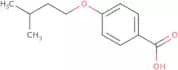
Fórmula:C7H15NOPureza:Min. 95%Peso molecular:129.2 g/mol4-(Isopentyloxy)benzenecarboxylic acid
CAS:Versatile small molecule scaffold
Fórmula:C12H16O3Pureza:Min. 95%Peso molecular:208.25 g/molEthyl N-(2,6-Dimethylphenyl)oxamate
CAS:Versatile small molecule scaffold
Fórmula:C12H15NO3Pureza:Min. 95%Peso molecular:221.25 g/mol2,2-Diphenylhexanoic acid
CAS:Versatile small molecule scaffold
Fórmula:C18H20O2Pureza:Min. 95%Peso molecular:268.3 g/molN-Acetyl-dl-tyrosine
CAS:N-Acetyl-dl-tyrosine is a biologically active form of tyrosine that inhibits the activity of protein tyrosine phosphatases. It has been shown to inhibit the acylation reaction of acetylcholine esterase, which leads to the accumulation of acetylcholine in the synaptic cleft and enhances its effects on postsynaptic receptors. N-Acetyl-dl-tyrosine also binds to metal ions such as copper, zinc, or iron and can be used in metal chelation therapy. The drug has been shown to produce light emission when exposed to UV radiation and has been used for detection of biochemical abnormalities.
Fórmula:C11H13NO4Pureza:Min. 95%Peso molecular:223.23 g/mol3-(4-Chlorophenyl)-2-phenylpropanoic acid
CAS:Versatile small molecule scaffoldFórmula:C15H13ClO2Pureza:Min. 95%Peso molecular:260.71 g/mol2-[Ethyl(propan-2-yl)amino]ethan-1-ol
CAS:Producto controladoVersatile small molecule scaffold
Fórmula:C7H17NOPureza:Min. 95%Peso molecular:131.22 g/mol5'-Chloro-2'-hydroxypropiophenone
CAS:Versatile small molecule scaffold
Fórmula:C9H9ClO2Pureza:Min. 95%Peso molecular:184.62 g/mol2-Bromo-3-phenylpyrazine
CAS:Versatile small molecule scaffold
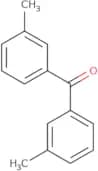
Fórmula:C10H7BrN2Pureza:Min. 95%Peso molecular:235.08 g/molBis(3-methylphenyl)methanone
CAS:The molecule is a benzene with two methyl groups at the 3 and 5 positions. The dipole moment of this molecule is 0.6 D, which means that it can be oriented in two different ways. Molecular conformations are analysed by calculating the energy of the molecule when it is rotated around its axis. This molecule has three possible conformations, with two of them being more stable than the other one.
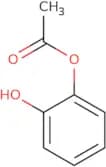
Fórmula:C15H14OPureza:Min. 95%Peso molecular:210.27 g/mol2-Hydroxyphenyl acetate
CAS:2-Hydroxyphenyl acetate (2HPA) is a phenolic compound that has been shown to inhibit the growth of prostate cancer cells in vitro. 2HPA inhibits the activity of two enzymes, hydroxylase and transketolase, which are involved in energy metabolism and collagen synthesis. 2HPA also induces apoptosis in prostate cancer cells by activating caspases and inhibiting DNA synthesis. Studies have shown that 2HPA may be effective against fungal infections by inhibiting cell growth. This compound also has anti-inflammatory properties and may be beneficial for those with osteoporosis by stimulating the production of new bone cells. 2HPA has been shown to stimulate the release of neurotransmitters, such as acetylcholine, glutamate, GABA, dopamine, norepinephrine and serotonin from mouse hippocampal neurons. It also inhibits the phosphorylation of cyclic AMP response element binding protein (CREB) to block CREB-mediated
Fórmula:C8H8O3Pureza:Min. 95%Peso molecular:152.15 g/molRef: 3D-CAA84825
Producto descatalogado6-(Morpholin-4-yl)-9H-purine
CAS:6-(Morpholin-4-yl)-9H-purine is a carbocyclic nucleoside that has been synthesized and its antiviral properties have been investigated. It has been shown to be damaging to cells and has potent inhibition of tumor cell proliferation. 6-(Morpholin-4-yl)-9H-purine is a synthetic compound that binds to the ribosome, inhibiting protein synthesis, which inhibits the production of proteins vital for cell division. 6-(Morpholin-4-yl)-9H-purine also interacts with kinases, blocking their activity by binding to the ATP site on the enzyme, preventing ATP hydrolysis and leading to cell death by apoptosis.
Fórmula:C9H11N5OPureza:Min. 95%Peso molecular:205.22 g/molThiazolo[5,4-d]pyrimidin-7-amine
CAS:Versatile small molecule scaffold
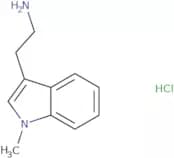
Fórmula:C5H4N4SPureza:Min. 95%Peso molecular:152.18 g/mol(3-(2-Aminoethyl)-1-methylindole) dihydrochloride
CAS:Producto controlado(3-(2-Aminoethyl)-1-methylindole) dihydrochloride is a drug that has been used to study serotonin receptors in the brain. It has been shown to bind to 5-HT1A, 5-HT2 and 5-HT6 receptors. This drug also binds to amine receptors in the cerebral cortex of rats. The drug is a phenylalkylamine with a ring system and homologs.
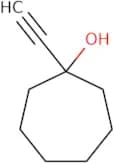
Fórmula:C11H16Cl2N2Pureza:Min. 95%Peso molecular:247.16 g/mol1-Ethynylcycloheptan-1-ol
CAS:1-Ethynylcycloheptan-1-ol is a synthetic drug that inhibits protease activity. It has been shown to have an inhibitory effect on the adenosine receptor and protonation of the skeleton. The 1-ethynylcycloheptan-1-ol molecule can be synthesised in two steps from phenylacetone. It has been shown to have hypoglycemic activity, which may be due to its ability to inhibit pancreatic alpha amylase. This drug also has a nucleophilic character, which is essential for its mechanism of action as it binds reversibly to the active site of the enzyme.
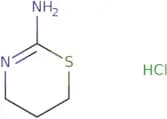
Fórmula:C9H14OPureza:Min. 95%Peso molecular:138.21 g/mol1,3-Thiazinan-2-imine hydrochloride
CAS:Versatile small molecule scaffold
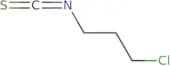
Fórmula:C4H9ClN2SPureza:Min. 95%Peso molecular:152.65 g/mol3-Chloropropyl isothiocyanate
CAS:3-Chloropropyl isothiocyanate (3CPITC) is a chemical compound that is used in research to produce an artificial reflux and to study the effects of acid on esterase activity. This compound is synthesized by reacting 2-chloroethyl chloride with triethylamine in the presence of methanol, followed by hydrolysis of the resulting 3-chloropropyl isothiocyanate. 3CPITC has been shown to have a neutral effect on esterase activity.
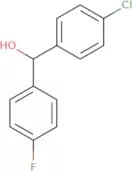
Fórmula:C4H6ClNSPureza:Min. 95%Peso molecular:135.61 g/mol(4-Chlorophenyl)(4-fluorophenyl)methanol
CAS:Versatile small molecule scaffold
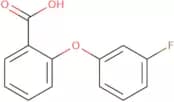
Fórmula:C13H10ClFOPureza:Min. 95%Peso molecular:236.67 g/mol2-(3-Fluorophenoxy)benzoic acid
CAS:Versatile small molecule scaffold
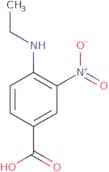
Fórmula:C13H9FO3Pureza:Min. 95%Peso molecular:232.21 g/mol4-(Ethylamino)-3-nitrobenzoic acid
CAS:4-(Ethylamino)-3-nitrobenzoic acid (4ENA) is a centrosymmetric molecule with a crystal structure that contains ammonium and nitro groups. It also forms dimers when in the presence of chloride or chloroformate, which can be seen by the absorption bands at 550 nm. The 4ENA molecule is sensitive to hydrogen chloride and ammonium carbonate, which can cause it to decompose into ethylamine and 3-nitrophenol. Nitric acid will cause 4ENA to form the nitro group attached to the benzene ring. 4ENA has been shown to inhibit platelet aggregation by inhibiting thrombus formation on damaged endothelium.
Fórmula:C9H10N2O4Pureza:Min. 95%Peso molecular:210.19 g/mol




![2-[Ethyl(propan-2-yl)amino]ethan-1-ol](/_next/image/?url=https%3A%2Fstatic.cymitquimica.com%2Fproducts%2F3D%2Fthumb-webp%2FCAA89361.webp&w=3840&q=75)



![Thiazolo[5,4-d]pyrimidin-7-amine](/_next/image/?url=https%3A%2Fstatic.cymitquimica.com%2Fproducts%2F3D%2Fthumb-webp%2FCAA84690.webp&w=3840&q=75)