Building Blocks
Subcategorías de "Building Blocks"
- Ácidos borónicos y derivados del ácido borónico(5.780 productos)
- Building Blocks quirales(1.241 productos)
- Building Blocks de hidrocarburos(6.100 productos)
- Building Blocks orgánicos(61.023 productos)
Se han encontrado 205289 productos de "Building Blocks"
5-Amino-3-fluoropyridin-2-ol
CAS:Versatile small molecule scaffold
Fórmula:C5H5FN2OPureza:Min. 95%Peso molecular:128.1 g/molRef: 3D-YEC23301
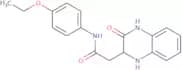
Producto descatalogadoN-(4-Ethoxyphenyl)-2-(3-oxo-1,2,3,4-tetrahydroquinoxalin-2-yl)acetamide
CAS:Versatile small molecule scaffoldFórmula:C18H19N3O3Pureza:Min. 95%Peso molecular:325.4 g/mol4-Chloro-2-iodo-5-methylaniline
CAS:Versatile small molecule scaffold
Fórmula:C7H7ClINPureza:Min. 95%Peso molecular:267.49 g/mol{1,1-Difluorospiro[2.5]octan-6-yl}methanamine hydrochloride
CAS:Versatile small molecule scaffold
Fórmula:C9H16ClF2NPureza:Min. 95%Peso molecular:211.7 g/mol9-Imino-1-oxa-9λ⁶-thia-4-azaspiro[5.5]undecan-9-one dihydrochloride
CAS:Versatile small molecule scaffold
Fórmula:C8H18Cl2N2O2SPureza:Min. 95%Peso molecular:277.2 g/molChroman-2-ylmethanamine
CAS:Chroman-2-ylmethanamine is an indole alkaloid that has been shown to have high affinity for the 5-HT1A receptor. It also has neuroprotective properties and prevents apoptotic cell death in a dose-dependent manner. This drug has also been shown to reduce extracellular glutamate levels in brain tissue and inhibit dopamine release. Chroman-2-ylmethanamine is an agonist at the 5-HT1A receptor, which causes it to inhibit extracellular acidification by hydrochloric acid. It also inhibits glutamate release by binding to the AMPA receptor, which leads to its anti-ischemic effects.
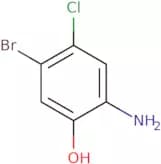
Fórmula:C10H13NOPureza:Min. 95%Peso molecular:163.22 g/mol2-Amino-5-bromo-4-chlorophenol
CAS:Versatile small molecule scaffold
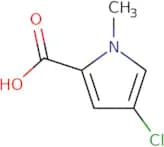
Fórmula:C6H5BrClNOPureza:Min. 95%Peso molecular:222.47 g/mol4-chloro-1-methyl-1H-pyrrole-2-carboxylic acid
CAS:Versatile small molecule scaffold
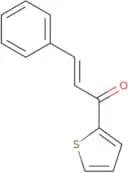
Fórmula:C6H6NO2ClPureza:Min. 95%Peso molecular:159.57 g/mol2-Cinnamoylthiophene
CAS:2-Cinnamoylthiophene is a synthetic compound that has been shown to have an apoptotic effect on cancer cells in culture. It is produced by the reaction of 2-aminothiophenol with acetic anhydride and cinnamic acid. The molecular structure of 2-cinnamoylthiophene has been determined using nuclear magnetic resonance (NMR) spectroscopy and quantum chemical calculations. This molecule is oxidized by hydrogen peroxide to generate reactive intermediates, which then react with DNA bases to form DNA adducts. These adducts are detected by the tetrazolium dye MTT, which is used as a cell viability assay. 2-Cinnamoylthiophene also contains functional groups that can be used for further study.
Fórmula:C13H10OSPureza:Min. 95%Peso molecular:214.28 g/mol2-Azaspiro[4.5]decane hydrochloride
CAS:Versatile small molecule scaffold
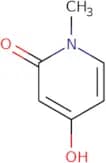
Fórmula:C9H18ClNPureza:Min. 95%Peso molecular:175.7 g/mol4-Hydroxy-1-methyl-2-pyridone
CAS:Versatile small molecule scaffold
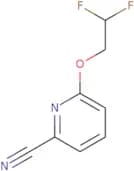
Fórmula:C6H7NO2Pureza:Min. 95%Peso molecular:125.13 g/mol6-(2,2-Difluoroethoxy)pyridine-2-carbonitrile
CAS:Versatile small molecule scaffold
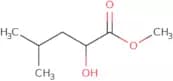
Fórmula:C8H6F2N2OPureza:Min. 95%Peso molecular:184.14 g/molMethyl 2-hydroxy-4-methylvalerate
CAS:Methyl 2-hydroxy-4-methylvalerate is an organic compound that belongs to the class of fatty acids. It is a colorless liquid with a fruity odor. Methyl 2-hydroxy-4-methylvalerate has been shown to inhibit the formation of reactive oxygen species and has antioxidant potential. It also inhibits bone resorption, which may be due to its ability to reduce levels of isobutyric acid in rats and humans. Methyl 2-hydroxy-4-methylvalerate has been found in tropical fruits such as mangoes, durians, and papayas.
Fórmula:C7H14O3Pureza:Min. 95%Peso molecular:146.18 g/moltert-Butyl cis-2,2-dimethyl-3-hydroxycyclobutylcarbamate
CAS:Versatile small molecule scaffold
Fórmula:C11H21NO3Pureza:Min. 95%Peso molecular:215.29 g/molRef: 3D-JHC14192
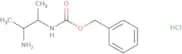
Producto descatalogadoBenzyl N-(3-aminobutan-2-yl)carbamate hydrochloride
CAS:Versatile small molecule scaffold
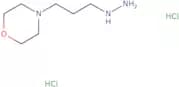
Fórmula:C12H19ClN2O2Pureza:Min. 95%Peso molecular:258.7 g/mol4-(3-Hydrazinylpropyl)morpholine dihydrochloride
CAS:Versatile small molecule scaffold
Fórmula:C7H19Cl2N3OPureza:Min. 95%Peso molecular:232.15 g/mol3-Azabicyclo[3.2.2]nonane HCl
CAS:Versatile small molecule scaffold
Fórmula:C8H16ClNPureza:Min. 95%Peso molecular:161.67 g/molRef: 3D-FAA59741
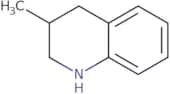
Producto descatalogado3-Methyl-1,2,3,4-tetrahydroquinoline
CAS:3-Methyl-1,2,3,4-tetrahydroquinoline is a synthetic molecule that has been shown to have adjuvant activity in the treatment of cancer. 3-Methyl-1,2,3,4-tetrahydroquinoline inhibits bacterial growth by alkylating DNA and RNA. It binds to nucleic acids and prevents transcription and replication. The molecular structure of 3-methyl-1,2,3,4-tetrahydroquinoline was elucidated by FTIR spectroscopy and XRPD analysis. This compound has also been shown to inhibit the growth of Staphylococcus aureus strains.
Fórmula:C10H13NPureza:Min. 95%Peso molecular:147.21 g/molMethyl[(1S)-1-(pyridin-3-yl)ethyl]amine dihydrochloride
CAS:Versatile small molecule scaffold
Fórmula:C8H14Cl2N2Pureza:Min. 95%Peso molecular:209.1 g/molRef: 3D-TMD05195
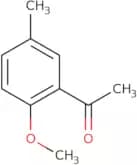
Producto descatalogado1-(2-Methoxy-5-methylphenyl)ethanone
CAS:1-(2-Methoxy-5-methylphenyl)ethanone is a volatile, synthetic compound. It is used as a chemical intermediate in the production of picotamide and esterification products. Methoxyphenylacetic acid (1) is methylated with methanol in the presence of hydrochloric acid to form 2,5-dimethoxybenzoic acid (2). The latter is then esterified with methanol and acetic anhydride to yield picotamide (3).
Fórmula:C10H12O2Pureza:Min. 95%Peso molecular:164.2 g/mol

![{1,1-Difluorospiro[2.5]octan-6-yl}methanamine hydrochloride](/_next/image/?url=https%3A%2Fstatic.cymitquimica.com%2Fproducts%2F3D%2Fthumb-webp%2FXPD10642.webp&w=3840&q=75)
![9-Imino-1-oxa-9λ⁶-thia-4-azaspiro[5.5]undecan-9-one dihydrochloride](/_next/image/?url=https%3A%2Fstatic.cymitquimica.com%2Fproducts%2F3D%2Fthumb-webp%2FLUD63536.webp&w=3840&q=75)

![2-Azaspiro[4.5]decane hydrochloride](/_next/image/?url=https%3A%2Fstatic.cymitquimica.com%2Fproducts%2F3D%2Fthumb-webp%2FLBA39274.webp&w=3840&q=75)

![3-Azabicyclo[3.2.2]nonane HCl](/_next/image/?url=https%3A%2Fstatic.cymitquimica.com%2Fproducts%2F3D%2Fthumb-webp%2FFAA59741.webp&w=3840&q=75)
![Methyl[(1S)-1-(pyridin-3-yl)ethyl]amine dihydrochloride](/_next/image/?url=https%3A%2Fstatic.cymitquimica.com%2Fproducts%2F3D%2Fthumb-webp%2FTMD05195.webp&w=3840&q=75)