Building Blocks
Subcategorías de "Building Blocks"
- Ácidos borónicos y derivados del ácido borónico(5.774 productos)
- Building Blocks quirales(1.237 productos)
- Building Blocks de hidrocarburos(6.098 productos)
- Building Blocks orgánicos(60.970 productos)
Se han encontrado 205134 productos de "Building Blocks"
N,N'-Bis(2-fluorophenyl)propanediamide
CAS:Versatile small molecule scaffold
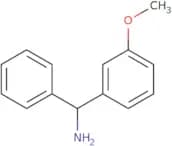
Fórmula:C15H12F2N2O2Pureza:Min. 95%Peso molecular:290.26 g/mol3-Methoxybenzhydrylamine
CAS:Versatile small molecule scaffold
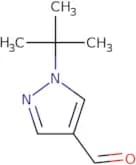
Fórmula:C14H15NOPureza:Min. 95%Peso molecular:213.28 g/mol1-(tert-Butyl)-1H-pyrazole-4-carbaldehyde
CAS:Versatile small molecule scaffold
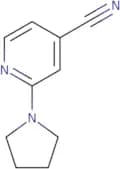
Fórmula:C8H12N2OPureza:Min. 95%Peso molecular:152.19 g/mol2-Pyrrolidinoisonicotinonitrile
CAS:Versatile small molecule scaffold
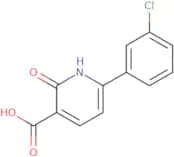
Fórmula:C10H11N3Pureza:Min. 95%Peso molecular:173.22 g/mol6-(3-Chlorophenyl)-2-oxo-1,2-dihydropyridine-3-carboxylic Acid
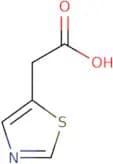
CAS:Versatile small molecule scaffoldFórmula:C12H8ClNO3Pureza:Min. 95%Peso molecular:249.65 g/mol2-(Thiazol-5-yl)acetic acid
CAS:2-(Thiazol-5-yl)acetic acid is an antimicrobial that is used as a fungicide. It has been shown to inhibit the growth of Fusarium and Curvularia. 2-(Thiazol-5-yl)acetic acid also has fungicidal activity against Refluxing, butanoic acid, and Oxysporum. This compound has been found to be effective against fungi in a number of different studies. 2-(Thiazol-5-yl)acetic acid inhibits the synthesis of ribosomes by inhibiting mRNA translation, leading to cell death by inhibition of protein synthesis.
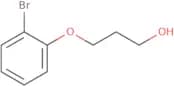
Fórmula:C5H5NO2SPureza:Min. 95%Peso molecular:143.16 g/mol3-(2-Bromophenoxy)propan-1-ol
CAS:Versatile small molecule scaffold
Fórmula:C9H11BrO2Pureza:Min. 95%Peso molecular:231.09 g/mol1-Benzothiophene-5-carbonitrile
CAS:1-Benzothiophene-5-carbonitrile is a heterocyclic compound that is formed by condensation of ethyl azidoacetate with indole under catalysis. It can be used in the synthesis of heterocycles. The yield of 1-benzothiophene-5-carbonitrile is about 56%.
Fórmula:C9H5NSPureza:Min. 95%Peso molecular:159.21 g/molMethyl 2-(piperidin-4-yl)-1,3-oxazole-5-carboxylate hydrochloride
CAS:Versatile small molecule scaffoldFórmula:C10H15ClN2O3Pureza:Min. 95%Peso molecular:246.7 g/molRef: 3D-XPD10395
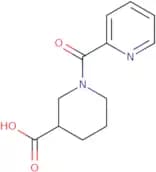
Producto descatalogado1-(Pyridine-2-carbonyl)piperidine-3-carboxylic acid
CAS:Versatile small molecule scaffold
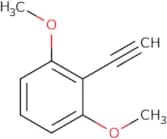
Fórmula:C12H14N2O3Pureza:Min. 95%Peso molecular:234.25 g/mol2,6-Dimethoxyphenylacetylene
CAS:Versatile small molecule scaffold
Fórmula:C10H10O2Pureza:Min. 95%Peso molecular:162.18 g/molrac-(4aR,7aS)-Octahydro-1H-pyrrolo[3,4-b]pyridin-5-one hydrochloride
CAS:Versatile small molecule scaffold
Fórmula:C7H13ClN2OPureza:Min. 95%Peso molecular:176.6 g/molRef: 3D-XPD10526
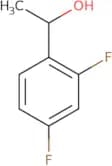
Producto descatalogado(1R)-1-(2,4-Difluorophenyl)ethan-1-ol
CAS:Versatile small molecule scaffold
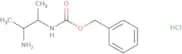
Fórmula:C8H8F2OPureza:Min. 95%Peso molecular:158.14 g/molBenzyl N-(3-aminobutan-2-yl)carbamate hydrochloride
CAS:Versatile small molecule scaffold
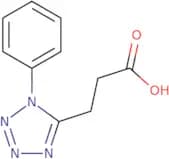
Fórmula:C12H19ClN2O2Pureza:Min. 95%Peso molecular:258.7 g/mol3-(1-Phenyl-1H-1,2,3,4-tetrazol-5-yl)propanoic acid
CAS:Versatile small molecule scaffoldFórmula:C10H10N4O2Pureza:Min. 95%Peso molecular:218.21 g/mol2,2-Bis(chloromethyl)-1,3-dioxolane
CAS:2,2-Bis(chloromethyl)-1,3-dioxolane is a chemical intermediate that can be used in the production of polyester resins. It is a colorless liquid with an unpleasant odor. 2,2-Bis(chloromethyl)-1,3-dioxolane reacts with ethylene and glycol to produce polyester resins. This reaction occurs at high temperatures and produces a mixture of products such as diols and triols. When heated in acidic conditions, the compound hydrolyzes to form dihydroxyacetone and p-toluenesulfonic acid. The compound is also used as an industrial solvent for acidic materials. Recrystallizing the product from ethylene glycol results in a white crystalline powder that can be used in the manufacture of other chemicals such as sulfate salts.
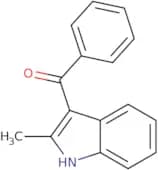
Fórmula:C5H8Cl2O2Pureza:Min. 95%Peso molecular:171.02 g/mol3-Benzoyl-2-methyl-1H-indole
CAS:Producto controlado3-Benzoyl-2-methyl-1H-indole is an isomer of tetrahydrocarbazole. It has a high yield and optical purity. 3-Benzoyl-2-methyl-1H indole can be synthesized from β-unsaturated aldehydes, such as 2-(4,4,5,5-tetramethyl-[1,3,2]dioxaborolan-2yl)-3,5,6,-trimethylphenol. The compound has been shown to react with alkali metals to form a salt in the presence of dehydrogenative conditions. This reaction proceeds via an iminium intermediate that reacts with the metal salt to produce the product. 3BzIMeI can also react with alcohols or amines in the presence of heterocycles such as mesitylene to form substituted benzimidazoles.
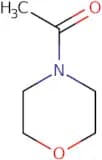
Fórmula:C16H13NOPureza:Min. 95%Peso molecular:235.28 g/mol4-Acetylmorpholine
CAS:4-Acetylmorpholine is a recycled amide that is synthesized from an alkanolamine and an acylation reaction. It has been used in the dehydrating of organic compounds, such as reaction solution, and for the preparation of acrylamide. 4-Acetylmorpholine is also used as a viscosity control agent in the extraction of aromatic hydrocarbons. Its chemical structure consists of a carbonyl group and an aromatic hydrocarbon. 4-Acetylmorpholine can be synthesized by reacting acetaldehyde with ammonia or thiourea with methyl chloride or ethylene oxide.
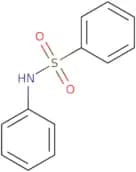
Fórmula:C6H3D8NO2Pureza:Min. 95%Peso molecular:137.21 g/molBenzenesulfonanilide
CAS:Benzenesulfonanilide is a compound that is soluble in water. It has potent antagonists against the chemokine receptor CXCR2 and the chemokine CCL5. The molecular weight of benzenesulfonanilide is 212.2 g/mol, and it has a fluorine atom at the 2-position on the benzene ring, a carbonyl group (-C=O) at the 2-position on the benzene ring, and a nitro group (-NO2) at the 3-position on the benzene ring. The structural formula for benzenesulfonanilide is shown below:
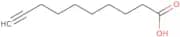
Fórmula:C12H11NO2SPureza:Min. 95%Peso molecular:233.29 g/molDec-9-ynoic acid
CAS:Dec-9-ynoic acid is a synthetic fatty acid that is a precursor to several biologically important substances. It is labile and easily oxidized by air, light, or heat. Dec-9-ynoic acid has been shown to be a central metabolic intermediate for the biosynthesis of polyunsaturated fatty acids. It can also be converted into linolenic acid, which is an essential fatty acid that cannot be synthesized by humans. Dec-9-ynoic acid exists in two geometric isomers: cis and trans. The cis form exhibits kinetic properties that are different from the trans form. Dec-9-ynoic acid has been studied as a potential treatment for human diseases such as diabetes mellitus type 2, Parkinson's disease, Alzheimer's disease, schizophrenia, and depression.
Fórmula:C10H16O2Pureza:Min. 95%Peso molecular:168.23 g/mol



![rac-(4aR,7aS)-Octahydro-1H-pyrrolo[3,4-b]pyridin-5-one hydrochloride](/_next/image/?url=https%3A%2Fstatic.cymitquimica.com%2Fproducts%2F3D%2Fthumb-webp%2FXPD10526.webp&w=3840&q=75)