Building Blocks
Subcategorías de "Building Blocks"
- Ácidos borónicos y derivados del ácido borónico(5.784 productos)
- Building Blocks quirales(1.242 productos)
- Building Blocks de hidrocarburos(6.105 productos)
- Building Blocks orgánicos(61.061 productos)
Se han encontrado 205399 productos de "Building Blocks"
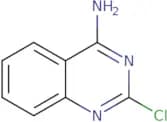
2-chloroquinazolin-4-amine
CAS:2-Chloroquinazolin-4-amine (CQA) is an anti-oxidant that exhibits significant cytotoxicity against human cancer cells. It is a competitive inhibitor of the enzyme chloride channel protein, which is involved in regulating the concentration of chloride ions in the blood. CQA has been shown to inhibit chemotaxis of white blood cells and platelets, and to have a protective effect on muscle tissue. The cytotoxic effects of CQA were shown to be due to its ability to induce apoptosis, or programmed cell death.
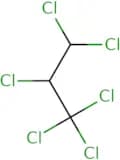
Fórmula:C8H6ClN3Pureza:Min. 95%Peso molecular:179.6 g/mol1,1,1,2,3,3-Hexachloropropane
CAS:1,1,1,2,3,3-Hexachloropropane is a fluorinated hydrocarbon that is used as a catalyst in the fluorination of organic compounds. The reaction is highly selective and only produces one stereoisomer (e.g., 1-fluoropropane). This product can be used as a conditioner for gas streams or a diluent for liquid phase reactions. Hexachloropropane also reacts with hydrogen chloride to produce fluorides and chlorides. The reaction selectivity of this product is high because it does not react with other substances such as water or ammonia.
Fórmula:C3H2Cl6Pureza:Min. 95%Peso molecular:250.8 g/mol[(1-Ethyl-5-methyl-1H-pyrazol-4-yl)methyl](2-phenylethyl)amine
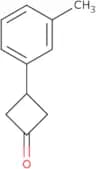
CAS:Versatile small molecule scaffoldFórmula:C15H21N3Pureza:Min. 95%Peso molecular:243.35 g/mol3-(3-Methylphenyl)cyclobutan-1-one
CAS:Versatile small molecule scaffold
Fórmula:C11H12OPureza:Min. 95%Peso molecular:160.21 g/molRef: 3D-TJA86756
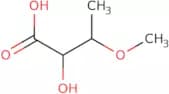
Producto descatalogado2-Hydroxy-3-methoxybutanoic acid
CAS:Versatile small molecule scaffold
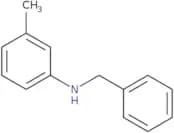
Fórmula:C5H10O4Pureza:Min. 95%Peso molecular:134.13 g/molN-Benzyl-3-methylaniline
CAS:Versatile small molecule scaffold
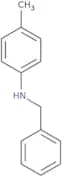
Fórmula:C14H15NPureza:Min. 95%Peso molecular:197.27 g/molN-Benzyl-4-methylaniline
CAS:N-Benzyl-4-methylaniline is a mesoporous material with a high surface area that can be used as a solid acid catalyst. It has been shown to have excellent catalytic properties for the synthesis of quinoline derivatives from trans-stilbene and anilines. The immobilized N-benzyl-4-methylaniline is a novel material that can be used in various applications, such as as an uv detector or proton donor.
Fórmula:C14H15NPureza:Min. 95%Peso molecular:197.27 g/mol2,5-Dichlorobenzenesulfonyl Chloride
CAS:2,5-Dichlorobenzenesulfonyl Chloride is a chemical compound that binds to the G protein-coupled receptor. It has been shown to stabilize the receptor and inhibit angiogenic process. 2,5-Dichlorobenzenesulfonyl Chloride has been shown to have anticancer activity against human glioma cells in vitro and in vivo. It also inhibits hydrogen bonding interactions with the receptor which may be important for cancer treatment.
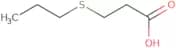
2,5-Dichlorobenzenesulfonyl Chloride is soluble in chloroform and acetone but not water or ethanol. The solubility of this compound can be improved by adding a solvent such as benzene or dichloromethane.Fórmula:C6H3Cl3O2SPureza:Min. 95%Peso molecular:245.51 g/mol3-(Propylsulfanyl)propanoic acid
CAS:Versatile small molecule scaffold
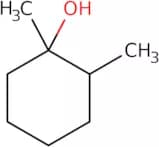
Fórmula:C6H12O2SPureza:Min. 95%Peso molecular:148.23 g/mol1,2-Dimethylcyclohexan-1-ol
CAS:1,2-Dimethylcyclohexan-1-ol is a hydroxylated phenolic compound that has been shown to inhibit the production of inflammatory cytokines. It also inhibits the activity of carboxylesterases and aminopeptidases in vitro, which may be due to its acidic nature. This drug is used to treat autoimmune diseases such as rheumatoid arthritis, psoriasis, and multiple sclerosis. 1,2-Dimethylcyclohexan-1-ol can be synthesized from hydroxybenzene and formaldehyde with hydrochloric acid as a reaction intermediate. It reacts with trifluoroacetic acid to produce an intermediate that is soluble in water. This compound is also susceptible to oxidation by air or light.
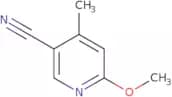
Fórmula:C8H16OPureza:Min. 95%Peso molecular:128.21 g/mol6-Methoxy-4-methylnicotinonitrile
CAS:Versatile small molecule scaffold
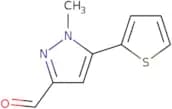
Fórmula:C8H8N2OPureza:Min. 95%Peso molecular:148.16 g/mol1-Methyl-5-(thiophen-2-yl)-1H-pyrazole-3-carbaldehyde
CAS:Versatile small molecule scaffold
Fórmula:C9H8N2OSPureza:Min. 95%Peso molecular:192.24 g/molRef: 3D-CXB33206
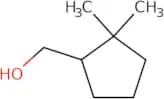
Producto descatalogado(2,2-Dimethylcyclopentyl)methanol
CAS:Versatile small molecule scaffold
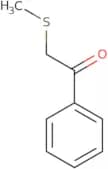
Fórmula:C8H16OPureza:Min. 95%Peso molecular:128.21 g/mol2-(Methylsulfanyl)-1-phenylethan-1-one
CAS:2-(Methylsulfanyl)-1-phenylethan-1-one is a sulfoxide that was synthesized by the photoelectron transfer of methylsulfane. It is an electron acceptor, which can be reduced to the corresponding sulfide or sulfone. It has been shown to react with carbonyl groups and thioacetals, forming triazole derivatives. The molecule has been found to have affinity for aluminium surfaces and has a strong interaction with the carbonyl group.
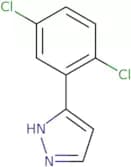
Fórmula:C9H10OSPureza:Min. 95%Peso molecular:166.24 g/mol3-(2,5-Dichlorophenyl)pyrazole
CAS:Versatile small molecule scaffold
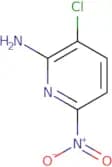
Fórmula:C9H6Cl2N2Pureza:Min. 95%Peso molecular:213.06 g/mol3-Chloro-6-nitropyridin-2-amine
CAS:Versatile small molecule scaffold
Fórmula:C5H4ClN3O2Pureza:Min. 95%Peso molecular:173.56 g/mol4-(1,2,3-Thiadiazol-4-yl)phenol
CAS:4-(1,2,3-Thiadiazol-4-yl)phenol is an antibiotic that belongs to the group of antimicrobials. It has an inhibitory concentration (IC) of 0.5 micrograms/ml against pyogenic bacteria and 1.0 micrograms/ml against a number of other bacterial strains. 4-(1,2,3-Thiadiazol-4-yl)phenol also has antimicrobial properties against fungi and may be used for the treatment of catalase-producing bacteria such as Streptococcus pyogenes or Staphylococcus aureus. Elemental analysis revealed that this compound is composed entirely of carbon, hydrogen, and oxygen. The molecular weight was found to be 166.16 g/mol. This compound inhibits bacterial growth by binding to DNA-dependent RNA polymerase and preventing transcription and replication of DNA. This active form is metabolized through a number of metabolic transformations including hydro
Fórmula:C8H6N2OSPureza:Min. 95%Peso molecular:178.21 g/mol5-[(3-Amino-1H-pyrazol-1-yl)methyl]furan-2-carboxylic acid
CAS:Versatile small molecule scaffold
Fórmula:C9H9N3O3Pureza:Min. 95%Peso molecular:207.19 g/mol2H,3H-Furo[3,2-c]pyridin-4-amine
CAS:Versatile small molecule scaffold
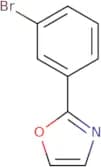
Fórmula:C7H8N2OPureza:Min. 95%Peso molecular:136.15 g/mol5-(3-Bromophenyl)-1,3-oxazole
CAS:5-(3-Bromophenyl)-1,3-oxazole is a carbamate that inhibits the activity of hydroxylase enzymes. 5-(3-Bromophenyl)-1,3-oxazole is used to study the role of hydroxylase enzymes in metabolism and as a chemical inhibitor for research purposes. It has been shown to inhibit human liver cytosols and cytosolic preparations from other species. The reaction mechanism for 5-(3-bromophenyl)-1,3-oxazole is unknown; it may bind to an active site on the hydroxylase enzyme or react with a nucleophile in the substrate's transition state. It has been shown that this carbamate can inhibit certain oxidases such as aldehyde oxidase, but not others such as alcohol oxidase or lactate oxidase.
Fórmula:C9H6BrNOPureza:Min. 95%Peso molecular:224.05 g/mol

amine](/_next/image/?url=https%3A%2Fstatic.cymitquimica.com%2Fproducts%2F3D%2Fthumb-webp%2FGQB35322.webp&w=3840&q=75)

![5-[(3-Amino-1H-pyrazol-1-yl)methyl]furan-2-carboxylic acid](/_next/image/?url=https%3A%2Fstatic.cymitquimica.com%2Fproducts%2F3D%2Fthumb-webp%2FGQB34895.webp&w=3840&q=75)
![2H,3H-Furo[3,2-c]pyridin-4-amine](/_next/image/?url=https%3A%2Fstatic.cymitquimica.com%2Fproducts%2F3D%2Fthumb-webp%2FPLC44000.webp&w=3840&q=75)