Building Blocks
Subcategorías de "Building Blocks"
- Ácidos borónicos y derivados del ácido borónico(5.780 productos)
- Building Blocks quirales(1.241 productos)
- Building Blocks de hidrocarburos(6.100 productos)
- Building Blocks orgánicos(61.024 productos)
Se han encontrado 205297 productos de "Building Blocks"
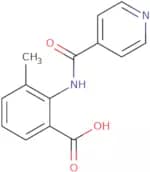
3-Methyl-2-(pyridine-4-amido)benzoic acid
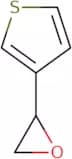
CAS:Versatile small molecule scaffoldFórmula:C14H12N2O3Pureza:Min. 95%Peso molecular:256.26 g/mol2-(Thiophen-3-yl)oxirane
CAS:Versatile small molecule scaffold
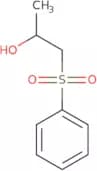
Fórmula:C6H6OSPureza:Min. 95%Peso molecular:126.18 g/mol1-(Benzenesulfonyl)propan-2-ol
CAS:1-(Benzenesulfonyl)propan-2-ol is a chiral, neutral compound that is used as a heterofunctional catalyst. It is an electrophilic catalyst that can be used to catalyze hydroboration reactions. 1-(Benzenesulfonyl)propan-2-ol binds to the substrate with two bidentate interactions and participates in the reaction by donating electron density from the nitrogen atom of an allylic position. This compound is also capable of catalyzing catecholborane oxidation reactions, which are important for the synthesis of pharmaceuticals.
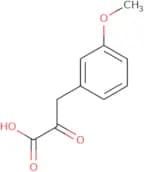
Fórmula:C9H12O3SPureza:Min. 95%Peso molecular:200.26 g/mol3-(3-Methoxyphenyl)-2-oxopropanoic acid
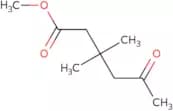
CAS:Vanillic acid is a phenolic compound that can be found in vanilla and other plants. It is an important precursor for the synthesis of aromatic compounds such as ferulic acid, lignin, and coumarin. Vanillic acid has been shown to have a variety of biochemical and chemists properties, including the ability to aromatize, which means it can be used in the preparation of synthetic hormones. This compound also acts as an antioxidant by scavenging reactive oxygen species. Vanillic acid is found in two sources: pre-existing vanillin (from plants) and ferulic acid (from microbial metabolism). Vanillin is derived from coniferyl alcohol and coniferaldehyde, which are both found in poria. Ferulic acid is produced by polyporus fungi and can be converted into vanillic acid via decarboxylation.Fórmula:C10H10O4Pureza:Min. 95%Peso molecular:194.18 g/molMethyl 3,3-dimethyl-5-oxohexanoate
CAS:Versatile small molecule scaffold
Fórmula:C9H16O3Pureza:Min. 95%Peso molecular:172.22 g/molRef: 3D-TCA20876
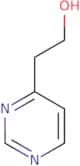
Producto descatalogado2-(Pyrimidin-4-yl)ethanol
CAS:Versatile small molecule scaffold
Fórmula:C6H8N2OPureza:Min. 95%Peso molecular:124.14 g/molRef: 3D-TCA12132
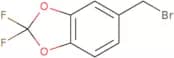
Producto descatalogado5-(Bromomethyl)-2,2-difluoro-2H-1,3-benzodioxole
CAS:Versatile small molecule scaffold
Fórmula:C8H5BrF2O2Pureza:Min. 95%Peso molecular:251.02 g/mol1H-Imidazo[4,5-c]pyridin-2-amine
CAS:Imidazo[4,5-c]pyridin-2-amines are a class of compounds that have shown anticancer activity in vitro and in vivo. They are structurally related to the azepines and can be synthesized from 1H-imidazo[4,5-c]pyridine-2-carboxylic acid. Imidazo[4,5-c]pyridin-2-amines may inhibit cancer cell proliferation by inhibiting the activity of matrix metalloproteinases (MMPs) and may also inhibit the synthesis of DNA and RNA. Several members of this class of compounds have been shown to be potent inhibitors of human cancer cells in vitro and in vivo.
Fórmula:C6H6N4Pureza:Min. 95%Peso molecular:134.14 g/mol3-(Propan-2-yl)-3-azabicyclo[3.3.1]nonan-9-one
CAS:Versatile small molecule scaffoldFórmula:C11H19NOPureza:Min. 95%Peso molecular:181.27 g/molRef: 3D-TCA06655
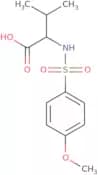
Producto descatalogado(2S)-2-(4-Methoxybenzenesulfonamido)-3-methylbutanoic acid
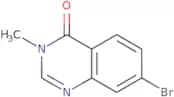
CAS:Versatile small molecule scaffoldFórmula:C12H17NO5SPureza:Min. 95%Peso molecular:287.33 g/mol7-Bromo-3-methyl-3,4-dihydroquinazolin-4-one
CAS:Versatile small molecule scaffold
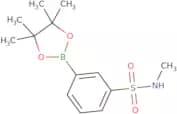
Fórmula:C9H7BrN2OPureza:Min. 95%Peso molecular:239.07 g/molBenzenesulfonamide, N-Methyl-3-(4,4,5,5-Tetramethyl-1,3,2-Dioxaborolan-2-Yl)-
CAS:Versatile small molecule scaffoldFórmula:C13H20BNO4SPureza:Min. 95%Peso molecular:297.18 g/mol3-(3-Fluorophenyl)butanoic acid
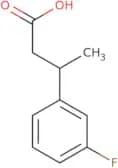
CAS:Versatile small molecule scaffold
Fórmula:C10H11FO2Pureza:Min. 95%Peso molecular:182.19 g/molN-(3-Hydroxyphenyl)-2-(2-oxopyrrolidin-1-yl)acetamide
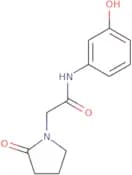
CAS:Producto controladoN-(3-Hydroxyphenyl)-2-(2-oxopyrrolidin-1-yl)acetamide is a research tool that is used as an activator or ligand to study the function of receptors, ion channels and other proteins. It binds to cell surface receptors and activates them by mimicking the endogenous ligands. This compound has been shown to be a high purity reagent with protein interactions.Fórmula:C12H14N2O3Pureza:Min. 95%Peso molecular:234.25 g/mol2-(3-Methylbutyl)pyrrolidine
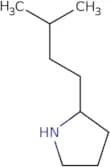
CAS:Versatile small molecule scaffold
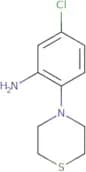
Fórmula:C9H19NPureza:Min. 95%Peso molecular:141.25 g/mol5-Chloro-2-(thiomorpholin-4-yl)aniline
CAS:Versatile small molecule scaffoldFórmula:C10H13ClN2SPureza:Min. 95%Peso molecular:228.74 g/mol1-Methyl-1-[(4-methylphenyl)methyl]urea
CAS:Versatile small molecule scaffold
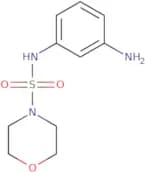
Fórmula:C10H14N2OPureza:Min. 95%Peso molecular:178.23 g/molN-(3-Aminophenyl)morpholine-4-sulfonamide
CAS:Versatile small molecule scaffold
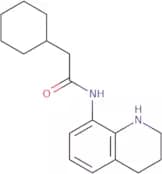
Fórmula:C10H15N3O3SPureza:Min. 95%Peso molecular:257.31 g/mol2-Cyclohexyl-N-(1,2,3,4-tetrahydroquinolin-8-yl)acetamide
CAS:Versatile small molecule scaffold
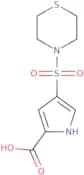
Fórmula:C17H24N2OPureza:Min. 95%Peso molecular:272.4 g/mol4-(Thiomorpholine-4-sulfonyl)-1H-pyrrole-2-carboxylic acid
CAS:Producto controlado4-(Thiomorpholine-4-sulfonyl)-1H-pyrrole-2-carboxylic acid is a peptide that belongs to the class of sulfonamides. It is an activator of ion channels and receptors, which may be useful in the study of life sciences and pharmacology. This compound has been shown to inhibit protein interactions by binding to receptor sites on cells and ligand sites on proteins. 4-(Thiomorpholine-4-sulfonyl)-1H-pyrrole-2-carboxylic acid also binds to the antibody, which enhances the immune response in animals by increasing the production of antibodies against bacterial antigens.
Fórmula:C9H12N2O4S2Pureza:Min. 95%Peso molecular:276.3 g/mol

![1H-Imidazo[4,5-c]pyridin-2-amine](/_next/image/?url=https%3A%2Fstatic.cymitquimica.com%2Fproducts%2F3D%2Fthumb-webp%2FTCA07463.webp&w=3840&q=75)
![3-(Propan-2-yl)-3-azabicyclo[3.3.1]nonan-9-one](/_next/image/?url=https%3A%2Fstatic.cymitquimica.com%2Fproducts%2F3D%2Fthumb-webp%2FTCA06655.webp&w=3840&q=75)
![1-Methyl-1-[(4-methylphenyl)methyl]urea](/_next/image/?url=https%3A%2Fstatic.cymitquimica.com%2Fproducts%2F3D%2Fthumb-webp%2FSRB78227.webp&w=3840&q=75)