Building Blocks
Subcategorías de "Building Blocks"
- Ácidos borónicos y derivados del ácido borónico(5.780 productos)
- Building Blocks quirales(1.240 productos)
- Building Blocks de hidrocarburos(6.100 productos)
- Building Blocks orgánicos(61.009 productos)
Se han encontrado 205248 productos de "Building Blocks"
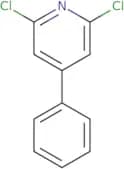
2,6-Dichloro-4-phenylpyridine
CAS:2,6-Dichloro-4-phenylpyridine is a chemosensor that can be used to detect the presence of aromatic compounds. It has a modular structure consisting of an emission domain and a substrate binding domain. The fluorophore is reversibly bound to the substrate binding domain, which means that it can be detached from the substrate when the desired molecule is detected. This sensor has been shown to have high selectivity for aromatic molecules in both water and organic solvents. 2,6-Dichloro-4-phenylpyridine has also been studied structurally and found to react with a number of other chemical entities such as thiocyanate ion, nitrobenzene, and nitrophenol.
Fórmula:C11H7Cl2NPureza:Min. 95%Peso molecular:224.09 g/molN-Cyclopentylacetamide
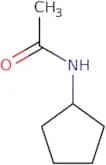
CAS:N-Cyclopentylacetamide is a reactive alkylating agent that is used in the synthesis of organic chemicals. It reacts with chlorine to form chloroform, and with acetonitrile to form acetanilide. N-Cyclopentylacetamide also reacts electrochemically with fission products such as uranium to form uranium hexafluoride. The reaction of N-Cyclopentylacetamide with bromides yields a spectrum of cyclopentyl bromides. This compound can be used for the synthesis of pharmaceuticals and other chemical compounds.
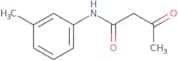
Fórmula:C7H13NOPureza:Min. 95%Peso molecular:127.18 g/molN-(3-Methylphenyl)-3-oxobutanamide
CAS:Versatile small molecule scaffold
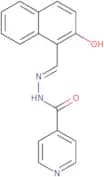
Fórmula:C11H13NO2Pureza:Min. 95%Peso molecular:191.23 g/molAS8351
CAS:AS8351 is a growth factor that has been shown to promote the repair of damaged tissues, including those of the heart and kidneys. AS8351 binds to the growth factor receptor and activates it, which in turn activates protein kinase B and extracellular signal-regulated kinases. This leads to cell lysis, fatty acid release, and cell proliferation. The molecule has potential therapeutic applications for degenerative diseases such as cancer and diabetes.
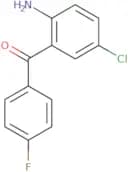
Fórmula:C17H13N3O2Pureza:Min. 95%Peso molecular:291.3 g/mol4-Chloro-2-(4-fluorobenzoyl)aniline
CAS:Versatile small molecule scaffold
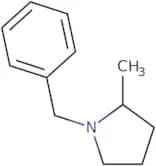
Fórmula:C13H9ClFNOPureza:Min. 95%Peso molecular:249.67 g/mol1-Benzyl-2-methylpyrrolidine
CAS:1-Benzyl-2-methylpyrrolidine is a chemical reagent that is used in organic synthesis as an oxidant, dehydrogenation agent, and alkylation agent. 1-Benzyl-2-methylpyrrolidine is also used to generate amines from thioacetals and anilines. It can be used to synthesize carbonyl compounds via the oxidation of alcohols with hydroxylamine or sodium carbonate. This chemical reagent has been shown to catalyze the aromatization of benzene derivatives with Raney nickel or cyclic systems. Furthermore, it has been shown to inactivate various types of microorganisms such as bacteria and yeast cells by reacting with their enzymes.
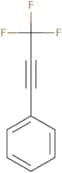
Fórmula:C12H17NPureza:Min. 95%Peso molecular:175.27 g/mol(3,3,3-Trifluoroprop-1-yn-1-yl)benzene
CAS:(3,3,3-Trifluoroprop-1-yn-1-yl)benzene is a reaction product that can be used to inhibit the activity of metalloprotease and as an anti-cancer agent. This compound inhibits the enzyme that causes chronic kidney disease and degenerative diseases. It is a potent inhibitor of metalloprotease, which is involved in cancer progression, fatty acid synthesis and bone formation. The effective dose for this drug is between 1 and 10mg/kg body weight. It has been shown to have an asymmetric synthesis with the use of amido groups. (3,3,3-Trifluoroprop-1-yn-1-yl)benzene also has antirheumatic properties due to its ability to inhibit proteases such as matrix metalloproteinases and cathepsins.
Fórmula:C9H5F3Pureza:Min. 95%Peso molecular:170.13 g/molRef: 3D-AAA77262
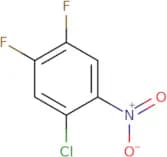
Producto descatalogado1-Chloro-4,5-difluoro-2-nitrobenzene
CAS:1-Chloro-4,5-difluoro-2-nitrobenzene is a water soluble, colorless liquid that is soluble in chloroform and reacts with hydrochloric acid to form 1-chloro-4,5-difluoro-2-nitrobenzene hydrochloride. It is a catalyst for the conversion of chloroformates to nitro radicals. 1,4,5-Trichloronitrobenzenes are used as catalysts in the nitration of aromatic compounds. The reaction temperature should be between 0 and 10 degrees Celsius.
Fórmula:C6H2ClF2NO2Pureza:Min. 95%Peso molecular:193.54 g/mol1,5-Difluoro-3-iodo-2-nitrobenzene
CAS:Versatile small molecule scaffold
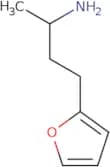
Fórmula:C6H2F2INO2Pureza:Min. 95%Peso molecular:284.99 g/mol3-Furan-2-yl-1-methyl-propylamine
CAS:Versatile small molecule scaffold
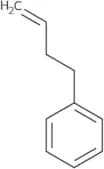
Fórmula:C8H13NOPureza:Min. 95%Peso molecular:139.2 g/mol4-Phenyl-1-butene
CAS:4-Phenyl-1-butene is an aryl halide that undergoes acylation reactions with the addition of hydrochloric acid. The reaction is efficient and produces high yields. 4-Phenyl-1-butene can be used in the synthesis of fosinopril sodium, which is a drug used to treat high blood pressure. The reaction requires hydrogen chloride gas, which reacts with the butene to produce chloride ions as well as sequences containing 4 phenyl groups. 4-Phenyl-1-butene is also used for asymmetric synthesis and copolymerization reactions. Copolymerization reactions are done at low temperatures to avoid polymerization and crosslinking of monomers.
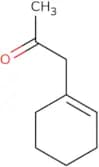
Fórmula:C10H12Pureza:Min. 95%Peso molecular:132.21 g/mol1-(Cyclohex-1-en-1-yl)propan-2-one
CAS:Versatile small molecule scaffold
Fórmula:C9H14OPureza:Min. 95%Peso molecular:138.21 g/mol5-Nitrobicyclo[2.2.1]hept-2-ene
CAS:Versatile small molecule scaffold
Fórmula:C7H9NO2Pureza:Min. 95%Peso molecular:139.15 g/mol2-Ethynyltoluene
CAS:2-Ethynyltoluene is an organic compound that has been reported to be reactive with various compounds. This chemical has been shown to inhibit the phosphorylation of tyrosine residues on human insulin receptor, which is a key step in insulin signaling pathways. The phosphate group in 2-ethynyl-toluene can be removed by protonation, allowing the molecule to react with other molecules and form model complexes. This chemical also forms polymers when heated and coated onto surfaces.2-Ethynyltoluene is soluble in polar solvents such as water, alcohols, and acetone.
2-Ethynyltoluene has a molecular weight of 130.1 g/mol and a boiling point of 148°C at 760 mmHg.Fórmula:C9H8Pureza:Min. 95%Peso molecular:116.16 g/mol7-Azaspiro[3.5]nonane
CAS:Isoxazole compounds are a class of heterocyclic compounds that inhibit the enzyme acetylcholine esterase (AChE) and thus have anticholinesterase activity. Isoxazoles have been shown to be effective in treating bladder and bowel disease, cancer, depression and other neurological disorders. The isooxazole 7-azaspiro[3.5]nonane has been shown to be effective in vitro against fungi. It is a covalent inhibitor of the fungal enzyme β-glucosidase and can also act as an endocannabinoid receptor agonist. 7-Azaspiro[3.5]nonane has not been studied in vivo, but its pharmacokinetic properties suggest it may be useful for treatment of inflammatory bowel disease or depression due to its high bioavailability and long elimination half-life.
Fórmula:C8H15NPureza:Min. 95%Peso molecular:125.21 g/mol2,5,5-Trimethyl-1,3-dioxane
CAS:2,5,5-Trimethyl-1,3-dioxane is an organic compound that has a strong odor. It is classified as an aliphatic ketone and has a cyclopropyl group.
Fórmula:C7H14O2Pureza:Min. 95%Peso molecular:130.18 g/molRef: 3D-AAA76633
Producto descatalogado(E)-Pent-3-en-1-ol
CAS:Versatile small molecule scaffold
Fórmula:C5H10OPureza:Min. 95%Peso molecular:86.13 g/mol2,2,2-Trichloroethyl Chlorosulfate
CAS:2,2,2-Trichloroethyl chlorosulfate is an organic compound that has a hydroxyl group and a chlorine in its structure. It is cytotoxic to cells and causes health effects in humans. This compound binds to the p-coumaric acid in the cell and inhibits the enzyme activity of the demethylase, which is responsible for the oxidation of p-coumaric acid to ferulic acid. This prevents p-coumaric acid from being converted into other metabolites such as dihydroferulic acid and dihydrocaffeic acid. 2,2,2-Trichloroethyl chlorosulfate also inhibits enzymes involved in the synthesis of cholesterol by competitively inhibiting HMG CoA reductase.
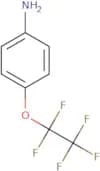
Fórmula:C2H2Cl4O3SPureza:Min. 95%Peso molecular:247.91 g/mol4-(Perfluoroethoxy)aniline
CAS:Versatile small molecule scaffold
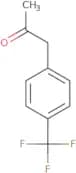
Fórmula:C8H6F5NOPureza:Min. 95%Peso molecular:227.13 g/mol1-(4-(Trifluoromethyl)phenyl)propan-2-one
CAS:Versatile small molecule scaffold
Fórmula:C10H9F3OPureza:Min. 95%Peso molecular:202.17 g/mol

![5-Nitrobicyclo[2.2.1]hept-2-ene](/_next/image/?url=https%3A%2Fstatic.cymitquimica.com%2Fproducts%2F3D%2Fthumb-webp%2FAAA76816.webp&w=3840&q=75)

![7-Azaspiro[3.5]nonane](/_next/image/?url=https%3A%2Fstatic.cymitquimica.com%2Fproducts%2F3D%2Fthumb-webp%2FAAA76634.webp&w=3840&q=75)