Building Blocks
Subcategorías de "Building Blocks"
- Ácidos borónicos y derivados del ácido borónico(5.780 productos)
- Building Blocks quirales(1.241 productos)
- Building Blocks de hidrocarburos(6.100 productos)
- Building Blocks orgánicos(61.017 productos)
Se han encontrado 205265 productos de "Building Blocks"
3-Propyl-cyclobutanecarboxylic acid
CAS:3-Propyl-cyclobutanecarboxylic acid is a cyclobutane that reacts with bromine to form a brominated liquid crystal. It has a temperature range of -97 °C to 29 °C and can be used as a solvent for organic compounds. 3-Propyl-cyclobutanecarboxylic acid can also be used in preparative chromatography, which is the process of separating different substances by their rate of movement through a column or tube. The use of 3-propyl-cyclobutanecarboxylic acid in preparative chromatography has been shown to be effective for the separation of diethyl malonate and other dicarboxylic acids, as well as other substances. 3-Propyl-cyclobutanecarboxylic acid can also be decarboxylated and hydrolyzed, forming methylmalonic acid.
Fórmula:C8H14O2Pureza:Min. 95%Peso molecular:142.2 g/molRef: 3D-RCA01617
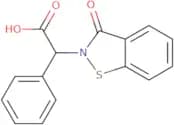
Producto descatalogado2-(3-Oxo-2,3-dihydro-1,2-benzothiazol-2-yl)-2-phenylacetic acid
CAS:Versatile small molecule scaffold
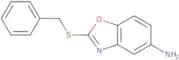
Fórmula:C15H11NO3SPureza:Min. 95%Peso molecular:285.3 g/mol2-(Benzylsulfanyl)-1,3-benzoxazol-5-amine
CAS:Versatile small molecule scaffold
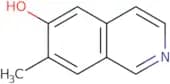
Fórmula:C14H12N2OSPureza:Min. 95%Peso molecular:256.32 g/mol7-Methylisoquinolin-6-ol
CAS:Versatile small molecule scaffold
Fórmula:C10H9NOPureza:Min. 95%Peso molecular:159.18 g/molRef: 3D-RBB73506
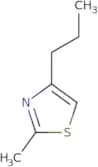
Producto descatalogado2-Methyl-4-propyl-1,3-thiazole
CAS:Versatile small molecule scaffold
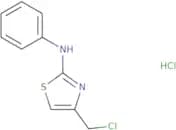
Fórmula:C7H11NSPureza:Min. 95%Peso molecular:141.24 g/mol4-(Chloromethyl)-N-phenyl-1,3-thiazol-2-amine hydrochloride
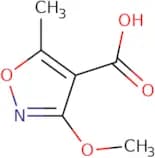
CAS:Versatile small molecule scaffoldFórmula:C10H9ClN2S·HClPureza:Min. 95%Peso molecular:261.18 g/mol3-Methoxy-5-methyl-1,2-oxazole-4-carboxylic acid
CAS:3-Methoxy-5-methyl-1,2-oxazole-4-carboxylic acid hydrobromide is an excitatory drug that belongs to the group of carboxylic acids. It has been shown to increase the firing rate of neurons in the cerebral cortex. 3-Methoxy-5-methyl-1,2-oxazole-4-carboxylic acid hydrobromide is used as a research tool for studying nervous system function and as a diagnostic agent for epilepsy.
Fórmula:C6H7NO4Pureza:Min. 95%Peso molecular:157.12 g/molEthyl 7-chloro-4-oxo-4H-pyrido[1,2-a]pyrimidine-3-carboxylate
CAS:Versatile small molecule scaffold
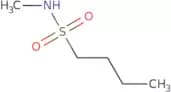
Fórmula:C11H9ClN2O3Pureza:Min. 95%Peso molecular:252.65 g/molN-Methylbutane-1-sulfonamide
CAS:Versatile small molecule scaffold
Fórmula:C5H13NO2SPureza:Min. 95%Peso molecular:151.23 g/mol1,2-Dihydronaphthalene-1-carboxylic acid
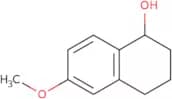
CAS:Versatile small molecule scaffoldFórmula:C11H10O2Pureza:Min. 95%Peso molecular:174.2 g/mol6-Methoxy-1,2,3,4-tetrahydronaphthalen-1-ol
CAS:The condensation of 6-methoxy-1,2,3,4-tetrahydronaphthalen-1-ol with a diaryl or chlorotrimethylsilane in the presence of a catalyst such as pyridine or triethylamine leads to the formation of a carbinol. The reaction is often used for the synthesis of phenols.
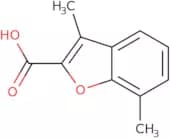
Fórmula:C11H14O2Pureza:Min. 95%Peso molecular:178.23 g/mol3,7-Dimethyl-1-benzofuran-2-carboxylic acid
CAS:Versatile small molecule scaffold
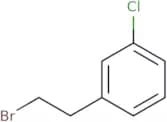
Fórmula:C11H10O3Pureza:Min. 95%Peso molecular:190.19 g/mol3-Chlorophenethyl bromide
CAS:3-Chlorophenethyl bromide is a linker that binds to viral proteins in the dimer interface and inhibits viral replication. It has been shown to be an inhibitor of HIV-1 reverse transcriptase and human immunodeficiency virus type 1 protease. 3-Chlorophenethyl bromide has also been found to inhibit the binding of HIV-1 integrase, which leads to inhibition of HIV-1 DNA integration into host cell chromosomes. 3-Chlorophenethyl bromide can be used for the treatment of AIDS and is being investigated for its use as a prophylactic agent for HIV infection.
Fórmula:ClC6H4CH2CH2BrPureza:Min. 95%Peso molecular:219.51 g/mol4-Amino-2-isopropylphenol
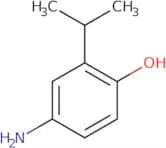
CAS:4-Amino-2-isopropylphenol is a phenolic compound that is used in the synthesis of esters. It reacts with carboxylic acids to form an acylation product, which is selective for hydroxy groups. 4-Amino-2-isopropylphenol can be used as a solvent for phenolic compounds such as resorcinols and hydroquinones. This reagent also selectively reacts with organic solvents preferentially to hydroxy groups on the same molecule. The regioselective reaction of 4-amino-2-isopropylphenol is due to its steric hindrance by the substituent on the isopropyl group.
Fórmula:C9H13NOPureza:Min. 95%Peso molecular:151.21 g/mol2',4'-Dimethoxyacetoacetanilide
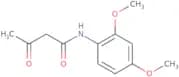
CAS:2',4'-Dimethoxyacetoacetanilide is a disubstituted dicarbonyl compound that is synthesized by acetoxylation of 2,4-dimethoxybenzaldehyde. The equilibrium between the two forms can be shifted to favor one form through the addition of reagents, such as dimethylformamide or dicarbonyl compounds. The oxidation of 2',4'-dimethoxyacetoacetanilide with hydrogen peroxide yields 2,4-dihydroxydiphenylmethane, which can undergo hydrolysis with hydrochloric acid to yield phenol.
Fórmula:C12H15NO4Pureza:Min. 95%Peso molecular:237.26 g/mol(4-Methoxy-pyridin-2-yl)-methanol
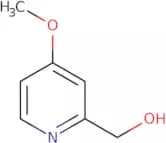
CAS:(4-Methoxy-pyridin-2-yl)-methanol is a nucleophile that can be used in the preparation of phosphorothioates and triphosphates. It is also used to synthesize oligonucleotides, which are biomolecules used to probe the structure of DNA. This compound has been shown to have high yields and is exothermic, making it a good candidate for catalysis. The chemical properties of (4-Methoxy-pyridin-2-yl)-methanol make it an excellent nucleophile with a strong affinity for phosphorous, which makes it useful in the synthesis of phosphorothioates and triphosphates.
Fórmula:C7H9NO2Pureza:Min. 95%Peso molecular:139.16 g/mol4-Bromo-5-nitro-1H-indazole
CAS:Versatile small molecule scaffold
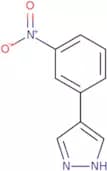
Fórmula:C7H4N3O2BrPureza:Min. 95%Peso molecular:242.02 g/mol4-(3-Nitrophenyl)-1H-pyrazole
CAS:Versatile small molecule scaffold
Fórmula:C9H7N3O2Pureza:Min. 95%Peso molecular:189.17 g/mol3-Amino-4-methyl-N-[3-(trifluoromethyl)phenyl]benzene-1-sulfonamide
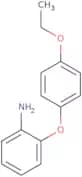
CAS:Versatile small molecule scaffoldFórmula:C14H13F3N2O2SPureza:Min. 95%Peso molecular:330.33 g/mol2-(4-Ethoxyphenoxy)aniline
CAS:Versatile small molecule scaffold
Fórmula:C14H15NO2Pureza:Min. 95%Peso molecular:229.28 g/mol


![Ethyl 7-chloro-4-oxo-4H-pyrido[1,2-a]pyrimidine-3-carboxylate](/_next/image/?url=https%3A%2Fstatic.cymitquimica.com%2Fproducts%2F3D%2Fthumb-webp%2FRAA86755.webp&w=3840&q=75)

![3-Amino-4-methyl-N-[3-(trifluoromethyl)phenyl]benzene-1-sulfonamide](/_next/image/?url=https%3A%2Fstatic.cymitquimica.com%2Fproducts%2F3D%2Fthumb-webp%2FQXA20922.webp&w=3840&q=75)