Building Blocks
Subcategorías de "Building Blocks"
- Ácidos borónicos y derivados del ácido borónico(5.780 productos)
- Building Blocks quirales(1.241 productos)
- Building Blocks de hidrocarburos(6.100 productos)
- Building Blocks orgánicos(61.024 productos)
Se han encontrado 205297 productos de "Building Blocks"
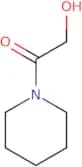
2-oxo-2-piperidin-1-ylethanol
CAS:2-Oxo-2-piperidin-1-ylethanol (OPAH) is an alkynyl with a benzene ring and a pyridyl. It can be synthesized by cross-linking the alkylene, which is unsaturated, to an alkenyl. The carbamoyl group can be attached to the amide or alkyl of the alkynyl. The cycloalkyl is attached to the phenyl at its 1-4 position.
Fórmula:C7H13NO2Pureza:Min. 95%Peso molecular:143.18 g/molrac-(1R,3R)-3-(tert-Butoxy)spiro[3.3]heptan-1-ol, trans
CAS:Versatile small molecule scaffold
Fórmula:C11H20O2Pureza:Min. 95%Peso molecular:184.3 g/molRef: 3D-JBD29476
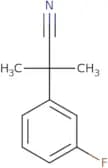
Producto descatalogado2-(3-Fluorophenyl)-2-methylpropanenitrile
CAS:Versatile small molecule scaffoldFórmula:C10H10FNPureza:Min. 95%Peso molecular:163.19 g/mol(2S)-2-[(3,4,5-Trimethoxyphenyl)formamido]propanoic acid
CAS:Versatile small molecule scaffold
Fórmula:C13H17NO6Pureza:Min. 95%Peso molecular:283.28 g/molCyclobutyl Phenyl Ketone
CAS:Cyclobutyl Phenyl Ketone is an unsaturated ketone that belongs to the class of aliphatic hydrocarbons. It is used in vitro assays as a receptor binding agent. Cyclobutyl Phenyl Ketone can bind to the benzodiazepine site on GABA-A receptors, which are a type of neurotransmitter receptor found in the central nervous system. Cyclobutyl Phenyl Ketone has been shown to be effective in treating chronic bronchitis due to its ability to inhibit chloride ion uptake by human lung cells. This compound has also been shown to be effective for treating bladder cancer due to its function as a hydrogen chloride scavenger and nitro group donor. Cyclobutyl Phenyl Ketone can be synthesized from ethyl formate, through a Friedel-Crafts reaction with hydrogen chloride, followed by carbonyl reduction with sodium borohydride. The asymmetric synthesis of this compound requires a simple modification in the starting material,
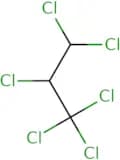
Fórmula:C11H12OPureza:Min. 95%Peso molecular:160.22 g/mol1,1,1,2,3,3-Hexachloropropane
CAS:1,1,1,2,3,3-Hexachloropropane is a fluorinated hydrocarbon that is used as a catalyst in the fluorination of organic compounds. The reaction is highly selective and only produces one stereoisomer (e.g., 1-fluoropropane). This product can be used as a conditioner for gas streams or a diluent for liquid phase reactions. Hexachloropropane also reacts with hydrogen chloride to produce fluorides and chlorides. The reaction selectivity of this product is high because it does not react with other substances such as water or ammonia.
Fórmula:C3H2Cl6Pureza:Min. 95%Peso molecular:250.8 g/mol5-Methoxy-1H-pyrrolo[2,3-b]pyridine-2-carboxylic acid
CAS:Versatile small molecule scaffoldFórmula:C9H8N2O3Pureza:Min. 95%Peso molecular:192.17 g/mol[(1,1-Dioxo-tetrahydro-1lambda*6*-thiophen-3-yl)-methyl-amino]-acetic acid
CAS:Versatile small molecule scaffold
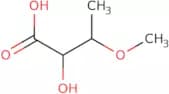
Fórmula:C7H13NO4SPureza:Min. 95%Peso molecular:207.24 g/mol2-Hydroxy-3-methoxybutanoic acid
CAS:Versatile small molecule scaffold
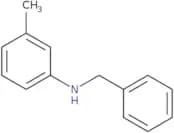
Fórmula:C5H10O4Pureza:Min. 95%Peso molecular:134.13 g/molN-Benzyl-3-methylaniline
CAS:Versatile small molecule scaffold
Fórmula:C14H15NPureza:Min. 95%Peso molecular:197.27 g/mol1-[2-(Trifluoromethyl)phenyl]propan-2-amine hydrochloride
CAS:Producto controladoVersatile small molecule scaffold
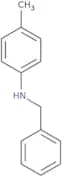
Fórmula:C10H13ClF3NPureza:Min. 95%Peso molecular:239.66 g/molN-Benzyl-4-methylaniline
CAS:N-Benzyl-4-methylaniline is a mesoporous material with a high surface area that can be used as a solid acid catalyst. It has been shown to have excellent catalytic properties for the synthesis of quinoline derivatives from trans-stilbene and anilines. The immobilized N-benzyl-4-methylaniline is a novel material that can be used in various applications, such as as an uv detector or proton donor.
Fórmula:C14H15NPureza:Min. 95%Peso molecular:197.27 g/mol2,5-Dichlorobenzenesulfonyl Chloride
CAS:2,5-Dichlorobenzenesulfonyl Chloride is a chemical compound that binds to the G protein-coupled receptor. It has been shown to stabilize the receptor and inhibit angiogenic process. 2,5-Dichlorobenzenesulfonyl Chloride has been shown to have anticancer activity against human glioma cells in vitro and in vivo. It also inhibits hydrogen bonding interactions with the receptor which may be important for cancer treatment.
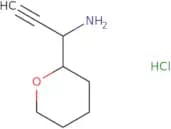
2,5-Dichlorobenzenesulfonyl Chloride is soluble in chloroform and acetone but not water or ethanol. The solubility of this compound can be improved by adding a solvent such as benzene or dichloromethane.Fórmula:C6H3Cl3O2SPureza:Min. 95%Peso molecular:245.51 g/mol1-(Oxan-2-yl)prop-2-yn-1-amine hydrochloride
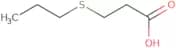
CAS:Versatile small molecule scaffoldFórmula:C8H14ClNOPureza:Min. 95%Peso molecular:175.65 g/mol3-(Propylsulfanyl)propanoic acid
CAS:Versatile small molecule scaffold
Fórmula:C6H12O2SPureza:Min. 95%Peso molecular:148.23 g/mol7-Methyl-5H-pyrano[4,3-b]pyridin-5-one
CAS:Versatile small molecule scaffold
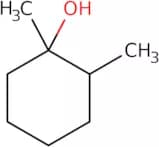
Fórmula:C9H7NO2Pureza:Min. 95%Peso molecular:161.16 g/mol1,2-Dimethylcyclohexan-1-ol
CAS:1,2-Dimethylcyclohexan-1-ol is a hydroxylated phenolic compound that has been shown to inhibit the production of inflammatory cytokines. It also inhibits the activity of carboxylesterases and aminopeptidases in vitro, which may be due to its acidic nature. This drug is used to treat autoimmune diseases such as rheumatoid arthritis, psoriasis, and multiple sclerosis. 1,2-Dimethylcyclohexan-1-ol can be synthesized from hydroxybenzene and formaldehyde with hydrochloric acid as a reaction intermediate. It reacts with trifluoroacetic acid to produce an intermediate that is soluble in water. This compound is also susceptible to oxidation by air or light.
Fórmula:C8H16OPureza:Min. 95%Peso molecular:128.21 g/molbicyclo[3.1.0]hexan-3-amine hcl
CAS:Versatile small molecule scaffold
Fórmula:C6H12ClNPureza:Min. 95%Peso molecular:133.62 g/molrac-(3aR,6aR)-N-(Propan-2-yl)-octahydropyrrolo[2,3-c]pyrrole-1-carboxamide, cis
CAS:Versatile small molecule scaffold
Fórmula:C10H19N3OPureza:Min. 95%Peso molecular:197.3 g/molRef: 3D-JBD29482
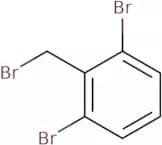
Producto descatalogado2,6-Dibromobenzyl Bromide
CAS:2,6-Dibromobenzyl Bromide is a reagent that is used in organic synthesis for the transfer of cholesterol esters. It reacts with anhydrous sodium sulfate to form 2,6-dibromobenzyl sulfate, which can then be hydrolyzed to 2,6-dibromobenzyl alcohol or brominated with carbon tetrachloride to produce 2,6-dibromobenzyl chloride. This product is typically used as a solution in solvents such as carbon tetrachloride or hydrogen peroxide. It is also used as a patterning agent when it is coated on a surface and exposed to light using magnetic or optical lithography.
Fórmula:C7H5Br3Pureza:Min. 95%Peso molecular:328.83 g/mol

![rac-(1R,3R)-3-(tert-Butoxy)spiro[3.3]heptan-1-ol, trans](/_next/image/?url=https%3A%2Fstatic.cymitquimica.com%2Fproducts%2F3D%2Fthumb-webp%2FJBD29476.webp&w=3840&q=75)
![(2S)-2-[(3,4,5-Trimethoxyphenyl)formamido]propanoic acid](/_next/image/?url=https%3A%2Fstatic.cymitquimica.com%2Fproducts%2F3D%2Fthumb-webp%2FTDA70967.webp&w=3840&q=75)

![5-Methoxy-1H-pyrrolo[2,3-b]pyridine-2-carboxylic acid](/_next/image/?url=https%3A%2Fstatic.cymitquimica.com%2Fproducts%2F3D%2Fthumb-webp%2FKAC38131.webp&w=3840&q=75)
![[(1,1-Dioxo-tetrahydro-1lambda*6*-thiophen-3-yl)-methyl-amino]-acetic acid](/_next/image/?url=https%3A%2Fstatic.cymitquimica.com%2Fproducts%2F3D%2Fthumb-webp%2FBCA07058.webp&w=3840&q=75)
![1-[2-(Trifluoromethyl)phenyl]propan-2-amine hydrochloride](/_next/image/?url=https%3A%2Fstatic.cymitquimica.com%2Fproducts%2F3D%2Fthumb-webp%2FAAA67003.webp&w=3840&q=75)

![7-Methyl-5H-pyrano[4,3-b]pyridin-5-one](/_next/image/?url=https%3A%2Fstatic.cymitquimica.com%2Fproducts%2F3D%2Fthumb-webp%2FLCA43683.webp&w=3840&q=75)
![bicyclo[3.1.0]hexan-3-amine hcl](/_next/image/?url=https%3A%2Fstatic.cymitquimica.com%2Fproducts%2F3D%2Fthumb-webp%2FPDA67680.webp&w=3840&q=75)
![rac-(3aR,6aR)-N-(Propan-2-yl)-octahydropyrrolo[2,3-c]pyrrole-1-carboxamide, cis](/_next/image/?url=https%3A%2Fstatic.cymitquimica.com%2Fproducts%2F3D%2Fthumb-webp%2FJBD29482.webp&w=3840&q=75)